
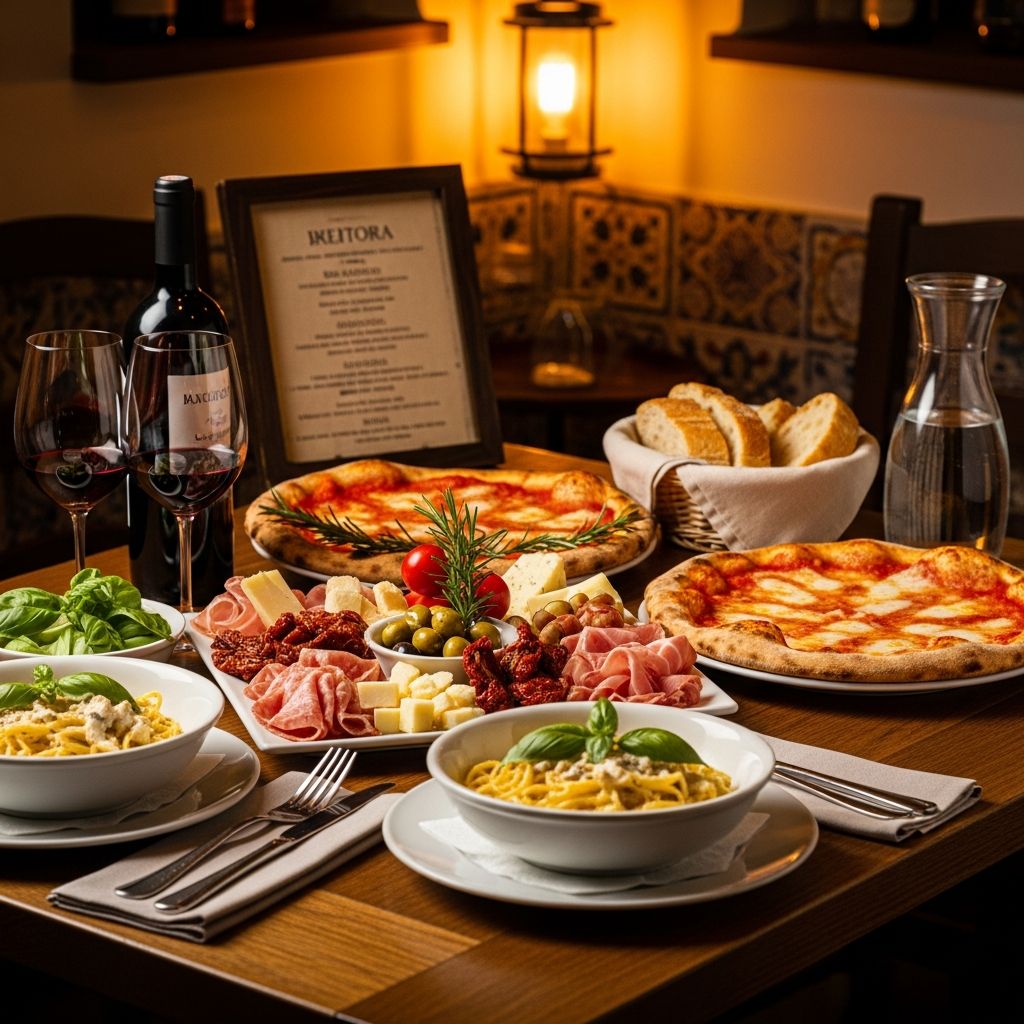
Italian cuisine captivates with its simplicity and regional diversity, but deciphering a restaurant menu can overwhelm first-time visitors. Unlike single-plate meals elsewhere, Italian dining follows a structured progression of courses, each highlighting fresh ingredients and time-honored preparations. This guide empowers you to interpret menu sections, recognize common dishes, and order confidently, transforming any meal into an authentic experience.
Understanding the Multi-Course Italian Meal Structure
Italian menus organize dishes by course, reflecting a meal’s logical flow from light starters to hearty mains and sweet finishes. Diners typically select 2-4 items, sharing where appropriate, rather than one all-in-one entree. This approach allows savoring flavors in sequence, preventing overload from rich dishes.
Starters: Building Appetite with Antipasti
Antipasti, meaning ‘before the pasta,’ kick off the meal with small, shareable bites. These awaken the palate without filling you up. Expect platters of cured meats like prosciutto or salami, creamy cheeses such as mozzarella or gorgonzola, marinated vegetables, or fried delights like arancini (rice balls). In coastal areas, seafood variations like octopus salad appear. Opt for ‘antipasto misto’ for a curated selection showcasing house specialties.
Carb-Centric First Courses: Primi Piatti
Primi feature pasta, risotto, or soups as the meal’s foundation. Portions are modest to leave room for subsequent courses. Pasta shapes pair regionally: tagliatelle with ragù in Bologna, spaghetti alla carbonara in Rome (eggs, pecorino, guanciale, pepper). Northern risotto uses arborio rice with saffron or mushrooms; southern menus favor semolina-based orecchiette. Soups like minestrone or ribollita provide lighter options. Remember: bread for sopping sauces, never butter on pasta.
Protein-Focused Mains: Secondi Piatti
Secondi deliver the meal’s protein punch—grilled fish, roasted meats, or egg-based dishes. A simple bistecca alla fiorentina (T-bone steak) or pesce spada (swordfish) arrives unadorned, emphasizing quality. Vegetarians find eggplant parmigiana or stuffed zucchini. Proteins portion modestly; don’t expect American-style platters.
Accompaniments: Contorni Essentials
Contorni, listed separately, are vegetable or starch sides ordered a la carte. Insalata (salad), patate al forno (roasted potatoes), or spinaci saltati (sautéed spinach) complement secondi. This modularity lets you customize; a grilled sea bream pairs perfectly with grilled zucchini.
Sweet Closers: Dolci and Digestivi
Dolci end meals sweetly with tiramisù (coffee-mascarpone layers), panna cotta (cooked cream), or cannoli (ricotta-filled shells). Follow with a digestivo like limoncello or grappa to aid digestion. Coffee—espresso only—comes post-dessert, never with it.
Key Vocabulary for Confident Ordering
Master these terms to decode descriptions:
- Crudo: Raw, as in carpaccio (thin beef slices).
- Al forno: Baked.
- Fritto: Fried.
- Alla griglia: Grilled.
- Cotto: Cooked.
- Bianco/Nero: White (no tomato) or black (ink-based) sauce.
- S.Q.: ‘Secondo quantità’—market price for fish/meat.
Regional Menu Highlights Across Italy
Italy’s 20 regions yield distinct menus. Use this table for quick reference:
| Region | Signature Primi | Signature Secondi | Local Twist |
|---|---|---|---|
| Tuscany | Pappardelle al cinghiale (wild boar) | Bistecca alla fiorentina | Robust reds, ribollita soup |
| Sicily | Pasta alla norma (eggplant, ricotta salata) | Involtini di pesce spada | Arancini, caponata |
| Veneto | Bigoli in salsa (anchovy pasta) | Fegato alla veneziana (liver) | Polenta sides |
| Campania | Spaghetti alle vongole | Parmigiana di melanzane | Mozzarella di bufala |
| Lombardy | Risotto alla milanese | Ossobuco | Gorgonzola desserts |
Adapt orders to locale: pesto in Genoa, amatriciana in Rome.
Practical Tips for Italian Restaurant Navigation
- Scan First: Review all courses upfront; servers expect complete orders initially.
- Share Strategically: Antipasti and contorni for groups; individual primi/secondi.
- Bread Rules: Use for sauce-mopping (scarpetta), not buttering.
- Water Wisdom: Specify naturale (still) or frizzante (sparkling); no free tap.
- Coperto Charge: Bread/cover fee per person—standard, not optional.
- Timing: Courses arrive sequentially; pace yourself.
Beverage Pairings to Elevate Your Meal
Wine lists match regional foods: Chianti with Tuscan steak, Prosecco for antipasti. Aperitivo (pre-meal spritz) or digestivo post-meal. Beer suits pizza; house wine (della casa) offers value.
Frequently Asked Questions (FAQs)
Do I need to order every course?
No—primi + secondo or antipasto + secondo suffices. Locals mix based on hunger.
Why no sides with mains?
Customization: pair as desired. Keeps plates light, focused.
Vegetarian options?
Abundant—parmigiana, veggie contorni, pasta al pomodoro. Ask ‘senza carne’ (no meat).
Gluten-free?
Specify ‘senza glutine’; risotto, polenta, grilled fish work well.
Tipping etiquette?
Service included; round up bill 5-10% for excellent service.
Common Pitfalls and How to Avoid Them
Tourist menus promise English but deliver bland food—seek Italian-only for authenticity. Overordering leads to waste; start light. Misreading ‘primo’ as full meal dooms appetite for secondi. Embrace the rhythm: slow, social, seasonal.
With this knowledge, Italian menus become gateways to culinary joy. Next trattoria visit, channel a local—buon appetito!
References
- Italian Ministry of Agriculture, Food and Forestry Policies – Regional Culinary Traditions — Italian Government. 2024-01-15. https://www.politicheagricole.it/flex/cm/pages/ServeBLOB.php/L/IT/IDPagina/141
- UNESCO Intangible Cultural Heritage – Mediterranean Diet — UNESCO. 2013-11-05 (last updated 2023). https://ich.unesco.org/en/RL/mediterranean-diet-00884
- Italian Academy of Cuisine – Traditional Regional Dishes — Accademia Italiana della Cucina. 2025-02-12. https://www.accademiaitalianacucina.it/en/
- EU Agricultural Quality Schemes – Protected Designation of Origin — European Commission. 2024-06-20. https://agriculture.ec.europa.eu/farming/geographical-indications-and-quality-schemes/geographical-indications-food-and-drink_en
- Italian National Tourist Board – Gastronomic Tourism Guide — ENIT. 2024-09-01. https://www.italia.it/en/food-and-wine

- Integrated M.A. in Applied Linguistics, University of Hyderabad
- 5+ years in editorial, instructional, SEO, and research-based writing
Sneha is a relationships and lifestyle writer with a strong foundation in applied linguistics and certified training in relationship coaching. She brings over five years of writing experience to theskillvault, crafting thoughtful, research-driven content that empowers readers to build healthier relationships, boost emotional well-being, and embrace holistic living. Her writing and insights reflect the belief that beauty, happiness, and wellness…