
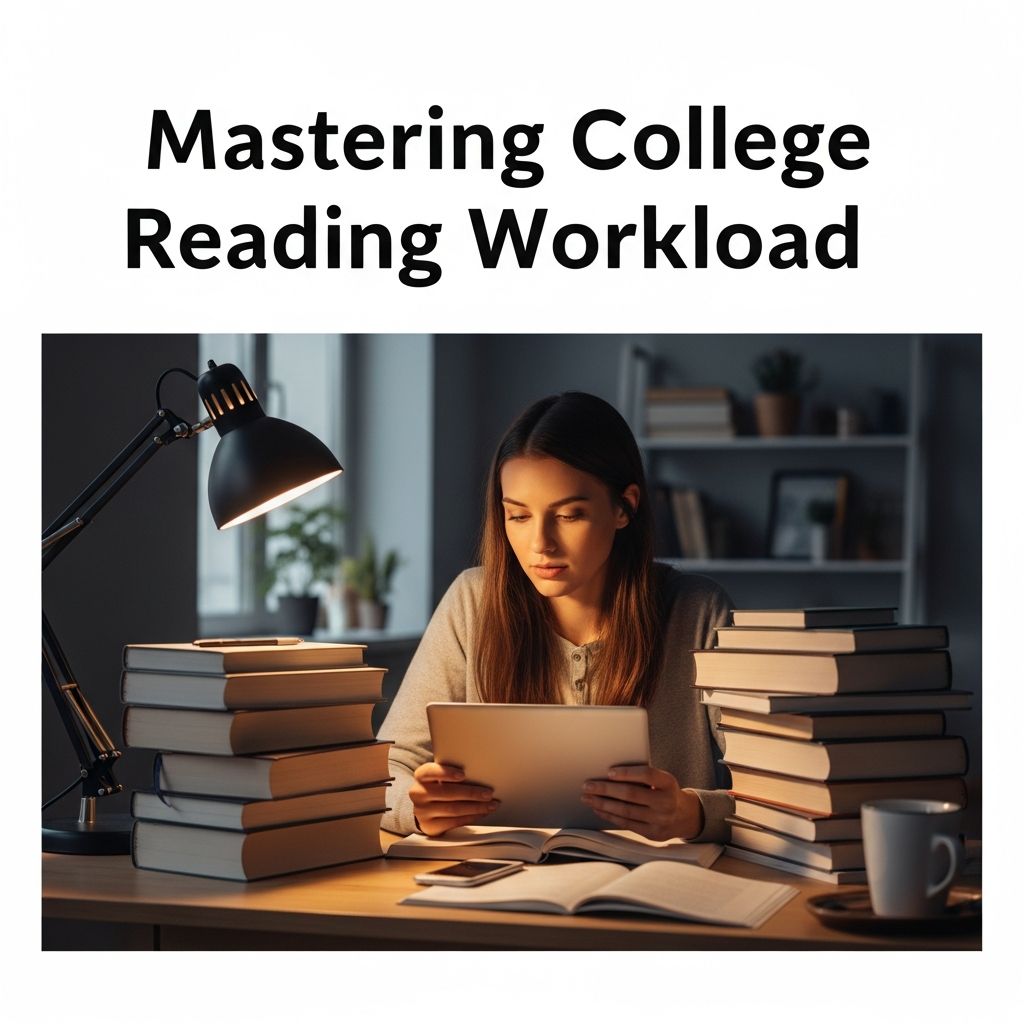
College introduces students to vastly increased reading demands compared to high school, often involving dense textbooks, journal articles, and primary sources that require deep understanding for success in courses. This guide provides original, actionable strategies to stay ahead of reading assignments, enhance retention, and reduce stress, drawing from proven educational practices.
Building the Foundation: Why Reading Matters in Higher Education
Effective reading forms the backbone of academic achievement in college, where professors expect independent engagement with complex materials. Unlike high school, where discussions might suffice, college demands proactive comprehension to fuel participation, essays, and exams. Students who master reading techniques report higher grades and less burnout.
Research from academic centers highlights that poor reading habits lead to procrastination and incomplete understanding. For instance, breaking dense texts into manageable parts improves focus and recall significantly.
Designing Your Ideal Study Environment
A dedicated reading space is crucial for sustained concentration. Select a location with natural light, ergonomic seating, and minimal interruptions to signal your brain it’s time for focused work.
- Lighting and Comfort: Opt for adjustable lamps to reduce eye strain during long sessions; a supportive chair prevents physical discomfort.
- Noise Control: Use noise-cancelling headphones with ambient sounds if silence isn’t possible, like in dorms.
- Accessibility: Choose spots near your schedule’s flow, such as a library corner or quiet cafe.
- Tech Management: Silence notifications and use apps to block social media during reading blocks.
Experiment to find what boosts your productivity; consistency in environment reinforces habits.
Strategic Planning for Reading Assignments
Overwhelm stems from tackling readings last-minute. Map out syllabi early, allocating time based on page counts and difficulty. Use a planner to divide weekly loads into daily sessions, factoring in breaks.
| Assignment Type | Estimated Time per 50 Pages | Best Approach |
|---|---|---|
| Textbook Chapters | 2-3 hours | Preview, read actively, review |
| Journal Articles | 1-2 hours | Abstract first, skim methods/results |
| Primary Sources | 3-4 hours | Contextual outline, annotate heavily |
Prioritize readings tied to upcoming lectures or assessments for maximum impact.
Active Reading Techniques for Deeper Understanding
Passive scanning won’t cut it; employ active methods to engage with content critically. The SQ3R framework—Survey, Question, Read, Recite, Review—transforms rote reading into interactive learning.
- Survey: Scan headings, summaries, visuals for an overview in 5-10 minutes.
- Question: Convert subheadings to queries like “What evidence supports this claim?”
- Read: Dive in selectively, focusing on answers to your questions.
- Recite: Summarize aloud or in notes without peeking.
- Review: Revisit notes post-session to solidify memory.
For speed, preview purpose: align reading depth with class goals, skipping non-essential sections.
Annotation and Note-Taking Mastery
Highlight sparingly—only key terms, theses, and evidence—to avoid ‘highlight everything’ pitfalls. Marginal notes capture reactions, connections, and questions, personalizing the text.
- Digital Tools: Use PDF annotators or apps like Notion for searchable highlights.
- Structured Notes: Employ Cornell method: cues on left, summaries below, notes in center.
- Visual Aids: Mind maps link concepts; draw arrows between related ideas.
After each section, write a one-sentence summary to test grasp. This reinforces main arguments and spots weak areas.
Leveraging Technology and Resources
Modern tools amplify efficiency. Text-to-speech apps read aloud during commutes; speed-reading trainers build pace without sacrificing comprehension.
University centers offer workshops; online platforms provide SQ3R templates. Pair readings with lecture videos for multimodal learning, enhancing retention by 20-30% per studies.
Overcoming Common Reading Challenges
Dealing with Dense or Unfamiliar Texts
Build background via Wikipedia overviews (not for citation), then tackle core material. Flag unknown terms, researching only pivotal ones to maintain momentum.
Managing Procrastination
Pomodoro Technique: 25-minute reads + 5-minute breaks. Reward completion to build positive associations.
Balancing Multiple Courses
Color-code syllabi; rotate subjects daily to prevent fatigue. Group similar readings for thematic connections.
Tracking Progress and Adjusting Habits
Weekly reviews assess what’s working: Did you finish assignments? Understand lectures better? Tweak strategies iteratively. Join study groups to discuss readings, filling knowledge gaps collaboratively.
Long-term, reading fluency improves with practice; track pages per hour to quantify gains.
Frequently Asked Questions (FAQs)
What if I fall behind on readings?
Prioritize core chapters linked to exams; skim peripherals. Communicate with professors for extensions if needed, showing proactive effort.
How much should I highlight?
Limit to 10-20% of text; focus on theses, data, unfamiliar vocab. Over-highlighting dilutes focus.
Is speed reading effective for college?
Yes for previews, but slow down for comprehension-heavy tasks. Practice builds balanced speed.
Can I read on my phone?
Possible with e-books, but larger screens reduce eye strain for long sessions.
How do I remember what I read?
Spaced repetition: review notes 24 hours, 1 week later. Teach concepts to others for mastery.
Long-Term Habits for Lifelong Learning
Beyond college, these skills aid professional growth. Cultivate curiosity by reading diversely; track personal development via reading journals. Consistent application yields confident, informed thinkers.
References
- 10 Tips to Improve Your Reading Comprehension for College — Purdue University Global. 2023-05-15. https://www.purdueglobal.edu/blog/general-education/improve-reading-comprehension-college/
- Master College-Level Reading: 5 Steps for Success — Learning Liftoff (K12 Inc.). 2022-08-10. https://learningliftoff.com/college/effective-college-reading-strategies/
- How to Read in College — Swarthmore College. 2024-01-22. https://www1.swarthmore.edu/SocSci/tburke1/reading.html
- Students Don’t Keep Up With Reading — Carnegie Mellon University Eberly Center. 2023-11-05. https://www.cmu.edu/teaching/solveproblem/strat-dontread/index.html
- Tackling Large Readings Guide — Barnard College. 2024-03-18. https://barnard.edu/tackling-large-readings-guide

- Integrated M.A. in Applied Linguistics, University of Hyderabad
- 5+ years in editorial, instructional, SEO, and research-based writing
Sneha is a relationships and lifestyle writer with a strong foundation in applied linguistics and certified training in relationship coaching. She brings over five years of writing experience to theskillvault, crafting thoughtful, research-driven content that empowers readers to build healthier relationships, boost emotional well-being, and embrace holistic living. Her writing and insights reflect the belief that beauty, happiness, and wellness…