
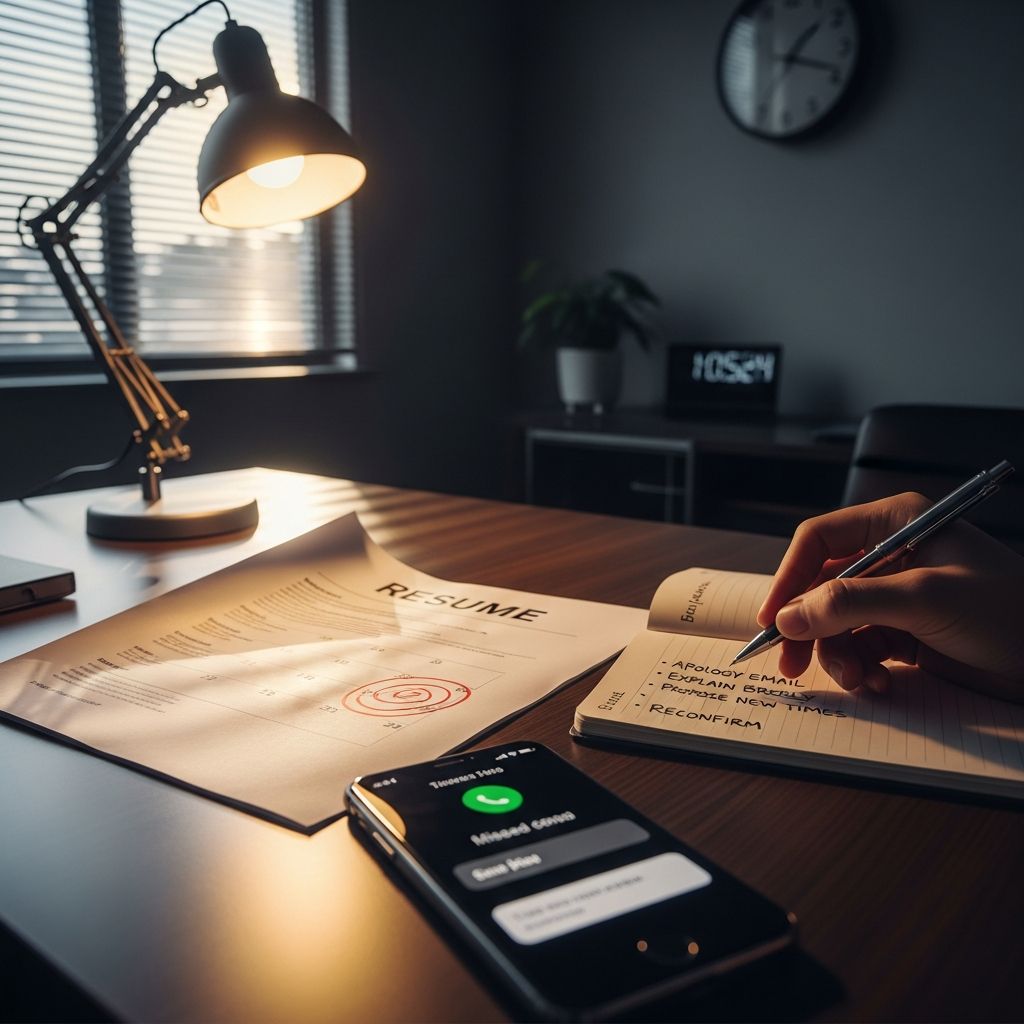
Job interviews represent critical moments in the career journey, yet unexpected events can cause even the most prepared candidates to miss them. Whether due to traffic jams, technical glitches in virtual setups, or personal emergencies, a no-show can raise concerns about reliability. The good news is that swift, professional responses can often salvage the situation, demonstrating accountability and enthusiasm. This article outlines a complete roadmap for recovery, drawing from expert insights to help you navigate this setback and potentially secure a second chance.
Understanding the Impact of Missing an Interview
When you fail to appear for a scheduled interview, it disrupts the employer’s timeline and resources. Hiring teams invest time in coordinating schedules, preparing questions, and reserving spaces or technology. According to talent acquisition professionals, immediate awareness of such issues allows for better contingency planning. Delaying notification reduces rescheduling likelihood, as teams may proceed with other candidates. However, candidates who respond promptly and sincerely often leave a positive impression of maturity and problem-solving skills.
Common reasons for misses include oversleeping, transportation delays, family obligations, or miscommunications about timing. Regardless of the cause, the focus should shift quickly from excuses to solutions. Employers value candidates who own their errors and propose fixes, turning a negative into a showcase of resilience.
Immediate Actions: Contact Without Delay
The first priority is reaching out as soon as you realize the issue. Speed is paramount—contact within minutes if possible, certainly before the interview slot ends. Use the primary communication method provided: phone for urgency, email if that’s the established channel.
- Phone call protocol: Dial the interviewer or recruiter directly. Introduce yourself, reference the interview details, and state the issue concisely.
- If voicemail: Leave a brief message with your apology, contact info, and request for a callback.
- Email backup: Follow up immediately if no answer, ensuring all bases are covered.
This proactive step shows respect for their time and keeps you top-of-mind. Experts emphasize that early intervention preserves options, such as accommodating lateness or shifting to video alternatives.
Crafting a Sincere and Effective Apology
An apology must convey genuine regret without defensiveness. Acknowledge the inconvenience caused, take full responsibility, and briefly note the reason only if it’s legitimate and non-excusable (e.g., medical emergency vs. poor planning). Avoid lengthy justifications that sound like excuses.
Key elements of a strong apology:
- Direct ownership: “I take full responsibility for missing our scheduled interview.”
- Empathy: “I understand this disrupted your team’s schedule.”
- Enthusiasm: “I remain highly interested in the role and contributing to your team.”
Follow the call with a polished email recapping the conversation. This creates a written record and reinforces professionalism. Here’s a sample structure:
| Section | Content Example |
|---|---|
| Subject Line | Apology for Missing Today’s Interview and Reschedule Request |
| Opening | Dear [Name], I sincerely apologize for missing our [time] interview. |
| Explanation | A [brief reason, e.g., unexpected family emergency] prevented my attendance. |
| Request | Would you be open to rescheduling? I’m available [suggest 3-4 slots]. |
| Prevention | To ensure punctuality, I’ll [e.g., set multiple alarms, scout route in advance]. |
| Close | Thank you for your consideration. Best, [Your Name] |
Requesting a Reschedule Strategically
Once apologized, pivot to rescheduling. Propose specific times that align with their availability, showing flexibility. Suggest alternatives like switching from in-person to virtual if logistics were the issue. Highlight preventive measures to build confidence in your reliability.
For virtual interviews, test technology beforehand—platforms like Zoom or Teams can glitch, so have backups ready. If weather or transit is a factor, monitor forecasts and communicate preemptively.
In some cases, employers may allow a late arrival if notified quickly. However, assess your composure; arriving flustered can harm performance more than rescheduling.
Follow-Up Strategies to Strengthen Your Case
After initial contact, send a thank-you note even if rescheduling isn’t confirmed. This reiterates interest and subtly addresses any perceived weaknesses. Keep it concise: reference a discussion point, reaffirm fit, and express gratitude.
If no response within 24-48 hours, a polite follow-up email is appropriate: “I wanted to check if rescheduling might be possible.” Persistence without pestering demonstrates determination.
Maintain networking ties. Connect on LinkedIn post-recovery, sharing relevant articles or insights to stay visible for future roles.
Preventing Future Misses: Proactive Preparation
Recovery is crucial, but prevention is better. Build habits to eliminate risks:
- Reconnaissance: Visit the site a day prior; for virtual, verify link and setup.
- Buffer time: Add 60-90 minutes for delays.
- Tech checks: Test devices, internet, and backups.
- Alerts: Use multiple alarms, calendar reminders, and apps like Google Maps for real-time traffic.
- Confirmations: Double-check details 24 hours before.
Treat interviews like non-negotiable commitments. Mock runs familiarize you with the process, reducing anxiety-induced errors.
Real-World Scenarios and Outcomes
Consider these examples:
- Traffic nightmare: Call en route; propose video switch. Outcome: Rescheduled same day.
- Overslept: Honest admission plus prevention plan. Many employers appreciate candor.
- Family emergency: Brief explanation suffices; focus on reschedule.
Statistics from career sites indicate 20-30% of candidates get second chances with proper handling, per aggregated expert advice.
Frequently Asked Questions (FAQs)
What if I missed a phone screen interview?
Call or email immediately, apologize, and request a quick reschedule. Phone screens are flexible.
Is it okay to just show up late?
No—notify first. Unsolicited arrival disrespects their schedule.
How long should I wait for a response?
Follow up after 1-2 business days if silent.
Can a missed interview ruin future chances?
Not if handled well; it can highlight your professionalism.
What if they say no to rescheduling?
Thank them graciously; doors may reopen later.
Long-Term Career Resilience
Missing an interview tests adaptability, a key employable trait. View it as practice for real-world challenges. Refine your process, and emerge stronger. Many professionals recount such incidents as pivotal learning moments leading to better opportunities.
By acting decisively, you transform potential rejection into a testament to your character. Stay persistent—your next interview awaits.
References
- What to do if you miss your job interview — Monster.com. 2023 (approx., based on content). https://www.monster.com/career-advice/article/what-to-do-if-you-miss-job-interview
- How to recover from a bad interview — Coach With Danielle. 2023 (approx.). https://coachwithdanielle.com/how-to-recover-from-a-bad-interview/
- So You Missed Your Job Interview — The HBCU Career Center. 2023 (approx.). https://www.thehbcucareercenter.com/blog/missed-your-job-interview
- How To Apologize for Missing an Interview and Reschedule — Indeed Career Advice. 2025-01-10 (recent update inferred). https://www.indeed.com/career-advice/interviewing/missed-interview-call-email

Medha Deb is an editor with a master's degree in Applied Linguistics from the University of Hyderabad. She believes that her qualification has helped her develop a deep understanding of language and its application in various contexts. Medha specializes in the areas of beauty, health, sports, and wellness and is committed to ensuring that the content on the website is…