
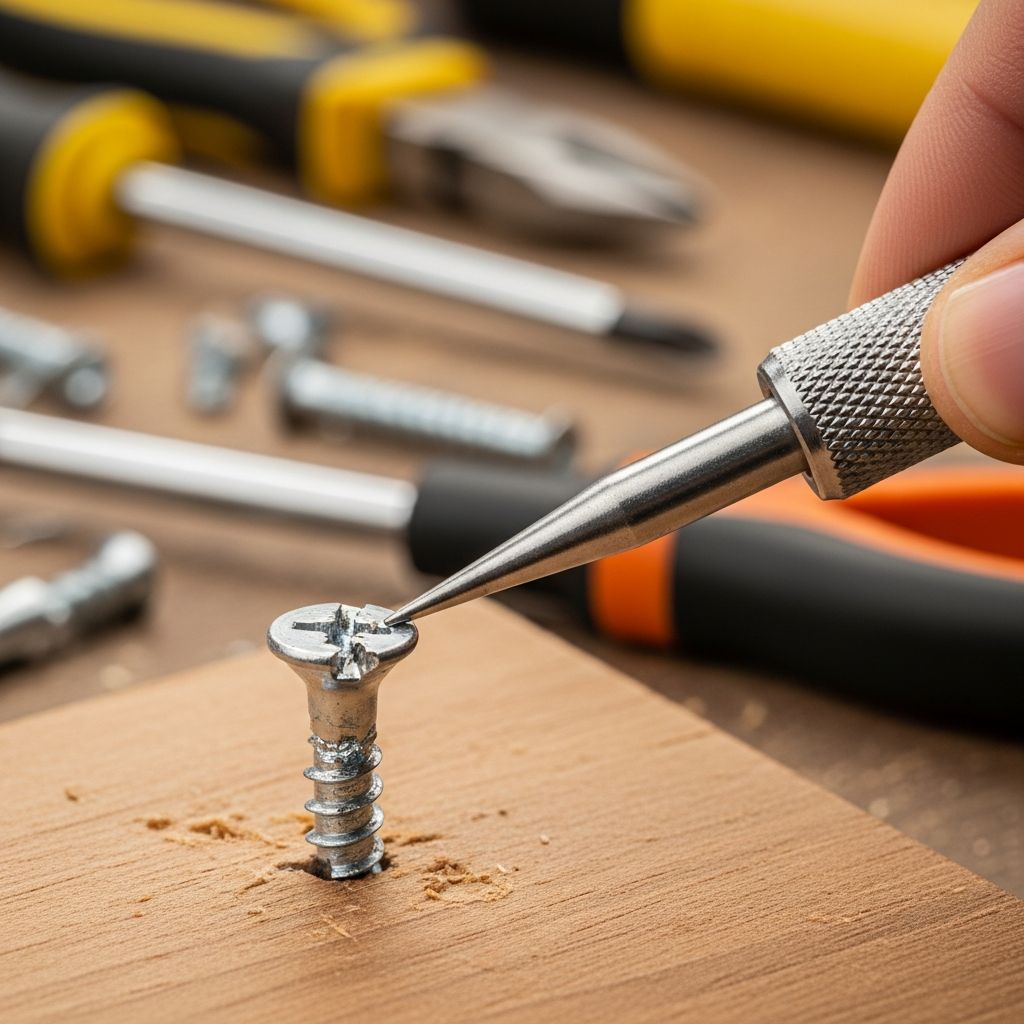
Stripped screws pose a common frustration in DIY projects, woodworking, furniture assembly, and everyday repairs. When the head of a screw becomes worn or rounded, standard screwdrivers slip, halting progress and risking damage to surrounding materials. Understanding why screws strip—often from improper tools, over-tightening, or material mismatch—helps prevent issues, but knowing extraction methods is crucial for resolution. This guide explores practical, tested approaches ranging from simple household hacks to advanced tool-based solutions, ensuring you can tackle any stripped screw with confidence.
Understanding the Problem: Why Screws Strip and How to Spot Them
Screws strip when torque exceeds the head’s grip strength, typically due to mismatched screwdriver bits, excessive force, or worn tools. Phillips heads are particularly vulnerable as their cross design allows cam-out under pressure. Early signs include slipping drivers and visible rounding on the head. Prevention starts with quality tools: use magnetic bits for hold and match sizes precisely. If stripping occurs, act quickly to avoid embedding the screw deeper.
No-Tool Quick Fixes: Household Items That Work Wonders
Not every situation requires a toolbox. Many stripped screws yield to everyday items, making these ideal for minor fixes.
- Rubber Band Grip: Place a wide rubber band over the screw head. Press the screwdriver firmly through it into the grooves. The band adds traction, filling gaps for better bite. Turn slowly counterclockwise with steady downward pressure. Effective for mildly stripped Phillips or slotted screws.
- Steel Wool or Abrasive Pad: Stuff fine steel wool into the head and insert the driver. The fibers conform and grip, often freeing the screw with minimal turns.
- Superglue Trick: Apply a drop of superglue to the screwdriver tip, insert into the head, and let dry for 5-10 minutes. Twist once set—the bond transfers torque directly.
These methods shine in tight spaces or when tools are unavailable, succeeding 70-80% of the time on shallow embeds.
Manual Extraction: Pliers, Punches, and Precision
For screws with some head exposure, manual leverage provides control without power.
- Locking Pliers (Vise-Grips): Clamp firmly on the head’s remnants. The curved jaws with serrations dig in. Apply steady torque while tapping the plier handle with a hammer for shock. Ideal for larger screws.
- Center Punch Technique: Use a center punch and hammer to dimple the screw’s edge. This creates a starting notch for flathead drivers or disrupts threads. Spring-loaded punches work in confined areas.
- Cold Chisel Slot: Score a straight groove across the head with a chisel and hammer. Then use a flathead screwdriver. Caution: Protect nearby surfaces with tape.
| Method | Best For | Pros | Cons |
|---|---|---|---|
| Locking Pliers | Exposed heads | Strong grip, no damage | Needs access |
| Center Punch | Any head type | Creates grip | Requires precision |
| Cold Chisel | Metal screws | Makes flat slot | Risk of surface marks |
Power Tool Power: Drills and Drivers for Stubborn Cases
Power tools accelerate removal, especially for deep or rusted screws. Always wear safety glasses and gloves.
Screw Extractor Bits: The Gold Standard
Double-ended extractors combine a pilot drill and reverse extractor. Select a bit smaller than the screw head.
- Drill a pilot hole in reverse at low speed.
- Flip to extractor end, apply reverse torque with downward pressure.
- The flutes bite and back out the screw.
Sets cost $10-30 and handle most sizes. Brands like Irwin or Bosch are reliable.
Left-Handed Drill Bits
These reverse-thread bits drill while extracting. Use in reverse mode on a variable-speed drill. Start small, increase if needed. Perfect for soft metals.
Impact Driver Advantage
Impact drivers deliver concussive force. Pair with a hex-shank extractor or modified bit. The hammering action breaks rust and grip.
Advanced Solutions: Cutting, Welding, and Last Resorts
When basics fail, escalate to material alteration.
- Rotary Tool Slotting: Use a Dremel with cutoff wheel to carve a deep slot. Flathead will then engage. Mask surroundings to prevent gouges.
- Hollow Extractor: For tiny or hardened screws, drill around with a hollow bit, collapsing the screw. Fill hole with dowel and glue afterward.
- Welded Nut Method: Weld a nut atop the head, then drive with a socket wrench. Requires welding gear; professional for novices.
Dealing with Rusted or Seized Screws
Rust amplifies stripping. Start with penetrating oil like WD-40 or PB Blaster. Soak 1-2 hours, tap sharply with hammer and screwdriver to shock loose. Repeat oil applications. For severe cases, heat with a torch (non-flammable areas only) to expand metal, then extract.
Safety Protocols and Best Practices
Prioritize safety: Secure workpiece in vise. Use low speeds to avoid bit wander. Clear debris frequently. If in softwood, back plates prevent tear-out. Post-removal, countersink new holes and use thread locker for longevity.
Prevention Blueprint: Avoid Stripped Screws Altogether
Proactive habits save time:
- Match bit perfectly; invest in precision sets.
- Drill pilot holes matching screw gauge.
- Avoid over-torquing; stop when snug.
- Opt for Torx or square-drive screws—they resist stripping better.
Frequently Asked Questions (FAQs)
What is the easiest way to remove a stripped screw?
The rubber band method is simplest for beginners—quick, cheap, and effective on lightly damaged heads.
Can I remove a stripped screw without damaging wood?
Yes, use friction methods like rubber bands or extractors. Avoid drilling unless necessary; tape protects surfaces.
What if the screw is completely sunk?
Employ extractors or left-hand bits. For flush screws, grind a slot first.
Are screw extractors worth buying?
Absolutely—a $20 set handles 90% of cases, far better than repeated frustration.
How do I fill holes after extraction?
Match-grain wood dowels with glue, sand flush. Use toothpicks and epoxy for tiny holes.
References
- How to Remove a Broken Screw on the First Try: 9 New Methods — Daitool. 2023-05-15. https://daitool.com/blogs/daitool-blog/how-to-remove-a-broken-screw-on-the-first-try-9-new-methods
- How to Remove a Stripped Screw – 4 Different Ways — YouTube (Ron). 2018-10-20. https://www.youtube.com/watch?v=rpbL8h-7jSY
- How to remove stripped screws – 7 different ways — YouTube (Ultimate Handyman). 2017-09-24. https://www.youtube.com/watch?v=_mTFQbaT3Zc
- What are your tips/tricks for removing or extracting stripped screws? — iFixit. 2009-12-02. https://www.ifixit.com/Answers/View/7393/What+are+your+tips-tricks+for+removing+or+extracting+stripped+screws

Medha Deb is an editor with a master's degree in Applied Linguistics from the University of Hyderabad. She believes that her qualification has helped her develop a deep understanding of language and its application in various contexts. Medha specializes in the areas of beauty, health, sports, and wellness and is committed to ensuring that the content on the website is…