
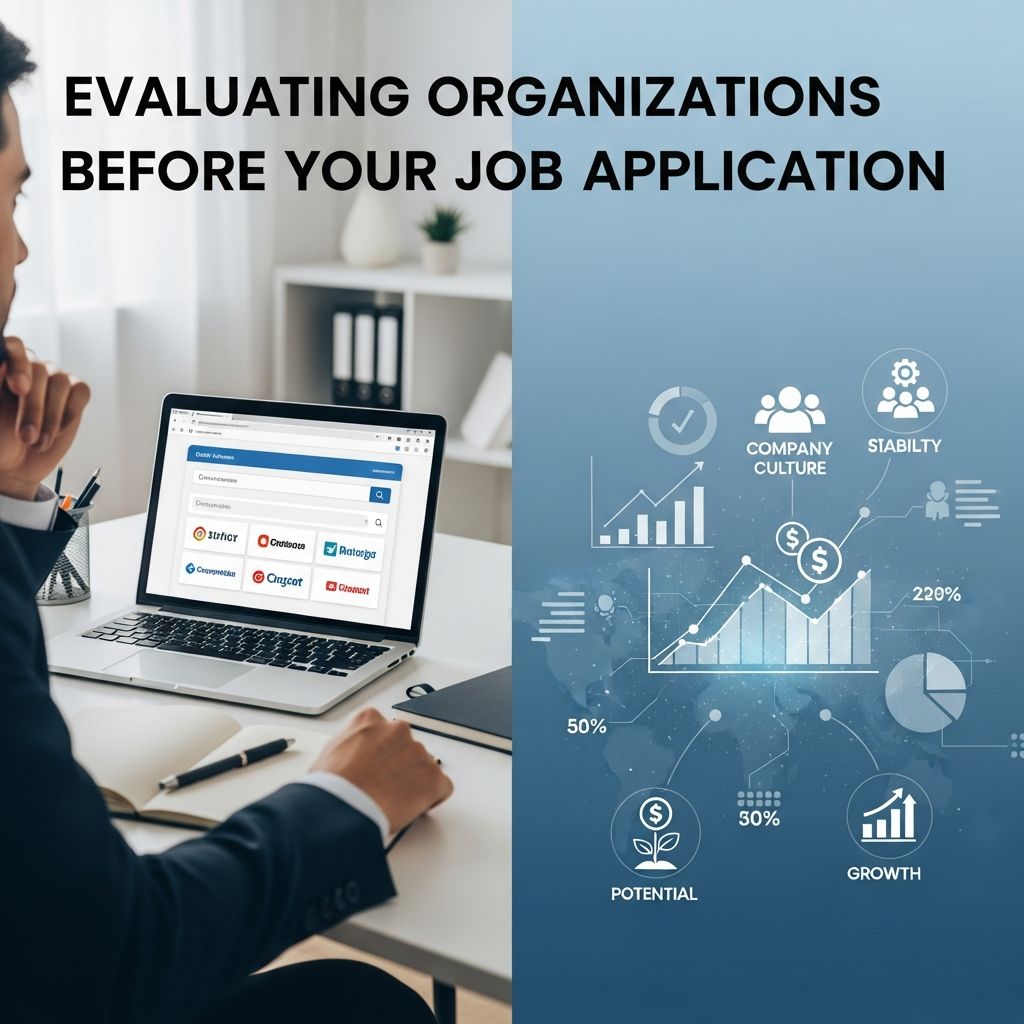
Understanding Why Employer Evaluation Matters in Your Career Journey
Before investing time in an application, cover letter, and interview preparation, taking the opportunity to thoroughly investigate a prospective employer can fundamentally transform your career trajectory. The process of evaluating organizations extends far beyond simply checking if they have openings in your field. It involves gathering intelligence about company culture, growth opportunities, compensation structures, and alignment with your professional values. This strategic approach ensures that the positions you pursue genuinely match your career aspirations and lifestyle preferences.
When you enter an interview with substantial knowledge about an organization, you immediately communicate professionalism and genuine interest. Hiring managers recognize candidates who have invested effort in understanding their company, distinguishing them from applicants who submit generic materials. Beyond the immediate hiring advantage, conducting thorough research protects you from accepting positions that might ultimately create dissatisfaction or misalignment with your career goals.
Establishing Clear Research Objectives Before You Begin
Effective employer evaluation starts with identifying what information matters most to your specific situation. Different career stages and personal circumstances warrant different priorities. A recent graduate might prioritize mentorship opportunities and professional development programs, while an experienced professional might focus on advancement trajectories and executive leadership structures. Establishing these research objectives upfront creates a framework for gathering relevant information efficiently.
Consider developing a personal criteria list that reflects your non-negotiables and preferences. This might include factors such as:
- Compensation and benefits packages relative to industry standards
- Work-life balance expectations and remote work policies
- Diversity and inclusion commitments within the organization
- Geographic location and commute considerations
- Industry sector alignment with your long-term vision
- Company size and the pace of work environment
- Sustainability and corporate social responsibility practices
Leveraging Company Digital Properties as Your Primary Information Source
The official company website serves as your first and most authoritative research destination. Organizations carefully curate their web presence to showcase their strengths, values, and opportunities. Begin by exploring the “About Us” section, which typically provides company history, mission statements, and foundational information. Pay particular attention to the leadership page, where you can identify key decision-makers and understand the organizational hierarchy.
Career or jobs pages offer invaluable insights beyond just open positions. Many organizations detail their company culture, employee testimonials, and workplace benefits here. Look for statements about diversity initiatives, training programs, and career pathways. The news or press release section reveals recent company developments, partnerships, product launches, and market expansions. These announcements indicate the organization’s strategic direction and growth areas.
Examine the products or services pages thoroughly to understand what the company actually delivers and how it serves its market. This knowledge becomes particularly valuable during interviews when you can discuss specific offerings and demonstrate how your skills might contribute to their success. For companies with multiple locations or divisions, understanding the geographic and operational structure helps you determine where you might fit within the larger organization.
Accessing Authentic Employee Perspectives Through Social Media Platforms
Social media channels provide windows into authentic company culture that official websites cannot replicate. LinkedIn company pages display employee counts, follower trends, and content strategy. Follow the company’s LinkedIn account to observe the types of updates they share, which reveals what they consider important enough to highlight publicly. Employee testimonials and success stories on these pages offer candid perspectives on working conditions.
Twitter and other social platforms show how organizations interact with customers, clients, and the broader public. The tone, responsiveness, and content reveal company personality and values in action. A company that responds thoughtfully to customer concerns demonstrates customer-centricity, while one that rarely engages might suggest internal silos or deprioritization of external communication.
Facebook company pages, particularly for consumer-facing businesses, showcase brand identity and customer interaction. Glassdoor reviews, while sometimes subjective, provide aggregated employee feedback about compensation, management quality, work culture, and career advancement opportunities. Look for patterns across multiple reviews rather than weighing individual opinions too heavily. Indeed company reviews, similar to Glassdoor, offer additional perspectives on the employee experience.
Utilizing Professional Networks and Informational Conversations
Your existing professional network represents a gold mine of insider information that no public source can provide. Colleagues, former coworkers, mentors, and industry contacts may have direct experience with organizations you’re researching. These individuals can provide nuanced perspectives on management styles, day-to-day work conditions, and authentic growth opportunities that official materials might present differently.
When reaching out to connections, frame your inquiry respectfully and specifically. Rather than asking vague questions about whether they “know” a company, ask targeted questions such as: “Based on your experience, how does this company support professional development?” or “What would you say is the most challenging aspect of working there?” People are generally willing to provide candid feedback when approached thoughtfully.
Informational interviews represent a more formal approach to gathering intelligence. Reaching out to someone employed at your target company with a request for a brief conversation demonstrates initiative and genuine interest. These conversations allow you to ask detailed questions about department structure, recent projects, team dynamics, and career progression. They also create a relationship with an insider who might provide valuable insights during your formal application process.
Analyzing Financial Health and Market Position Indicators
Understanding an organization’s financial stability and market position helps you assess long-term job security and growth potential. For publicly traded companies, SEC filings and quarterly earnings reports provide official financial statements. These documents reveal revenue trends, profitability, debt levels, and management discussion about business challenges and opportunities.
Industry research databases and business publications offer analyst perspectives on company performance relative to competitors. Understanding whether the company is gaining or losing market share, expanding or contracting, and innovating or stagnating informs your assessment of job stability and advancement potential. Companies experiencing rapid growth often create more opportunities for ambitious employees, while declining organizations might limit advancement.
Competitor analysis provides context for your target company’s market position. Identifying three to five primary competitors and understanding how your target company differentiates itself reveals strategic priorities. A company investing heavily in emerging technologies while competitors lag indicates innovation culture. One focusing on cost reduction while others expand suggests different values and work environment.
Conducting Targeted Research on Specific Departments and Teams
Large organizations function differently across various departments. Understanding the specific area where you might work requires department-level research beyond company-wide investigation. LinkedIn allows you to view employees in specific departments, their titles, and sometimes their previous roles. This reveals typical career progressions within that department and educational backgrounds of successful employees.
When possible, identify the specific team and hiring manager for positions you’re considering. Review their LinkedIn profiles to understand their career history, stated values, and professional interests. People who actively share content about their work, mentor junior employees, or engage professionally online typically foster more supportive team environments. Following potential managers’ activity on LinkedIn provides insight into their management philosophy and communication style.
Department-specific projects, initiatives, and recent accomplishments can be gleaned from company news, LinkedIn updates, and press releases mentioning your target area. Understanding what current projects are underway helps you envision your daily responsibilities and contribution.
Building a Comparative Framework for Decision-Making
Once you’ve accumulated substantial information about multiple prospective employers, organizing this data into a comparison framework streamlines decision-making. Creating a simple spreadsheet with your established criteria as rows and target companies as columns allows visual comparison. Rate or score each company against your identified priorities, creating an objective tool for evaluating opportunities as they arise.
This framework becomes particularly valuable when you’ve successfully progressed through interviews with multiple organizations and must choose between offers. Revisiting your documented research refreshes your memory and provides evidence-based grounds for accepting or declining opportunities.
The comparison process also helps identify gaps in your knowledge. If you realize you haven’t found information about a particular criterion for a company, that becomes a question to ask during interviews or through informational conversations before making final decisions.
Incorporating Research Into Your Interview Strategy
Throughout interviews, demonstrate your research by asking informed questions and connecting your qualifications to company needs. Reference recent company announcements, initiatives, or products to show you’ve done your homework. Ask about your potential team’s involvement in company-wide projects you’ve learned about, or inquire about how the department contributes to strategic goals you’ve identified.
Well-researched candidates typically ask better questions. Rather than inquiring about basic information available on the website, ask questions that reveal your research and indicate genuine interest. For example, “I noticed your company recently expanded into the European market. How is that expansion affecting the hiring needs in this department?” conveys engagement far more effectively than “Tell me about the company culture.”
Your research also prepares you to authentically explain why you’re interested in the specific role and company. Hiring managers can distinguish between candidates pursuing any available job and those specifically interested in their organization. Detailed knowledge demonstrates your selectivity and commitment.
Evaluating Company Culture Alignment Beyond Marketing Messages
Company culture extends beyond fun office perks or stated values. Authentic culture emerges through how organizations handle challenges, treat employees during difficult times, and prioritize competing demands. Look for evidence of culture in action rather than relying solely on marketing language about “collaborative” or “innovative” environments.
Employee retention rates, particularly among mid-level and senior employees, indicate whether people choose to remain long-term. High turnover in specific departments might signal management challenges or unfulfilled promises. Conversely, teams with long-tenured employees suggest stability and satisfaction. Review LinkedIn employment dates for current and recent employees to identify patterns.
Awards and recognitions from external organizations provide third-party validation of company culture claims. “Best Places to Work” designations, industry leadership awards, and employee recognition programs suggest organizations backing up their culture messaging with substantive practices.
Frequently Asked Questions About Employer Research
Q: How much time should I invest in researching a company before applying?
A: Initial research might take 30-45 minutes for companies you’re genuinely interested in. This allows you to gather enough information to determine fit and write a compelling application. Deeper research, including informational interviews, happens only after your initial interest is confirmed.
Q: What if a company has minimal social media presence?
A: Limited social presence might indicate limited resources, a more traditional industry, or focus on private rather than public engagement. Use alternative sources like news archives, industry publications, and direct networking to compensate. This also provides interview questions about their digital strategy and market positioning.
Q: Should I research smaller companies differently than large corporations?
A: Smaller companies may lack extensive public information, making networking and informational interviews more valuable. Founder or leadership backgrounds often reveal culture and values more directly than in large organizations with multiple management layers.
Q: How can I assess compensation fairly across different companies?
A: Use resources like Glassdoor salary reports, PayScale, LinkedIn Salary, and industry-specific salary surveys. Account for geographic variation, experience level, and benefits packages beyond base salary when comparing opportunities.
Q: Is it appropriate to ask about company challenges during interviews?
A: Yes, asking about challenges demonstrates sophistication. Frame it constructively, such as: “What would you identify as the biggest opportunity for growth in this department?” This shows you understand all companies have areas for improvement.
References
- 5 Methods for Researching Prospective Employers — TechBridge Inc. https://techbridgeinc.com/5-methods-for-researching-prospective-employers/
- Best Ways and Places to Research Your Target Employers — Executive Career Brand. https://executivecareerbrand.com/best-ways-and-places-to-research-your-target-employers/
- How to Conduct Employer Research — Texas State University Career Services. https://www.careerservices.txst.edu/students-alumni/resources-services/career-guides/employer-research-guide.html
- What Job Seekers Wish Employers Knew — Boston Consulting Group. 2023. https://www.bcg.com/publications/2023/recruitment-recommendations-for-employers
- Researching Potential Employers: Finding Your Best Fit — Florida State University Career Center. https://career.fsu.edu/sites/g/files/upcbnu746/files/Researching%20Potential%20Employers_1.pdf
- Focused Jobseeking: A Measured Approach to Looking for Work — University of Southern Maine Geography-Anthropology Department. 2022. https://usm.maine.edu/geography-anthropology/wp-content/uploads/sites/148/2022/09/focused-job-seeking.pdf
- The Systematic Job Search — Seattle Central College Career Center. https://seattlecentral.edu/pdf-library/career-center/the-systematic-job-search.pdf

- Integrated M.A. in Applied Linguistics, University of Hyderabad
- 5+ years in editorial, instructional, SEO, and research-based writing
Sneha is a relationships and lifestyle writer with a strong foundation in applied linguistics and certified training in relationship coaching. She brings over five years of writing experience to theskillvault, crafting thoughtful, research-driven content that empowers readers to build healthier relationships, boost emotional well-being, and embrace holistic living. Her writing and insights reflect the belief that beauty, happiness, and wellness…