
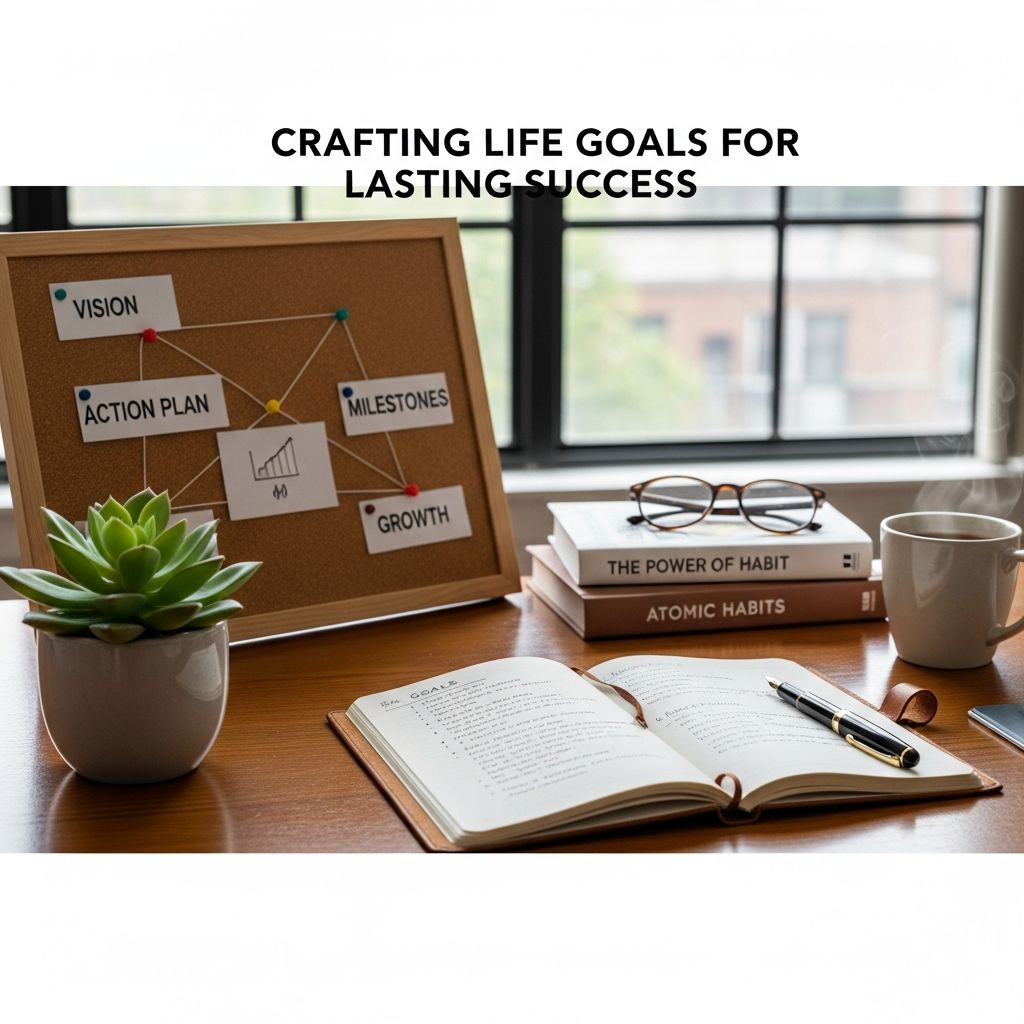
Setting life goals provides a roadmap for personal fulfillment, directing efforts toward areas that matter most. Effective goal-setting combines clarity, realism, and consistent action to yield sustainable progress and joy.
Understanding the Foundation of Purposeful Goals
Life goals emerge from self-reflection on core values and current life balance. Tools like the Wheel of Life help evaluate satisfaction across domains such as health, career, relationships, and growth, revealing priorities for targeted improvement. This assessment visualizes imbalances, guiding individuals to focus where change creates the greatest impact.
Research emphasizes aligning goals with personal values to enhance motivation. Vague aspirations often lead to inaction, while value-driven objectives sustain long-term commitment.
Prioritizing What Truly Matters
Amid numerous desires, selecting a few high-impact goals prevents overwhelm. Identify the “wildly important goal” (WIG)—one objective that, if achieved, advances other areas significantly. For example, improving physical health might boost energy for career productivity and stronger relationships.
- Assess ripple effects: Choose goals influencing multiple life sectors.
- Limit to 1-3 focuses: Multitasking dilutes effort; singular attention sharpens results.
- Reevaluate regularly: Life shifts demand goal adjustments for relevance.
Applying the SMART Framework for Precision
The SMART method transforms ambitions into actionable plans: Specific, Measurable, Achievable, Relevant, Time-bound. Specificity clarifies intent, measurability tracks advancement, achievability ensures feasibility, relevance ties to values, and time-bound deadlines impose urgency.
| SMART Element | Description | Example |
|---|---|---|
| Specific | Define exactly what, who, where, when, why. | Run 5K in under 30 minutes, three times weekly at the park. |
| Measurable | Set criteria for progress tracking. | Log distance and time via app. |
| Achievable | Within resources and skills. | Build from current 3K runs. |
| Relevant | Aligns with broader values. | Supports health for family energy. |
| Time-bound | Include deadlines. | Achieve in 12 weeks. |
This structure boosts success rates by making abstract dreams concrete.
Deconstructing Goals into Manageable Actions
Large goals intimidate; breaking them into incremental steps builds momentum. Focus on small, controllable actions to foster confidence and reduce anxiety. Start with daily or weekly tasks linked to existing habits, like exercise post-coffee.
- Identify milestones: Divide into 4-6 phases.
- Assign timelines: Set weekly checkpoints.
- Track via tools: Use apps, journals, or charts for visibility.
Stacking goals—pairing new behaviors with routines—increases adherence twofold.
From Planning to Consistent Execution
Action bridges planning and results. Begin with quick wins to build habit momentum, then scale up. Implementation intentions specify when, where, and how: “After breakfast, I will meditate for 10 minutes in the living room.”
Visualize success and anticipate obstacles to strengthen resolve. Protect goals by minimizing distractions and conflicting commitments.
Tracking Progress and Making Adjustments
Regular monitoring doubles achievement likelihood. Schedule weekly reviews using Wheel of Life re-assessments to gauge balance shifts. Adjust for barriers:
- Verify alignment with values.
- Resize steps for attainability.
- Address obstacles proactively.
- Leverage support networks.
Celebrate milestones to reinforce behaviors, using scoreboards for motivation.
Overcoming Common Obstacles
Procrastination, burnout, and unrealistic expectations derail progress. Counter by setting upper bounds—avoid overambition—and disengaging from unattainable goals to preserve mental health. Balance specific targets with flexible aspirations to maintain self-esteem.
When stuck, explore underlying beliefs or activate accountability partners.
Sustaining Momentum for Long-Term Fulfillment
Success demands persistence. Focus on process over perfection, recognizing small wins accumulates to transformation. Periodic reflection ensures goals evolve with life.
Incorporate rest and enjoyment to prevent fatigue. Research shows balanced pursuit enhances happiness alongside achievement.
FAQs
What if my goals feel overwhelming?
Break them into tiny steps and prioritize one WIG. Incremental progress reduces pressure.
How often should I review goals?
Weekly for actions, monthly for Wheel of Life to track balance.
Can I have too many goals?
Yes; limit to fewer for focus. Multiple dilute energy.
What tools help track goals?
Apps, journals, scoreboards, or habit trackers.
How do values fit into goal-setting?
Relevant goals align with values for sustained motivation.
References
- Empowering Growth: Strategies for Wheel of Life Goal Setting — Quenza. 2023. https://quenza.com/blog/wheel-of-life-goals/
- The Complete Guide to Goal Setting (Backed by Science) — Good Life Goals. 2024. https://www.goodlifegoals.org/blogs/the-complete-guide-to-goal-setting
- Setting Effective Goals — Psychology Today. 2025-12-01. https://www.psychologytoday.com/us/blog/science-of-choice/202512/setting-effective-goals
- Goal Setting: A Scientific Guide — James Clear. 2023. https://jamesclear.com/goal-setting
- 5 Effective Goal-Setting Strategies — FranklinCovey. 2024. https://www.franklincovey.com/blog/blueprint-for-achievement-mastering-goal-setting-strategies/
- How to Create an Action Plan to Achieve Your Goals — Harvard Extension School. 2024. https://extension.harvard.edu/blog/how-to-create-an-action-plan-to-achieve-your-goals/

- Integrated M.A. in Applied Linguistics, University of Hyderabad
- 5+ years in editorial, instructional, SEO, and research-based writing
Sneha is a relationships and lifestyle writer with a strong foundation in applied linguistics and certified training in relationship coaching. She brings over five years of writing experience to theskillvault, crafting thoughtful, research-driven content that empowers readers to build healthier relationships, boost emotional well-being, and embrace holistic living. Her writing and insights reflect the belief that beauty, happiness, and wellness…