
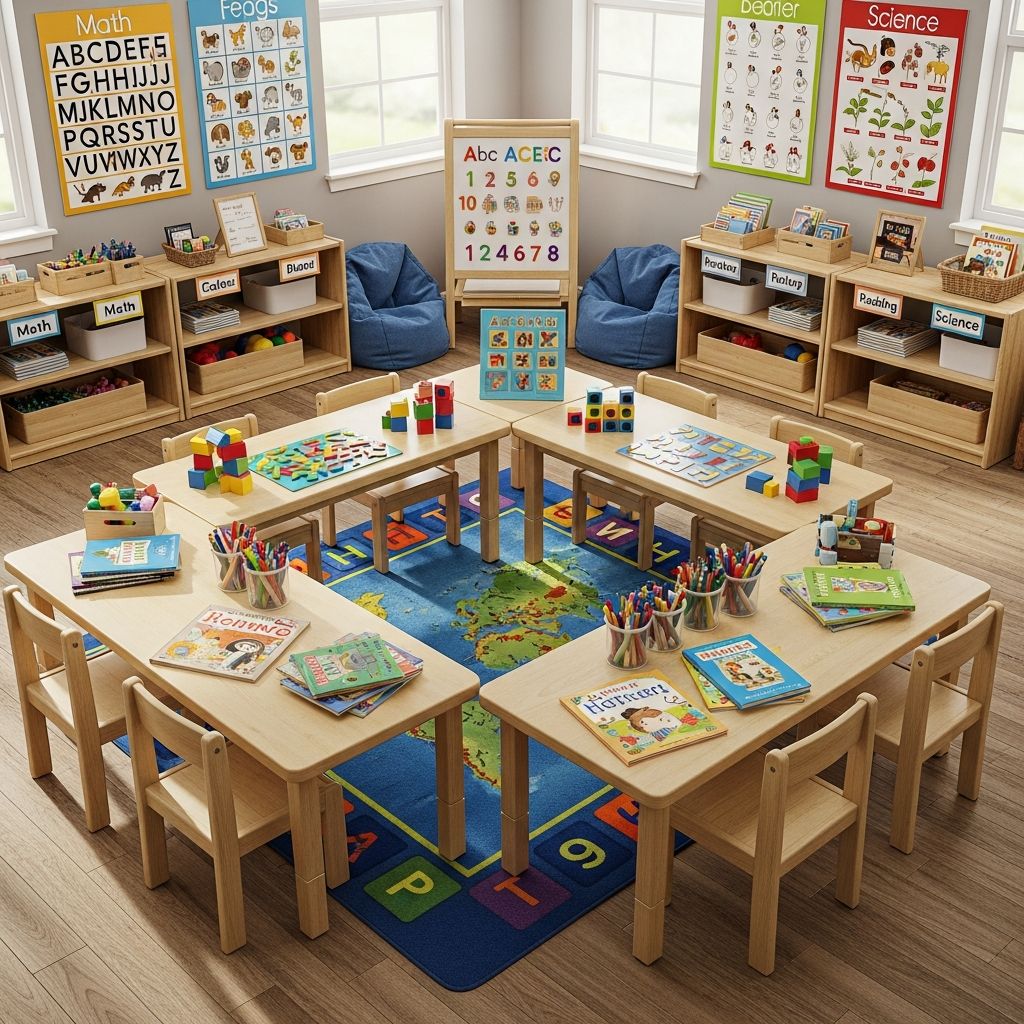
Learning centers transform traditional classrooms into vibrant hubs of discovery, allowing students to engage in targeted, hands-on activities tailored to their needs. These structured yet flexible zones promote active learning, collaboration, and individualized progress, making them indispensable for modern educators.
Why Learning Centers Matter in Today’s Classrooms
Centers shift the focus from teacher-led instruction to student-driven exploration, aligning with developmental theories that emphasize play-based and experiential learning. Research from educational authorities highlights how such setups enhance cognitive skills, social interaction, and retention by catering to diverse learning styles. In early childhood and elementary settings, they build independence, problem-solving, and self-regulation—key predictors of long-term academic success.
For instance, centers enable simultaneous practice of multiple skills, from literacy to math, while freeing teachers to provide small-group interventions. This differentiation ensures no student falls through the cracks, particularly benefiting diverse learners including those with special needs.
Planning Your Learning Center Framework
Successful implementation begins with intentional planning. Start by assessing your classroom’s physical layout, student demographics, and curriculum goals to determine the ideal number of centers—typically 4 to 6 for optimal management without overwhelming space.
Consider these foundational steps:
- Schedule Allocation: Dedicate a consistent daily or weekly block, such as 45 minutes, divided into 10-15 minute rotations. This allows coverage of all centers over a few days.
- Student Grouping: Form heterogeneous or leveled groups of 3-5 students based on skills like reading levels to facilitate targeted support.
- Resource Inventory: Catalog existing materials and identify gaps, prioritizing durable, multi-use items that match developmental stages.
| Factor | Considerations | Best Practices |
|---|---|---|
| Class Size | 20-30 students | 4-6 centers with 4-5 students each |
| Age Group | Preschool-Grade 3 | Incorporate play-based, sensory-rich activities |
| Time Block | 30-60 minutes | Include transition buffers (2-3 minutes) |
Optimizing Classroom Space for Dynamic Flow
Effective spatial design prevents chaos and maximizes engagement. Prioritize traffic flow by creating wide pathways between centers, positioning noisy areas (e.g., blocks or music) away from quiet zones (e.g., reading nooks). Messy activities like sensory bins or art should be near sinks for easy cleanup.
Use visual delimiters to define boundaries:
- Shelving units or low dividers to separate zones without blocking sightlines.
- Color-coded rugs or floor tape for intuitive navigation.
- Strategic furniture placement, ensuring the teacher can monitor all areas from key vantage points.
In smaller rooms, opt for modular setups like wall-mounted shelves or stackable bins. Always include ample storage for rotations, labeling everything with pictures and words to support emerging readers.
Designing Engaging Center Activities
Centers should blend open-ended exploration with skill-specific tasks, rotating materials weekly to sustain interest. Tailor activities to curriculum standards while incorporating cross-curricular links for deeper learning.
Core Center Ideas with Implementation Tips
- Reading and Literacy Nook: Stock with leveled books, audiobooks with headphones, and prompts for retelling stories. Add magnetic letters for word-building to boost phonics skills.
- Math Exploration Station: Feature manipulatives like counters, pattern blocks, and measuring tools. Integrate literacy via number stories or shopping simulations with play money.
- Sensory and Science Discovery: Offer textured bins with rice, water beads, or natural items. Include magnifiers and simple experiments to spark inquiry, with trays for contained play.
- Art and Creativity Hub: Provide recyclables, paints, and collage materials. Encourage pattern designs or shape collages to tie into math objectives.
- Dramatic Play Corner: Equip with diverse props like multicultural dolls, costumes, and role-play scenarios (e.g., kitchen or clinic). Mirrors and soft lighting enhance immersion.
- Technology and Listening Post: Use tablets for interactive apps or headphones for music/rhythm activities. Visual aids like emotion cards support emotional learning.
For inclusivity, incorporate adaptive tools: larger grips on instruments, picture communication supports, and diverse representations in play props.
Grouping and Rotation Strategies
Strategic grouping maximizes learning. Skill-based clusters ensure peers challenge each other appropriately, while color-coded schedules clarify rotations. Rotate daily or bi-weekly to expose students to varied dynamics.
Sample Weekly Rotation Table:
| Day | Group A | Group B | Group C | Group D |
|---|---|---|---|---|
| Monday | Center 1 | Center 2 | Teacher-Led | Center 4 |
| Tuesday | Center 3 | Teacher-Led | Center 1 | Center 2 |
| Wednesday | Center 4 | Center 3 | Center 2 | Teacher-Led |
Assign rotating roles within groups—timer, materials manager, reporter—to foster responsibility.
Introducing Centers: Building Routines Step-by-Step
Avoid overload by rolling out one center weekly. Demonstrate procedures explicitly: model usage, have students practice, then peer-teach. Post visual rules at each station (e.g., ‘Clean before rotate’).
Week 1 Focus: Independence training. Circulate instead of leading a group, troubleshooting logins or conflicts. By week 2, transition to full rotations with teacher-led small groups.
Classroom Management Essentials
Clear expectations prevent disruptions. Establish universal rules: tidy workspaces, respect materials, quiet voices in calm zones. Use timers for seamless transitions and checklists for cleanup.
Timers and signals (e.g., chimes) cue rotations. Monitor via roaming checks, intervening early on off-task behavior. Data tracking—via checklists or apps—guides adjustments.
Essential Supplies Checklist
- Storage bins and labels (plastic preferred for durability).
- Headphones and charging stations for audio tasks.
- Manipulatives, books, and art supplies in multiples for groups.
- Timers, visual schedules, and rule posters.
- Adaptive items: textured tools, PECS cards.
Overcoming Common Challenges
Issue: Uneven Participation Solution: Pair buddies and offer choice boards.
Issue: Mess and Cleanup Solution: Pre-portioned trays and photo ‘before/after’ guides.
Issue: Time Overruns Solution: Staggered starts and audible timers.
For mid-year starts, hold a class meeting to reset routines, mirroring back-to-school protocols.
Frequently Asked Questions (FAQs)
What is the ideal number of students per center?
3-5 students ensure collaboration without overcrowding, accommodating most elementary classes effectively.
How do I differentiate for special needs students?
Incorporate visuals, adaptive tools, and paired activities; align materials to IEPs for inclusive access.
Can learning centers work in large classes?
Yes, with 5-6 centers and half-class rotations (one with teacher, one independent), scaling activities accordingly.
How often should I rotate materials?
Weekly or bi-weekly to maintain novelty; theme around units for relevance.
What if students finish early?
Provide extension cards or ‘helper’ tasks like peer mentoring or quiet reading.
References
- Setting Up Learning Centers in the Classroom — Teaching with Kaylee B. 2023-01-15. https://www.teachingwithkayleeb.com/set-up-learning-centers-in-the-classroom/
- Setting Up Learning Centers in Early Childhood Classrooms — Parent App Blog. 2024-05-20. https://www.parent.app/blog/learning-centers-in-early-childhood-classrooms
- Student-Centered Learning Environment Best Practices: Learning Centers — New York State Education Department. 2023-08-10. https://www.nysed.gov/early-learning/student-centered-learning-environment-best-practices
- Learning Centers: A Complete Guide for Teachers — Teach Starter. 2024-02-12. https://www.teachstarter.com/us/blog/how-to-set-up-learning-centers-classroom/
- Set Up Centers the Easy Way: 10 Quick Steps — Dr. Lori Friesen. 2023-11-05. https://www.drlorifriesen.com/blog/centers

Medha Deb is an editor with a master's degree in Applied Linguistics from the University of Hyderabad. She believes that her qualification has helped her develop a deep understanding of language and its application in various contexts. Medha specializes in the areas of beauty, health, sports, and wellness and is committed to ensuring that the content on the website is…