
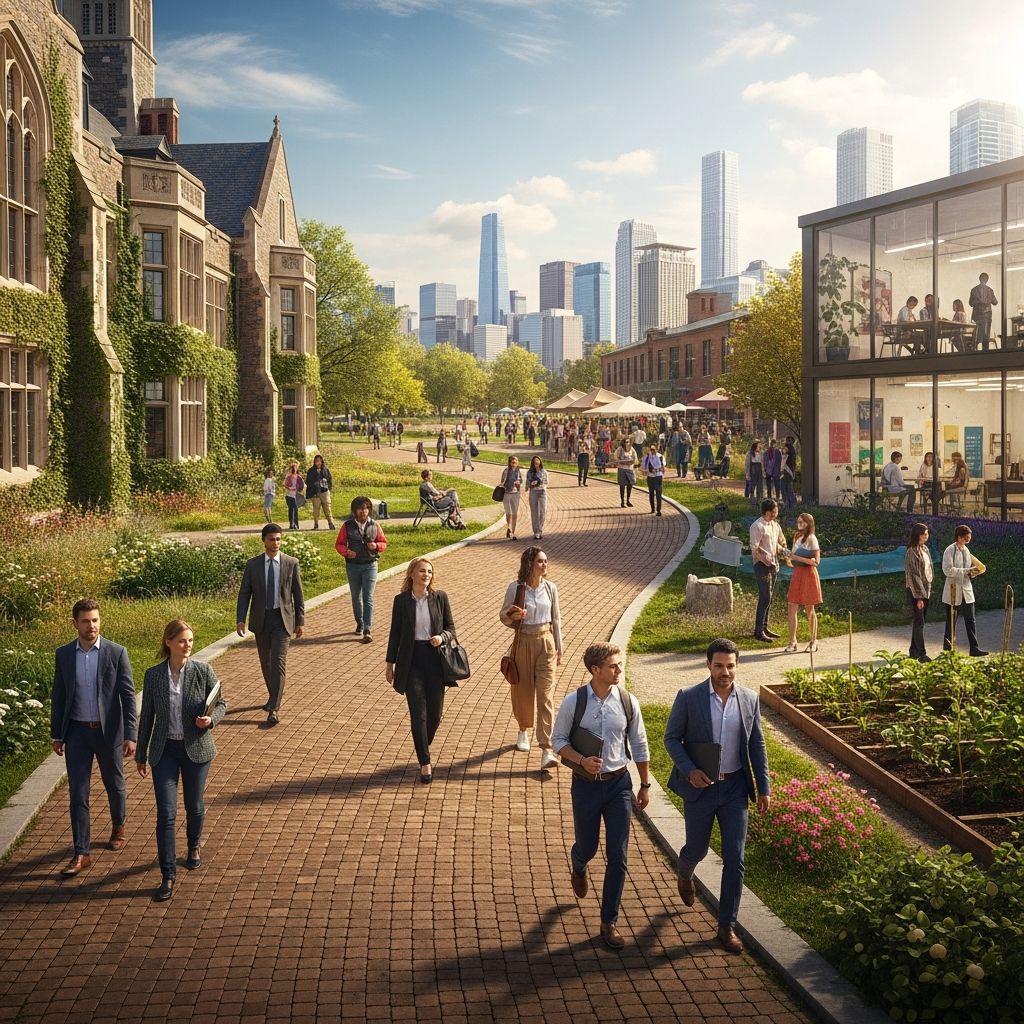
The transition from college to professional life represents one of the most significant turning points in a person’s journey. While graduation marks the completion of an academic chapter, it simultaneously opens the door to a new phase where the skills, relationships, and mindset developed during university years directly influence long-term career trajectory. Understanding what separates those who thrive professionally from those who struggle begins with recognizing that post-graduation success is not determined by a single factor but rather by a constellation of intentional decisions and preparations made throughout the undergraduate experience.
The Foundation: Why College Preparation Matters for Career Outcomes
Many students approach their university years with a narrow focus on earning a degree, viewing graduation as the ultimate goal. However, research demonstrates that institutions measuring student success increasingly look beyond degree completion to post-graduation employment rates, earnings trajectories, and career satisfaction. This shift in perspective reveals an important truth: the value of higher education is fundamentally tied to how well it prepares graduates for meaningful work.
The disconnect between academic preparation and professional readiness has become increasingly apparent. While traditional curricula excel at building theoretical knowledge, they often fall short in equipping students with the practical competencies employers demand. This gap explains why some graduates find themselves competing for entry-level positions despite holding advanced degrees, while others transition seamlessly into fulfilling careers. The difference frequently lies not in academic performance but in how strategically students leveraged their college years to build professional capital.
Developing Practical Skills Alongside Academic Learning
Employers consistently prioritize candidates who combine subject-matter expertise with hands-on experience. Yet many college curricula prioritize theoretical frameworks over applied learning. This creates a fundamental challenge: students graduate with knowledge but lack the practical competencies needed to execute that knowledge in real-world contexts.
Forward-thinking institutions address this gap by offering skills-based supplementary programs alongside traditional degrees. These might include:
- Micro-credentialing courses that provide recognized certifications in specific competencies
- Professional licensing opportunities integrated into degree programs, particularly in fields like education, healthcare, and engineering
- Online skills development modules that students can complete alongside their major coursework
- Technical training programs that teach industry-standard tools and software
Students who graduate with evidence of practical skills gain a significant competitive advantage when entering job markets. Rather than waiting until after graduation to acquire these competencies, proactive learners identify skill gaps related to their target careers and systematically fill them during their undergraduate years. This approach transforms the college experience from passive knowledge consumption into active career preparation.
The Irreplaceable Value of Direct Work Experience
Perhaps no single factor influences post-graduation employability more than prior work experience. Many entry-level positions still require candidates to demonstrate one year of relevant experience, yet most college curricula do not provide this during academic coursework. This seemingly circular requirement—needing experience to get your first job—has become a major obstacle for recent graduates.
Internships represent the most direct pathway to bridging this experience gap. Strategic internship placement provides multiple simultaneous benefits:
| Benefit | Impact on Post-Graduation Success |
|---|---|
| Real-world skill application | Students practice competencies in authentic contexts, building confidence and competence |
| Professional network development | Interns establish relationships with potential employers, mentors, and peers in their field |
| Industry insight | Direct exposure to workplace culture and expectations allows informed career decisions |
| Resume credibility | Relevant experience makes graduates significantly more competitive for full-time positions |
| Employer pipelines | Many internships convert directly to permanent positions or strong job referrals |
The most successful graduates typically complete multiple internships across their college years, progressively taking on more responsibility. This cumulative experience transforms them from candidates discussing what they hope to accomplish into professionals discussing what they have already accomplished.
Strategic Networking: Building Professional Capital
Professional networks function as invisible infrastructure that dramatically accelerates career advancement. Yet many students view networking as something to pursue after graduation, missing crucial years of relationship-building opportunities. In reality, the connections established during college years often prove more valuable than credentials alone.
Research indicates that 75% of recent graduates credit faculty members as the most important contributor to their success, yet this represents only one dimension of beneficial relationships. Effective networking during college extends across multiple categories:
- Faculty mentors who understand your goals and can provide guidance, letters of recommendation, and industry introductions
- Industry professionals met through campus events, internships, and informational interviews who become informal advisors
- Peer networks consisting of classmates who will eventually populate your field and become professional collaborators
- Alumni connections representing a pre-established network at countless organizations who understand your institution’s preparation
The quality of networking depends on intentionality and follow-through. Students who attend career fairs passively collect business cards accomplish little, while those who research speakers beforehand, ask thoughtful questions, and follow up with personalized messages begin building genuine professional relationships. Colleges that combine networking events with skills workshops—teaching students how to communicate effectively, follow professional etiquette, and build relationships—maximize the return on these networking opportunities.
Clarity of Direction: The Competitive Edge of Career Planning
Indecision and lack of direction create friction that impedes graduation and extends the transition into careers. Students who arrive at graduation with a clear understanding of their desired career path and the steps required to achieve it demonstrate markedly higher post-graduation success rates. This clarity serves multiple functions simultaneously.
First, it enables strategic course selection. Rather than taking electives randomly, purposeful students select courses that build specific competencies aligned with their goals. Second, it directs extracurricular engagement—club membership, projects, and activities chosen to strengthen target skills rather than fill time. Third, it focuses internship search toward roles that provide relevant experience and industry exposure. Fourth, it informs networking conversations, as students who understand their direction can articulate specific interests when speaking with professionals.
Career education and early exposure to different professions help students make informed decisions about majors and career paths, reducing unnecessary major changes and extension of graduation timelines. Institutions that embed career exploration into early academic years—freshman seminars dedicated to professional assessment, sophomore-level career development courses, and ongoing advising—help students develop this clarity early enough to benefit their entire educational trajectory.
The Role of Career Services: Often Underutilized Assets
Most colleges employ career services professionals whose expertise directly addresses post-graduation success, yet significant gaps exist in student awareness and utilization of these services. While 24% of recent graduates reported finding jobs with career services help, this percentage suggests substantial untapped potential.
The disconnect between available services and student engagement reflects several factors. First, many students underestimate how early career preparation should begin, believing career services become relevant only in final semesters. Second, some perceive career services as limited to resume review and job posting databases rather than recognizing the broader strategic guidance available. Third, students sometimes hesitate to reach out, uncertain about what constitutes appropriate requests.
Maximizing career services requires institutional coordination where career services staff and faculty work closely together, aligned toward helping students develop professional readiness. When professors encourage students to visit career advisors, faculty members directly support career counseling efforts, and administrators prioritize the career-services-faculty partnership, student engagement increases significantly.
Building Soft Skills That Employers Value Consistently
While technical knowledge and industry-specific skills vary by field, employers universally prioritize competencies that transcend specific job descriptions. These soft skills—critical thinking, problem-solving, communication, collaboration, and adaptability—determine how effectively professionals apply their technical knowledge in dynamic work environments.
College provides abundant opportunities to develop these competencies, though students must pursue them intentionally. Group projects in classes teach collaboration. Public speaking in presentations builds communication skills. Research papers develop critical thinking and synthesis abilities. Leadership roles in student organizations cultivate decision-making and conflict resolution competencies. Yet students who view these activities as merely academic requirements rather than professional development opportunities minimize their impact.
Graduates who explicitly recognize and articulate how their college experiences built soft skills emerge as significantly more competitive candidates. Rather than simply listing “group project” on a resume, they describe specific problems solved, disagreements navigated, and outcomes achieved—directly connecting academic experiences to workplace-relevant competencies.
Understanding Industry Expectations and Workplace Realities
The academic environment, despite its rigor and sophistication, differs fundamentally from professional workplaces in culture, communication style, pace, and expectations. Students who graduate without understanding these differences experience unnecessary friction during their first career transitions.
Internships and informational interviews provide windows into workplace reality. By directly observing how professionals spend their time, prioritize work, communicate across hierarchies, and navigate organizational politics, students develop realistic expectations. This prevents the common post-graduation shock where new employees discover that workplace success depends not only on technical excellence but also on stakeholder management, political awareness, and communication effectiveness.
Additionally, direct workplace exposure helps students identify whether particular career paths align with their actual preferences and strengths. A student who theoretically loves finance but discovers through internship experience that they dislike spreadsheet-heavy work can pivot before graduating and substantially investing in a wrong direction. This course correction, facilitated by early work exposure, represents one of career education’s most valuable functions.
Creating Psychological Confidence for Career Transitions
Students who feel successful during their college careers are more likely to continue feeling successful in their professional careers and to perceive their educational investment as valuable. This psychological dimension of success carries practical importance—confident graduates approach job searches strategically, interview more effectively, and persist through initial rejections rather than abandoning their goals.
Conversely, students who complete degrees without having contributed to projects, presented to audiences, solved complex problems, or received recognition for accomplishments arrive at graduation psychologically unprepared for professional challenges. The self-efficacy—the belief in one’s capability to succeed—that distinguishes thriving graduates from struggling ones often traces directly to experiences accumulated during university years.
Institutions and individual students can deliberately cultivate this confidence by seeking progressively challenging experiences, seeking feedback, and actively reflecting on capability growth. Students who can articulate specific examples of obstacles overcome, problems solved, and skills acquired demonstrate the psychological foundation necessary for navigating career transitions successfully.
Measuring What Matters: Post-Graduation Outcomes as Success Metrics
A fundamental shift in how educational success is measured influences the strategies students should employ. Rather than measuring success solely by graduation rates or GPA, institutions increasingly evaluate their effectiveness through employment rates, graduate earnings, career satisfaction, and loan default rates.
This evolution in metrics reflects a crucial reality: degrees without corresponding career outcomes provide limited value to students. When institutions directly tie their reputation to graduate employment and satisfaction, they invest more resources in career preparation programming, internship facilitation, and alumni tracking. Students benefit from these institutional priorities by gaining access to better career development resources and clearer pathways to professional success.
Understanding this shift helps students make better decisions about how to invest their college time. Rather than asking “Will this look good on my transcript?” successful students ask “Will this build the capabilities and experiences that lead to meaningful employment and career satisfaction?” This reframing transforms college from a credential-accumulation exercise into genuine professional preparation.
Frequently Asked Questions
When should I begin thinking about post-graduation career success?
Career preparation should begin during freshman year. Early focus allows you to strategically select courses, identify relevant internships, and develop professional networks across your entire college tenure rather than scrambling in final semesters.
n
Is it too late to prepare for career success if I’m already a junior or senior?
No, but time constraints require more intensive effort. Senior internships, accelerated skill-building, and focused networking can still substantially improve graduation readiness, though students who began earlier typically enjoy greater competitive advantages.
n
How do I know which skills employers actually want?
Research job postings in your target field, conduct informational interviews with professionals, and consult with your institution’s career services office. These resources reveal consistent patterns in what employers prioritize, allowing you to develop targeted competencies.
n
Can I be successful after graduation without internship experience?
While possible, it becomes substantially more challenging. Entry-level positions increasingly require prior experience, and internships provide the most accessible pathway to gaining it while still in school. If internships weren’t available, emphasize related work experience, projects, and skills developed through other means.
n
How important are grades for post-graduation success?
Grades matter primarily for initial job screening at large companies. Once you secure your first position and accumulate experience, professional accomplishments become far more important than GPA. However, strong grades during early college years can facilitate internship placement and networking opportunities that ultimately prove more valuable.
Conclusion: Intentionality Creates Opportunity
Post-graduation success is not an accident or a matter of luck. Rather, it represents the accumulated effect of deliberate choices made throughout college years—choices about how to invest time, which experiences to pursue, which skills to develop, and which relationships to cultivate. Students who approach their college years understanding that graduation marks a beginning rather than an ending, and who strategically build professional capital alongside academic knowledge, transition into careers with advantages that compound across their working lives. The investment in intentional career preparation during college years yields returns far exceeding the relatively modest effort required, making it perhaps the most practical and rewarding dimension of the undergraduate experience.
References
- What Can Schools Do to Better Promote Post-Graduation Success? — Jenzabar. 2024. https://jenzabar.com/blog/what-can-schools-do-to-better-promote-post-graduation-success
- Preparing for Life After College: The Top 10 Student Survey Insights — Inside Higher Ed. 2024-02-01. https://www.insidehighered.com/news/student-success/life-after-college/2024/02/01/life-after-college-survey-top-10
- Post-Secondary Success Is the New Student Success Metric — High Point. 2024. https://www.highpoint.io/blog/post-secondary-success-new-student-success-metric/
- Preparing Students for Life After Graduation — Chronicle of Higher Education. 2024. https://sponsored.chronicle.com/preparing-students-for-life-after-graduation/index.html
- Why Career Education is Core to Student Retention Initiatives — Career Leadership Collective. 2024. https://www.careerleadershipcollective.com/post/why-career-education-is-core-to-student-retention-initiatives

- Integrated M.A. in Applied Linguistics, University of Hyderabad
- 5+ years in editorial, instructional, SEO, and research-based writing
Sneha is a relationships and lifestyle writer with a strong foundation in applied linguistics and certified training in relationship coaching. She brings over five years of writing experience to theskillvault, crafting thoughtful, research-driven content that empowers readers to build healthier relationships, boost emotional well-being, and embrace holistic living. Her writing and insights reflect the belief that beauty, happiness, and wellness…