
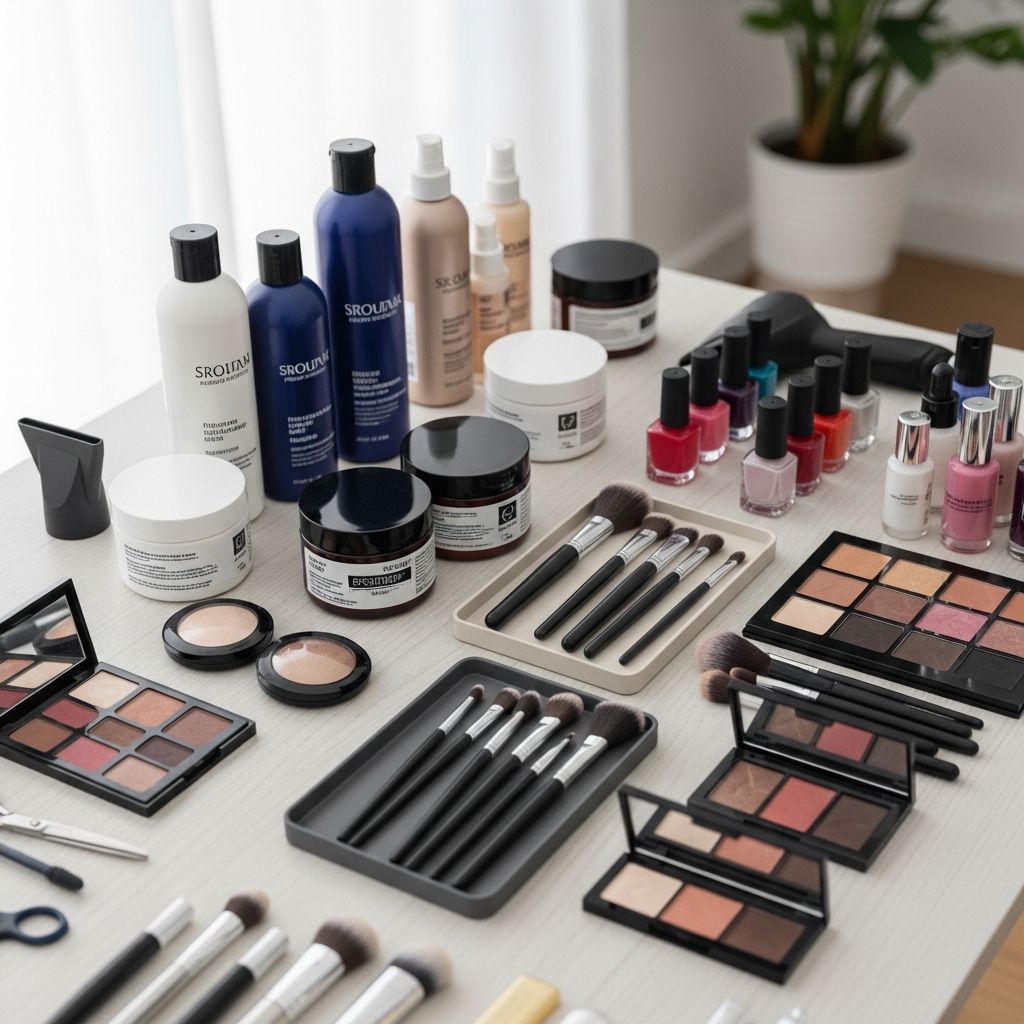
Establishing Your Beauty Supply Business Foundation
Starting a beauty supply business requires more than enthusiasm; it demands a strategic approach grounded in thorough planning and market understanding. The beauty industry continues to expand, offering significant opportunities for entrepreneurs willing to invest time in proper preparation. Whether you envision a brick-and-mortar store, an online platform, or a hybrid model, the foundation you build during the planning phase will determine your long-term success.
The first critical step involves articulating a clear vision for your enterprise. This means defining what makes your beauty supply business distinct from existing competitors. Your mission statement should communicate your primary objectives concisely, specifying the product categories you intend to stock and the customer segments you aim to serve. Crafting this statement forces you to think critically about your niche and helps guide every subsequent decision.
Conducting Comprehensive Market Analysis
Before committing significant resources, invest time in understanding your local or online market landscape. This research protects you from stocking products that lack demand and helps you identify underserved customer needs. Begin by speaking directly with potential customers—independent stylists, salon owners, and beauty professionals who will comprise your core clientele. Ask these professionals about product preferences, brands they struggle to find, and pricing expectations.
Simultaneously, analyze your competitive environment from multiple angles. Online competitors require digital reconnaissance through SEO analysis tools to understand their market positioning and visibility. For physical competitors, conduct in-person visits to observe their store layout, inventory choices, pricing strategies, and customer service approach. These observations reveal gaps you can exploit, whether through superior product selection, competitive pricing, or specialized expertise.
Document your findings systematically. Create a preliminary budget based on industry cost estimates, ensuring your financial expectations align with market realities. Research commercial real estate options if you plan a physical location, understanding rental costs in your target area and how this impacts your overall investment requirements.
Establishing Your Legal and Financial Framework
Transitioning from concept to legitimate business requires navigating several legal and regulatory requirements. Most successful beauty supply entrepreneurs choose a Limited Liability Company (LLC) structure, which protects personal assets from business liabilities while offering operational flexibility. However, your specific situation may benefit from alternative structures like an S Corporation if tax optimization becomes important as you scale. Consulting with a certified public accountant ensures you make tax-efficient decisions tailored to your financial circumstances.
Securing the necessary licenses and permits protects your business legally and establishes credibility with suppliers and customers. Begin by obtaining an Employer Identification Number (EIN) from the IRS, which you’ll need for tax purposes and opening business bank accounts. Next, apply for a state seller’s permit or resale certificate, enabling you to purchase inventory at wholesale prices without paying sales tax. Most municipalities require a general business license, which typically costs between $50 and $400, with processing times of two to four weeks. If operating a physical store, you’ll also need a Certificate of Occupancy confirming your location meets safety and zoning requirements.
Choosing Your Operating Model
Your business model fundamentally shapes your operational complexity, capital requirements, and scalability potential. Three primary models dominate the beauty supply sector, each with distinct advantages and challenges.
The dropshipping model minimizes upfront investment by eliminating inventory holding. Customers place orders through your online storefront, you forward those orders to suppliers, and products ship directly to customers. This approach suits entrepreneurs with limited capital, as you avoid warehouse expenses and inventory management complexity. However, you sacrifice quality control and face challenges building brand loyalty when suppliers handle fulfillment.
The wholesaling and warehousing model provides maximum control over product quality, inventory levels, and shipping timelines. You purchase products in bulk, maintain them in warehouse space, and sell through your online or physical channels. This model requires substantial upfront capital for inventory and storage space but enables you to monitor compliance, manage customer expectations, and respond quickly to demand fluctuations.
The manufacturing model positions your business as a brand owner rather than a reseller. You develop exclusive products manufactured under your brand name, giving you complete control over formulations, packaging, and brand identity. This approach demands significant research and development investment plus the challenge of identifying reliable manufacturers, but it creates defensible competitive advantages and higher profit margins.
Developing a Comprehensive Business Plan
Your business plan serves multiple critical functions: it provides a roadmap for your decision-making, attracts potential investors, and helps secure financing. A strong plan should span 10-15 pages and cover several essential components.
Your executive summary condenses your entire concept into a brief, compelling overview that captures the reader’s attention immediately. The market analysis section demonstrates your understanding of industry trends, competitive positioning, and customer demographics. Include data on market size, growth projections, and specific insights about your target customers’ preferences and purchasing behaviors.
The operational plan outlines how you’ll manage day-to-day activities, from inventory management to customer service protocols. Include timelines for major milestones, such as securing your location, hiring staff, and launching marketing campaigns. Your financial projections should forecast revenue, expenses, and profitability across at least five years. Be realistic about startup costs, which typically range from $50,000 to $250,000 depending on your model and location.
The marketing strategy should specify where and how you’ll reach customers, including pricing approaches, promotional tactics, and customer acquisition costs. Finally, your management team section outlines the expertise and roles of key personnel, demonstrating that you have the capabilities to execute your vision.
Securing Adequate Startup Capital
Most beauty supply entrepreneurs need external financing to launch successfully. Several funding mechanisms can bridge the gap between your savings and your capital requirements.
SBA 7(a) loans represent a common choice, typically offering between $50,000 and $250,000 at favorable terms. Lenders generally require a credit score exceeding 680 and a detailed business plan with realistic financial projections. Rather than applying with just a business concept, successful applicants present comprehensive financial models showing startup costs, monthly operating expenses, and revenue forecasts.
Small business grants offer non-dilutive funding, though competition can be intense. Organizations like the Amber Grant for Women specifically support female entrepreneurs in launching new ventures. Additionally, major beauty brands sometimes offer funding programs to retailers aligned with their mission, effectively subsidizing your inventory purchases while building their distribution networks.
Alternative financing includes business lines of credit, equipment financing for point-of-sale systems and shelving, and personal investments from family or friends. Many successful entrepreneurs also start with a lean approach, launching online through platforms like Etsy or eBay while reinvesting early profits to expand inventory gradually.
Building and Training Your Team
Your team’s expertise directly impacts customer satisfaction and business growth. The hiring process should prioritize industry knowledge over general retail experience. Your first key hire—a Store Manager—oversees daily operations and typically commands a salary between $45,000 and $65,000 annually. This person should understand beauty industry standards and possess strong leadership capabilities.
Beauty Advisors representing your customer-facing team should preferably hold active cosmetology or esthetician licenses, earning between $15 and $25 per hour. Professional customers expect advice from knowledgeable specialists who understand product formulations, application techniques, and industry best practices. Licensed staff instantly establish credibility and justify premium pricing to professionals.
Once your team is in place, implement scheduling software like Homebase or When I Work to organize shifts and track labor costs against sales metrics. This transparency helps you maintain budget discipline and identify productivity patterns. As you scale, use the sales-per-employee ratio—targeting approximately $120,000 in annual revenue per full-time employee—to guide hiring decisions.
Creating Your Physical or Digital Storefront
Whether you operate a brick-and-mortar location or online platform, your storefront communicates your brand identity and values to customers. For physical stores, invest in professional layout design that facilitates product discovery and encourages impulse purchases. Organize products by category and professional use case, making it easy for stylists to find professional-grade shampoos separate from retail consumer products.
For digital stores, prioritize user experience through intuitive navigation, high-quality product photography, and detailed descriptions that help customers make informed decisions. Implement filtering options for product type, brand, price, and hair/skin type to reduce search friction.
In either format, establish a professional online presence starting with a Google Business Profile for local visibility. Add high-quality photographs showcasing your storefront, products, and team members. This profile becomes crucial for local search visibility when customers search for beauty supply stores in your area.
Pricing Strategies and Professional Discounts
Developing appropriate pricing requires balancing profitability with competitive market rates. Most beauty supply retailers target a 40-60% markup from wholesale cost to retail price, though this varies by product category and local competition. Your pricing strategy should reflect your positioning: premium products and expert service justify higher margins, while value-oriented stores operate on tighter margins with higher volume.
Professional discount programs are essential for attracting and retaining salon owners and independent stylists. These tiers typically offer 15-30% discounts to licensed professionals who purchase in quantity, incentivizing them to make you their primary supplier. Clearly communicate these discounts and track professional pricing separately in your point-of-sale system.
Regularly review competitor pricing on comparable products to ensure you remain competitive while protecting your margins. Your pricing strategy should be documented, consistent, and communicated clearly to your team to prevent unauthorized discounting that erodes profitability.
Developing Your Marketing and Growth Strategy
Effective marketing reaches your target customers where they are and convinces them of your value proposition. Social media platforms like Instagram serve as powerful channels for beauty supply businesses, allowing you to showcase products, share beauty tips, and build community. Develop a content plan for your first month addressing customer pain points and highlighting products that solve common challenges.
Brand ambassador partnerships amplify your reach by leveraging established stylists’ influence within their professional networks. Approach local stylists with a partnership proposal offering exclusive discounts or commission structures in exchange for recommending your products and bringing their clients to your store.
Implement a customer loyalty program rewarding repeat purchases and referrals. Track which marketing channels drive the highest-value customers and allocate your budget accordingly. Email marketing remains highly effective, particularly for announcing new products and promoting sales to your existing customer base.
Managing Inventory and Operations
Efficient inventory management prevents stockouts that disappoint customers and overstocking that ties up capital in slow-moving products. Implement inventory management software that tracks stock levels in real-time, alerts you to reorder points, and identifies your top-selling products versus slow movers.
Establish relationships with multiple suppliers to ensure product availability and negotiate favorable terms. Many wholesalers offer net-30 payment arrangements or consignment options, improving your cash flow during early stages. Build these relationships strategically, recognizing that reliability and relationship depth often matter as much as pricing.
Create systems for receiving, quality checking, and shelving inventory efficiently. Poor inventory practices lead to losses through damage, expiration, or shrinkage that significantly impact profitability. Train your team on proper product handling, storage conditions, and rotation practices to maximize product shelf life.
Measuring Success and Scaling
Establish key performance indicators (KPIs) that reveal whether your business is moving toward profitability. Track metrics including average transaction value, customer acquisition cost, repeat purchase rate, inventory turnover, and gross profit margin. These numbers guide strategic decisions about product assortment, pricing, and marketing spend.
Plan for growth strategically once your first location proves profitable. This might mean expanding inventory depth, opening additional locations, developing an e-commerce presence, or introducing private-label products. Use your financial performance data to identify which growth strategies will generate the strongest returns on investment.
Frequently Asked Questions
Q: How much initial capital do I need to start a beauty supply business?
A: Startup costs typically range from $50,000 to $250,000 depending on your model. Dropshipping requires minimal capital, while physical stores with inventory demand significantly more investment. SBA 7(a) loans typically finance between $50,000 and $250,000 for qualified applicants.
Q: Do I need professional licenses to operate a beauty supply store?
A: You need a business license, EIN, seller’s permit, and Certificate of Occupancy if operating a physical store. You don’t need a cosmetology license to sell products, but hiring licensed staff enhances credibility with professional customers.
Q: What’s the best business model for beginners with limited capital?
A: Dropshipping minimizes startup costs by eliminating inventory investment. Starting with online sales through platforms like Etsy or eBay allows you to reinvest profits gradually before opening a physical location.
Q: How do I attract salon owners as customers?
A: Offer professional discount programs (15-30%), build relationships through direct outreach and brand ambassador partnerships, and maintain knowledgeable staff with cosmetology credentials. Understanding their specific product needs differentiates you from competitors.
Q: What’s a realistic timeline to profitability?
A: Most beauty supply businesses require 35 months to reach profitability, though this varies based on your model, location, and execution. Dropshipping models may achieve profitability faster, while physical retail locations require longer to break even.
References
- How to Start a Beauty Supply Business: Your First Steps — JIM. 2025. https://www.jim.com/blog/how-to-start-a-beauty-supply-business
- How to Start an Online Beauty Supply Store: Step-by-Step Guide — eLogic. 2025. https://elogic.co/blog/how-to-start-an-online-beauty-supply-store-step-by-step-guide/
- How to Write a Beauty Supply Store Business Plan: 7 Steps — Financial Models Lab. 2025. https://financialmodelslab.com/blogs/write-business-plan/beauty-supply-store
- How to Open a Beauty Supply Store with No Money: A Detailed Plan — Hale Cosmeceuticals. 2025. https://www.halecosmeceuticals.com/blog/how-to-open-a-beauty-supply-store-with-no-money-a-detailed-plan
- How to Open a Beauty Supply Store in 2025: Steps to Success — Suplery. 2025. https://suplery.com/blog/how-to-open-a-beauty-supply-store/

Medha Deb is an editor with a master's degree in Applied Linguistics from the University of Hyderabad. She believes that her qualification has helped her develop a deep understanding of language and its application in various contexts. Medha specializes in the areas of beauty, health, sports, and wellness and is committed to ensuring that the content on the website is…