
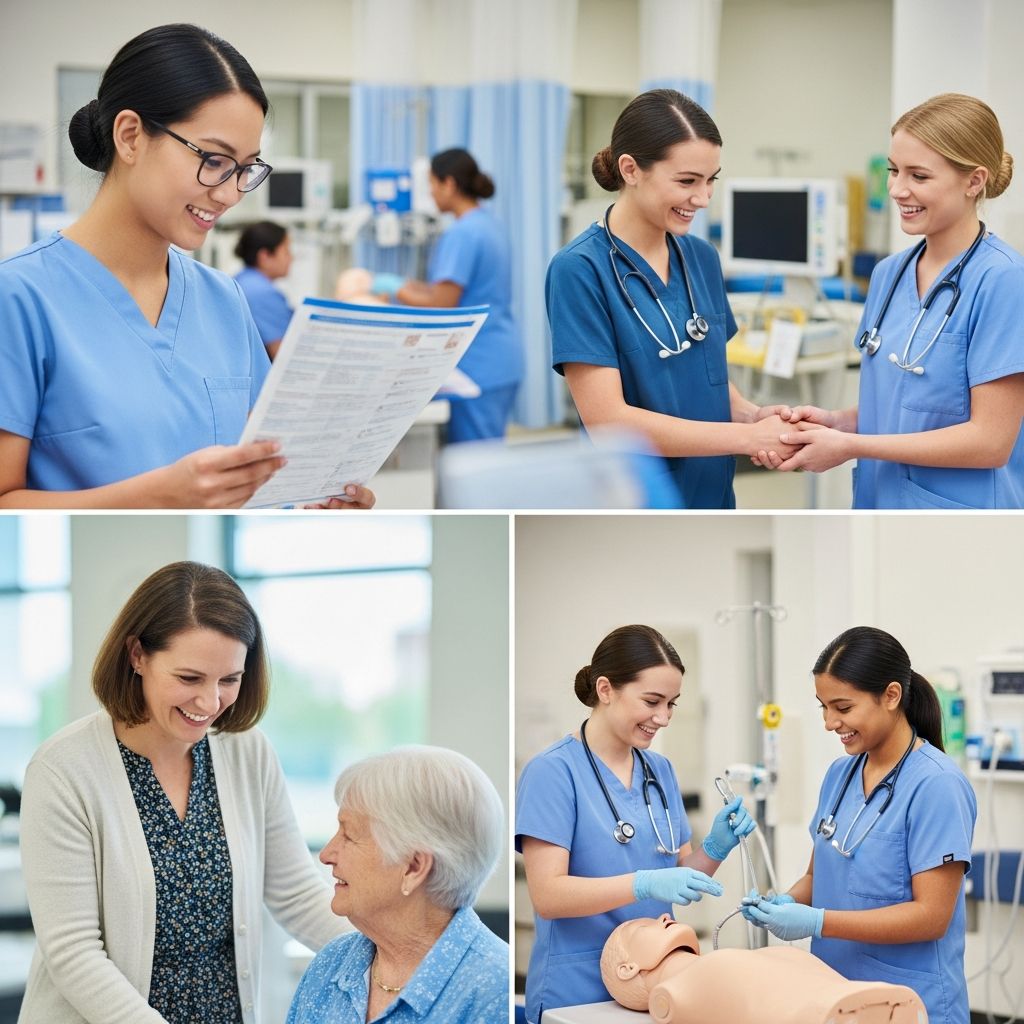
Nursing offers a rewarding career blending science, compassion, and problem-solving in high-demand healthcare settings. With projections of 194,500 annual RN job openings through 2030 and 9% employment growth, it’s a stable choice amid evolving industry needs like telehealth and technology integration.
Assessing Your Fit: Key Personality Traits and Interests
Success in nursing starts with self-reflection. Individuals who thrive often exhibit empathy, resilience, and a genuine interest in helping others during vulnerable moments. Consider if you enjoy dynamic environments where no two days are identical, involving tasks from patient monitoring to family education.
- Empathy and Communication: Nurses must convey complex medical information clearly while sensing unspoken patient concerns.
- Stress Tolerance: Handling emergencies requires calm decision-making under pressure.
- Attention to Detail: Administering medications or charting vital signs demands precision to ensure safety.
- Team Collaboration: Working alongside doctors, aides, and specialists is core to coordinated care.
- Lifelong Learning Mindset: Healthcare advances rapidly, requiring ongoing adaptation to new protocols and tech.
Reflect on past experiences: Did volunteer work or caregiving roles energize you? If problem-solving in fast-paced scenarios appeals, nursing may suit you well.
Daily Life in Nursing: What to Realistically Expect
A nursing shift varies by setting—hospitals, clinics, schools, or home health—but common elements include assessing patients, delivering treatments, and advocating for needs. RNs coordinate care, oversee aides, and educate families, while advanced roles like NPs diagnose and prescribe.
Challenges include physical demands like standing for 12-hour shifts and emotional weight from patient outcomes. Rewards come from tangible impacts, such as aiding recovery or providing comfort. Variety keeps it engaging: one day in pediatrics, the next in surgery.
| Work Setting | Typical Tasks | Shift Length |
|---|---|---|
| Hospital | Acute care, meds, monitoring | 8-12 hours |
| Clinic/Outpatient | Check-ups, education | 8 hours |
| Home Health | Visits, wound care | Flexible |
| School | Screenings, emergencies | Day shifts |
Work-life balance improves with experience; many nurses report fulfillment outweighing demands.
Educational Pathways: From Entry-Level to Advanced
No single route exists—options range from quick certifications to doctoral programs, accommodating different timelines and goals. All paths emphasize prerequisites like biology, chemistry, and a minimum GPA of 2.5-3.0, plus exams like TEAS.
Entry-Level Roles
Certified Nursing Assistants (CNAs) complete short programs (4-12 weeks) for basic care under supervision, ideal for testing the field. Licensed Practical Nurses (LPNs) finish 1-year programs, passing NCLEX-PN for tasks like vital checks and wound dressing.
Registered Nurse (RN) Tracks
ADN (2-3 years) offers quick entry via community colleges, qualifying for NCLEX-RN. BSN (4 years) builds leadership skills, preferred by employers for complex roles.
- Accelerated BSN: 1-2 years post-non-nursing bachelor’s.
- RN-to-BSN: Bridge for ADN holders seeking advancement.
Advanced Practice
Nurse Practitioners (NPs) require RN licensure, MSN/DNP, and certification for independent practice in areas like family or mental health.
Clinical hours are mandatory across programs: CNAs/LPNs in facilities, RNs in specialties like med-surg or OB.
Meeting Admission and Licensure Requirements
Prepare early: High school diploma/GED, prerequisites (anatomy, microbiology, psychology), GPA threshold, entrance exams (TEAS/HESI), immunizations, CPR, background checks.
Post-program, apply to state boards: fingerprinting, authorization to test (ATT), then NCLEX (PN for LPNs, RN for RNs). State-specific steps like jurisprudence exams may apply.
Table of Prerequisites:
| Course | Purpose |
|---|---|
| Anatomy & Physiology | Body systems knowledge |
| Microbiology | Infection control |
| Algebra/Chemistry | Dosage calculations |
| Psychology | Patient behavior |
Job Market and Financial Outlook
Demand surges with aging populations and shortages; BLS forecasts 9% RN growth to 2030, with 194,500 openings yearly. Median salaries exceed many fields, rising with education and location.
Entry-level CNAs earn modestly, but RNs command competitive pay, BSNs more so. Future-proof via upskilling in telehealth or tech.
Advancement Opportunities and Long-Term Growth
Nursing ladders easily: ADN-RN to BSN/MSN for NP, educator, or admin roles. DNP offers terminal clinical expertise. Specialties (ICU, oncology) boost pay and satisfaction.
Continuous education keeps you relevant amid 2026 trends like AI diagnostics and virtual care.
Potential Drawbacks and How to Overcome Them
Burnout risks from shifts and emotions; mitigate with self-care, boundaries, and specialties matching interests. Physical strain? Ergonomics and fitness help. Start small as CNA to gauge fit.
Steps to Get Started Today
- Self-assess traits and motivations.
- Complete prerequisites via community college or online (e.g., StraighterLine).
- Research accredited programs.
- Gain experience volunteering or as CNA.
- Prepare for NCLEX and apply.
Frequently Asked Questions (FAQs)
How long to become a nurse?
CNA: weeks; LPN: 1 year; RN (ADN): 2-3 years; BSN: 4 years.
Do I need a BSN for nursing?
Not initially—ADN suffices for RN licensure, but BSN unlocks more jobs.
What’s the NCLEX like?
Computer-adaptive exam on care, safety, pharmacology; pass rates high post-prep.
Is nursing oversaturated?
No—strong growth projected through 2030 despite challenges.
Can I work while studying?
Yes, many CNA/LPN jobs fit around classes.
References
- How to Begin a Nursing Career in 2026 — Prolink. 2026. https://prolinkworks.com/perspectives/how-to-begin-nursing-career-in-2026
- Main Requirements for Pursuing a Career in Nursing — Indeed.com. 2025. https://www.indeed.com/career-advice/career-development/nursing-career-requirements
- How Do You Start a Nursing Career in 2026? Complete Guide — StraighterLine. 2026. https://straighterline.com/blog/3-ways-to-get-started-nursing-career
- Registered Nursing Career Guide — Gwynedd Mercy University (.edu). 2025. https://www.gmercyu.edu/academics/learn/registered-nurse-career-guide
- Nursing Trends to Watch in 2026 — Herzing University (.edu). 2026. https://www.herzing.edu/blog/nursing-trends-watch-2026
- Registered Nurses: Occupational Outlook Handbook — U.S. Bureau of Labor Statistics (.gov). 2025-11-20. https://www.bls.gov/ooh/healthcare/registered-nurses.htm
- Traditional BS in Nursing — University of Michigan-Flint (.edu). 2025. https://www.umflint.edu/nursing/undergrad/bs-nursing/

- Integrated M.A. in Applied Linguistics, University of Hyderabad
- 5+ years in editorial, instructional, SEO, and research-based writing
Sneha is a relationships and lifestyle writer with a strong foundation in applied linguistics and certified training in relationship coaching. She brings over five years of writing experience to theskillvault, crafting thoughtful, research-driven content that empowers readers to build healthier relationships, boost emotional well-being, and embrace holistic living. Her writing and insights reflect the belief that beauty, happiness, and wellness…