
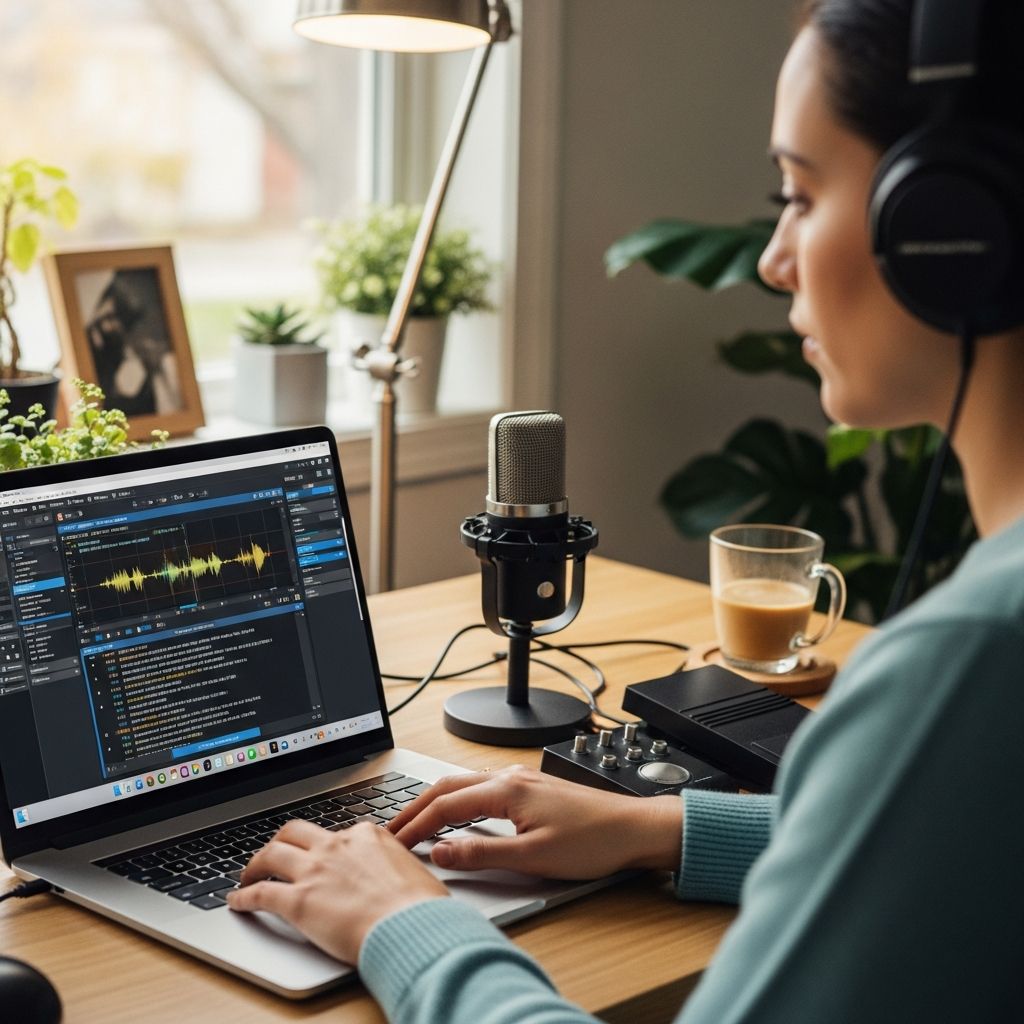
Remote transcription jobs have become a popular entry point into working from home, especially for people who type quickly, pay attention to detail, and want flexible hours. Transcriptionists turn audio or video recordings into accurate written documents, serving industries like media, medicine, law, research, and education. As more organizations rely on digital recordings and online content, the demand for transcription and related services such as captioning continues to grow.
What Does a Transcriptionist Actually Do?
At its core, transcription is the process of listening to recorded speech and converting it into a written format. However, the day-to-day work can vary depending on the client and niche.
- Listening to recordings such as interviews, meetings, podcasts, phone calls, webinars, or legal proceedings.
- Typing what you hear accurately, capturing both words and relevant non-verbal cues when required (for example, laughter or pauses in legal or research transcripts).
- Following style guidelines set by the client or company, including formatting rules, punctuation preferences, and how to handle unclear speech.
- Researching terminology such as company names, medical terms, or legal phrases to ensure correct spelling and usage.
- Editing and proofreading your own work before submitting it to meet quality benchmarks.
Types of Transcription Work You Can Do From Home
Not all transcription jobs are the same. Understanding the main categories helps you choose where to start and where to specialize later.
1. General Transcription
General transcription involves everyday content that does not require specialized medical or legal knowledge. Examples include:
- Podcast episodes and YouTube videos
- Marketing focus groups and customer interviews
- Business meetings and internal trainings
- Academic lectures or research interviews
This is usually the most beginner-friendly path because companies often hire applicants with no prior experience, provided they can pass a basic skills test.
2. Medical Transcription
Medical transcriptionists create written records of clinical notes dictated by doctors and other healthcare professionals. These transcripts become part of a patient’s official medical record. Because of the specialized vocabulary and accuracy requirements, many employers prefer or require formal training or certification.
- Requires knowledge of anatomy, pharmacology, and medical terminology.
- May require a postsecondary certificate or associate degree.
- Often offers more stable, long-term work compared to purely gig-based platforms.
3. Legal Transcription
Legal transcriptionists type up legal documents from audio, such as depositions, hearings, and client meetings. The work demands familiarity with legal systems, terminology, and formatting standards.
- Common clients include law firms, courts, and law enforcement agencies.
- Some roles may require prior legal experience or completion of a legal transcription course.
- Specialization can lead to higher pay per audio hour once you have experience.
4. Captioning and Subtitling
Closely related roles include captioning and subtitling, where you sync text with video to make content accessible. These roles may require additional skills like basic video editing software, time-coding, and adherence to accessibility standards.
Core Skills You Need to Succeed
You do not need an advanced degree to get started, but you do need a specific skill set that you can build over time.
| Skill | Why It Matters |
|---|---|
| Typing speed and accuracy | Determines how quickly you can complete audio and how much you earn per hour of work. |
| Excellent grammar and punctuation | Ensures professional transcripts that meet client standards and pass quality checks. |
| Active listening | Helps you decipher accents, poor audio, overlapping speakers, and technical terms. |
| Concentration and focus | Transcribing long recordings requires sustained attention without missing details. |
| Time management | Critical when you are juggling multiple files with different deadlines. |
| Research ability | Needed to verify names, jargon, and references quickly and accurately. |
Tools and Equipment for Home-Based Transcription
Most remote transcription platforms expect you to provide your own basic setup. Fortunately, the required tools are relatively affordable compared with many other home-based careers.
- Computer or laptop: A reliable device capable of running a browser and transcription software smoothly.
- High-speed internet: Needed for downloading large audio or video files and uploading your work.
- Quality headphones: Over-ear, noise-canceling models make it easier to catch every word, especially with noisy recordings.
- Word processing software: Most companies accept files created in common formats like .docx or .txt.
- Transcription software: Some roles allow or require tools that let you slow down, rewind, or speed up audio efficiently; some companies provide a web-based editor.
- Foot pedal (optional but helpful): A USB foot pedal can control audio playback, allowing you to keep your hands on the keyboard for faster typing.
How Transcriptionists Get Paid
Unlike traditional salaried jobs, many transcription roles pay piece-rate based on the length of the audio, not the time you spend working. Your effective hourly income depends on your skills, the complexity of the material, and how efficiently you work.
Common Payment Structures
- Per audio minute or audio hour: Many freelance-friendly platforms pay a set rate for each minute or hour of audio, such as a range per audio hour.
- Per word or per line: More common in medical transcription, where documents follow specific formats.
- Per project: Direct clients may agree on a flat fee for a full project, such as a series of interviews.
Entry-level general transcription tends to pay less, while specialized work (legal or medical) or direct client relationships can raise your earnings over time.
Training and Education Options
You can technically start transcribing with no formal schooling beyond a high school diploma, especially in general transcription. However, targeted training can shorten your learning curve and open doors to more advanced roles.
When Training Helps
- You want to enter medical or legal niches: Healthcare and law employers often prefer candidates who have completed specialized programs or hold certifications.
- You are new to working online: Courses that cover file management, formatting, and professional standards can help you avoid early mistakes.
- You plan a long-term career: Structured learning gives you a foundation you can build on, similar to other administrative or documentation roles.
Common Educational Paths
- Short online courses: Focus on general transcription techniques, style guides, and software basics.
- Certificate programs: Programs for medical transcription or legal support roles often cover terminology, documentation standards, and privacy regulations.
- Associate degrees: Options like a legal administrative assistant or healthcare documentation programs can broaden your career options beyond pure transcription.
Pros and Cons of Work-From-Home Transcription
Like any remote role, transcription comes with clear advantages and specific challenges. Weighing both sides helps you decide whether this path matches your goals and working style.
| Advantages | Challenges |
|---|---|
|
|
Step-by-Step Plan to Launch Your Transcription Career
If you are interested in giving transcription a real try, the following steps provide a practical roadmap.
Step 1: Assess and Improve Your Typing
- Use free typing tests to measure your current speed and accuracy.
- Aim for at least 60 words per minute with high accuracy for competitive performance.
- Set aside 10–15 minutes daily for practice until you reach your target speed.
Step 2: Strengthen Grammar and Punctuation
- Refresh your knowledge of sentence structure, comma rules, and common errors.
- Practice by transcribing short clips from podcasts or talks and then editing for clarity.
- Create a personal style sheet with decisions on numbers, abbreviations, and capitalization.
Step 3: Build a Simple Home Workspace
- Choose a quiet, comfortable area where you can focus.
- Invest in headphones that reduce background noise and improve clarity.
- Set up basic file organization on your computer for audio and transcript files.
Step 4: Practice on Realistic Audio
- Download or stream publicly available interviews, lectures, or podcast episodes.
- Transcribe 5–10 minutes at a time and track how long it takes you.
- Focus on capturing difficult segments accurately, not just the easy parts.
Step 5: Apply to Beginner-Friendly Platforms
- Look for companies that clearly state their application steps, testing process, and pay structure.
- Prepare to complete a grammar quiz or short transcription test during the application.
- Start with simpler files while you get used to each platform’s editor and style guidelines.
Step 6: Track Your Earnings and Efficiency
- Record audio length, time spent, and pay for each job.
- Calculate your effective hourly rate so you know which types of files are most profitable.
- Adjust the work you accept based on difficulty, turnaround time, and your income goals.
Staying Safe: Spotting Legitimate Transcription Jobs
Because remote work is attractive to many people, it can also attract scams. Use these guidelines to evaluate potential employers and clients.
- Clear application instructions: Reputable companies explain how to apply, what tests you will take, and what to expect next.
- Transparent payment policies: Look for clarity on pay rates, payment methods (such as direct deposit or PayPal), and payment schedule.
- No upfront fees for basic work: Be cautious of anyone asking for large payments to access job lists.
- Professional web presence: Check whether the company provides client information, privacy policies, and contact details.
- Reasonable expectations: Avoid offers that promise extremely high earnings for very little work.
Long-Term Growth: From Side Gig to Sustainable Career
Transcription can start as a side hustle and evolve into a steady self-employed career if you approach it strategically.
- Specialize over time: Once you have basic experience, consider focusing on legal, medical, academic, or technical content where higher rates are more common.
- Build relationships with repeat clients: Long-term clients can provide more predictable workloads than open gig platforms.
- Expand to related services: Offer proofreading, editing, formatting, or captioning to increase the value you provide.
- Invest in continuing education: Stay current on privacy regulations, accessibility requirements, and industry tools.
Frequently Asked Questions (FAQs)
Q: Do I need prior experience to become a transcriptionist?
A: Many general transcription platforms hire beginners with no formal experience, as long as you can pass a skills test in typing and grammar. Specialized roles in medical or legal transcription typically require training or previous work in those fields.
Q: How fast do I need to type?
A: A common benchmark is around 60 words per minute with high accuracy for professional transcription work. Faster typing can increase your effective hourly rate, but accuracy and attention to detail matter just as much.
Q: Can transcription be a full-time income?
A: It can be, but it often starts as part-time income. Your earning potential depends on your niche, speed, accuracy, the platforms or clients you work with, and how consistently you can secure work. Specializing in legal or medical areas and working with direct clients usually improves income stability.
Q: What is the difference between transcription and captioning?
A: Transcription focuses on creating a written version of spoken content, while captioning synchronizes that text with video and may include sound effects and speaker labels for accessibility. Captioning also requires adherence to specific formatting and timing standards.
Q: Is transcription a good option for introverts?
A: Many people who prefer independent, low-interaction work find transcription appealing because most tasks involve working quietly with audio files and written documents rather than phone or video calls. However, you still need to communicate professionally with clients or platform support when necessary.
References
- How to Become a Legal Transcriptionist — TranscribeMe. 2023-05-10. https://www.transcribeme.com/legal-transcriptionists-jobs/
- Earn Money with Transcription Jobs from Home — Rev. 2023-03-01. https://www.rev.com/freelancers/transcription
- How to Become a Transcriptionist & Earn Money From Home — Ditto Transcripts Blog. 2022-11-15. https://www.dittotranscripts.com/blog/how-to-become-a-transcriptionist/
- 24 Online Transcription Jobs for Beginners — Indeed Career Guide. 2023-08-09. https://www.indeed.com/career-advice/finding-a-job/online-transcription-jobs
- Transcription Job Requirements — SpeakWrite. 2022-09-20. https://speakwrite.com/services/transcriptionist-position-requirements/
- Become a Transcriptionist in 2025: A Complete Free Guide — Transcription Certification Institute. 2024-01-05. https://www.transcriptioncertificationinstitute.org/blog/get-started-as-a-transcriptionist-guide-part-1
- Guide to Becoming a Medical Transcriptionist: Salary, FAQs, and More — Penn Foster. 2023-06-30. https://www.pennfoster.edu/blog/guide-to-becoming-a-medical-transcriptionist

- Integrated M.A. in Applied Linguistics, University of Hyderabad
- 5+ years in editorial, instructional, SEO, and research-based writing
Sneha is a relationships and lifestyle writer with a strong foundation in applied linguistics and certified training in relationship coaching. She brings over five years of writing experience to theskillvault, crafting thoughtful, research-driven content that empowers readers to build healthier relationships, boost emotional well-being, and embrace holistic living. Her writing and insights reflect the belief that beauty, happiness, and wellness…