
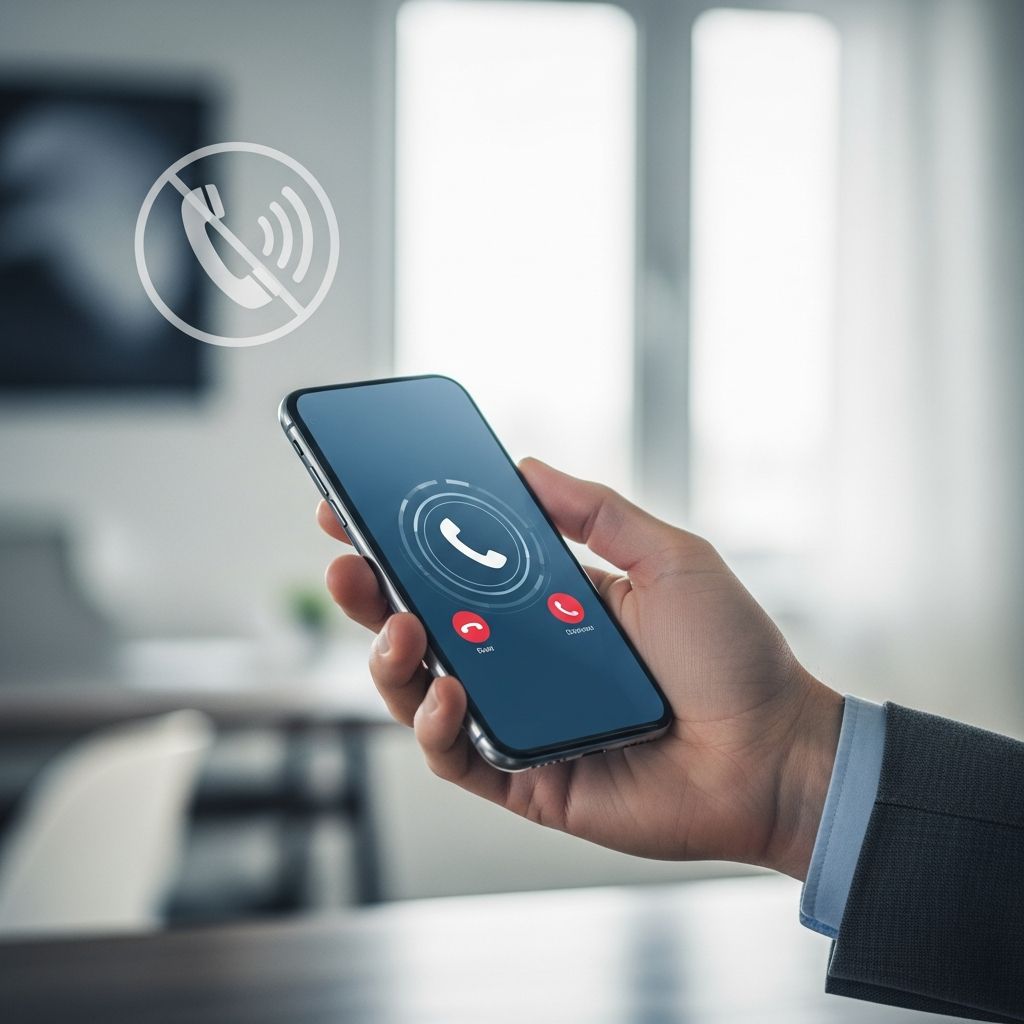
Unsolicited phone calls and texts from telemarketers disrupt daily life, but federal agencies provide clear pathways to report and curb these intrusions. This guide outlines registration processes, reporting mechanisms, and preventive measures backed by official U.S. government resources.
Understanding Your Rights Against Intrusive Calls
Consumers have legal protections under the Telephone Consumer Protection Act (TCPA) and Telemarketing Sales Rule (TSR). Legitimate telemarketers must respect the National Do Not Call Registry, avoid calling before 8 a.m. or after 9 p.m., and identify themselves clearly. Robocalls—automated prerecorded messages—are illegal for sales without prior consent.
Scammers often spoof numbers, making calls appear local. Registration on the Do Not Call list reduces legitimate sales calls but does not block illegal ones. Reports to agencies help enforce rules and improve call-blocking technologies.
Step 1: Register on the National Do Not Call Registry
Adding your number to the National Do Not Call Registry is the first defense. It signals legitimate companies to scrub your number from calling lists. Registration is free and effective after 31 days.
- Visit DoNotCall.gov or call 1-888-382-1222 from the phone to register (TTY: 1-866-290-4236).
- Online registrants receive a confirmation email; click the link within 72 hours.
- Cell phones and landlines qualify; businesses must purchase access to the list.
- Exemptions include charities, political calls, and debt collectors, but sales calls are restricted.
To remove a number, follow the same process; it takes effect the next day. Note: The registry targets lawful telemarketers, not scammers.
Step 2: Immediate Actions During a Suspicious Call
When an unwanted call comes in, act swiftly to minimize risk.
| Action | Why It Matters | How to Do It |
|---|---|---|
| Hang up immediately | Prevents engagement that confirms active number | Do not press buttons or say ‘yes’ |
| Avoid callbacks | Reveals your number is live, inviting more spam | Let unknown numbers go to voicemail |
| Block the number | Stops future calls from that ID | Use phone settings or carrier tools |
| Forward spam texts to 7726 | Alerts carrier to block sources | Free service from wireless providers |
Do not respond to prompts like ‘press 1 to opt out,’ as this flags your line.
Reporting Unwanted Calls to Federal Agencies
Complaints fuel enforcement. Agencies analyze data for patterns but rarely respond individually due to volume.
Federal Trade Commission (FTC) Reporting
The FTC oversees the Do Not Call Registry and TSR violations.
- Go to ReportFraud.ftc.gov for scams with losses, or DoNotCall.gov for simple reports.
- Provide: your number, caller ID number, callback number, date/time.
- Reports help block numbers and pursue bad actors.
Streamlined form at DoNotCall.gov suits non-financial issues.
Federal Communications Commission (FCC) Complaints
The FCC handles robocalls, spoofing, and phone service issues.
- Unwanted calls/texts: Select ‘unwanted calls/texts’ > ‘all other unwanted calls/messages’ at consumercomplaints.fcc.gov
- Spoofing: Choose ‘my own number is being spoofed.’ Include international numbers in additional info.
- Phone: 1-888-CALL-FCC (1-888-225-5322).
FCC uses complaints for policy and enforcement, not individual resolutions.
State-Level Protections and Additional Reporting
Many states have stricter rules. California’s Attorney General advises FCC/FTC reports and company-specific do-not-call requests.
- Ask telemarketers to add you to their internal list (per company only).
- Report to state AG if violations persist.
- USA.gov centralizes options: usa.gov/telemarketer-scam-call-complaints
Local laws may allow private lawsuits for TCPA violations, with penalties up to $1,500 per call.
Advanced Tools and Carrier Solutions
Beyond reporting, leverage technology.
- Call-blocking apps: Carrier-provided or third-party (e.g., Nomorobo, YouMail).
- STIR/SHAKEN: FCC-mandated caller ID authentication to combat spoofing.
- Contact providers for free blocking services; fees may apply for premiums.
- Enable voicemail screening on smartphones.
FTC shares reported numbers daily with carriers for improved labeling.
Common Call Types and How to Handle Them
| Call Type | Key Indicators | Report To |
|---|---|---|
| Robocalls (sales) | Prerecorded message, sales pitch | FCC & FTC |
| Scam calls | Urgent demands for money/gifts cards | FTC ReportFraud |
| Spoofed calls | Your number or fake local ID | FCC spoofing form |
| Spam texts | Unsolicited promos/links | Forward to 7726, FCC |
Frequently Asked Questions (FAQs)
Does the Do Not Call Registry block all calls?
No, it stops legitimate sales calls after 31 days but not scams, charities, or surveys. Hang up and report illegal ones.
How long until I see fewer calls after registering?
Up to 31 days, as companies update lists monthly.
Will agencies call me back about my complaint?
Rarely, due to millions of reports, but data drives actions like fines.
Can I sue telemarketers directly?
Yes, TCPA allows private suits for willful violations; consult a lawyer.
What if calls continue after reporting?
Block numbers, report repeatedly, and consider carrier tools. Persistence builds cases.
Preventive Best Practices for Long-Term Relief
Combine registration, reporting, and habits:
- Never share personal info over unsolicited calls.
- Use caller ID and silence unknowns.
- Update phone OS for security patches.
- Educate family on scams.
- Monitor bills for unauthorized charges.
Collective reporting has led to billions in FCC fines and shutdowns.
In 2023, agencies processed over 1 billion robocall complaints, authenticating billions of calls via STIR/SHAKEN. Your report contributes to this momentum.
References
- Unwanted Calls/Texts – Phone – FCC Complaints — Federal Communications Commission. 2023. https://consumercomplaints.fcc.gov/hc/en-us/articles/115002234203-Unwanted-Calls-Texts-Phone
- National Do Not Call Registry FAQs — Federal Trade Commission. 2024-01-15. https://consumer.ftc.gov/national-do-not-call-registry-faqs
- What To Do If You Get a Robocall — Federal Trade Commission. 2023. https://consumer.ftc.gov/media/video-0028-what-do-if-you-get-robocall
- Leave Me Alone! — California Department of Justice. 2024. https://oag.ca.gov/privacy/facts/other-privacy/leave-me-alone
- Complain about phone and text scams, robocalls, and telemarketers — USA.gov. 2024. https://www.usa.gov/telemarketer-scam-call-complaints
- FCC Complaints — Federal Communications Commission. 2024. https://consumercomplaints.fcc.gov/hc/en-us

- Integrated M.A. in Applied Linguistics, University of Hyderabad
- 5+ years in editorial, instructional, SEO, and research-based writing
Sneha is a relationships and lifestyle writer with a strong foundation in applied linguistics and certified training in relationship coaching. She brings over five years of writing experience to theskillvault, crafting thoughtful, research-driven content that empowers readers to build healthier relationships, boost emotional well-being, and embrace holistic living. Her writing and insights reflect the belief that beauty, happiness, and wellness…