
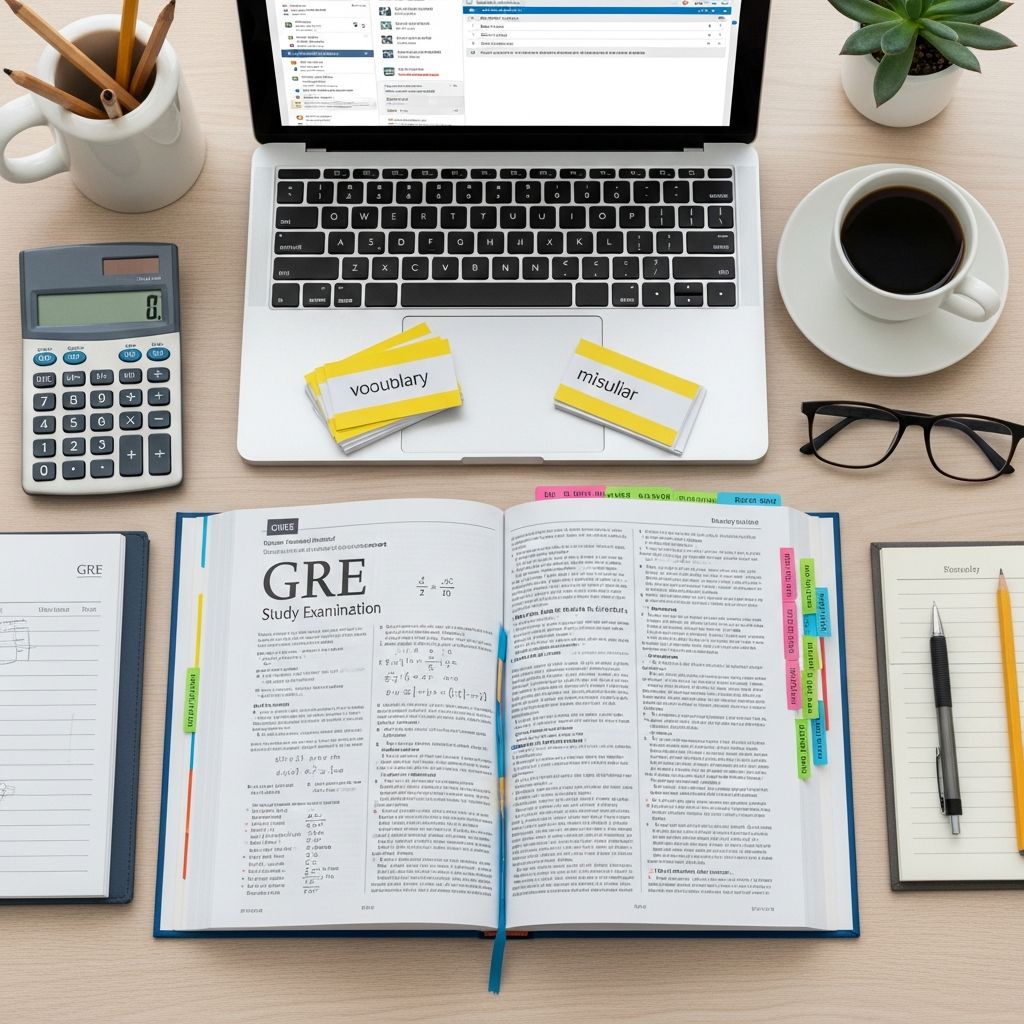
The GRE General Test is a pivotal step for aspiring graduate students, assessing critical thinking, analytical writing, quantitative reasoning, and verbal reasoning skills. Success demands a structured approach combining self-assessment, targeted practice, and strategic review. This guide draws from official recommendations to outline a clear path to peak performance, emphasizing realistic practice and adaptive learning.
Understanding the GRE Format and Expectations
The GRE General Test, administered by ETS, lasts about 2 hours and includes three main sections: Analytical Writing (one task, 30 minutes), Quantitative Reasoning (two sections, 21 minutes each), and Verbal Reasoning (two sections, 21 minutes each). Scores range from 260-340 for Quant and Verbal combined, with Analytical Writing scored 0-6. Familiarity with this structure prevents surprises on test day.
Key features include adaptive scoring, where section difficulty adjusts based on performance, making practice under timed conditions essential. Official materials stress starting with a diagnostic test to gauge readiness.
Step 1: Establish Your Starting Point with a Diagnostic Test
Begin by simulating real test conditions: find a quiet space, use a computer if possible, and time yourself strictly. ETS recommends their POWERPREP Online tools for authentic computer-delivered experiences, including two free full-length practice tests.
- Take a full-length practice test without interruptions to mimic exam day.
- Score it immediately to identify strengths and weaknesses across sections.
- Analyze errors: categorize by question type (e.g., text completion in Verbal) to pinpoint gaps.
This baseline score informs your study plan. For instance, if Quant is below 160, prioritize math review; low Verbal calls for vocabulary building.
Building a Personalized Study Schedule
Dedicate 4-12 weeks to preparation, studying 10-20 hours weekly based on your timeline and baseline. Divide time proportionally: 40% practice questions, 30% content review, 20% full tests, 10% strategy refinement.
| Week | Focus Areas | Weekly Goals |
|---|---|---|
| 1-2 | Diagnostic + Content Review | 1 full test; review basics in weak areas |
| 3-6 | Targeted Practice | Daily drills; 2-3 sectional tests |
| 7-10 | Full Simulations + Review | 1 full test weekly; deep error analysis |
| 11-12 | Light Review + Rest | Polish strategies; taper off |
Adjust for full-time workers by focusing evenings on high-yield topics. Consistency trumps cramming, as the GRE tests pattern recognition over rote memorization.
Essential Resources for Effective Preparation
Rely on official ETS materials for accuracy. The Official Guide to the GRE General Test (Fourth Edition) offers four real practice tests—two in print, two online—plus 150 Verbal questions with explanations.
- Free ETS Tools: POWERPREP Online (tests 1 & 2), Test Preview Tool, practice questions bank with 500+ items.
- Books: Official GRE Quantitative Reasoning Practice Questions (150 questions), Official GRE Verbal Reasoning Practice Questions.
- Supplemental: High-quality courses for structured guidance, but verify alignment with ETS content.
Avoid outdated or unofficial mocks that misrepresent adaptive difficulty.
Conquering Quantitative Reasoning
Quant covers arithmetic, algebra, geometry, and data analysis—no calculus required. Expect problem-solving and quantitative comparisons.
Core Strategies:
- Memorize formulas (e.g., quadratic equation, circle area) and properties (e.g., Pythagorean theorem).
- Practice estimation for speed on multiple-choice.
- Use on-screen calculator judiciously; build mental math fluency.
Review errors by rewriting problems. Aim for 160+ through daily 30-minute drills.
Excelling in Verbal Reasoning
Verbal tests reading comprehension, text completion, and sentence equivalence. Build a 1,000-word vocabulary list from official questions.
Pro Tips:
- Read dense passages (scientific journals) daily to improve speed.
- Eliminate wrong answers aggressively in inferences.
- For text completion, predict words before options.
Target 160+ by analyzing why distractors work.
Perfecting Analytical Writing
The single “Analyze an Issue” task requires a 30-minute essay arguing a position with evidence. ETS scores on clarity, depth, and structure.
Essay Framework:
- Introduction: State position + roadmap.
- Body Paragraphs (2-3): Examples + counterarguments.
- Conclusion: Reinforce thesis.
Practice typing essays; self-score using ETS samples. Aim for 4.0+ by varying sentence structure.
Advanced Test-Taking Tactics
Master time management: skip and flag tough questions, returning later. On adaptive tests, strong first sections unlock harder (higher-scoring) items.
- Practice endurance with back-to-back sections.
- Guess strategically—no penalty for wrong answers.
- Build stamina: simulate full tests bi-weekly.
Review post-test: log question types missed (e.g., “slow on geometry word problems”).
Common Pitfalls and How to Avoid Them
Many falter by neglecting review or using paper tests only. Computer-adaptive practice is non-negotiable. Over-relying on vocab flashcards ignores context-based questions. Balance sections evenly—don’t neglect writing.
Test Day Essentials
Arrive early with ID; eat a balanced meal. During breaks, stretch and hydrate. Stay calm: you’ve prepared rigorously.
Frequently Asked Questions (FAQs)
What is a good GRE study timeline?
A 4-12 week plan works best, starting with a diagnostic test to customize focus areas.
Are official ETS practice tests free?
Yes, POWERPREP Online offers two full free tests, plus additional free questions.
How often should I take full practice tests?
Once weekly after initial diagnostics, reducing to every other week near test day.
Can I retake the GRE?
Yes, up to 5 times in 12 months; scores are valid 5 years.
Is the GRE harder than practice tests?
Official ones match closely; use them exclusively for realism.
References
- The Official Guide to the GRE General Test — ETS. 2023. https://static1.squarespace.com/static/5b67b79831d4dfab6ca1b892/t/6035c1bff8cab523e1ceaba0/1614135748355/The-Official-Guide-to-the-GRE-General-Test.pdf
- Prepare for the Test — ETS. Accessed 2026. https://www.ets.org/gre/test-takers/general-test/prepare.html
- GRE General Test Prep Books & Services — ETS. Accessed 2026. https://www.ets.org/gre/test-takers/general-test/prepare/prep-books-services.html
- How to Study for the GRE — Princeton Review. Accessed 2026. https://www.princetonreview.com/grad-school-advice/how-to-prepare-for-gre
- Free GRE Prep Resources — Kaplan Test Prep. Accessed 2026. https://www.kaptest.com/study/gre/

- Integrated M.A. in Applied Linguistics, University of Hyderabad
- 5+ years in editorial, instructional, SEO, and research-based writing
Sneha is a relationships and lifestyle writer with a strong foundation in applied linguistics and certified training in relationship coaching. She brings over five years of writing experience to theskillvault, crafting thoughtful, research-driven content that empowers readers to build healthier relationships, boost emotional well-being, and embrace holistic living. Her writing and insights reflect the belief that beauty, happiness, and wellness…