
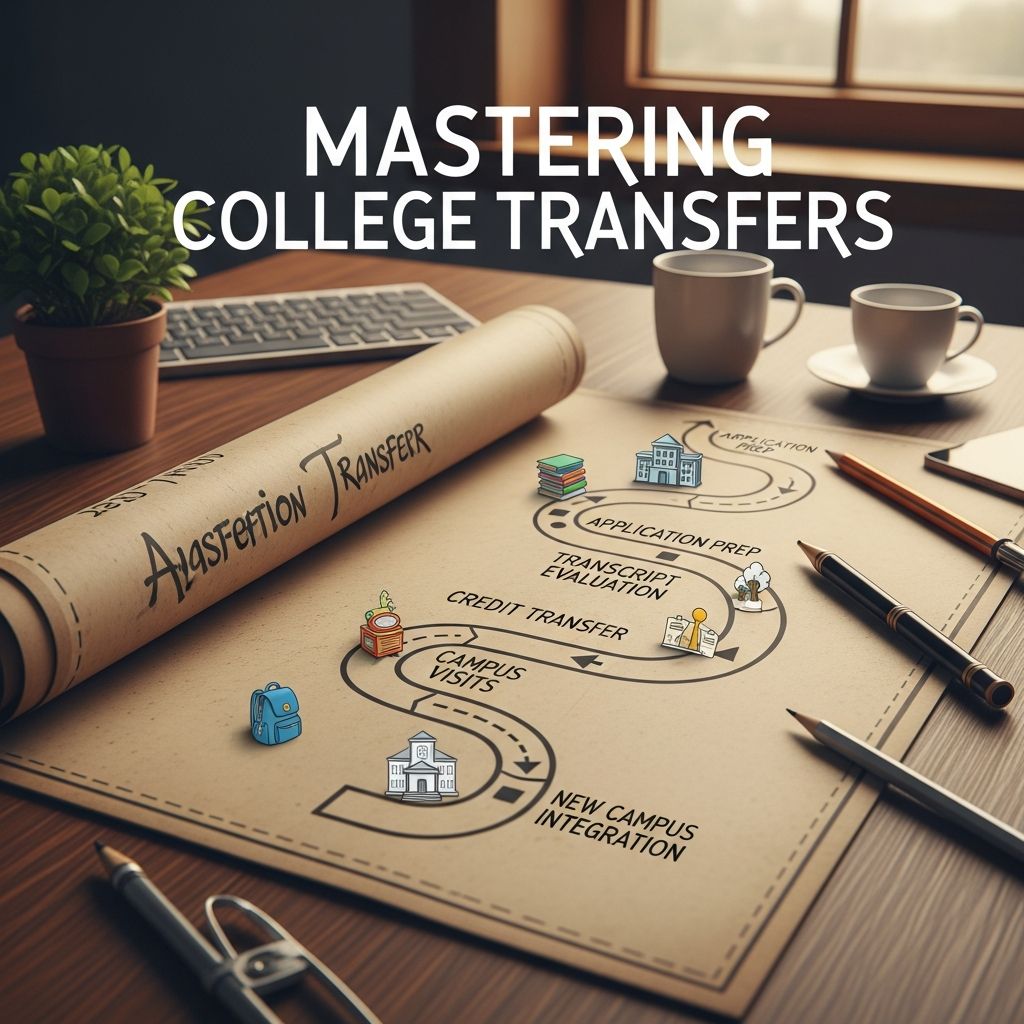
Transferring to a new college can open doors to better opportunities, stronger programs, and a campus environment that truly suits your needs. Each year, hundreds of thousands of students make this shift successfully, leveraging their existing credits to advance toward degrees without starting over. This guide provides a fresh, detailed roadmap drawn from proven strategies, helping you minimize setbacks and maximize progress.
Evaluating Your Reasons for a College Switch
Before diving into logistics, reflect deeply on why a transfer feels right. Common motivations include seeking a major unavailable at your current school, pursuing superior academic resources, or finding a location closer to home or work. Financial pressures, such as rising tuition or better aid packages elsewhere, also play a role. Assess if these issues stem from temporary adjustments or fundamental mismatches—freshmen often feel overwhelmed but settle in after a semester.
Document your rationale in a list: academic fit, career alignment, social environment, or cost savings. This clarity not only guides your search but strengthens future application essays, where admissions teams value thoughtful decision-making. Statistics show transfers after the first year succeed at higher rates, as they’ve built a college-level record demonstrating resilience and focus.
Researching Ideal Transfer Destinations
Start by identifying schools that align with your goals. Use tools like the Common App Transfer portal, which connects to over 600 institutions, or state-specific platforms for seamless pathways. Prioritize schools with strong programs in your field—check department websites for faculty expertise, research opportunities, and alumni outcomes.
Key factors to compare:
- Academic Programs: Does the major match your interests? Look for specialized tracks or internships.
- Transfer-Friendly Policies: Seek articulation agreements, especially from community colleges, guaranteeing credit acceptance.
- Campus Culture: Virtual tours, student reviews, and transfer-specific events reveal daily life.
- Location and Size: Urban vs. rural, small liberal arts vs. large research universities.
- Cost and Aid: Net price calculators estimate out-of-pocket expenses post-aid.
Create a spreadsheet tracking 5-10 options, noting deadlines, GPA thresholds, and transfer acceptance rates. Community college to university pipelines often offer priority admission upon associate degree completion.
Maximizing Credit Transfers: Essential Strategies
Credit transfer is the cornerstone of an efficient move. Institutions categorize incoming credits as direct equivalents, general education fulfillments, major-specific, or electives. However, caps limit totals—typically 60-90 credits—with residency rules requiring 30-60 credits earned on-site.
| Category | Description | Example | Typical Transfer Rate |
|---|---|---|---|
| Direct Equivalents | Exact course matches | Intro Biology at School A = Intro Biology at School B | 90-100% |
| General Education | Broad requirements like math or humanities | College Algebra fulfills gen-ed math | 70-90% |
| Major-Specific | Toward degree requirements | Organic Chemistry for pre-med | 50-80% |
| Electives | General credits, no specific use | Art History as free elective | 100% |
To optimize:
- Request preliminary evaluations by sending unofficial transcripts early.
- Aim for C grades minimum; many schools reject lower.
- Complete an associate degree for guaranteed transfers via agreements.
- Avoid time-barred credits (e.g., over 10 years old in technical fields).
Four-year to four-year transfers face stricter scrutiny, so verify equivalencies meticulously. Tools like Transferology or school-specific databases aid this process.
Consulting Advisors and Building Your Support Network
Engage your current academic advisor early—they guide on credit impacts, course sequencing, and internal processes like registrar approvals. Share your target list for tailored advice. At prospective schools, schedule transfer advising sessions to discuss fit and requirements.
Financial aid offices clarify how transfers affect packages; registrar staff handle transcripts. Join transfer student groups online for peer insights. This network prevents surprises, like overlooked prerequisites.
Crafting a Standout Transfer Application
Unlike freshman apps, transfers emphasize college performance: GPA (aim for 3.0+), transcripts, and essays explaining your journey. The Common App Transfer streamlines multi-school apps with sections for personal info, academics, experiences, and program materials.
Essay Tips:
- Be specific: “At XYZ University, the data science lab aligns with my internship experience.”
- Show growth: Address challenges overcome at current school.
- Length: 250-650 words; revise for clarity.
Other elements: 1-2 recommendations from professors highlighting your readiness; resumes listing extracurriculars, jobs, or research; optional test scores for early transfers. Deadlines vary—spring for fall entry (March-May), fall for spring (October-November). Track via calendar.
Navigating Financial Aid and Costs
Transfers can reset aid eligibility, potentially qualifying for better packages. Complete FAFSA immediately upon deciding—priority deadlines align with admissions. Expect renewed consideration for Pell Grants, state aid, and scholarships.
- Merit Aid: High GPAs attract awards at welcoming schools.
- Need-Based: Independent status possible after age 24 or emancipation.
- Scholarships: Search transfer-specific funds via Fastweb or school portals.
Compare net costs; some privates match publics for transfers. Budget for deposits ($200-500) and orientation fees.
Finalizing Your Move: From Acceptance to Enrollment
Upon acceptances, compare offers holistically. Submit deposits promptly, apply for housing (transfers often prioritized), and register for orientation—these sessions connect you with peers and advisors. Request official transcripts post-acceptance for final credit posting.
Update health insurance, notify current school of withdrawal to avoid fees, and prepare academically by reviewing syllabi. Mid-year transfers adjust to new calendars seamlessly with planning.
Thriving After Transfer: Long-Term Success
New environments demand adaptation. Attend welcome events, meet professors during office hours, and join clubs for community. Track credits quarterly to stay on-degree pace—transfers graduate at similar rates to natives with proactive advising. Career services often overlook transfers; schedule early for internships aligning with your path.
Overcome isolation by seeking mentors; studies affirm transfers excel when engaged. Celebrate milestones like degree completion ahead of peers who’ve restarted.
Frequently Asked Questions
Is transferring colleges difficult?
Less so than freshman admissions, focusing on college GPA over high school. Success hinges on preparation and school selectivity; sophomore transfers fare best with solid records.
What documents do I need?
College transcripts (primary), high school transcripts, possibly SAT/ACT, essays, recommendations, and resume. Verify per school.
Will all my credits transfer?
Not always—expect 60-90 max, with grades C+ and residency rules. Use tools for previews.
When should I start the process?
One year ahead: research fall prior, apply by spring deadlines for fall entry.
Does transferring affect financial aid?
It can improve it—refile FAFSA; some schools offer transfer scholarships.
References
- How to Transfer Colleges: Step-by-Step Guide — EdVisorly. 2023. https://www.edvisorly.com/student-guides/how-to-transfer-colleges
- Step-by-Step Guide: How to Transfer Colleges — Fastweb. 2024-01-15. https://www.fastweb.com/college-search/articles/step-by-step-guide-to-transferring-colleges
- How to Transfer Colleges + Common App Transfer Guide — College Essay Guy. 2023-08-20. https://www.collegeessayguy.com/blog/how-to-transfer-colleges
- Transfer Colleges and Credits — My Texas Future (Texas Workforce Commission). 2025. https://www.mytexasfuture.org/adult-college/transfer-process/
- Application Guide for Transfer Students — Common App. 2025-09-01. https://www.commonapp.org/apply/transfer-students
- Guide to Transferring Colleges — The Princeton Review. 2024. https://www.princetonreview.com/college-advice/transferring-colleges

- Integrated M.A. in Applied Linguistics, University of Hyderabad
- 5+ years in editorial, instructional, SEO, and research-based writing
Sneha is a relationships and lifestyle writer with a strong foundation in applied linguistics and certified training in relationship coaching. She brings over five years of writing experience to theskillvault, crafting thoughtful, research-driven content that empowers readers to build healthier relationships, boost emotional well-being, and embrace holistic living. Her writing and insights reflect the belief that beauty, happiness, and wellness…