
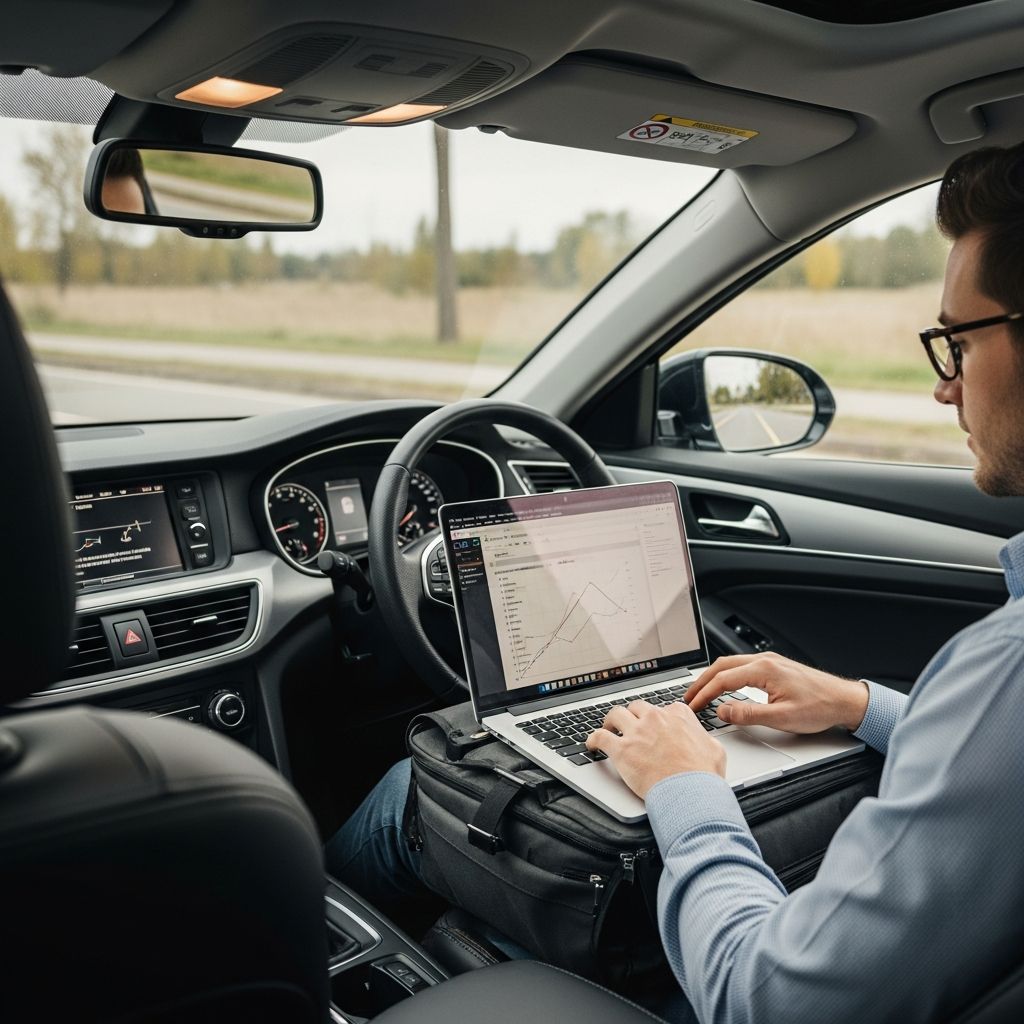
Transforming Your Commute into Productive Time
Vehicle travel presents a unique opportunity that many professionals overlook: an extended window of uninterrupted time that can be repurposed for meaningful work and personal development. Whether you spend thirty minutes or three hours behind the wheel each week, the cumulative time available for productive activities is substantial. Rather than viewing your commute as dead time filled with frustration and stress, strategic approaches can transform these hours into valuable opportunities for professional advancement, personal growth, and mental wellness.
The key to successful productivity during vehicle travel lies in understanding that different types of activities suit different contexts. Your approach during a morning commute may differ significantly from a long weekend road trip or a business travel itinerary. By aligning your activities with your environment, energy levels, and safety requirements, you can maximize the return on your travel time investment.
Planning Your Commute Architecture for Success
Effective vehicle-based productivity begins long before you turn the ignition. Deliberate planning transforms a potentially chaotic or stressful journey into a structured opportunity. Begin by mapping your typical weekly travel patterns and identifying which segments suit which activities. A thirty-minute morning commute might be divided into fifteen minutes of podcast-based learning followed by fifteen minutes of hands-free phone calls. A longer weekly business trip offers space for multiple activity types throughout the day.
Technological planning tools streamline route optimization and reduce decision-making friction. Synchronizing navigation applications across your devices means selecting your destination takes seconds rather than minutes, eliminating the temptation to delay departure. When you’ve invested the evening before in route planning, morning departures become automatic, leaving mental space for strategic thinking about your day’s priorities rather than navigation logistics.
- Map your weekly driving patterns to identify time blocks
- Use navigation applications to synchronize routes across devices
- Pre-program destination addresses the evening before travel
- Identify which activities suit specific journey segments
- Build buffer time for unexpected delays and traffic
Cognitive Enhancement Through Audio Learning
Your vehicle transforms into a mobile classroom when you strategically employ audio-based educational content. Podcasts, audiobooks, and online courses have democratized access to expert knowledge, making it possible to learn from industry leaders, academics, and thought innovators regardless of your physical location. The passive nature of audio consumption makes it ideal for situations where visual focus must remain on the road.
The selection of audio content matters significantly for sustained engagement. Rotating between educational programs, motivational content, industry-specific podcasts, and lighter entertainment maintains mental engagement without creating monotony. Organizing these resources in dedicated mobile applications with automatic playback sync ensures you never waste time searching for what to listen to when you begin driving.
Audio learning offers secondary benefits beyond information acquisition. The engaging nature of compelling content makes travel time pass more quickly, reduces fatigue during longer drives, and provides mental stimulation that counteracts the monotony of highway driving. This cognitive engagement can paradoxically improve safety by keeping your mind actively focused rather than allowing attention to drift.
Leveraging Communication Opportunities
Modern hands-free technology enables drivers to engage in meaningful professional communication without compromising safety. Phone calls conducted through vehicle Bluetooth systems allow you to address important matters while maintaining full attention on the road. This approach proves particularly valuable for checking in with team members, conducting brief consultations, or following up on outstanding items.
Voice recording technology offers an alternative when synchronous communication isn’t available. Rather than attempting to remember important ideas or observations during your drive, quickly recording voice notes ensures you capture thoughts while they remain fresh. This technique particularly benefits those who generate ideas during travel, whether creative concepts, problem-solving approaches, or task reminders. The voice memo application on most smartphones requires minimal interaction and can integrate into your dashboard interface.
For those with administrative support, delegating tasks through brief verbal communication maximizes the value of drive time. Rather than allowing important action items to accumulate until you return to the office, communicating priorities in real-time ensures work progresses continuously and responsive assistance becomes available when you need it most.
Mental Wellness and Stress Reduction Practices
Productivity encompasses more than task completion; it includes mental clarity and emotional equilibrium. Reframing vehicle travel as mandatory thinking time rather than lost time fundamentally changes how you experience the commute. When you release the pressure to accomplish measurable tasks during every journey, you create space for reflection, problem-solving, and creative thinking that often produces superior results compared to forced productivity.
Recognizing that some of your most valuable insights often emerge during unstructured thinking time transforms how you approach commute hours. Many professionals report that solutions to complex problems surface during routine travel when the mind can work associatively rather than reactively. Meditation practices, mindfulness exercises, or simple reflection become legitimate productivity activities when they contribute to mental clarity and decision-making capacity.
Accepting traffic delays as inevitable rather than fighting against them reduces stress responses that compromise both safety and wellbeing. The frustration generated by aggressive lane changes yields minimal time advantage while significantly elevating cortisol levels and creating emotional residue that affects your arrival state. Conversely, viewing congestion as an opportunity for the valuable downtime you otherwise struggle to create reframes the experience entirely.
Physical Organization and Environmental Setup
Your vehicle environment directly impacts your ability to execute planned activities. A disorganized, cluttered interior creates cognitive friction that reduces efficiency and increases stress. Before implementing new productivity practices, invest time in creating an organized vehicle system that supports your intended activities.
Essential organizational elements include dedicated storage for frequently accessed materials, beverage holders for hydration, snack containers for sustained energy, and charging solutions for electronic devices. Shower caddies, small organizers, and hanging storage systems maximize limited vehicle space while keeping items accessible and visible. When everything has an assigned location, finding what you need requires no thought, preserving mental energy for your actual productivity tasks.
Cable management becomes especially important as you integrate multiple devices into your vehicle workspace. Tangled cords create visual clutter and waste time troubleshooting connection issues. Utilizing cable organizers, wireless charging pads, and magnetic cable clips creates a professional environment that supports focused work.
Self-Care Integration During Extended Travel
Long vehicle journeys present challenges for physical wellbeing when movement becomes limited and sitting positions remain static. Intentional self-care practices during extended travel maintain energy levels, improve focus, and support overall health. These practices aren’t distractions from productivity; they directly enable sustained performance.
Hydration and nutritional support require particular attention during vehicle travel. Dehydration impairs cognitive function and increases fatigue, while poor nutritional choices create energy fluctuations that undermine concentration. Bringing prepared healthy snacks, adequate water, and electrolyte beverages maintains steady energy and mental performance throughout your journey.
Movement breaks during longer drives prevent physical stiffness and improve blood circulation. Even brief periods of walking, stretching, or light exercise during rest stops significantly enhance alertness and reduce fatigue for subsequent driving segments. These breaks also provide mental reset opportunities that can improve productivity during focused work segments.
Technology Infrastructure for Remote Work
Modern business travel often requires conducting work from various locations, including extended periods in vehicles. Establishing reliable technology infrastructure enables you to access necessary tools and maintain communication regardless of your physical location.
Portable hotspot devices or mobile data plans ensure internet connectivity in areas where vehicle location or movement might otherwise disconnect you. Project management software, collaboration platforms, and cloud-based document systems enable seamless work continuation between office and mobile environments. Noise-canceling headphones improve audio quality during video calls and help maintain focus in noisy environments.
Backup power solutions prevent technological failures from disrupting your productivity. Multiple charging cables, portable power banks, and vehicle outlet adapters ensure your devices remain functional throughout extended travel. This infrastructure becomes especially important for business travel where connection failures translate directly into lost productivity and professional impact.
Strategic Time Allocation for Different Journey Types
Different vehicle journeys support different productivity activities. A morning commute during your highest energy hours suits complex thinking, strategic planning, and important communications. Afternoon return journeys might better accommodate lighter learning activities or routine task management when energy naturally declines.
Multi-hour road trips offer opportunities for varied activity rotation. Allocating specific time blocks to different task categories—organization, communication, learning, strategic thinking—prevents mental fatigue while maintaining consistent productivity throughout your journey. This variation also serves safety by keeping your mind engaged and alert rather than experiencing the monotony-induced drowsiness that long periods of single-activity focus can create.
Early Departure Strategies and Traffic Mitigation
Beginning your journey earlier than strictly necessary provides multiple productivity advantages beyond the obvious time gained. Early departures mean lighter traffic, reduced time spent in congestion, and lower stress levels when arriving at your destination. Your cognitive resources aren’t depleted by frustrating traffic situations, leaving you fresher and more capable of productive focus once you arrive.
The cumulative time advantage of consistent early departures is substantial. Gaining fifteen to thirty minutes on congestion several times weekly represents significant additional productive time or reduced pressure on your schedule. This approach also provides buffer space for unexpected delays, mechanical issues, or route changes without creating time pressure that forces reactive decision-making.
Task Prioritization Within Vehicle Constraints
Not all work activities suit vehicle environments. Distinguishing between tasks that benefit from vehicle time and those requiring stationary focus improves overall productivity. Communications, learning, thinking, and voice-recorded notes all thrive in mobile contexts. Complex analysis requiring sustained visual focus, detailed document creation, or work requiring physical resources doesn’t translate to vehicle productivity.
Pre-determining which specific tasks you’ll address during vehicle time prevents decision-making delays and ensures alignment between available time and task requirements. A thirty-minute commute suits returning emails or listening to industry updates. Extended downtime might accommodate more complex strategic thinking or multiple phone-based consultations.
Frequently Asked Questions
Q: Is it safe to engage in productivity activities while driving?
A: Safety depends entirely on activity selection and execution. Hands-free phone calls, audio learning, and voice recording require minimal visual attention and integrate safely with driving. Reading, writing, or other visually intensive activities compromise safety and should never occur while actively operating a vehicle. The fundamental rule is that your primary attention must always remain on road conditions and vehicle operation.
Q: How do I prevent audio content from becoming background noise I don’t actually absorb?
A: Selective attention requires deliberate focus. Choose content that genuinely interests you rather than what you think you “should” consume. Take brief voice notes on key points. Rotate content types to maintain engagement. Some people benefit from reviewing material by reading summaries after listening to the audio version, creating multiple learning pathways that improve retention.
Q: What if I share driving responsibilities or travel with family members?
A: Shared driving scenarios require accommodating multiple preferences. Rotate control of audio content selection. Allocate some driving segments to individual audio choices and others to collectively selected content. This approach maintains engagement for various passengers while respecting individual preferences and needs.
Q: How do I manage vehicle organization when space is extremely limited?
A: Prioritize items by frequency of use and necessity. Multi-purpose organizers maximize space efficiency. Vertical storage solutions like hanging organizers utilize underutilized space. Regularly purge items you no longer need. Even highly constrained spaces can accommodate essential organization that significantly improves usability and reduces stress.
Q: Should I attempt productivity activities during difficult traffic or weather conditions?
A: No. When driving conditions demand elevated attention and focus, abandon productivity activities and concentrate entirely on vehicle operation and road safety. Challenging conditions automatically become your exclusive productivity focus. This safety-first approach ensures you arrive safely and capable of performing well when you reach your destination.
References
- 6 Great Tips For A More Productive And Stress Free Commute — Lingford Consulting. Accessed January 2026. https://www.lingfordconsulting.com.au/productivity/productive-stress-commute
- Have a long commute on your work trip? Don’t fret! — GetGoing. Accessed January 2026. https://www.getgoing.com/blog/productivity-tips-for-navigating-long-commutes/
- Top Business Travel Tips for Staying Productive on the Road — DT. Accessed January 2026. https://www.dt.com/blog/top-business-travel-tips-for-staying-productive-on-the-road/
- 6 Tips for Being Productive in the Car — Charleston Moms. Accessed January 2026. https://charlestonmoms.com/home-lifestyle/6-tips-for-being-productive-in-the-car/
- Road Tripping Like a Pro: Planning Tips To Help You Stay Sane on Long Drives — Rachel Off Duty. Accessed January 2026. https://racheloffduty.com/blog/road-trip-planning-tips/

Medha Deb is an editor with a master's degree in Applied Linguistics from the University of Hyderabad. She believes that her qualification has helped her develop a deep understanding of language and its application in various contexts. Medha specializes in the areas of beauty, health, sports, and wellness and is committed to ensuring that the content on the website is…