
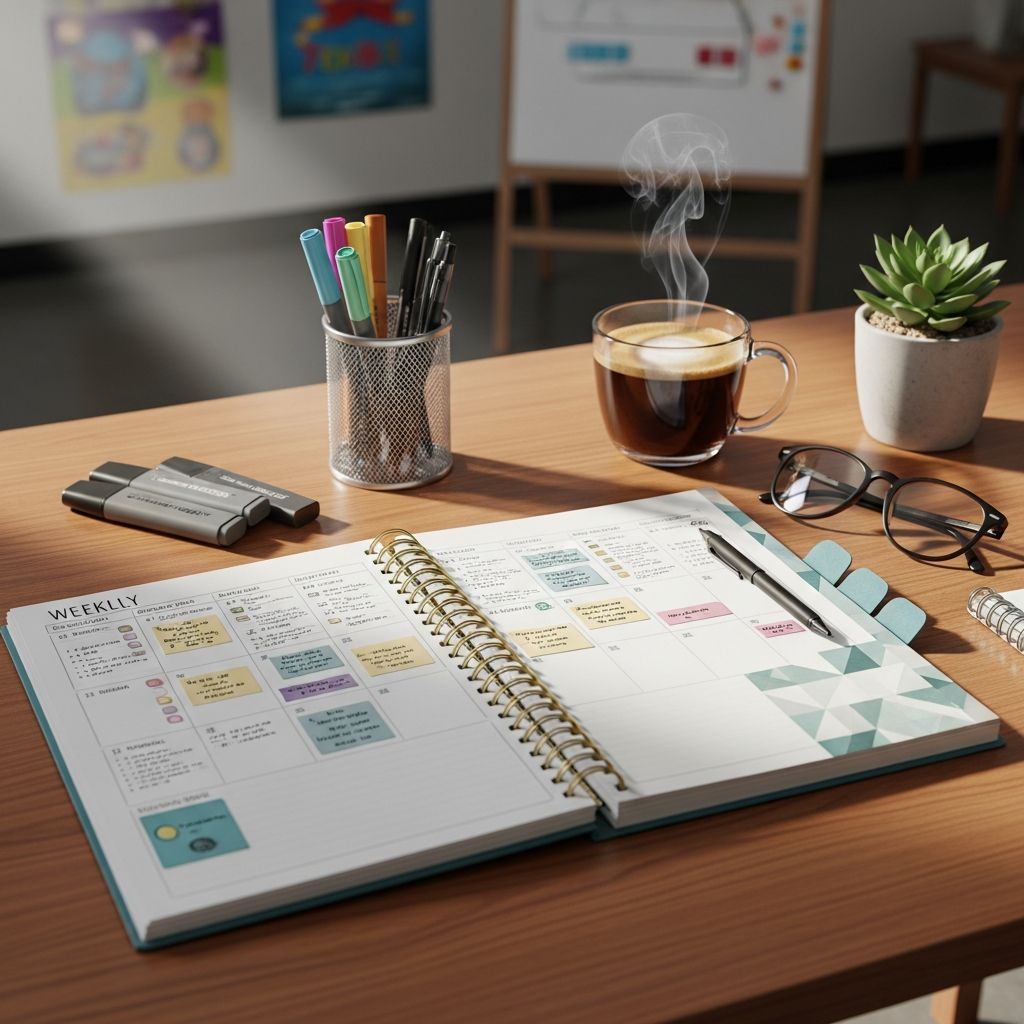
A well-utilized teacher planner serves as the cornerstone of an organized classroom, helping educators juggle lessons, student needs, administrative tasks, and personal commitments. By strategically setting up and maintaining this essential tool, teachers can reduce stress, enhance instructional quality, and foster a balanced professional life. This guide explores comprehensive methods to transform your planner into a powerful ally for daily triumphs.
Choosing the Ideal Teacher Planner
Selecting the right planner is the first step toward efficiency. Opt for one with versatile layouts that accommodate your teaching style, whether you prefer daily, weekly, or monthly views. Consider factors like binding type—spiral for flexibility or lay-flat for easy reference—and ample space for notes, goals, and trackers.
Essential features include:
- Monthly calendars for overarching schedules and key dates.
- Weekly spreads for detailed lesson breakdowns.
- Daily sections for minute-by-minute class plans.
- Dedicated pages for student data, grade tracking, and to-do lists.
- Customizable elements like sticker compatibility or undated pages for flexibility.
Undated planners suit homeschoolers or those with irregular schedules, allowing reuse without pressure. Eco-friendly options and vibrant designs can boost motivation, making the planner a joy to use daily.
Structuring Lessons for Maximum Impact
Effective lesson planning begins with a big-picture view. Use monthly overviews to map curriculum progression, noting units, assessments, and holidays. This prevents overload and ensures alignment with learning standards.
Transition to weekly layouts by outlining objectives, required materials, activities, and evaluation methods. For instance, detail reading goals, math worksheets, and group projects to create purposeful sessions. Daily entries should include class periods, warm-ups, core instruction, and reflections on what succeeded or needs tweaking.
| Planning Level | Purpose | Key Elements |
|---|---|---|
| Monthly | Long-term vision | Units, tests, events |
| Weekly | Balanced schedule | Objectives, resources, assessments |
| Daily | Execution details | Timing, activities, notes |
Integrate extracurriculars like after-school clubs by reserving specific slots, ensuring comprehensive coverage.
Tracking Student Progress Effectively
A teacher planner excels at centralizing student information. Maintain class rosters with contacts, allergies, and IEPs for quick access during emergencies or meetings.
Implement progress trackers for individual goals, such as reading levels or math benchmarks. Note milestones and interventions to inform parent conferences and differentiated instruction. Use charts or dedicated sections to log grades, attendance, and behavior patterns, spotting trends early.
- Weekly check-ins for at-risk students.
- Quarterly summaries for reports.
- Visual scales for skill mastery.
This data-driven approach empowers teachers to personalize learning and demonstrate growth.
Balancing Professional Duties Seamlessly
Beyond teaching, planners manage the myriad administrative tasks. Calendar professional development, faculty meetings, and deadlines for reports or permissions.
Schedule parent-teacher conferences and IEP reviews alongside lessons to avoid conflicts. Track certification renewals and workshop notes in a professional growth section, fostering continuous improvement.
Incorporate school-wide events like field trips or assemblies to coordinate with colleagues seamlessly.
Preparing for Unplanned Absences
Sub plans are a planner’s secret weapon. Develop a dedicated emergency section with routines, seating charts, rules, and backup activities for a full week. Photocopy essentials and include contact lists for substitutes, ensuring smooth classroom operation in your absence.
Pro tip: Update these quarterly and keep a digital backup for added security.
Infusing Personal Goals and Reflection
A holistic planner addresses work-life balance. Dedicate pages to personal milestones, family events, exercise, and self-care reminders. Set SMART professional goals—like implementing new tech tools—and track progress monthly.
End each week with reflections: What energized students? What to adjust? Gratitude notes sustain motivation amid challenges. Review past planners for insights, recycling strong ideas and refining weak ones.
Practical Habits for Planner Mastery
Consistency is key. Spend 10-15 minutes daily reviewing and updating, adjusting for the next day. Weekly reviews identify patterns, allowing refinements throughout the year.
Enhance with stickers for visuals, color-coding for categories, and sticky notes for flexibility. Choose a planner size that fits your bag for portability.
Customizing for Unique Teaching Scenarios
Tailor your planner to your context. Elementary teachers might emphasize behavior charts and themed units, while high school educators focus on rigorous assessments. Homeschool parents need multi-child trackers and flexible undated formats.
For specials like PE or art, block time for equipment prep and skill progression.
Frequently Asked Questions (FAQs)
What makes a teacher planner different from a regular notebook?
Teacher planners feature specialized layouts for lessons, grading, and events, unlike generic notebooks, optimizing for educational workflows.
How often should I review my planner?
Daily for 10-15 minutes, weekly for deeper analysis, and monthly for big-picture adjustments to stay proactive.
Can digital tools replace a physical planner?
Physical planners aid handwriting benefits for retention, but hybrids with digital backups offer the best of both.
What’s the best way to handle overplanning?
Review past planners to carry forward viable ideas, prioritizing essentials over exhaustive lists.
Are undated planners worth it?
Yes, especially for irregular schedules or homeschooling, providing reusability without date constraints.
Advanced Tips for Planner Optimization
Integrate technology by photographing pages for phone access or syncing with apps for reminders. Experiment with dividers for sections like ‘Curriculum Maps’ or ‘Parent Communications.’
For team teaching, share planner excerpts digitally to align efforts. Use washi tape for aesthetic motivation and quick category flags.
Annual setup ritual: At year’s start, input all known dates from school calendars, personal events, and goals. This front-loading saves time later.
Measure success by reduced stress and increased student engagement—adjust accordingly.
References
- Learn How To Use A Teacher Planner Effectively — Plum Paper. 2023-01-15. https://www.plumpaper.com/blog/how-to-use-a-teacher-planner
- Understanding Teacher Planners and Their Must-Have Features — Poprun Life. 2024-05-20. https://www.poprunlife.com/blogs/poprun-product-guide-blog-1/teacher-planner-essential-features-for-classroom-organization
- Best Teacher Planner Tips to Stay Organized — Scholastic. 2023-08-10. https://www.scholastic.com/teachers/teaching-tools/book-lists/resources/best-teacher-planner.html
- Teacher Planner 101: How to Build Your Planner — Erin Condren. 2024-02-28. https://www.erincondren.com/inspiration-center-teacher-lesson-planner-101
- Putting Together the Perfect Teacher Planner — One Stop Teacher Shop. 2022-02-15. https://onestopteachershop.com/2022/02/putting-together-perfect-teacher-planner.html

- Integrated M.A. in Applied Linguistics, University of Hyderabad
- 5+ years in editorial, instructional, SEO, and research-based writing
Sneha is a relationships and lifestyle writer with a strong foundation in applied linguistics and certified training in relationship coaching. She brings over five years of writing experience to theskillvault, crafting thoughtful, research-driven content that empowers readers to build healthier relationships, boost emotional well-being, and embrace holistic living. Her writing and insights reflect the belief that beauty, happiness, and wellness…