
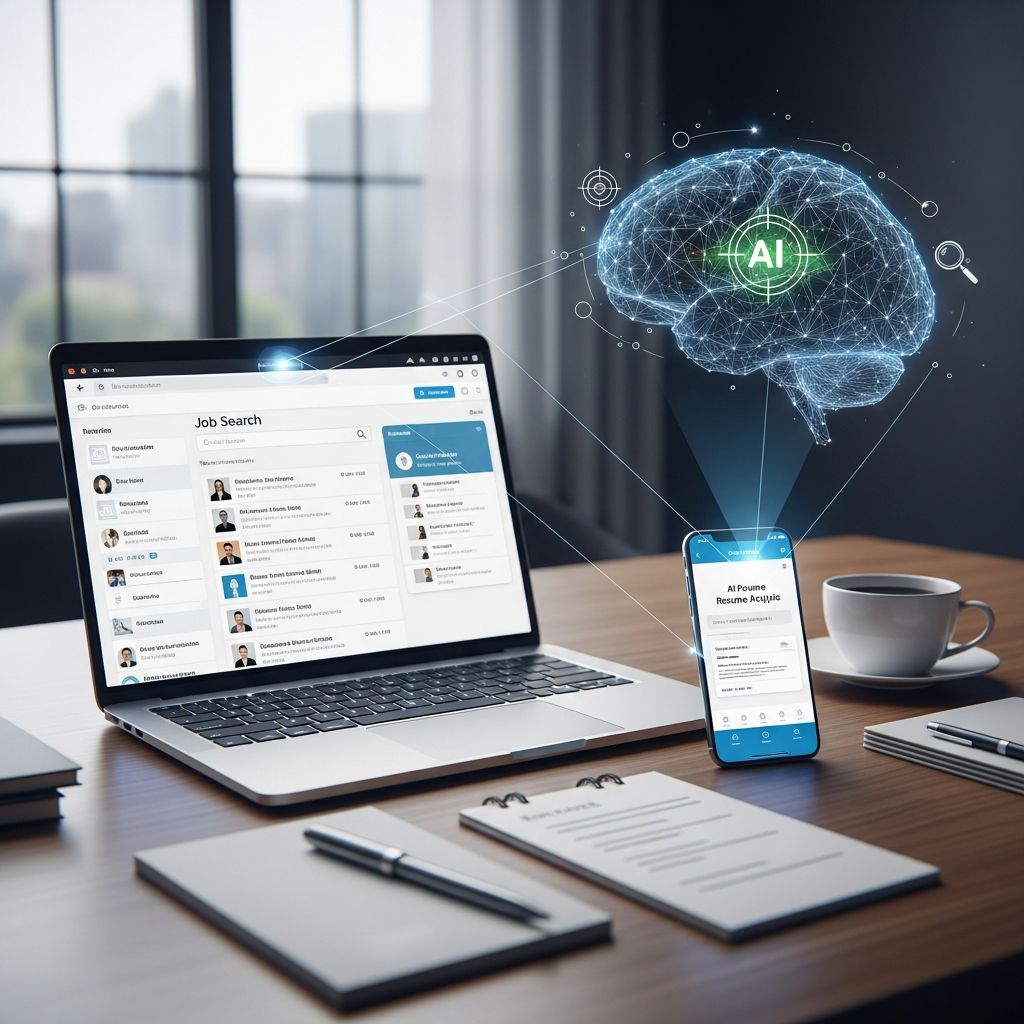
In the evolving landscape of 2026, artificial intelligence has become a game-changer for job seekers. With workforce trends showing accelerated job transformations and a surge in demand for AI-complementary skills, integrating AI into your search strategy can provide a significant edge. This guide explores actionable ways to harness AI, drawing from current trends like human-AI hybrid teams and emerging roles, to optimize every step of your job hunt.
Understanding AI’s Role in the Modern Job Market
The job market is undergoing rapid shifts, with the World Economic Forum projecting that by 2030, 22% of jobs will be disrupted, creating 170 million new roles while displacing 92 million, for a net gain. AI isn’t just replacing tasks; it’s augmenting them, particularly in technology, data, healthcare, and green sectors. Job seekers who master AI tools position themselves as adaptable professionals ready for hybrid human-AI environments.
AI excels at handling repetitive tasks, analyzing vast data sets, and generating personalized content, freeing you to focus on uniquely human strengths like creativity and strategic thinking. According to recent studies, over 80% of workers using AI report time savings, allowing more focus on high-value projects. For job hunters, this means faster, more targeted applications and better preparation.
Optimizing Your Resume with AI Precision
Resumes are your first impression, and AI can tailor them to beat applicant tracking systems (ATS) and impress recruiters. Start by using AI-powered resume builders that scan job descriptions and suggest keywords, structure, and phrasing aligned with industry standards.
- Keyword Extraction: Input a job posting into an AI tool to identify critical terms like ‘machine learning’ or ‘data analysis,’ ensuring your resume matches exactly.
- Content Generation: AI can rewrite bullet points to quantify achievements, e.g., transforming ‘Managed team’ into ‘Led 10-person team to 20% efficiency gain.’
- Formatting Checks: Tools analyze layout for readability and ATS compatibility, recommending clean fonts and sections.
Combine this with skills mapping from AI platforms that assess your experience against emerging demands, such as AI fluency alongside leadership. This approach supports skills-based hiring trends, where titles matter less than capabilities.
| Traditional Resume | AI-Optimized Resume |
|---|---|
| Generic descriptions | Tailored keywords from job ads |
| No metrics | Quantified impacts (e.g., ‘Increased sales 30%’) |
| Static format | ATS-friendly, scannable design |
Crafting Compelling Cover Letters Effortlessly
Cover letters personalize your application, but writing them is time-intensive. AI generators create drafts by blending your background with job specifics, emphasizing why you’re a fit.
Key techniques include:
- Prompting AI with: ‘Write a cover letter for a data analyst role highlighting my Python experience and leadership in projects.’
- Refining output to infuse your voice, avoiding generic language.
- Ensuring alignment with company values, pulled from their website via AI summarization.
In 2026, with generative AI deployed in half of HR functions, tailored letters stand out amid automated screening. Always review for authenticity, as over-reliance can erode critical skills.
Mastering Job Discovery and Application Tracking
AI transforms job searching from manual scrolling to intelligent matching. Platforms use algorithms to recommend roles based on your profile, skills gaps, and market trends.
- Personalized Alerts: Set AI to notify you of openings in growing fields like AI ethics or green tech.
- Market Insights: Analyze salary data, demand forecasts, and competitor applications for strategic targeting.
- Application Automation: Tools auto-fill forms while customizing submissions, saving hours weekly.
With AI enabling continuous workforce planning, focus on proactive searches in high-growth areas. Track applications via AI dashboards that predict response rates and suggest follow-ups.
Elevating Interview Preparation with AI Simulations
Interviews are pivotal, and AI offers realistic practice. Virtual interviewers use natural language processing to simulate conversations, providing feedback on answers, tone, and body language.
Effective strategies:
- Behavioral Rehearsal: Practice STAR method (Situation, Task, Action, Result) responses for common questions.
- Technical Drills: For roles like software engineering, AI generates coding challenges with solutions.
- Feedback Loops: Receive scores on clarity, relevance, and enthusiasm, iterating for improvement.
As AI agents become workplace teammates, demonstrating comfort with them impresses employers. Gartner’s predictions highlight the need for human oversight, so emphasize your collaborative skills.
Building Networks in the AI Era
Networking remains essential, and AI accelerates connections. Tools scan LinkedIn for mutual contacts, suggest outreach messages, and even schedule informational interviews.
- Profile Optimization: AI refines your LinkedIn headline, summary, and posts to attract recruiters.
- Conversation Starters: Generate personalized messages referencing shared interests or recent company news.
- Event Discovery: Find virtual webinars and industry meetups aligned with your goals.
In hybrid teams, networking showcases your adaptability. Ethical AI use, like transparent practices, builds trust.
Navigating AI Ethics and Pitfalls in Job Searching
While powerful, AI has limitations. The EU AI Act classifies recruitment AI as high-risk, mandating transparency and bias checks. Avoid over-dependence to preserve skills like critical thinking.
- Verify AI outputs for accuracy and personalization.
- Disclose AI use if asked, positioning it as a tool you master.
- Balance with human elements for genuine applications.
Regulations emphasize worker protections, so stay informed on frameworks affecting hiring.
Future-Proofing Your Career with AI Skills
Beyond searching, upskill in AI to thrive. Demand surges for prompt engineering, ethics, and hybrid competencies. Platforms offer free courses on these, aligning with 39% core skills change by 2030.
Incorporate AI daily to model proficiency, as leaders advocate. This positions you for new roles in agentic workflows.
Frequently Asked Questions
Is it ethical to use AI for job applications?
Yes, when used transparently as a tool to enhance, not replace, your input. Many employers expect it, but always add your unique voice.
What are the best free AI tools for resumes?
Tools like ChatGPT for drafting, Resume.io for templates, and Jobscan for ATS checks are popular starters.
Can AI really help me get more interviews?
Absolutely—optimized applications increase match rates by matching keywords and trends effectively.
How do I avoid AI-generated content detection?
Edit heavily, incorporate personal anecdotes, and vary phrasing to ensure originality.
Will AI replace human recruiters?
No, it augments them; human judgment remains key for nuanced decisions.
References
- 10 Key AI Workforce Trends In 2026 — Gloat. 2026. https://gloat.com/blog/ai-workforce-trends/
- How AI Is Redefining Workforce Planning for 2026 — Verstela. 2026. https://www.verstela.com/blog/how-ai-is-redefining-workforce-planning-for-2026/
- Culture dissonance and AI among top workplace challenges in 2026 — HR Dive. 2026. https://www.hrdive.com/news/culture-dissonance-negative-ai-effects-workplace/809768/
- What’s next in AI: 7 trends to watch in 2026 — Microsoft Source. 2026. https://news.microsoft.com/source/features/ai/whats-next-in-ai-7-trends-to-watch-in-2026/
- Why 2026 will be the year AI grows up — Atlassian Work Life. 2025-12. https://www.atlassian.com/blog/teamwork/ai-insights-december-2025

- Integrated M.A. in Applied Linguistics, University of Hyderabad
- 5+ years in editorial, instructional, SEO, and research-based writing
Sneha is a relationships and lifestyle writer with a strong foundation in applied linguistics and certified training in relationship coaching. She brings over five years of writing experience to theskillvault, crafting thoughtful, research-driven content that empowers readers to build healthier relationships, boost emotional well-being, and embrace holistic living. Her writing and insights reflect the belief that beauty, happiness, and wellness…