
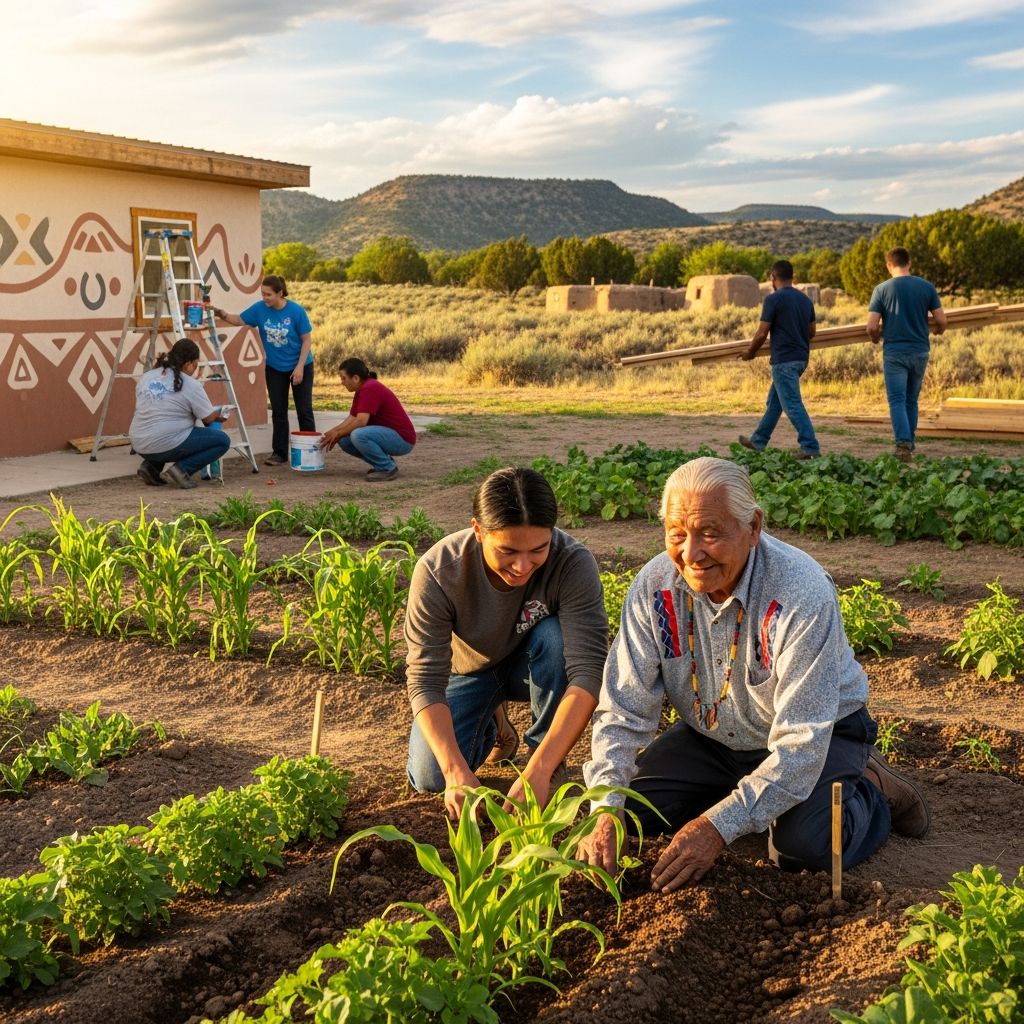
Volunteering on Native American reservations represents a unique opportunity to contribute meaningfully to communities while gaining profound insights into indigenous cultures and contemporary tribal life. These service experiences extend far beyond traditional volunteering—they create pathways for cultural understanding, address critical community needs, and build lasting relationships between volunteers and tribal members. Understanding the landscape of reservation volunteering requires exploring both the genuine needs within these communities and the transformative potential such engagement offers.
Understanding the Current State of Reservation Communities
Many reservation communities face significant infrastructure and resource challenges that require sustained attention and support. These challenges are not remnants of the past but present-day realities affecting thousands of families across the United States. From inadequate housing to limited educational resources, the disparities are substantial and multifaceted.
Volunteers visiting reservations often report being struck by the contrast between conditions on tribal lands and broader American standards of living. Housing shortages, limited access to adequate utilities, and infrastructure gaps create immediate, tangible needs that volunteer organizations address systematically. These are not abstract problems but daily challenges affecting the quality of life for families and elders within tribal communities.
Core Categories of Volunteer Work on Reservations
Reservation volunteer programs typically organize their efforts around several key categories of community impact:
- Infrastructure and Housing Projects: Building and repairing structures represents a cornerstone of many volunteer initiatives. This includes constructing safe sleeping spaces, installing functional plumbing infrastructure, and improving shelter quality through weatherization efforts.
- Educational Support: Volunteers contribute to academic advancement by assisting classroom instructors, supervising educational programs, and facilitating learning opportunities for children and young adults.
- Elder Care and Support Services: Dedicated volunteers engage directly with tribal elders through companionship programs, meal provision, and activities that combat isolation and enhance quality of life.
- Food Security Initiatives: Community gardens, food distribution networks, and meal preparation represent crucial volunteer contributions addressing nutritional security.
- Community Facility Improvements: Volunteers assist with repairs and upgrades to shared community spaces, recreation areas, and institutional buildings.
Leading Volunteer Organizations and Their Approaches
Several established organizations have developed sophisticated frameworks for reservation volunteering that balance genuine community benefit with volunteer learning objectives.
Re-Member and the Pine Ridge Experience
Operating on the Pine Ridge Reservation with the Oglala Lakota Nation, Re-Member exemplifies a comprehensive approach to community service. The organization brings approximately 1,200 volunteers annually from diverse backgrounds to engage in week-long service-learning experiences. A distinguishing feature of Re-Member’s model is its emphasis on cultural immersion alongside practical work.
Volunteers participate in a structured program where three days focus on direct community projects—building sleeping facilities, constructing sanitation infrastructure, and preparing essential resources like firewood for winter months—while two days center on cultural education. This balance ensures volunteers understand the historical context and contemporary realities of Lakota life rather than operating in isolation from community identity and aspirations.
Global Volunteers and the Blackfeet Nation Partnership
Operating since 1999 with the Blackfeet Nation in Montana, Global Volunteers represents another model of sustained, respectful engagement. Their approach emphasizes partnership development and integration within existing community structures and priorities. Rather than importing predetermined project agendas, Global Volunteers collaborates with local leaders to identify where volunteer contributions align with community-determined goals.
Work with the Blackfeet includes diverse projects from recreational facility development to supporting educational programs, addiction treatment initiatives, and youth organizations. The longevity of this partnership—spanning over two decades—demonstrates how respectful, community-led volunteer relationships can endure and evolve.
The Structure of Reservation Volunteer Programs
| Program Element | Purpose | Duration/Frequency |
|---|---|---|
| Direct Service Projects | Address immediate community infrastructure and resource needs | Ongoing, seasonal alignment |
| Cultural Education Sessions | Build volunteer understanding of tribal history, language, and contemporary life | Integrated throughout service periods |
| Community Interaction | Foster genuine relationships beyond volunteer-beneficiary dynamics | Daily integration |
| Skill-Based Opportunities | Allow volunteers to contribute specialized professional expertise | As available and needed |
| Reflection and Learning | Help volunteers process experiences and develop advocacy awareness | Ongoing throughout engagement |
What Volunteers Actually Experience
Volunteer accounts from reservation service consistently highlight unexpected dimensions of the experience. Rather than a straightforward charitable engagement, volunteers describe transformation through relationship and reciprocal learning.
Many volunteers arrive with preconceived notions about Native Americans rooted in historical narratives or media representations. Direct interaction with tribal members—engaging with cultural presenters, participating in community events, and working alongside local people—challenges these assumptions. Volunteers encounter contemporary indigenous people actively shaping their communities’ futures rather than passive subjects of historical injustice.
The work itself proves physically engaging but emotionally complex. Volunteers report that hands-on contributions like building infrastructure create tangible accomplishment, but also confront them with systemic inequities they may not have previously recognized. Discovering families without adequate shelter in North America’s wealthiest nation typically prompts deeper questioning about policy, historical injustice, and ongoing disparities.
Volunteer Age, Background, and Accessibility
Reservation volunteer programs accommodate diverse participant demographics. Most programs welcome families with children, typically establishing minimum ages between 8 and 16 depending on project intensity. Adult volunteers of all ages participate, from young professionals to retired individuals.
Educational background and professional expertise vary widely. Programs value both individuals seeking basic community service experiences and those bringing specialized skills in medical care, construction, education, or other professional domains. The inclusive approach reflects the principle that meaningful contribution comes in multiple forms.
The Cultural Learning Component
Cultural immersion distinguishes quality reservation volunteering from purely transactional service work. This component addresses a critical concern within tribal communities: the desire to share indigenous cultures and histories on their own terms rather than through outsider interpretation.
Authentic cultural learning typically includes presentations by tribal members covering historical events, contemporary challenges, language preservation efforts, and cultural practices. Field excursions might visit sites of cultural significance, markets featuring traditional foods and crafts, or cultural centers.
Evening programs often explore both the richness of indigenous traditions and the specific challenges communities face—historical trauma’s ongoing effects, educational disparities, health challenges, and economic limitations. This balanced approach prevents cultural sharing from becoming entertainment divorced from lived reality.
Addressing the Voluntourism Concern
Thoughtful engagement with reservations requires acknowledging and avoiding “voluntourism”—the practice of traveling to serve in ways that ultimately benefit the volunteer more than the community, or that perpetuate problematic dynamics.
Ethical volunteer participation means several things: ensuring that your skills and contributions address genuine community-identified needs rather than volunteer preferences, working through established organizations with authentic community partnerships, compensating organizations appropriately for program management and cultural education, and approaching engagement with humility about limitations of short-term service.
Some individuals discover that rather than volunteering, financial support—making donations to reservation-based organizations—better serves community needs. This honest self-assessment represents ethical engagement.
Impact Beyond Individual Service
While direct project work—building infrastructure, supporting education, assisting elders—creates immediate benefits, the broader impact of reservation volunteering extends further. Organizations emphasize that volunteers often become long-term advocates for tribal issues.
Volunteers return to their home communities carrying firsthand knowledge of reservation realities and indigenous perspectives. They become informed voices in discussions about Native American policy, historical education, and resource allocation. Some pursue ongoing engagement through donations, advocacy, or participation in awareness campaigns. This scaling of impact—from individual service to systemic advocacy—represents the fuller potential of volunteer engagement.
Practical Considerations for Potential Volunteers
Several factors warrant consideration before committing to reservation volunteering:
- Program Selection: Research organizations thoroughly, prioritizing those demonstrating long-standing community partnerships and transparent communication about community needs and volunteer contributions.
- Financial Commitment: Programs typically require participant fees covering accommodations, meals, transportation coordination, and program management. These investments support organizational operations and tribal employment.
- Physical Preparation: Most programs involve outdoor work and physical activity. Assess your mobility and stamina honestly, as inaccurate self-assessment can undermine project success.
- Timing and Duration: Programs typically operate seasonally, with summer representing peak activity. Most intensive experiences span one week, balancing sufficient time for meaningful contribution with accessibility for working volunteers.
- Attitude and Openness: Success depends on approaching the experience with genuine interest in learning, respect for tribal sovereignty and culture, and willingness to be challenged regarding assumptions and perspectives.
Supporting Tribal Communities Beyond Direct Service
Not everyone can or should volunteer on reservations, yet many wish to support tribal communities. Alternative engagement approaches include:
- Financial Support: Direct donations to reservation-based organizations fund essential services, cultural preservation, and community-identified priorities.
- Educational Advocacy: Engaging with educational institutions to incorporate accurate Native American history and contemporary tribal issues into curricula.
- Policy Engagement: Communicating with elected representatives about policies affecting tribal communities, from healthcare access to education funding.
- Awareness Amplification: Sharing information about tribal issues, cultural heritage, and volunteer opportunities within personal networks.
- Skill-Based Contributions: Offering professional expertise—legal services, graphic design, fundraising consultation—to tribal organizations remotely.
The Long-Term Vision
Reservation volunteer programs operate within a larger framework of building sustained relationships and supporting tribal self-determination. The goal is not perpetual dependence on outside volunteers but rather strengthening communities’ capacity to address their own priorities.
Organizations emphasize that volunteers contribute to this vision through their immediate service and their subsequent role as informed advocates. A volunteer who returns home and educates others about tribal realities, supports policy changes benefiting Native Americans, or maintains connection with reservation communities extends the impact of their service engagement far beyond project completion.
Frequently Asked Questions
What skills do I need to volunteer on a reservation?
Most reservation programs welcome volunteers across broad skill levels. Basic willingness to work hard and learn proves more valuable than specialized expertise. Programs that do seek professional skills—construction specialists, healthcare providers, educators—explicitly recruit for these areas.
Can families with children volunteer?
Yes, most programs accommodate families, though minimum ages vary. Programs specifically designed for families create age-appropriate activities and roles. Family participation introduces children to diverse communities and service perspectives early.
Is volunteering culturally appropriate and welcome?
Established, community-partnered organizations have earned tribal support for their work. These programs operate with explicit tribal approval and involvement. Volunteers should work exclusively through such recognized organizations rather than attempting independent reservation engagement.
How much does reservation volunteering cost?
Program fees typically range from several hundred to over a thousand dollars per week, covering accommodations, meals, program management, and cultural education. Inquire about scholarship or reduced-fee options, as many organizations prioritize accessibility.
What is the time commitment?
Most intensive volunteer experiences last one week, with programs operating seasonally (typically March through October). Some organizations offer shorter weekend programs or extended multi-week placements for committed volunteers.
Moving Forward with Purpose
Volunteering on Native American reservations offers genuine opportunities to contribute meaningfully to communities while transforming one’s own understanding and advocacy capacity. The key to respectful, impactful engagement lies in choosing established, community-partnered organizations; approaching the experience with humility and openness; and recognizing that service represents the beginning of longer-term commitment to supporting tribal communities and advancing indigenous rights.
References
- Re-Member: Volunteer Organization on Pine Ridge Reservation — Re-Member. 2025. https://www.re-member.org
- Volunteer On the Blackfeet Indian Reservation — Go Overseas. 2025. https://www.gooverseas.com/volunteer-abroad/united-states/global-volunteers
- Volunteer on the Blackfeet Indian Reservation — Global Volunteers. 2025. https://globalvolunteers.org/usa-montana/
- How You Can Help Native Americans: Volunteer on Reservations — Powwows.com. 2025. https://www.powwows.com/can-help-native-americans/
- Native American Volunteer Opportunities — Partnership With Native Americans (PWNA). 2025. https://nativepartnership.org/volunteer/
- Volunteering in Navajo Nation Schools — Road Scholar. 2025. https://www.roadscholar.org/find-an-adventure/6262/Volunteering-Navajo-Nation-Schools

- Integrated M.A. in Applied Linguistics, University of Hyderabad
- 5+ years in editorial, instructional, SEO, and research-based writing
Sneha is a relationships and lifestyle writer with a strong foundation in applied linguistics and certified training in relationship coaching. She brings over five years of writing experience to theskillvault, crafting thoughtful, research-driven content that empowers readers to build healthier relationships, boost emotional well-being, and embrace holistic living. Her writing and insights reflect the belief that beauty, happiness, and wellness…