
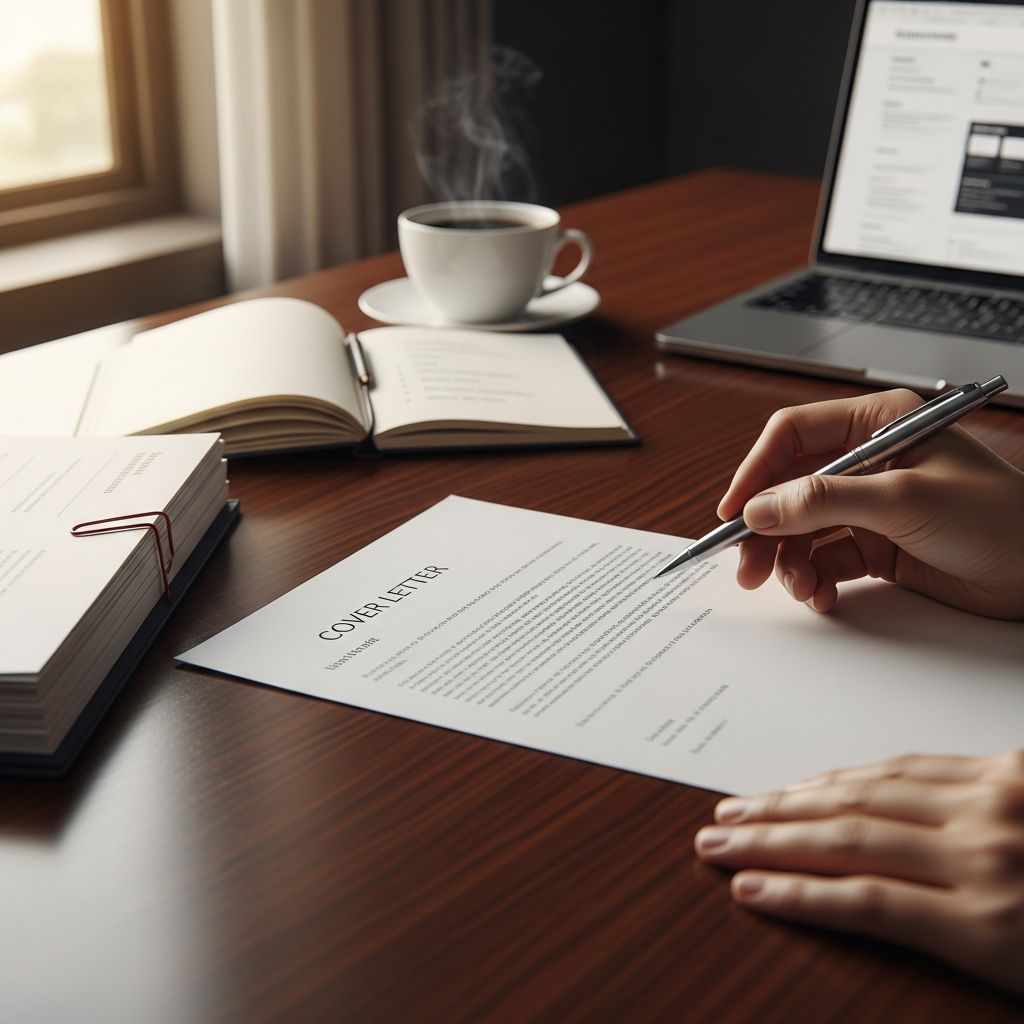
A cover letter serves as your introduction to potential employers before they ever read your resume. It’s an opportunity to showcase your personality, motivation, and fit for a specific role in ways a resume alone cannot accomplish. Many job seekers underestimate the power of a well-crafted cover letter, treating it as a mandatory formality rather than a strategic marketing document. The reality is that hiring managers often use cover letters to differentiate between candidates with similar qualifications, making the quality of your letter a determining factor in whether you advance to an interview.
The challenge lies in balancing professionalism with personality, specificity with brevity, and confidence with humility. This article explores a comprehensive framework for developing cover letters that resonate with hiring managers and demonstrate your genuine interest in both the position and the organization.
Understanding the Purpose and Power of Your Cover Letter
Before diving into the mechanics of writing, it’s essential to understand what a cover letter actually accomplishes. Unlike a resume, which presents facts about your career history, a cover letter tells a story about why you’re interested in a particular opportunity and how your background positions you to succeed in that specific role.
An effective cover letter serves multiple purposes simultaneously. It demonstrates your ability to communicate clearly and professionally, shows that you’ve invested time researching the company and position, provides context for your career decisions, and reveals your personality in ways that help hiring managers envision you as a team member. This multifaceted value makes the cover letter far more than a box to check—it’s a critical component of your application strategy.
Establishing a Professional Foundation
The technical aspects of your cover letter matter more than many candidates realize. Before you write a single sentence of content, you must establish a professional presentation that mirrors the quality of your resume and reflects the standards of your industry.
Formatting and Visual Presentation
Your cover letter should maintain consistency with your resume in terms of fonts, sizing, and overall aesthetic. Select professional fonts such as Arial, Calibri, or Times New Roman in sizes between 10 and 12 points. Maintain standard margins of one inch on all sides and use left-aligned text throughout. The document should never exceed one page, regardless of your level of experience, as hiring managers are busy professionals with limited time to review applications.
The header of your cover letter should include your name and contact information at the top, followed by the date and the employer’s information. This layout demonstrates organization and makes it easy for the hiring manager to reach you if they wish to schedule an interview. A formal greeting using the hiring manager’s name, when available, personalizes your approach and shows attention to detail.
Length and Pacing
Cover letters should generally range between 250 and 400 words, depending on the specific role and industry expectations. This length provides sufficient space to develop your arguments and share relevant examples without overwhelming the reader. Use short paragraphs, strong topic sentences, and varied sentence structures to maintain reader engagement. Dense blocks of text discourage careful reading, while well-spaced paragraphs invite the hiring manager to give your letter the attention it deserves.
Crafting an Opening That Commands Attention
Your opening paragraph represents your first and most critical opportunity to capture the hiring manager’s interest. A generic opening such as “I am writing to express my interest in the Marketing Manager position” wastes precious space and gives the reader no reason to continue.
Creating a Memorable Hook
Instead of starting with a self-focused statement, begin with a bold assertion that highlights what sets you apart. This opening should reference something specific about the company, the role, or your background that demonstrates genuine enthusiasm and research. For example, rather than stating a general skill, you might write about a meaningful encounter with the company’s product or a compelling reason why the organization’s mission aligns with your professional values.
Consider this approach: if you’ve been a loyal customer of the company, mention it. If the role addresses a challenge you’ve personally grappled with, reference that experience. If you possess a unique qualification directly relevant to the position, lead with that distinction. These specific hooks distinguish your letter from dozens of others the hiring manager will read and signal that you view this opportunity as genuinely important.
Expressing Authentic Motivation
Beyond capturing attention, your opening paragraph must clearly articulate why this specific position at this specific company appeals to you. Generic statements about company growth or reputation do not suffice. Instead, demonstrate knowledge of the company’s actual work, recent initiatives, or cultural values, and explain how these elements align with your professional goals and values.
Avoid the appearance of desperation or the implication that you’re applying to dozens of similar positions. Your language should convey enthusiasm without suggesting that any job will do. The hiring manager wants to believe that you’ve chosen their organization deliberately and that you understand why you’d be an excellent fit.
Developing a Compelling Middle Section
The body of your cover letter comprises one to three paragraphs that bridge the gap between your opening statement and your closing remarks. This section demonstrates the connection between your background and the specific requirements of the position.
Matching Your Skills to Job Requirements
The most effective approach involves extracting key terms and requirements from the job description and reflecting them back in your cover letter through concrete examples. This technique serves dual purposes: it demonstrates that you understand what the employer is seeking, and it helps your application navigate applicant tracking systems that scan for keyword matches.
Rather than simply copying phrases from the job description, incorporate them into sentences that illustrate your relevant experience. If the job posting emphasizes “collaborative work with distributed teams,” you might write: “In my current role, I regularly coordinate projects across three time zones, ensuring seamless communication and consistent delivery despite geographical distance.” This approach shows linguistic alignment while proving you possess the required capability.
Highlighting Achievements Over Abilities
Any candidate can claim to possess desirable skills such as leadership, creativity, or problem-solving ability. What distinguishes you is demonstrating these skills through specific examples with measurable outcomes. Rather than stating “I am an excellent communicator,” describe a situation where your communication skills resolved a complex problem or drove meaningful business results.
Use brief anecdotes that include a challenge you faced, the action you took, and the concrete result achieved. This storytelling approach makes your qualifications memorable and credible. For instance, instead of “I have strong project management skills,” you might share: “When our team faced a delayed product launch due to workflow inefficiencies, I redesigned our project timeline and communication protocols, ultimately delivering the product three weeks ahead of the revised schedule.”
Demonstrating Company Knowledge and Alignment
Effective cover letters prove that you’ve invested time understanding not just the job, but the organization itself. This research demonstrates genuine interest and helps the hiring manager imagine you as a knowledgeable, engaged team member.
Conducting Meaningful Research
Before writing your cover letter, spend time on the company’s website, LinkedIn page, recent news articles, and social media presence. Understand their mission statement, recent company announcements, product launches, or market positioning. This research allows you to reference specific initiatives or values in your letter, adding authenticity to your expression of interest.
However, avoid generic statements such as “Your company is a leader in the industry.” Instead, reference specific evidence of the company’s approach or values. You might mention a recent corporate sustainability initiative, a particular product feature that impressed you, or the company’s approach to employee development that aligns with your professional values.
Establishing Values Alignment
Many job seekers overlook this critical element: helping the hiring manager understand why the company’s values, culture, or mission resonates with you personally. This alignment extends beyond “your company is great” to meaningful connection. Perhaps the company’s commitment to social impact aligns with your volunteer experience, or their innovative approach to customer service reflects your professional philosophy. Making these connections explicit helps the hiring manager envision you thriving within their organizational culture.
Closing with Conviction and Clarity
Your closing paragraph brings your argument to a satisfying conclusion while reiterating your interest and opening the door for further conversation.
Reinforcing Your Value Proposition
Rather than simply repeating information from earlier paragraphs, use your closing to succinctly restate why you represent an excellent fit for this position and organization. This is your final opportunity to leave a lasting impression, so make it count. Reference the specific value you would bring or the ways your background positions you to contribute meaningfully to the team’s success.
Including a Strong Call to Action
End your cover letter with a professional closing that invites continued conversation. Avoid passive language such as “I look forward to hearing from you.” Instead, express your eagerness to discuss your qualifications in greater detail and your enthusiasm for the opportunity to explore how you can contribute to the organization’s goals. This forward-looking language demonstrates confidence and initiative.
Professional Sign-Off
Close with a professional salutation such as “Sincerely,” “Best regards,” or “Thank you for your consideration,” followed by your name. Ensure your signature maintains the professional tone established throughout the letter. Your full name should appear both above and below your signature if submitting a digital document.
Personalization Strategies That Set You Apart
Generic cover letters rarely advance candidates to the interview stage. Hiring managers can quickly identify letters that have been minimally customized or that could apply to multiple positions. True personalization requires genuine effort and demonstrates your serious interest in the opportunity.
Tailoring to Each Specific Role
Each position you pursue requires a customized cover letter that directly references the job title, key responsibilities, and specific requirements mentioned in the job posting. Extract three to five critical qualifications or responsibilities from the job description and ensure your letter directly addresses how you meet each one. This specificity proves you’ve carefully reviewed the opportunity and considered how your skills match the actual needs of the role.
Incorporating Personal Connection
If you learned about the position through a personal referral, mention that individual by name and title. Personal connections carry weight with hiring managers and suggest that someone within the organization believes you would be a valuable addition to the team. If you discovered the position through another channel, briefly mention where you found the opportunity, as this detail contextualizes your application and demonstrates intentionality.
Common Pitfalls to Avoid
| Pitfall | Why It Undermines Your Application | Better Approach |
|---|---|---|
| Generic opening statements | Fails to capture attention or differentiate you from other candidates | Lead with a specific, compelling hook that demonstrates research and enthusiasm |
| Repeating your resume verbatim | Wastes space and provides no additional value to hiring managers | Complement your resume with deeper context, stories, and specific examples |
| Focusing on what you want from the company | Centers the narrative on you rather than the employer’s needs | Emphasize what you will contribute and how you’ll add value to the organization |
| Neglecting to proofread thoroughly | Spelling and grammar errors suggest carelessness and lack of attention to detail | Read your letter multiple times, have a trusted person review it, and use spell-check tools |
| Exceeding one page | Communicates poor judgment about conciseness and respect for the reader’s time | Ruthlessly edit to convey your message within the one-page standard |
| Using overly formal or stilted language | Creates distance and suggests insincerity or lack of personality | Use professional language while maintaining your authentic voice and conversational tone |
The Psychology of Effective Cover Letter Writing
Understanding how hiring managers process cover letters can inform your writing strategy. Most hiring managers spend only 30 to 60 seconds reviewing an initial application. This limited timeframe means your letter must quickly establish relevance, credibility, and interest.
Your opening paragraph determines whether the hiring manager will continue reading. If it fails to engage, your carefully crafted middle and closing sections may never receive attention. This reality underscores the importance of that initial hook—whether it’s a bold statement about your unique qualifications, a memorable anecdote, or a specific reference to the company’s work.
Additionally, hiring managers appreciate letters that feel authentic and personal. While maintaining professionalism, allow your individual voice to emerge. This balance between polish and personality helps the hiring manager envision you as a real person who would bring energy and perspective to their team, rather than simply a collection of qualifications.
Final Recommendations for Cover Letter Success
- Begin your writing process by thoroughly researching the company and carefully analyzing the job description
- Identify three to five specific requirements or qualifications and develop concrete examples demonstrating how you meet each
- Write multiple drafts, allowing time between writing sessions to approach your work with fresh perspective
- Read your letter aloud to catch awkward phrasing and ensure it sounds like your authentic voice
- Have a trusted colleague or mentor review your letter for clarity, impact, and any overlooked errors
- Ensure perfect formatting, grammar, and spelling in your final version
- Customize each cover letter for every position you pursue—never recycle the same letter for multiple applications
- Submit your cover letter as a PDF to preserve formatting and avoid compatibility issues
- Consider the timing of your submission and follow any specific instructions provided in the job posting
Conclusion
A strategically written cover letter transforms a routine application into a compelling case for why you represent an exceptional candidate for a specific opportunity. By establishing a professional foundation, crafting an engaging opening, demonstrating relevant skills through specific examples, proving company knowledge, and closing with confidence, you create a document that hiring managers actually want to read.
The investment of time and thought in tailoring each cover letter pays dividends, as you significantly increase the likelihood of advancing to the interview stage. Remember that your cover letter is not a formality to be rushed—it’s a powerful tool that allows you to tell your professional story in a way your resume cannot, and to demonstrate genuine enthusiasm for joining a specific organization.
References
- How To Write a Cover Letter (With Examples and Tips) — Indeed.com. 2024. https://www.indeed.com/career-advice/resumes-cover-letters/how-to-write-a-cover-letter
- How to write a standout cover letter (step-by-step guide for students) — University of Cincinnati. 2024. https://www.uc.edu/news/articles/2024/11/standout-cover-letter-guide.html
- How to write an effective cover letter (with samples) — MIT Career Development. https://capd.mit.edu/resources/how-to-write-an-effective-cover-letter/
- Cover Letter Writing Guide — Penn Career Services. https://careerservices.upenn.edu/cover-letter-writing-guide/
- Cover Letter Resources — University of Michigan Career Center. https://careercenter.umich.edu/content/cover-letter-resources
- Cover Letter Advice & Samples — Yale Law School. https://law.yale.edu/student-life/career-development/students/toolkit-student-job-seekers/cover-letter-advice-samples

- Integrated M.A. in Applied Linguistics, University of Hyderabad
- 5+ years in editorial, instructional, SEO, and research-based writing
Sneha is a relationships and lifestyle writer with a strong foundation in applied linguistics and certified training in relationship coaching. She brings over five years of writing experience to theskillvault, crafting thoughtful, research-driven content that empowers readers to build healthier relationships, boost emotional well-being, and embrace holistic living. Her writing and insights reflect the belief that beauty, happiness, and wellness…