
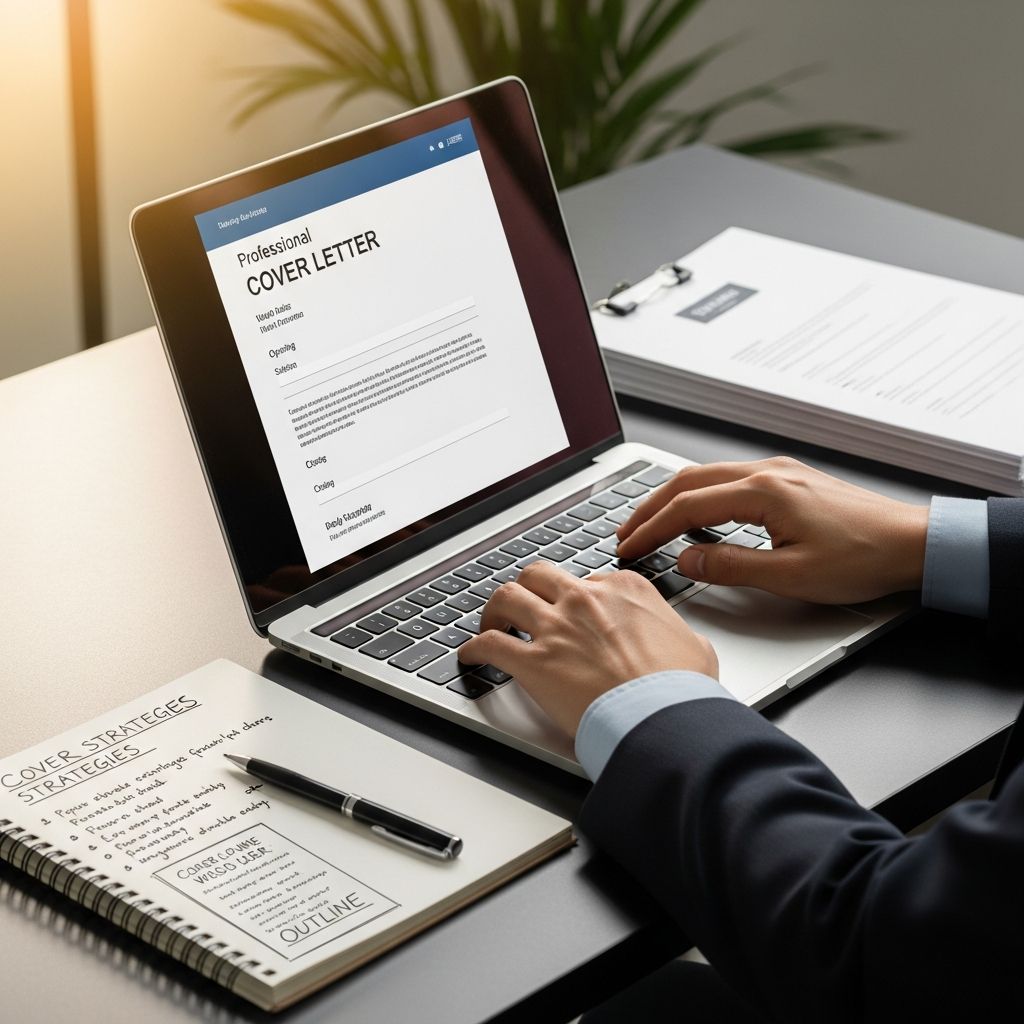
Understanding the Purpose and Power of Cover Letters
A cover letter serves as your written introduction to potential employers, offering a platform to communicate why you are the ideal candidate for a specific position. Unlike a resume, which presents a chronological summary of your work history and qualifications, a cover letter allows you to tell a compelling narrative about your career journey and demonstrate how your background aligns with the organization’s needs. This document provides context for your professional experiences and reveals your personality, communication skills, and genuine interest in the role.
The strategic value of a well-crafted cover letter cannot be overstated. Research consistently demonstrates that employers invest time reading cover letters from candidates who genuinely interest them, and a thoughtfully written letter can differentiate you from other applicants competing for the same position. By tailoring your message to each specific opportunity, you demonstrate that you have invested effort in understanding the company and the role, which signals professionalism and serious intent.
Establishing the Foundation: Header and Professional Presentation
The opening section of your cover letter establishes the professional tone and provides essential contact information. Begin by formatting your document as a formal business letter, which means including specific elements at the top in a clear, organized manner. This presentation layer matters significantly because hiring managers form initial impressions based on how your document looks before they read a single word of content.
Your header should contain your full name, city and postal code, telephone number, and professional email address. Below your contact information, include the current date, followed by the recipient’s details: their full name, job title, company name, and complete company address. Taking time to research and correctly identify the hiring manager by name demonstrates attention to detail and respect for the individual reviewing your application. If the job posting does not specify a name, research the company website or call the human resources department to obtain this information.
Formatting guidelines include using a simple, professional font such as Arial or Helvetica in 10 to 12-point size. Maintain left alignment throughout the document, use single spacing between lines, and preserve one-inch margins on all sides. Your entire letter should fit on a single page, which typically accommodates 250 to 300 words of content. This concise approach respects the reader’s time while forcing you to prioritize the most impactful information about your candidacy.
Crafting a Compelling Opening Statement
Your opening paragraph functions as the hook that determines whether a hiring manager will read your entire letter or move on to the next application. This section must accomplish several objectives simultaneously: it should identify the specific position you are pursuing, explain how you learned about the opportunity, and convey authentic enthusiasm for both the role and the organization.
Begin by referencing the exact job title and the platform where you discovered the posting. For example, you might mention that you found the advertisement on a specific job board, company website, or professional networking platform. If an employee referred you to the opportunity, acknowledge this connection as it adds credibility to your application. Current employees often serve as valuable ambassadors for companies, and mentioning a referral can immediately establish rapport with the hiring manager.
The opening paragraph should also include a brief statement about why this particular position appeals to you. Rather than offering generic statements about seeking career advancement, explain what specifically attracts you to the role or company. Perhaps the organization’s mission aligns with your values, their innovative approach to industry challenges intrigues you, or the position offers opportunities to develop skills you are passionate about developing. This personalized approach demonstrates that you have researched the organization and considered whether the position represents a genuine fit for your career goals.
Some candidates choose to include a short anecdote or personal connection that illustrates their interest in the company or their understanding of the industry. If you select this approach, keep it brief—no more than two to three sentences—and ensure it connects directly to the position or organization. Avoid starting with tired clichés or overused opening lines that fail to differentiate you from other applicants.
Developing Substantive Body Paragraphs
The body section represents the core of your cover letter, where you provide evidence supporting your claim that you are an exceptional candidate for the position. Most effective cover letters include one to two body paragraphs that showcase specific experiences, achievements, and skills relevant to the job description.
Each body paragraph should open with a clear topic sentence that introduces the experience or skill you will elaborate on. This sentence functions as a transition that connects your background to the employer’s needs. Following this introduction, provide specific examples of situations where you demonstrated the competency in question. Rather than making abstract claims about your abilities, show hiring managers tangible evidence of your capabilities through concrete examples.
When selecting examples, prioritize achievements that produced measurable results or demonstrated significant professional growth. Describe the action you took, explain the context of the situation, and articulate the positive outcomes or impact of your work. Quantifiable metrics—such as percentage increases in productivity, revenue generated, customer satisfaction scores, or timelines met—make your accomplishments more compelling and memorable. For instance, instead of stating “I improved our team’s efficiency,” you might write: “I implemented a new workflow system that reduced processing time by 30 percent and enabled our team to handle 40 percent more client requests monthly.”
Conclude each body paragraph with a statement that bridges your past experiences with your potential contributions to the employer. This connection helps hiring managers envision how your background will benefit their organization and directly addresses their needs. Reference specific responsibilities from the job description and explain how your experience has prepared you to excel in those areas.
Aligning Your Qualifications with Job Requirements
Before writing your cover letter, carefully analyze the job description to identify key qualifications, required skills, and primary responsibilities. Create a list of keywords and competencies mentioned in the posting, then strategically incorporate relevant terms into your letter using specific examples that demonstrate these abilities. This alignment accomplishes two important goals: it shows hiring managers that you understand what they are seeking, and it helps your application survive automated screening systems that search for relevant keywords.
The language you use matters significantly. Rather than using generic terminology, echo the exact phrasing from the job description when describing your relevant skills and experiences. If the posting emphasizes “project management expertise,” for instance, reference a specific project you managed, the scope of your responsibilities, and the successful outcome. This mirroring technique demonstrates that you have thoroughly reviewed the job requirements and possess the specific competencies the employer values.
Customize your cover letter for each application rather than using a template for multiple submissions. While you may maintain a basic structure from letter to letter, the content should reflect what you have learned about each unique organization and position. Employers can generally discern when a cover letter has been recycled for multiple applications, and generic letters significantly reduce your competitive advantage.
Closing With Confidence and Clarity
Your closing paragraph provides the opportunity to reinforce your interest in the position and prompt the hiring manager to take action. This final section should be brief but impactful, typically consisting of three to four sentences that accomplish specific purposes.
Restate your enthusiasm for the opportunity and briefly summarize why you believe you are a strong candidate. Avoid simply repeating information from earlier paragraphs; instead, provide a concise synthesis of your key selling points. Include a clear call to action that invites the hiring manager to contact you to discuss your candidacy further. For example, you might write: “I would welcome the opportunity to discuss how my experience in digital marketing and proven ability to increase online engagement can contribute to your team’s continued growth.”
Include a professional closing statement such as “Sincerely,” “Best regards,” or “Thank you for considering my application,” followed by your full name. If submitting your letter electronically, type your name rather than including a handwritten signature. Provide your contact information again in your email transmission, even though it appears in your header, ensuring the hiring manager can easily reach you if they wish to schedule an interview.
Common Mistakes to Avoid
Certain errors can undermine even well-intentioned cover letters. Understanding these pitfalls helps you avoid them and maintain a professional presentation.
- Generic language: Statements like “I am a motivated individual seeking a challenging position” fail to distinguish you from other applicants. Instead, provide specific examples of your motivations and accomplishments.
- Spelling and grammatical errors: Mistakes in a document emphasizing your communication skills damage your credibility. Proofread multiple times and consider asking a trusted colleague to review your letter before submission.
- Focusing excessively on your needs: While it is appropriate to mention that you are seeking opportunities for professional development, emphasize what you can contribute to the organization rather than what the organization can do for you.
- Excessive length: Avoid writing lengthy letters that test the reader’s patience. Hiring managers appreciate concise, well-organized documents that respect their time constraints.
- Negativity about previous employers: Never criticize former supervisors, colleagues, or organizations, even if you had negative experiences. Maintain professionalism and focus on positive aspects of your background.
- Making unsupported claims: Every statement about your qualifications should be backed by a concrete example or specific accomplishment.
Adapting Your Letter for Different Industries
While the fundamental structure of cover letters remains consistent, different industries and organizational cultures may require varying tones and emphasis. A cover letter for a creative position at an advertising agency might incorporate more personality and innovative language than one for a financial services firm, which would prioritize demonstrating analytical rigor and attention to detail.
Research the company culture before finalizing your letter. Review the organization’s website, social media presence, and employee reviews to understand their values and work environment. If the company projects an innovative, casual culture, your letter might incorporate slightly less formal language while maintaining professionalism. Conversely, traditional or hierarchical organizations typically expect more formal, conservative communication styles.
Industry-specific terminology also matters. If you are applying to a technical position, you might include relevant technical skills and certifications. A healthcare application might emphasize your patient-centered approach and understanding of regulatory compliance. Demonstrating fluency in industry-specific language signals that you understand the professional context and take the position seriously.
Frequently Asked Questions
Q: Should I always include a cover letter with my application?
A: Whenever possible, include a cover letter unless the job posting explicitly states that one is not required. Some employers specifically request cover letters because they value the additional insight into candidates’ communication skills and motivation. When no mention is made, submitting a well-written letter can still provide a competitive advantage.
Q: How long should my cover letter be?
A: Your cover letter should be one page in length, typically containing 250 to 300 words. This length is substantial enough to provide meaningful detail about your qualifications while respecting the hiring manager’s time constraints.
Q: Can I use the same cover letter for multiple positions?
A: While you may maintain a basic template structure, you should customize the content for each application. Different positions and organizations have different priorities, and employers can discern generic letters. Tailoring each letter demonstrates genuine interest and significantly improves your chances of success.
Q: What should I do if I do not know the hiring manager’s name?
A: Research the company website, call the human resources department, or check professional networking platforms like LinkedIn to identify the appropriate person. If you cannot determine a name despite reasonable effort, using a generic greeting such as “Dear Hiring Manager” is acceptable, though a personalized greeting is preferable.
Q: Should I mention salary expectations in my cover letter?
A: Generally, avoid discussing salary in your cover letter unless the job posting specifically requests this information. Compensation discussions typically occur later in the interview process once mutual interest has been established.
Q: How can I make my cover letter stand out?
A: Focus on telling a compelling story about your professional journey, provide specific examples of achievements relevant to the position, demonstrate genuine understanding of the organization, and maintain a professional tone that reflects your authentic voice. Avoid clichés and generic statements in favor of personalized, substantive content.
References
- Cover Letter Writing Guide — University of Arizona Career Services. 2024. https://career.arizona.edu/resources/cover-letter-writing-guide/
- How To Write a Cover Letter (With Examples and Tips) — Indeed Career Guide. 2024. https://www.indeed.com/career-advice/resumes-cover-letters/how-to-write-a-cover-letter
- Cover Letter Writing Guide — Cornell School of Hotel Administration. 2016. https://sha.cornell.edu/wp-content/uploads/sites/4/2019/04/CoverLetterGuide1_2016-2017.pdf
- Cover Letter Writing Guide — Penn Career Services, University of Pennsylvania. 2024. https://careerservices.upenn.edu/cover-letter-writing-guide/
- Cover Letter Guide — Center for Career Development, Princeton University. 2019. https://careerdevelopment.princeton.edu/sites/g/files/toruqf1041/files/documents/cover_letter_guide_2019.pdf
- How to Write a Cover Letter That Sounds Like You and Gets Noticed — Harvard Business Review. May 2022. https://hbr.org/2022/05/how-to-write-a-cover-letter-that-sounds-like-you-and-gets-noticed

- Integrated M.A. in Applied Linguistics, University of Hyderabad
- 5+ years in editorial, instructional, SEO, and research-based writing
Sneha is a relationships and lifestyle writer with a strong foundation in applied linguistics and certified training in relationship coaching. She brings over five years of writing experience to theskillvault, crafting thoughtful, research-driven content that empowers readers to build healthier relationships, boost emotional well-being, and embrace holistic living. Her writing and insights reflect the belief that beauty, happiness, and wellness…