
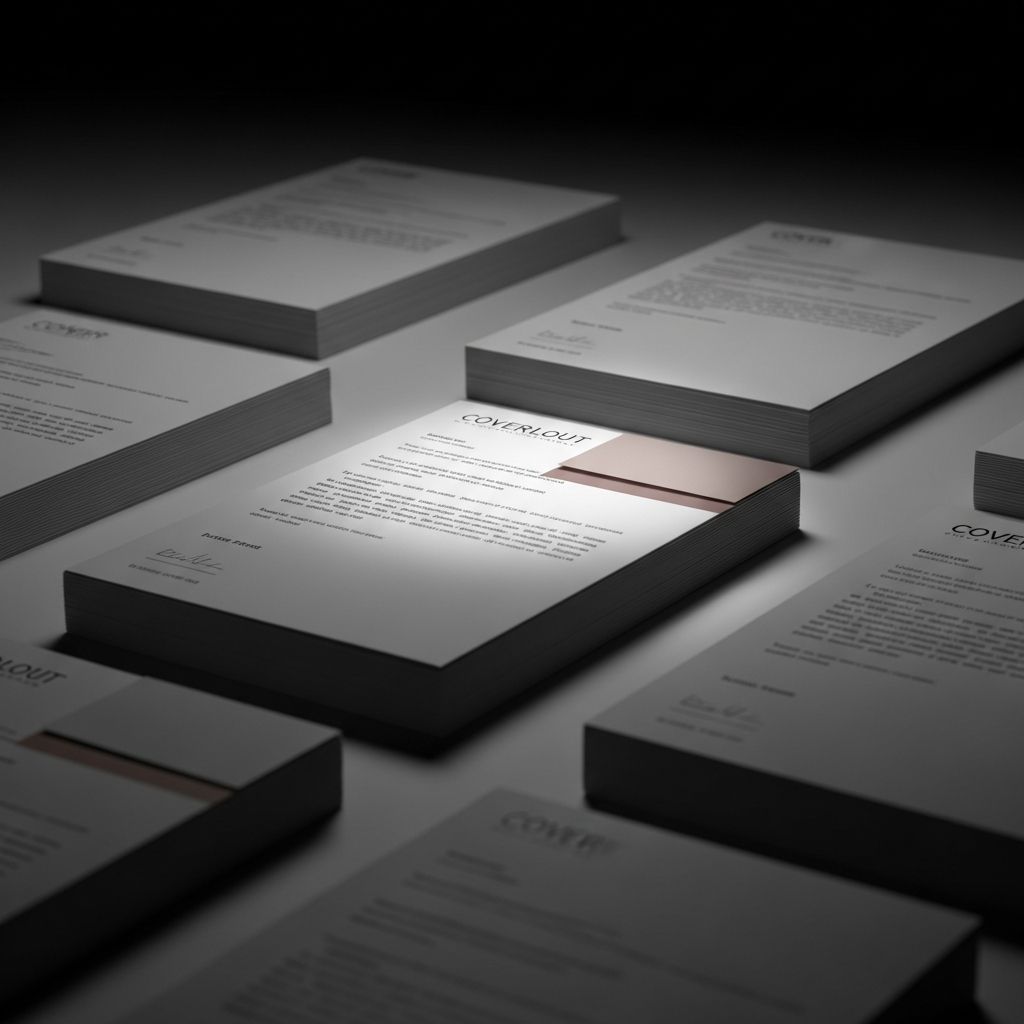
Why Your Cover Letter Matters More Than You Think
Many job seekers treat the cover letter as an afterthought, a formality to check off before submitting an application. But in reality, a well-crafted cover letter can be the difference between getting an interview and being quietly passed over. It’s your chance to go beyond the bullet points on your resume and tell a story about who you are, what you’ve achieved, and why you’re the right fit for this specific role and company.
Unlike a resume, which is structured and standardized, a cover letter allows for personality, context, and narrative. It’s where you can explain career transitions, highlight relevant accomplishments in more detail, and show genuine enthusiasm for the opportunity. When done well, it doesn’t just repeat your resume—it complements it, strengthens your case, and makes a memorable impression.
Start with Research, Not Writing
Before you write a single sentence, invest time in understanding the company and the role. A generic, one-size-fits-all cover letter is easy to spot and rarely effective. Employers want to see that you’ve taken the time to learn about their organization, its mission, culture, and current priorities.
Here’s how to gather the right information:
- Read the company’s website, especially the About Us, Mission, and Careers pages.
- Review recent news, press releases, or blog posts to understand what they’re currently focused on.
- Look at their social media presence to get a sense of tone and values.
- Study the job description carefully, noting keywords, required skills, and responsibilities.
- If possible, research the hiring manager or team on LinkedIn to understand their background.
This research isn’t just about flattery—it’s about alignment. The more you can connect your experience and goals to what the company is trying to achieve, the more compelling your letter will be.
Structure That Works: A Simple Framework
There’s no need to overcomplicate the structure. A clear, logical flow makes it easy for hiring managers to follow your argument and see your value. A strong cover letter typically follows this pattern:
- Opening paragraph: Introduce yourself, state the position you’re applying for, and express genuine interest in the role and company.
- Body paragraph(s): Highlight 2–3 key qualifications, skills, or achievements that directly relate to the job. Use specific examples and, when possible, quantify results.
- Closing paragraph: Reiterate your enthusiasm, summarize why you’re a strong fit, and clearly state your desire for an interview.
Keep the letter to one page, roughly 250–400 words. Every sentence should serve a purpose—either to demonstrate relevance, build credibility, or convey enthusiasm.
Writing a Strong Opening That Grabs Attention
The first few lines of your cover letter are critical. This is where you decide whether the reader keeps going or moves on. Avoid generic openings like “I am writing to apply for…” or “I saw your job posting and thought I’d be a good fit.” Instead, aim for something more engaging and specific.
Effective openings often include one or more of the following:
- A brief, relevant accomplishment that shows immediate value.
- A specific reason why you’re excited about this company (e.g., a recent product launch, a mission you admire).
- A personal connection to the role or industry that feels authentic.
- A referral or mutual connection, if applicable.
For example, instead of saying “I’m excited to apply for the Marketing Manager role,” you might say:
“When I saw that [Company] is expanding its digital presence in the education sector, I knew I had to apply. In my last role, I led a campaign that increased online course sign-ups by 40% in six months—exactly the kind of growth I’d love to help drive for your team.”
This kind of opening immediately shows relevance, enthusiasm, and results.
Building the Body: Show, Don’t Just Tell
The body of your cover letter is where you make your case. This is not the place to repeat your resume verbatim. Instead, use this space to expand on the most relevant parts of your background and explain how they connect to the job at hand.
Here’s how to make the body effective:
- Focus on 2–3 key strengths that match the job description (e.g., project management, client communication, data analysis).
- Use specific examples to illustrate those strengths. Describe a challenge, your actions, and the outcome.
- Quantify results whenever possible (e.g., “reduced processing time by 25%,” “increased customer satisfaction scores by 15 points”).
- Explain the “why”—why this experience matters for this role and how it would benefit the company.
For instance, if the job emphasizes collaboration and cross-functional work, you might write:
“In my current role, I regularly coordinate between engineering, product, and marketing teams to launch new features. For our last major release, I facilitated weekly syncs, managed timelines, and ensured clear communication across departments. As a result, we launched two weeks ahead of schedule and received positive feedback from both internal stakeholders and early users.”
This kind of detail is far more persuasive than simply listing “strong communication skills” on a resume.
Tailoring Your Letter to the Role and Company
One of the most common mistakes in cover letters is being too generic. A letter that could be sent to any company in any industry is unlikely to stand out. Tailoring means customizing your content to reflect the specific job, company, and industry.
Here’s how to tailor effectively:
- Use keywords from the job description, but in a natural way that fits your narrative.
- Reference specific company projects, values, or goals that resonate with you.
- Adjust your tone to match the company culture (more formal for traditional industries, slightly more conversational for startups).
- Explain why you want to work at this company, not just any company.
Tailoring doesn’t mean rewriting everything from scratch every time. You can create a strong base version and then adapt key sections—especially the opening and closing—for each application.
Striking the Right Tone: Professional but Human
Your cover letter should sound like a real person wrote it, not a robot or a thesaurus. That means using clear, concise language while maintaining a professional tone.
Here’s what to aim for:
- Be confident, not arrogant. Focus on what you’ve done and what you can contribute, without exaggerating.
- Be enthusiastic, not gushing. Show genuine interest in the role and company, but avoid over-the-top flattery.
- Be concise, not robotic. Avoid overly formal or stiff language that feels unnatural.
- Be authentic. Let your personality come through in a way that fits the company culture.
Reading your letter aloud can help you catch awkward phrasing and ensure it sounds like something you’d actually say in a conversation.
Common Pitfalls to Avoid
Even strong candidates can undermine their cover letter with avoidable mistakes. Watch out for these common issues:
- Repeating the resume without adding context or depth.
- Being too vague (e.g., “I’m a hard worker with great communication skills”).
- Overloading with jargon or industry buzzwords that don’t clearly explain value.
- Apologizing for gaps or lack of experience instead of focusing on transferable skills.
- Sharing irrelevant personal details (e.g., political views, family situations, unrelated hobbies).
- Ignoring instructions (e.g., not following formatting requirements or submission guidelines).
Every word should serve a purpose: to demonstrate fit, build credibility, or convey enthusiasm.
Formatting and Presentation Tips
How your cover letter looks matters almost as much as what it says. A clean, professional format makes it easy to read and reflects attention to detail.
Key formatting guidelines:
- Use the same font and style as your resume (e.g., 10–12 pt, professional font like Arial, Calibri, or Georgia).
- Keep margins between 0.5 and 1 inch.
- Single-space the letter with a blank line between paragraphs.
- Include your contact information at the top (name, phone, email, LinkedIn if relevant).
- If possible, include the hiring manager’s name, title, and company address.
- Use a professional salutation (e.g., “Dear [Hiring Manager’s Name]” or “Dear Hiring Team”).
- Close with a professional sign-off (e.g., “Sincerely,” “Best regards,” “Kind regards”) followed by your full name.
If submitting a printed letter, use quality paper that matches your resume. For digital submissions, save as a PDF unless otherwise specified.
Ending Strong: The Closing Paragraph
The closing paragraph is your final chance to leave a positive impression. It should be concise, confident, and action-oriented.
A strong closing typically includes:
- A brief restatement of your enthusiasm for the role and company.
- A summary of why you’re a strong fit (1–2 key points).
- A clear call to action, such as requesting an interview or expressing eagerness to discuss your qualifications further.
For example:
“I’m excited about the opportunity to bring my experience in customer success and process improvement to [Company]. I’d welcome the chance to discuss how I can contribute to your team and help achieve your goals. Thank you for your time and consideration—I look forward to the possibility of speaking with you.”
Avoid weak closings like “I hope you’ll consider my application” or “I’m available for an interview whenever.” Be proactive and confident.
Proofreading and Final Checks
Even a small typo or grammatical error can damage your credibility. Before submitting, take the time to proofread carefully and ensure your letter is polished.
Here’s a quick checklist:
- Check for spelling, grammar, and punctuation errors.
- Verify names, titles, company names, and contact details are correct.
- Ensure the tone is consistent and professional.
- Confirm the letter is tailored to the specific job and company.
- Make sure it’s no longer than one page.
- Ask a trusted friend or colleague to review it if possible.
Using tools like Grammarly or Hemingway can help catch issues, but don’t rely on them alone—human review is still the best way to catch awkward phrasing or tone problems.
When and How to Use a Cover Letter Template
Templates can be helpful for structure and consistency, but they should be starting points, not final products. A good template provides a clear framework (header, greeting, intro, body, closing), but every application should feel customized.
Here’s how to use templates effectively:
- Choose a clean, professional template that matches your resume style.
- Use it to ensure you include all necessary sections and formatting elements.
- Replace generic content with specific, tailored information for each job.
- Adjust tone and examples to fit the company and role.
- Never send a template without personalizing it—employers can spot a generic letter instantly.
Think of a template as a skeleton; your job is to give it life with real, relevant content.
FAQs About Cover Letters
Do I really need a cover letter?
While not every job requires one, a well-written cover letter can significantly strengthen your application, especially for competitive roles. If the job posting asks for a cover letter, always include one. If it’s optional, consider including one if you can add meaningful context that isn’t in your resume.
What if I don’t know the hiring manager’s name?
If you can’t find a specific name, it’s fine to use a general but professional salutation like “Dear Hiring Team,” “Dear [Company] Hiring Manager,” or “Dear [Department] Team.” Avoid outdated phrases like “To Whom It May Concern” if possible.
How long should a cover letter be?
Aim for 250–400 words, or about three to four concise paragraphs. Keep it to one page, with enough white space to make it easy to read.
Should I mention salary expectations in my cover letter?
No. Salary discussions are better saved for later in the hiring process, typically after an offer is on the table. Your cover letter should focus on your qualifications and fit for the role.
Can I use the same cover letter for multiple jobs?
You can use a base version as a starting point, but each application should be tailored to the specific role and company. Generic letters are easy to spot and rarely effective.
What if I have a career gap or limited experience?
Focus on transferable skills, relevant projects, volunteer work, or achievements from other areas of your life. Emphasize what you can do, not what you haven’t done. Avoid apologizing—instead, frame your background as a strength.
Final Thoughts: Make It About Them, Not Just You
The most effective cover letters don’t just talk about the candidate—they talk about the employer. They answer the unspoken question: “Why should we hire this person?” by clearly connecting the candidate’s background to the company’s needs.
Every sentence should serve one of three purposes:
- Demonstrate that you understand the role and company.
- Show that you have the skills and experience to succeed.
- Convey genuine enthusiasm for the opportunity.
When you approach your cover letter with that mindset, it becomes more than just another document—it becomes a compelling argument for why you belong in that role.
References
- How to Format a Cover Letter (With Outline and Examples) — Indeed Career Guide. Accessed 2025. https://www.indeed.com/career-advice/resumes-cover-letters/how-to-format-a-cover-letter-example
- Cover Letter Resources — University of Michigan Career Center. Accessed 2025. https://careercenter.umich.edu/content/cover-letter-resources
- How to Write a Cover Letter That Gets You Hired — Novorésumé Career Blog. Accessed 2025. https://novoresume.com/career-blog/how-to-write-a-cover-letter-guide

- Integrated M.A. in Applied Linguistics, University of Hyderabad
- 5+ years in editorial, instructional, SEO, and research-based writing
Sneha is a relationships and lifestyle writer with a strong foundation in applied linguistics and certified training in relationship coaching. She brings over five years of writing experience to theskillvault, crafting thoughtful, research-driven content that empowers readers to build healthier relationships, boost emotional well-being, and embrace holistic living. Her writing and insights reflect the belief that beauty, happiness, and wellness…