
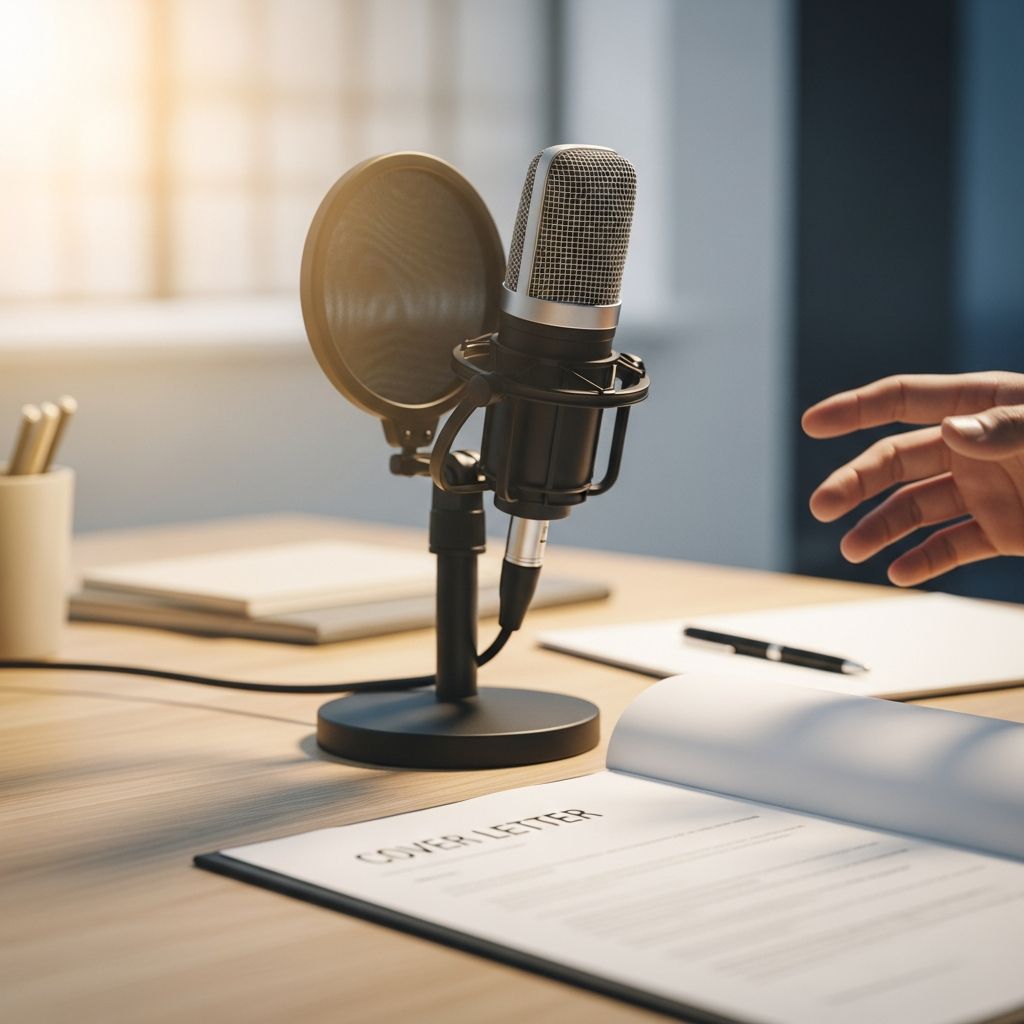
Why Your Cover Letter Needs a Real Voice
Most job seekers treat the cover letter as a formality: a short paragraph repeating their resume, wrapped in stiff, generic language. But that approach misses the point. A cover letter isn’t just a checklist of skills; it’s a chance to introduce yourself as a person, not just a candidate. The way you write it—your tone and voice—shapes how hiring managers see you before they even look at your work history.
When a hiring manager reads dozens of applications, the ones that stand out are the ones that sound like a real human who’s genuinely interested in the role. That doesn’t mean being casual or unprofessional. It means writing in a way that reflects who you are while still respecting the expectations of the industry and company. Getting this balance right can turn a forgettable application into one that gets a second look.
Understanding Tone vs. Voice in Professional Writing
Before you can choose the right style for your cover letter, it helps to understand the difference between tone and voice.
- Voice is the consistent personality behind your writing. It’s shaped by your background, values, communication style, and how you naturally express ideas. Your voice stays relatively stable across different situations.
- Tone is how that voice adapts to context. It changes based on the audience, purpose, and situation. For example, you might use the same voice when talking to a close friend and a manager, but your tone will be more relaxed with the friend and more polished with the manager.
In a cover letter, your voice should feel authentic—like it could only come from you. But your tone should be carefully adjusted to match the company’s culture, the role’s expectations, and the norms of the industry. A mismatch in tone can make even a strong candidate seem like a poor fit, while a well-matched tone can make an average resume more compelling.
How Company Culture Shapes the Right Tone
There’s no single “correct” tone for every cover letter. The best tone depends heavily on the organization you’re applying to. A startup that values creativity and fast-paced collaboration will respond differently to a cover letter than a law firm or government agency that prioritizes precision and formality.
To choose the right tone, start by researching the company:
- Read their website, especially the About Us and Careers pages.
- Look at their social media presence. Do they use playful language, emojis, and casual posts, or do they stick to polished, formal updates?
- Check employee reviews or interviews to get a sense of how people describe the work environment.
Once you have a sense of the culture, you can decide whether your cover letter should lean more formal, conversational, energetic, or reserved. For example:
- A tech startup might appreciate a tone that’s confident, slightly informal, and enthusiastic about innovation.
- A financial institution or legal firm will likely expect a more polished, structured, and serious tone.
- A nonprofit or education organization may respond well to a tone that shows passion, values, and a sense of mission.
The goal isn’t to mimic the company’s exact style, but to show that you understand and respect their culture while still sounding like yourself.
Matching Your Personality to the Role
While it’s important to adapt your tone to the company, it’s equally important that your cover letter still feels like you. A cover letter that sounds like a different person—too stiff if you’re naturally warm, or too casual if you’re more reserved—can come across as inauthentic.
Ask yourself a few key questions:
- How do I usually communicate in professional settings?
- Do I tend to be more direct and to the point, or do I enjoy storytelling and context?
- Am I more analytical and data-driven, or do I focus on relationships and big-picture ideas?
Your answers will help you decide how to frame your experience. For instance:
- If you’re naturally detail-oriented and logical, your cover letter can highlight precision, problem-solving, and measurable results in a clear, structured way.
- If you’re more relationship-focused and empathetic, you might emphasize collaboration, communication, and impact on teams or customers.
The strongest cover letters don’t try to be someone else; they show how your natural strengths and personality make you a great fit for the role.
Common Tone Pitfalls to Avoid
Even with the best intentions, it’s easy to fall into tone traps that weaken your cover letter. Here are some of the most common mistakes and how to avoid them:
- Overly formal language: Using stiff, bureaucratic phrases like “I wish to convey my interest” or “Please find enclosed” can make you sound robotic. Instead, use clear, professional language that still feels human.
- Excessive informality: While some roles welcome a conversational tone, going too casual (“Hey! I saw your job post and thought, why not?”) can undermine your credibility, especially in more traditional fields.
- Overconfidence that borders on arrogance: It’s good to be confident, but statements like “I’m the best candidate you’ll find” can backfire. Focus on what you’ve done and how it aligns with the role, not on declaring superiority.
- Underconfidence that sounds hesitant: Phrases like “I think I might be a good fit” or “I’m not sure if this is what you’re looking for” make you seem unsure of your value. Use strong, clear language: “My experience in X makes me well-suited for this role.”
- Generic enthusiasm: Saying “I’m excited about this opportunity” without explaining why can feel empty. Tie your enthusiasm to specific aspects of the company, mission, or role.
Avoiding these pitfalls doesn’t mean writing in a bland, neutral way. It means being intentional about how you come across so that your tone supports your message, not distracts from it.
Practical Strategies for Crafting the Right Voice
Once you’ve thought about tone and personality, it’s time to put it into practice. Here are a few concrete strategies to help you write a cover letter that sounds like you while still being professional:
1. Start with a Freewrite
Before you draft the official letter, spend 10–15 minutes writing freely about why you’re interested in the role and what makes you a strong fit. Don’t worry about structure, grammar, or sounding “professional.” Just write in your natural voice. Later, you can pull the best parts and refine them into a polished version.
2. Use “I” Statements Confidently
Your cover letter is about you, so it’s okay to use “I” liberally. Instead of hiding behind passive language (“Responsibilities included…”), own your experience: “I led a team of five to deliver the project on time and under budget.” This makes your writing more direct and personal.
3. Show, Don’t Just Tell
Instead of saying “I’m a great communicator,” describe a situation where your communication made a difference: “I facilitated weekly cross-functional meetings that reduced misalignment and sped up decision-making by 30%.” Concrete examples make your voice more credible and memorable.
4. Read It Aloud
One of the best ways to check if your cover letter sounds like you is to read it out loud. If it feels awkward, stilted, or unlike how you’d actually speak, it probably needs to be rewritten in a more natural way. If it flows and sounds like something you’d say in a conversation, you’re on the right track.
5. Get Feedback from Someone Who Knows You
Ask a trusted colleague, mentor, or friend to read your cover letter and tell you whether it sounds like you. If they say, “This doesn’t sound like you at all,” that’s a sign you’ve overcorrected toward formality or are trying too hard to fit a mold.
Industry-Specific Tone Guidelines
While every company is different, certain industries tend to favor particular tones. Here’s a general guide to help you adjust your voice appropriately:
| Industry | Recommended Tone | What to Emphasize |
|---|---|---|
| Law, Finance, Government | Formal, precise, and professional | Accuracy, experience, and adherence to standards |
| Tech, Startups, Creative Agencies | Confident, energetic, and slightly informal | Innovation, problem-solving, and collaboration |
| Healthcare, Education, Nonprofits | Warm, passionate, and mission-driven | Values, impact, and long-term commitment |
| Engineering, Science, Technical Roles | Clear, concise, and detail-oriented | Technical skills, results, and process |
| Executive, Leadership, Consulting | Authoritative, strategic, and polished | Vision, leadership, and measurable outcomes |
These are starting points, not rigid rules. Always tailor your tone based on the specific company and role, not just the industry.
How to Sound Enthusiastic Without Sounding Desperate
Enthusiasm is one of the most powerful tools in a cover letter, but it’s easy to cross the line into sounding overly eager or even desperate. The key is to show genuine interest in a way that feels grounded and professional.
Here’s how to strike that balance:
- Be specific about what excites you: Instead of “I’m so excited to work for your company,” say “I’ve followed your work in sustainable packaging and am particularly impressed by your recent initiative to reduce plastic waste.”
- Connect your values to the company’s mission: “Your commitment to accessible education aligns with my belief that learning should be available to everyone, regardless of background.”
- Focus on what you can contribute, not just what you want: “I’m eager to bring my experience in digital marketing to help grow your audience and deepen engagement with your community.”
When enthusiasm is tied to concrete reasons and framed around contribution, it feels authentic and professional, not desperate.
When to Be More Formal vs. More Conversational
Deciding how formal to be depends on several factors:
- Company size and culture: Large, established organizations often expect more formality than small, fast-moving startups.
- Industry norms: Legal, finance, and government roles typically require a more formal tone, while creative and tech roles often welcome a more relaxed style.
- Level of the role: Entry-level roles may allow for a slightly more conversational tone, while senior or executive roles usually call for a more polished, authoritative voice.
- How the job is advertised: If the job description uses casual language and emojis, it’s a signal that a more conversational tone is acceptable. If it’s very structured and formal, match that style.
As a rule of thumb:
- Use a more formal tone when you’re unsure, especially in traditional industries.
- Use a more conversational tone when the company clearly signals that it values creativity, speed, and personality.
You can always adjust slightly in interviews once you’ve seen how the team communicates in person.
FAQs About Cover Letter Tone and Voice
How personal should a cover letter be?
A cover letter should be professional, but it can include personal elements that are relevant to the role. For example, it’s fine to mention a mentor who inspired you, a project you’re proud of, or a value that drives your work. Avoid overly personal details like family situations, health issues, or unrelated hobbies unless they directly connect to the job.
Should I use contractions in a cover letter?
Contractions (like “I’m,” “you’re,” “don’t”) are generally acceptable in most modern cover letters, especially in less formal industries. They make your writing sound more natural and conversational. In very traditional fields (like law or high-level finance), you might choose to avoid them for a more polished tone, but it’s not a strict rule.
How do I sound confident without sounding arrogant?
Focus on facts and results, not opinions about yourself. Instead of “I’m the best candidate,” say “My experience leading three successful product launches makes me well-prepared for this role.” Let your achievements speak for you, and avoid comparing yourself to others or making sweeping claims.
Can I be creative in a cover letter?
Yes, but only if it fits the company and role. Creative industries often welcome a bit of flair, storytelling, or unique formatting. In more conservative fields, creativity is better expressed through clear, compelling writing and strong examples, not gimmicks or unusual formats.
How long should a cover letter be?
Aim for three to four short paragraphs, or about 250–400 words. Hiring managers often skim applications, so being concise and focused is more effective than writing a long, detailed letter. Every sentence should serve a clear purpose: introduce yourself, explain why you’re a good fit, and express interest in the role.
Final Tips for a Strong, Authentic Cover Letter
Writing a cover letter that sounds like you doesn’t mean ignoring professionalism. It means finding the sweet spot where your personality, skills, and the company’s expectations meet. Here are a few final tips to keep in mind:
- Always tailor each cover letter to the specific role and company.
- Use a clear, confident tone that matches the industry and culture.
- Let your genuine interest and values come through, but keep it professional.
- Proofread carefully to avoid typos and awkward phrasing.
- Read it aloud to make sure it sounds like a real person wrote it.
When your cover letter feels authentic, it becomes more than just a document—it becomes an invitation for the hiring manager to want to learn more about you. And that’s exactly what a great cover letter should do.
References
- How to Write a Cover Letter That Sounds Like You (and Gets Noticed) — Harvard Business Review. 2022-05-11. https://hbr.org/2022/05/how-to-write-a-cover-letter-that-sounds-like-you-and-gets-noticed
- Guide to Writing a Cover Letter — U.S. Department of Labor, CareerOneStop. https://www.careeronestop.org/Toolkit/JobSearch/cover-letter-guide.aspx
- Examples of Tone in Writing — Indeed Career Guide. https://www.indeed.com/career-advice/career-development/examples-of-tone

- Integrated M.A. in Applied Linguistics, University of Hyderabad
- 5+ years in editorial, instructional, SEO, and research-based writing
Sneha is a relationships and lifestyle writer with a strong foundation in applied linguistics and certified training in relationship coaching. She brings over five years of writing experience to theskillvault, crafting thoughtful, research-driven content that empowers readers to build healthier relationships, boost emotional well-being, and embrace holistic living. Her writing and insights reflect the belief that beauty, happiness, and wellness…