
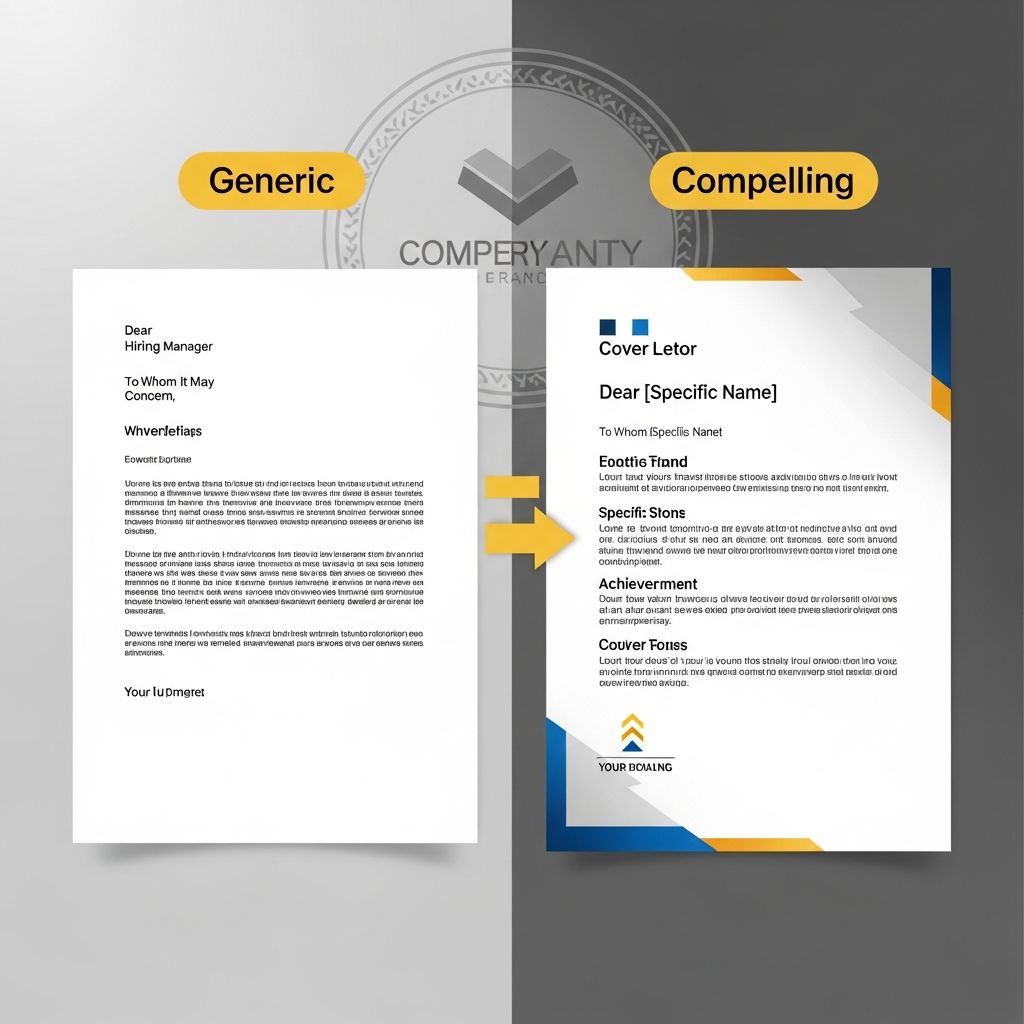
Many job seekers treat the cover letter as an afterthought: a polite, formal note that mostly repeats the resume. That approach is a missed opportunity. A strong cover letter can explain context your resume can’t, connect your experience directly to the role, and make a hiring manager want to meet you.
This guide walks through how to reshape a dull, unfocused letter into a clear, persuasive narrative. It is inspired by a before-and-after example of a rewritten cover letter, but the structure, wording, and explanations here are completely original.
What a Great Cover Letter Really Does
Before rewriting anything, it helps to understand the job of a cover letter. A strong letter is not a summary of your resume; it is a tailored argument for why you are the best match for this specific role and employer.
| Weak Cover Letter | Effective Cover Letter |
|---|---|
| Repeats resume in paragraph form | Explains how your experience fits this job |
| Vague claims like “hard worker” | Specific examples and measurable results |
| Could be sent to any company | References the employer’s goals, language, and needs |
| Focuses on what you want | Focuses on the value you bring |
| Formal but generic tone | Professional and authentic voice |
The Core Structure of a High-Impact Cover Letter
You can format a strong cover letter in different ways, but most effective letters contain four essential elements that align with guidance from university career centers and major career sites.
- Opening: A focused hook that names the role and gives a compelling reason to keep reading.
- Connection: A short section that shows you understand the employer and the context of the role.
- Evidence: 1–2 concise stories or bullet points that demonstrate how you’ve solved similar problems.
- Close: A confident, courteous ending that invites next steps.
Think of the letter as a brief, written version of your pitch in a first conversation.
Step 1: Diagnose Why Your Current Letter Isn’t Working
If you already have a draft, start by identifying what is holding it back. Common patterns show up again and again in weak cover letters.
Typical Problems in Weak Cover Letters
- Generic openings: Starting with lines such as “I am writing to apply for the position of…” adds no real information and wastes the most valuable space.
- Resume repetition: Restating your job titles and duties without showing how they connect to this role leaves the reader doing all the interpretation work.
- Clichés without proof: Claims like “team player” or “self-starter” mean little unless backed by specific examples.
- Too much biography, not enough relevance: Long explanations of your life story that do not clearly relate to the job signal that you do not see things from the employer’s point of view.
- Apologizing for gaps or weaknesses: Over-explaining career gaps or lack of experience can draw attention away from your strengths.
- No clear through-line: If a reader cannot explain in one sentence why you are a fit after reading, the letter is not doing its job.
Read your draft with a hiring manager’s eye and underline anything that is vague, could apply to anyone, or does not help them decide whether to interview you.
Step 2: Clarify Your Message Before You Rewrite
Before touching a word, decide what you actually want to say. This saves time and leads to a much more focused letter.
Answer Three Targeting Questions
- What are the top 3–5 things this employer cares about most?
Use the job description to look for repeated skills, responsibilities, and outcomes. Highlight key phrases and requirements. - Which experiences best show you can deliver those things?
Pick specific projects or accomplishments instead of general traits. Look for results you can describe concretely. - What is your headline as a candidate for this role?
For example: “Nonprofit program manager with a track record of building partnerships” or “Data analyst who translates complex findings into business decisions.”
These decisions become the spine of your revised letter.
Step 3: Craft a Strong, Specific Opening
Hiring managers often skim dozens of applications. A strong opening signals that continuing to read your letter is worth their time.
Elements of a Powerful First Paragraph
- Name the role you’re applying for.
- Include your headline – a one-sentence summary of why you’re a strong fit.
- Add a concrete point of connection, such as a recent project, value, or outcome at the organization that you admire.
Avoid apologetic or tentative language. You are not asking for a favor; you are proposing a mutually beneficial match.
Step 4: Show You Understand the Employer’s World
Generic letters fail because they could be sent to any company. Strong letters demonstrate that you’ve done research and are thinking from the employer’s perspective.
How to Demonstrate Insight Without Flattery
- Reference recent work or priorities: A product launch, initiative, or goal mentioned in the job posting, website, or news coverage.
- Match the tone: If the organization’s materials are formal and conservative, keep your letter more traditional; if they sound creative and informal, moderate your tone accordingly.
- Use their language: Mirror 2–3 key terms from the job description naturally in your prose (for example, “stakeholder engagement” or “process improvement”). This helps both the human reader and automated screening systems.
The goal is not to flatter, but to make it obvious that you are interested in this role, not just any job.
Step 5: Replace Vague Claims with Concrete Evidence
The heart of your cover letter is where you prove your value. This is where most weak letters fall apart: they rely on adjectives instead of evidence. Employers respond to specific examples, especially when you can show measurable outcomes.
Turn Duties into Results
Instead of describing only what you were responsible for, emphasize what happened because you did the work well. Where possible, use numbers or clear indicators of impact.
- “Managed social media” becomes “Developed and scheduled campaigns that increased engagement by 35% over six months.”
- “Customer service experience” becomes “Resolved an average of 40+ customer tickets per day while maintaining a 95% satisfaction score.”
- “Led a team” becomes “Coordinated a cross-functional team of 6 to deliver a complex project 2 weeks ahead of schedule.”
Use a Short, Focused Bulleted List
Many effective cover letters include a brief bulleted section to highlight 2–4 achievements most relevant to the role.
For example, under a short sentence such as “Here are a few results I’m especially proud of that align with this position:” you might include bullets like:
- Designed a new intake process that reduced response times by 40% while maintaining quality standards.
- Coordinated three partner organizations to deliver a joint program reaching 500+ participants.
- Built dashboards to track key performance indicators, enabling leadership to adjust strategy mid-quarter.
These quick, scannable points can quickly answer the question “What can this person actually do?”
Step 6: Address Complexities Strategically (Without Over-sharing)
Many people use their cover letter to explain career changes, employment gaps, or unconventional backgrounds. This can be appropriate—but only when done briefly and thoughtfully.
Guidelines for Sensitive Topics
- Be concise: One or two sentences is usually enough to explain a transition, as long as you pivot back quickly to your strengths.
- Avoid unnecessary personal detail: Experts advise against including unrelated personal information such as political views or extensive discussion of personal hardships.
- Emphasize continuity and transferable skills: Focus on the skills and insights you gained that prepare you for this role, rather than on the challenges themselves.
- Don’t apologize: You may acknowledge a gap, but the bulk of the letter should be about what you bring now.
Step 7: Close with Confidence and a Clear Next Step
The final paragraph is your chance to leave a strong impression. A common mistake is ending with a passive, generic line.
Elements of a Strong Closing Paragraph
- Reinforce your fit: Briefly restate how your experience intersects with their priorities.
- Express genuine interest: Show enthusiasm about contributing to specific aspects of the role.
- Invite next steps: Politely indicate that you welcome the chance to discuss your application further.
You do not need to demand an interview; instead, show that you’re proactive and engaged while maintaining professional courtesy.
Step 8: Polish for Clarity, Tone, and Professionalism
Even a well-structured letter can be undermined by sloppy proofreading, awkward phrasing, or formatting issues. University career centers and major career resources consistently recommend a simple, professional presentation.
Final Checklist Before Sending
- Length: Keep the letter to one page or less, typically 3–4 paragraphs plus a short bulleted section.
- Formatting: Use a clear, readable font (around 10–12 point), standard margins, and consistent spacing.
- Names and details: Double-check the spelling of the hiring manager’s name, the company, and the role title.
- Professional tone: Avoid slang, text-style abbreviations, or humor that might not land well across cultures or industries.
- Active voice: Choose direct sentences such as “I led” or “I developed” instead of “was responsible for.”
- No redundancy: Remove sentences that simply restate your resume without adding context or interpretation.
Putting It All Together: A Rewrite Roadmap
To apply all of these principles to your own letter, use this simple rewrite workflow.
Four-Pass Revision Method
- Pass 1 – Delete: Remove anything that is generic, repetitive, or focused only on what you want from the job.
- Pass 2 – Add specifics: Insert details, numbers, and results where you previously had vague descriptions.
- Pass 3 – Tailor: Add 2–3 references to the organization’s priorities and adjust language to echo the job description.
- Pass 4 – Polish: Read aloud to check flow, tone, and clarity. Fix grammar, tighten long sentences, and verify formatting.
By the end of this process, your new letter should feel more like a focused argument than a formality.
Frequently Asked Questions (FAQs)
How long should my cover letter be?
Most experts recommend keeping your cover letter to one page, typically 3–4 short paragraphs plus a bulleted list if helpful. This length allows you to provide meaningful detail without overwhelming busy hiring managers.
Do I really need a different cover letter for every job?
Yes. You do not need to start from scratch each time, but you should tailor each letter by aligning it with the job description, highlighting the most relevant achievements, and referencing specific aspects of the organization. Tailored letters are far more likely to get noticed.
What if I do not meet every qualification in the posting?
Very few candidates match every single requirement. Use your cover letter to emphasize the qualifications you do have, especially transferable skills and experiences that show you can learn quickly and adapt. Avoid apologizing for what you lack; focus instead on your strengths and potential to contribute.
Should I repeat information from my resume?
You can refer to experiences listed on your resume, but the cover letter should add value by explaining context, motivation, and impact. Rather than copying bullet points, use the letter to connect the dots between your history and the role you want.
Is it okay to use AI tools to help write my cover letter?
AI tools can help you brainstorm phrasing, organize your ideas, or check for clarity. However, career experts emphasize that your final letter should reflect your own voice, specific details, and accurate representation of your experience. Always review, customize, and fact-check anything generated by tools before submitting.
References
- How to Write a Cover Letter That Gets You Hired — MyPerfectResume Career Center. 2024-03-01. https://www.myperfectresume.com/career-center/cover-letters/how-to/write
- Best Cover Letters of 2025 (10 Good Examples) — ResumeGenius. 2025-01-05. https://resumegenius.com/blog/cover-letter-help/best-cover-letters
- How to Write a Cover Letter That Gets You Hired in 2025 — Apt. 2025-02-10. https://www.tryapt.ai/blog/how-to-write-cover-letter-that-gets-you-hired
- How To Write a Cover Letter (With Examples and Tips) — Indeed Career Guide. 2024-06-15. https://www.indeed.com/career-advice/resumes-cover-letters/how-to-write-a-cover-letter
- How to Write a Cover Letter That Sounds Like You (and Gets Noticed) — Harvard Business Review. 2022-05-23. https://hbr.org/2022/05/how-to-write-a-cover-letter-that-sounds-like-you-and-gets-noticed
- Cover Letter Resources — University of Michigan Career Center. 2023-09-01. https://careercenter.umich.edu/content/cover-letter-resources

- Integrated M.A. in Applied Linguistics, University of Hyderabad
- 5+ years in editorial, instructional, SEO, and research-based writing
Sneha is a relationships and lifestyle writer with a strong foundation in applied linguistics and certified training in relationship coaching. She brings over five years of writing experience to theskillvault, crafting thoughtful, research-driven content that empowers readers to build healthier relationships, boost emotional well-being, and embrace holistic living. Her writing and insights reflect the belief that beauty, happiness, and wellness…