
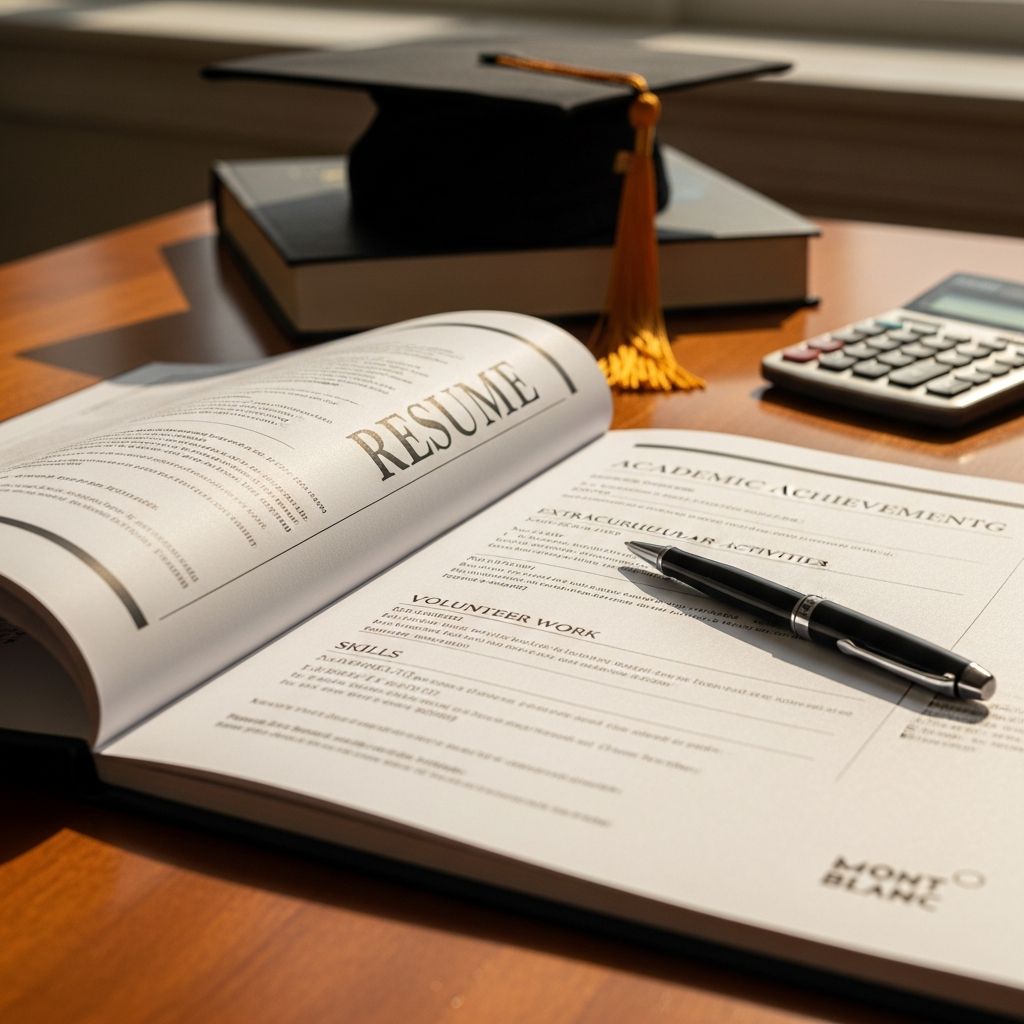
Why a High School Resume Matters More Than You Think
Many students assume that a resume is only for college graduates or professionals with years of experience. In reality, a well-crafted high school resume is one of the most valuable tools a student can have. Whether you’re applying for a part-time job, internship, volunteer position, or even college admission, a resume helps you present your strengths in a clear, organized way.
Employers and admissions officers look for evidence of responsibility, initiative, and reliability. Even if you haven’t held a formal job, your academic work, extracurriculars, volunteer efforts, and personal projects can all demonstrate these qualities. The key is knowing how to frame them effectively.
What Belongs in a High School Resume
A strong high school resume doesn’t need to be complicated. It should be clean, easy to read, and focused on what’s most relevant to the opportunity you’re pursuing. While formats can vary slightly, most effective student resumes include these core sections:
- Contact information
- Objective or profile statement
- Education
- Experience (paid, unpaid, and project-based)
- Skills
- Achievements and awards
- Extracurricular activities and leadership
Each section serves a specific purpose and should be tailored to highlight your strengths in a way that aligns with the role or program you’re applying to.
Starting with the Basics: Contact Information
The top of your resume should clearly display your name and contact details. This seems simple, but small mistakes here can make it difficult for employers to reach you.
Include:
- Your full name (larger font, easy to spot)
- A professional email address (ideally first.last@gmail.com or similar)
- A phone number where you can be reached
- Your city and state (no need for a full street address)
- Optional: LinkedIn profile or personal website if relevant and professional
Avoid using nicknames, unprofessional email addresses, or including personal details like age, gender, or photos unless specifically requested. Keep the focus on your qualifications, not personal information.
Setting the Tone: Objective or Profile Statement
Right after your contact information, include a short statement that explains who you are and what you’re looking for. For high school students, this is often called an objective or profile statement.
This section should be 2–3 sentences and answer three questions:
- What kind of role or opportunity are you seeking?
- What relevant skills or experiences do you bring?
- What value can you offer the employer or institution?
For example:
- “Motivated high school student seeking a part-time position in customer service. Strong communication skills, reliability, and experience assisting customers through volunteer work and school events.”
- “High school junior with interest in business and finance, looking for an internship opportunity. Skilled in organization, data entry, and teamwork through academic projects and extracurricular involvement.”
Keep this statement concise and focused. Avoid generic phrases like “hard worker” or “team player” unless you back them up with specific examples elsewhere in the resume.
Highlighting Your Education
For most high school students, education is the most substantial section of the resume. This is where you show your academic foundation and any special coursework or achievements.
Include:
- School name
- Expected graduation date (or actual graduation date if applicable)
- Current grade level or class year
- Relevant coursework (especially if related to the job or program)
- Honors, awards, or academic distinctions
Example:
- Lincoln High School – Expected Graduation: June 2026
- Current Grade: 11th Grade
- Relevant Coursework: Business Fundamentals, Computer Applications, Advanced Algebra
- Honors: Honor Roll (2023–Present), National Honor Society (2024–Present)
If you’ve taken advanced courses, dual enrollment, or earned certifications (like Microsoft Office, Google Workspace, or industry-specific training), list them here. These details can set you apart from other applicants.
Presenting Experience in a Meaningful Way
Many students worry that they don’t have enough “real” work experience. The truth is, experience comes in many forms. Paid jobs are great, but they’re not the only way to show responsibility and skills.
Consider including:
- Part-time or seasonal jobs (retail, food service, tutoring, babysitting, lawn care, etc.)
- Volunteer work (school events, community organizations, religious groups, nonprofits)
- Internships or job shadowing experiences
- Leadership roles in clubs, sports teams, or student government
- Personal projects (websites, blogs, YouTube channels, coding projects, art portfolios)
For each experience, structure the entry clearly:
- Position/Role
- Organization or context (school, company, club, etc.)
- Dates (month and year)
- 3–5 bullet points describing responsibilities and accomplishments
Use strong action verbs to start each bullet point:
- Organized, managed, led, assisted, supported, coordinated, maintained, improved, created, developed, taught, trained, served, handled, resolved, contributed, participated.
Where possible, add numbers or specific outcomes:
- “Assisted 15–20 customers per shift with purchases and returns.”
- “Helped organize a school fundraiser that raised over $2,000 for a local charity.”
- “Led a team of 5 students in a science fair project that placed second in the regional competition.”
Even if you didn’t earn a salary, these experiences show that you can follow instructions, work with others, and take initiative.
Skills That Actually Matter to Employers
Employers want to know what you can do, not just where you’ve been. A dedicated skills section helps them quickly see your capabilities.
Divide your skills into categories that make sense for the role:
- Technical/Computer Skills: Microsoft Office, Google Workspace, basic coding, graphic design tools, social media management, data entry, email management.
- Communication Skills: Writing, public speaking, customer service, active listening, presenting, teamwork.
- Organizational Skills: Time management, scheduling, record keeping, multitasking, attention to detail.
- Soft Skills: Problem solving, adaptability, reliability, responsibility, leadership, conflict resolution.
Be honest about your skill level. If you’re comfortable using Excel for basic tasks, say “Proficient in Excel for data entry and basic formulas.” If you’re still learning, you can say “Familiar with…” or “Basic knowledge of…”
When possible, match your skills to the job description. If the job asks for “strong communication skills” and “ability to work in a team,” make sure those phrases appear in your resume, backed up by examples in your experience section.
Recognizing Achievements and Awards
High school is full of opportunities to earn recognition, and these should be highlighted. Awards and achievements show that you’ve gone beyond the minimum and excelled in certain areas.
Include:
- Academic honors (Honor Roll, Dean’s List, National Honor Society)
- Subject-specific awards (Math, Science, English, etc.)
- Competitions and contests (science fairs, debate, robotics, art, music, sports)
- Leadership awards or recognition from clubs or organizations
- Certifications (first aid, CPR, lifeguard, coding, software, etc.)
Format each entry clearly:
- “Honor Roll – Lincoln High School, 2023–Present”
- “Second Place, Regional Science Fair – 2024”
- “Certified in CPR and First Aid – American Red Cross, 2023”
Even small recognitions can make a difference. If you received a “Student of the Month” award or a leadership certificate from a summer program, include it.
Extracurriculars and Leadership Roles
Clubs, sports, and other activities are more than just hobbies—they’re proof of your ability to manage time, work in teams, and take on responsibility.
When listing extracurriculars:
- Include the name of the club, team, or organization
- State your role (member, officer, captain, president, etc.)
- Add dates of involvement
- Highlight any leadership, planning, or special contributions
Examples:
- “Member, Debate Club – 2022–Present: Participated in 5 regional tournaments and helped organize weekly practice sessions.”
- “Varsity Soccer Team – 2021–Present: Captain (2023–Present), led team warm-ups, and assisted coaches with drills.”
- “Key Club – 2022–Present: Organized two community service events, each involving 20+ volunteers.”
These entries show commitment, teamwork, and leadership—qualities that employers and colleges value highly.
Design and Formatting Tips for a Professional Look
A resume should be easy to read and visually clean. You don’t need fancy designs or colors to make a strong impression.
Follow these formatting guidelines:
- Use a standard, professional font (Arial, Calibri, Times New Roman, Georgia)
- Font size: 10–12 pt for body text, 14–16 pt for your name
- Keep margins between 0.5 and 1 inch
- Use consistent spacing and alignment
- Limit the resume to one page (especially for high school students)
- Save and send as a PDF unless otherwise requested
Avoid:
- Overly decorative fonts or colors
- Photos, graphics, or icons (unless applying for creative roles)
- Long paragraphs; use bullet points instead
- Unnecessary personal information (age, religion, marital status, etc.)
A simple, well-organized layout makes it easier for hiring managers to scan your resume quickly and find the information they need.
Tailoring Your Resume for Different Opportunities
One resume does not fit all situations. It’s smart to adjust your resume slightly depending on the job, internship, or program you’re applying to.
For example:
- If applying for a retail or customer service job, emphasize communication, reliability, and any customer-facing experience.
- If applying for a tech or office support role, highlight computer skills, organization, and any relevant coursework or projects.
- If applying for a leadership or volunteer position, focus on teamwork, initiative, and community involvement.
Review the job description carefully and use similar language in your resume. If the posting mentions “attention to detail,” “team collaboration,” or “problem solving,” make sure those terms appear in your skills and experience sections.
Common Mistakes to Avoid
Even a well-written resume can be weakened by small errors. Watch out for these common pitfalls:
- Spelling and grammar mistakes: Always proofread carefully and ask a teacher, parent, or career counselor to review it.
- Vague descriptions: Avoid phrases like “helped with” or “responsible for.” Be specific about what you did and what you achieved.
- Irrelevant information: Focus on experiences and skills that matter for the role. Hobbies like video games or social media use are only worth mentioning if they relate to the job.
- Overloading with information: Keep it concise. One page is usually enough for a high school student.
- Using personal pronouns: Write in a professional tone without “I,” “me,” or “my.”
Taking the time to avoid these mistakes can make your resume stand out in a positive way.
Getting Feedback and Making Improvements
Once you’ve drafted your resume, don’t assume it’s finished. The best resumes are revised multiple times.
Ask for feedback from:
- Teachers or school counselors
- Parents or family members with work experience
- Career center staff or college advisors
- Employers or mentors you’ve worked with
They can help you spot unclear wording, formatting issues, or areas where you could add more detail. Be open to suggestions and willing to make changes.
Frequently Asked Questions (FAQs)
Do I need a resume if I’ve never had a job?
Yes. A resume isn’t just for paid work. It can include volunteer work, school projects, extracurriculars, leadership roles, and skills. These experiences show responsibility and initiative, which employers value.
How long should a high school resume be?
Most high school resumes should be one page. Focus on the most relevant and impressive information. As you gain more experience, you can expand to a second page if needed.
Should I include my GPA?
If your GPA is strong (typically 3.0 or higher), it’s worth including. If it’s lower, you can choose to leave it out and instead highlight specific achievements, honors, or relevant coursework.
Can I use the same resume for every application?
You can use the same base resume, but it’s best to tailor it slightly for each opportunity. Adjust your objective, skills, and experience to match the job or program description.
What if I don’t have any awards or leadership roles?
Focus on what you do have: coursework, projects, volunteer work, and any responsibilities at home or in the community. Even small contributions can be presented in a way that shows responsibility and growth.
Final Thoughts: Your Resume as a Living Document
Your high school resume isn’t a one-time project. It’s a living document that grows with you. As you take on new classes, jobs, volunteer roles, and leadership positions, update your resume regularly.
Think of it as a tool that helps you track your progress, reflect on your strengths, and prepare for future opportunities. Whether you’re applying for your first job, an internship, or college, a strong resume gives you a clear advantage.
Start simple, be honest, and focus on what makes you unique. With a little effort and attention to detail, you can create a resume that opens doors and helps you move confidently toward your goals.
References
- Resume Writing Guide for Students — University of North Carolina Career Services. Accessed 2025. https://careers.unc.edu/resource/unc-resume-guide-for-students/
- Anatomy of a High School Résumé — College Board BigFuture. Accessed 2025. https://bigfuture.collegeboard.org/explore-careers/get-started/career-prep-high-school/anatomy-of-a-high-school-resume
- How To Craft a High School Resume in 6 Steps — Indeed Career Advice. Accessed 2025. https://www.indeed.com/career-advice/resumes-cover-letters/high-school-resume-tips

Medha Deb is an editor with a master's degree in Applied Linguistics from the University of Hyderabad. She believes that her qualification has helped her develop a deep understanding of language and its application in various contexts. Medha specializes in the areas of beauty, health, sports, and wellness and is committed to ensuring that the content on the website is…