
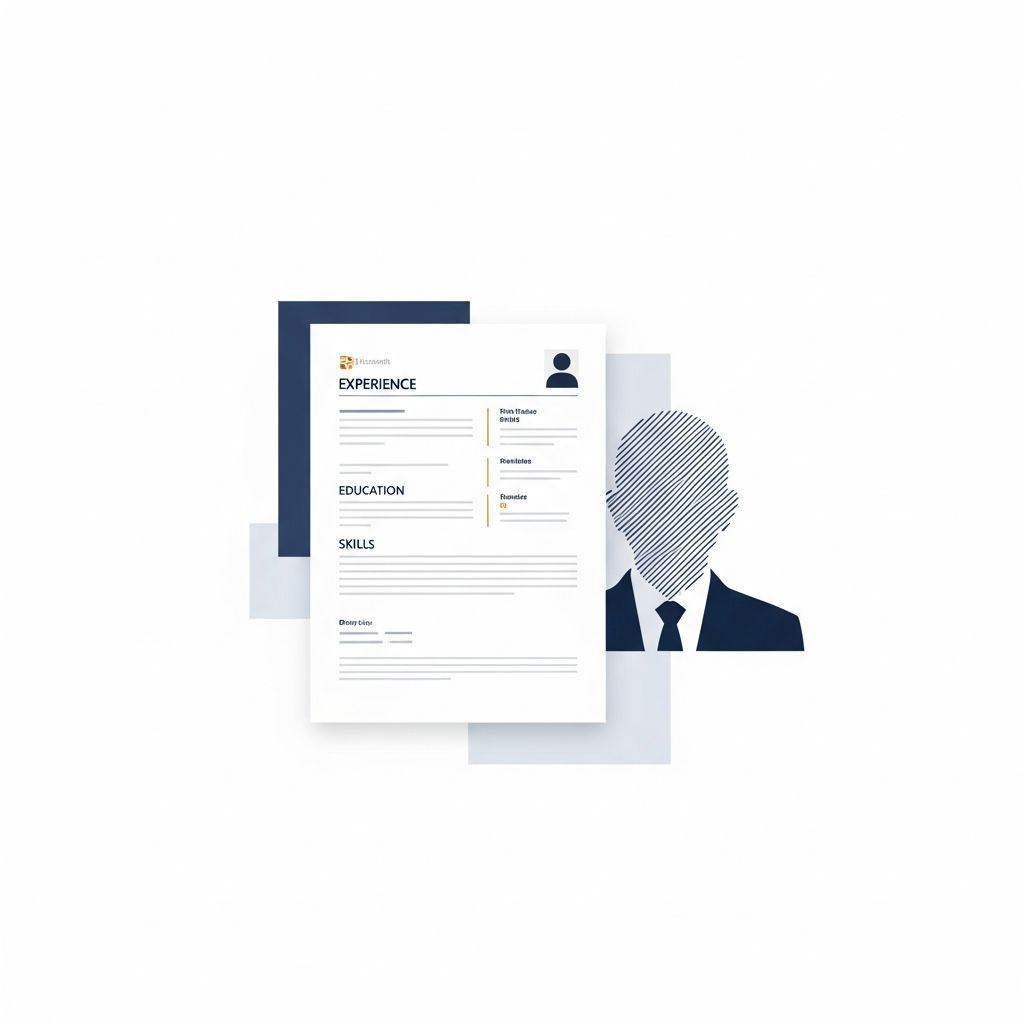
Satya Nadella’s rise from engineer to CEO of Microsoft offers more than a compelling leadership story; it also provides a blueprint for creating a focused, one-page resume that clearly communicates value and long-term potential.
This article does not analyze Nadella’s actual resume. Instead, it uses public information about his career and leadership style as inspiration to show how you can condense extensive experience into a concise, powerful document.
Why One Page Still Works — Even for Senior Leaders
Many professionals believe that a long career automatically requires a multi-page resume. Yet, a single page can be more persuasive when it presents a clear story of impact, especially for leadership or senior technical roles.
- Focus over volume: Recruiters often scan resumes for seconds, not minutes; clarity beats completeness.
- Signal of discipline: A concise resume suggests you can prioritize information and communicate effectively.
- Strategic narrative: A one-page document forces you to highlight only the most important business outcomes and leadership moments.
Nadella’s public biography, for example, focuses on a few defining themes: cloud transformation, cultural change, and long-term vision, not an exhaustive list of every task he has ever performed.
Anchor Your Resume in a Clear Executive Summary
The first third of your resume should make it immediately obvious who you are and what you offer. Nadella is widely recognized as the leader who transformed Microsoft into a cloud- and AI-driven company with a renewed culture of learning and collaboration.
You can mirror this level of clarity in your own summary.
- Identify your core identity (for example, “Cloud engineering leader,” “Product strategist,” “Operations executive”).
- Highlight 2–3 business themes you are known for: transformation, innovation, turnaround, growth, or operational excellence.
- Mention measurable outcomes (growth, cost savings, efficiency gains, customer impact).
A strong summary for a senior professional might compress years of work into one focused paragraph that captures your domain, scale of responsibility, and impact.
Example Structure for an Executive Summary
- Role level: “Senior cloud architect,” “VP of marketing,” “Data science leader.”
- Scope: Team size, budget, or portfolio size you have led.
- Impact themes: Revenue growth, modernization, innovation, culture change.
- Signature achievements: One or two numbers that quickly illustrate your value.
Turn Career History into a Story of Transformation
Nadella’s public career narrative is not just a list of roles; it is a sequence of larger responsibilities leading to Microsoft’s repositioning in cloud and AI. This is exactly how your experience section should read: as a progression, not a pile of jobs.
1. Show Progression, Not Just Tenure
Across decades at Microsoft, Nadella moved from engineering roles to leading major business units and, eventually, the entire company.
- Group related roles under the same employer when possible.
- Highlight promotions or expanded scope (e.g., “Promoted from senior engineer to engineering manager to director”).
- Use brief labels such as “Turnaround mandate,” “New business launch,” or “Scale-up phase” to describe each stage.
2. Lead with Results, Not Responsibilities
Under Nadella’s leadership, Microsoft’s Azure cloud platform grew into one of the leading global cloud providers, substantially contributing to the company’s valuation and competitiveness.
A resume that simply says “responsible for cloud initiatives” misses the point. Instead, emphasize results:
- Growth metrics (revenue, users, adoption rates).
- Efficiency improvements (cost reductions, performance gains).
- Strategic shifts (new markets, new product lines, business model changes).
3. Emphasize Strategic Inflection Points
Nadella is associated with critical shifts at Microsoft: moving from a Windows-first philosophy to a “cloud-first” model, embracing cross-platform software, and accelerating AI investments.
Look for equivalent turning points in your own career:
- Moments when you changed direction (e.g., on-premise to cloud, offline to digital-first).
- Times when you influenced culture or strategy, not just execution.
- Situations where you turned around a struggling product or team.
Highlight Leadership and Culture, Not Only Technology
Public accounts of Nadella’s leadership repeatedly emphasize empathy, collaboration, and a growth mindset as central to Microsoft’s resurgence. Modern employers look for similar qualities in senior hires.
| Traditional Resume Focus | High-Impact Resume Focus (Nadella-Inspired) |
|---|---|
| Tasks and tools used | Business outcomes and strategic decisions |
| Individual contributions only | Team performance, cross-functional collaboration, and coaching |
| Static list of responsibilities | Story of transformation, innovation, and continuous improvement |
| Generic soft skills | Specific examples of culture change, inclusion, or mindset shifts |
Ways to Show Leadership on One Page
- Culture: Describe how you changed processes, improved collaboration, or increased engagement.
- Mentorship: Mention how many people you have coached or the pipelines you’ve built.
- Decision-making: Highlight major strategic calls you influenced (e.g., migration to cloud, AI adoption).
Feature 3–5 Signature Achievements
High-level overviews of Nadella’s career usually spotlight a handful of signature achievements: driving Microsoft’s cloud pivot, reshaping culture around learning, and betting early on AI.
Your resume should similarly feature a small set of high-impact highlights that a recruiter will remember.
What Makes a “Signature Achievement”?
- Scale: Large revenue or cost impact, user base, or geographic scope.
- Complexity: Multiple stakeholders, difficult constraints, or high uncertainty.
- Durability: Outcomes that continued to generate value over time.
- Alignment: Relevance to the roles and industries you are targeting.
On a one-page resume, these can appear as a short “Key Achievements” section under the summary, or as standout bullets under your most recent roles.
Boil Down Technical Expertise Without Losing Depth
Before becoming CEO, Nadella oversaw Microsoft’s cloud and enterprise businesses, including Azure and its broad portfolio of cloud services. His technical and business understanding is deep, but public profiles describe it in compact, high-level language.
Your one-page resume should treat technical skills similarly.
- Group tools into categories (e.g., “Cloud platforms,” “Programming languages,” “Data & analytics”).
- Prioritize skills you have used recently and at scale.
- Avoid long, alphabetized tool lists that add little value.
A brief technical section is enough if your experience bullets clearly demonstrate how you applied those tools to real problems.
Use a Clean Layout That Supports Fast Scanning
Think of your one-page resume as an executive dashboard. For a reader to grasp your value quickly, the layout must be simple and predictable.
- Single column or clear primary column for experience — no cluttered multi-column layouts that break reading flow.
- Consistent formatting for dates, job titles, and company names.
- White space to separate sections so each has room to “breathe.”
- Readable font and limited use of color; avoid design elements that distract from content.
Executive content about Nadella’s career is usually presented with simple typography and strong structure, reinforcing the idea that clarity and organization create more impact than visual decoration.
Align Your Resume with Strategic Themes in Your Industry
One reason Nadella’s leadership narrative resonates is that it is aligned with the biggest forces shaping technology: cloud computing, digital transformation, and AI.
Your resume should similarly signal awareness of the strategic shifts in your own field.
- If you are in technology, this might mean data, automation, security, or platform thinking.
- In marketing, it could be personalization, analytics, and customer experience.
- In operations, it might be resilience, sustainability, and process optimization.
When describing your roles, connect your work to these wider themes. This demonstrates that you not only execute tasks but also understand where your industry is going.
Integrate Education and Continuous Learning Strategically
Nadella’s educational background in engineering and business is often mentioned briefly in official biographies, emphasizing its relevance without dominating the story.
Your own education and training section should follow a similar pattern:
- List your highest relevant degree and institution.
- Mention honors or specializations only if they strengthen your positioning.
- Include advanced certifications, particularly those that relate to current industry directions (e.g., cloud, AI, cybersecurity, data).
For senior candidates, education should typically appear after your experience and be concise, unless you are in academia or research-focused roles.
Craft a Narrative of Growth and Resilience
Public stories about Nadella often highlight perseverance, continuous learning, and the ability to lead through uncertainty. While a resume is not a biography, it can still hint at these qualities through the way you describe your journey.
- Show how you moved from smaller to larger scopes of responsibility.
- Highlight instances where you led during market shifts or organizational changes.
- Make it clear that your career is not a series of random moves but a deliberate progression.
If done well, a reader should be able to see how your early roles laid the foundation for later leadership, just as Nadella’s early technical positions supported his later executive impact.
FAQ: Applying These Ideas to Your Own Resume
Q1: Can I really fit a long career into one page?
Yes. A one-page resume is not meant to capture everything you have ever done; it is designed to present the most relevant 10–15 years of impact, especially for the roles you are targeting. Earlier experience can be summarized more briefly.
Q2: Should I include every job I have had?
Not necessarily. Focus on roles that build your core story of expertise and leadership. Short, less relevant, or very early roles can be grouped, abbreviated, or omitted if they do not add clear value.
Q3: How do I show culture and leadership without sounding vague?
Replace generic phrases like “strong leader” with specific outcomes: team retention rates, engagement improvements, successful cross-functional initiatives, or adoption of new working practices you introduced.
Q4: What if I am not a CEO or executive?
You can still borrow the same ideas: emphasize progression, connect your work to strategic themes, and prioritize measurable impact. The scale may be smaller, but the principles are identical.
Q5: How often should I update my one-page resume?
Update it whenever you have a new, meaningful achievement or change in responsibility. Treat it as a living document, much like a public professional profile that evolves with your career.
References
- Satya Nadella — Microsoft. 2024-06-01. https://news.microsoft.com/source/exec/satya-nadella/
- Satya Nadella: The Architect of Microsoft’s Resurgence — Quartr / Peter Westberg. 2023-10-10. https://quartr.com/insights/business-philosophy/satya-nadella-the-architect-of-microsofts-resurgence
- 10 years into Nadella’s run, Microsoft is a company transformed — GeekWire. 2024-02-04. https://www.geekwire.com/2024/microsofts-resurgence-reflecting-on-satya-nadellas-leadership-a-decade-after-he-became-ceo/
- Lifetime of Achievement: Satya Nadella — Technology Magazine. 2023-05-15. https://technologymagazine.com/articles/lifetime-of-achievement
- The Leadership Style of Microsoft CEO, Satya Nadella — CTO Magazine. 2024-03-20. https://ctomagazine.com/ceo-satya-nadella-leadership-style/
- Satya Nadella — Samuel J. Heyman Service to America Medals. 2020-09-01. https://servicetoamericamedals.org/honorees/satya-nadella/

Medha Deb is an editor with a master's degree in Applied Linguistics from the University of Hyderabad. She believes that her qualification has helped her develop a deep understanding of language and its application in various contexts. Medha specializes in the areas of beauty, health, sports, and wellness and is committed to ensuring that the content on the website is…