
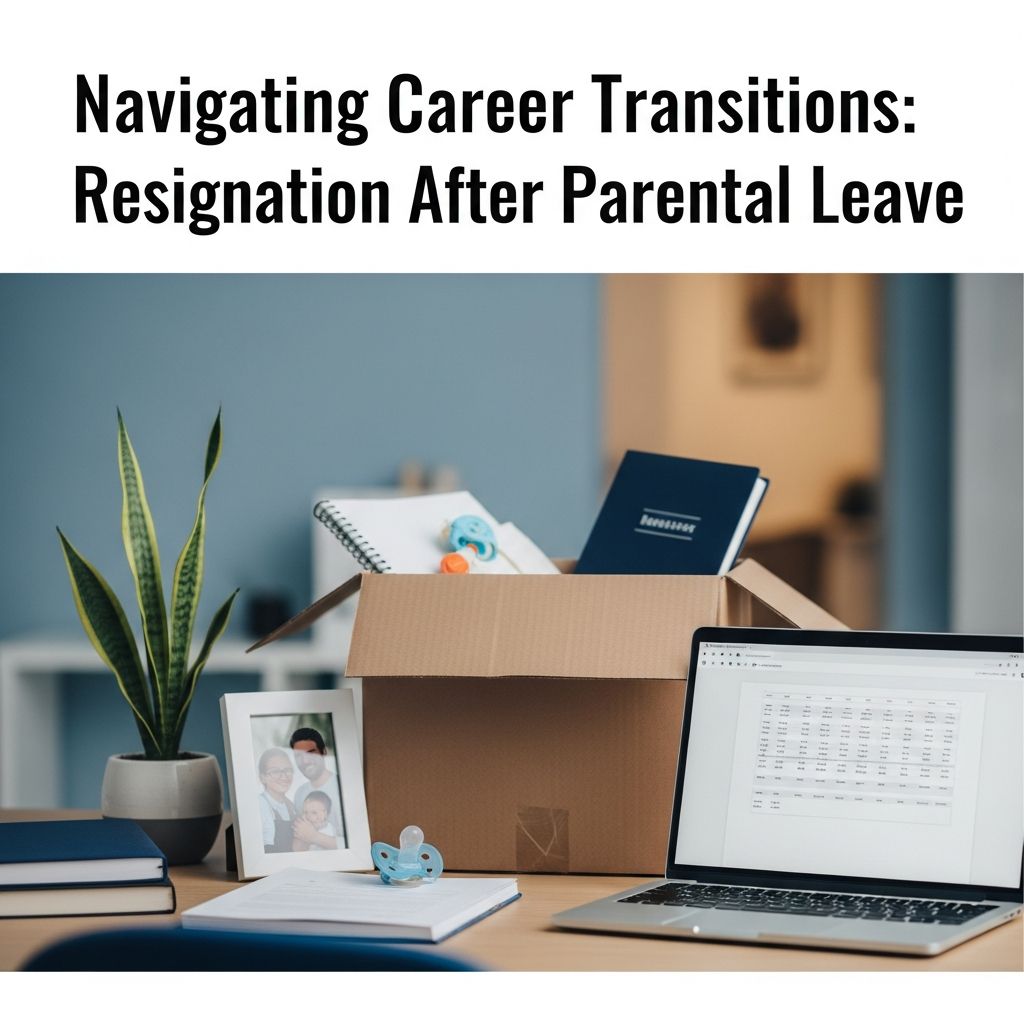
Understanding Your Decision to Leave After Parental Leave
The transition back to work after welcoming a new child into your family is a pivotal moment that many professionals face. For some, returning to the workplace feels like the right choice, offering continued career growth and financial stability. For others, the experience of being home with a newborn or young child creates a shift in priorities that leads to a difficult but necessary decision: resigning from their position.
Making the choice to leave your job after parental leave is deeply personal. Whether you’re deciding to stay home full-time, pursue a different career path, seek more flexible work arrangements, or simply reassess your life goals, the decision itself requires thoughtful consideration. Once you’ve determined that resignation is the right path forward, the next challenge is communicating this decision professionally and respectfully to your employer.
This transition requires more finesse than a standard resignation because you’re navigating unique circumstances. Your employer may have made arrangements during your absence, adjusted timelines around your return, or organized team structures based on your expected comeback. Understanding how to communicate your departure with grace and professionalism helps preserve your reputation and maintains positive relationships within your industry.
The Foundation of Professional Communication
Before you put pen to paper or compose that crucial email, take time to prepare yourself mentally and logistically. Your resignation letter is more than just a notice of departure; it’s a formal document that becomes part of your employment record and can influence how former colleagues and supervisors remember your professional journey with the company.
The cornerstone of an effective resignation letter is clarity. Your reader should immediately understand three things: that you are resigning, when your last day of work will be, and that you respect the company and your colleagues despite your decision to leave. While you’ll want to provide some context about your reasons for resigning, remember that excessive detail or emotional language can undermine your professional standing.
Timing matters significantly when you’re planning to submit your resignation. Many professionals opt to send their resignation letter during their first week back from parental leave, once they’ve had time to reorient themselves to the workplace. However, if you’ve already been back for several weeks or months and have made your decision, there’s no benefit to prolonging the announcement. The sooner you communicate your plans, the sooner your employer can begin succession planning.
Structuring Your Resignation Message Effectively
A well-organized resignation letter follows a logical progression that guides your reader through your decision. Think of your letter as building blocks, each serving a specific purpose in the larger structure.
Opening with Purpose and Clarity
Begin your letter with a direct statement of your intention. Rather than burying your main message, lead with it. For example, you might write something like, “I am writing to formally notify you of my resignation from my position as [Your Job Title] at [Company Name], effective [Your Last Day].” This approach immediately answers the essential question of what your letter is about, allowing your reader to understand the context for everything that follows.
The opening should be formal but warm. You’re not announcing bad news; you’re sharing a significant personal decision. The tone should reflect respect for the organization while maintaining appropriate professional boundaries. Avoid apologizing for your decision unless you’re resigning with very short notice, in which case an apology for any inconvenience is appropriate.
Contextualizing Your Journey and Decision
After stating your intention to resign, provide context about your time on parental leave and how it influenced your decision. This section helps your employer understand that this wasn’t a hasty choice made in frustration, but rather a thoughtful decision informed by your new circumstances as a parent.
You might reflect on your experience during leave, acknowledging how the time away provided perspective on your professional goals and personal priorities. This is where you can gently explain that your priorities have shifted, that you’ve realized the importance of being present during your child’s early years, or that you’re exploring different career options that offer better flexibility for your family situation.
Keep this section focused and specific. Rather than making vague statements about “family matters,” you might say something like, “During my time away, I’ve come to realize that being actively present in my child’s early development is a priority I want to honor during this season of my life.” This demonstrates maturity and thoughtfulness without oversharing personal details.
Acknowledging Professional Relationships
Your gratitude section is an opportunity to reinforce positive professional relationships and leave a favorable lasting impression. Rather than offering generic thanks, reference specific experiences, learning opportunities, or colleagues who made your time at the company meaningful. This personalization demonstrates genuine appreciation rather than obligatory courtesy.
You might mention a particular project that taught you valuable skills, a manager who provided excellent mentorship, or team members who created a supportive work environment. These specific references show that you valued your time there and respected the people you worked with. Such details can be important if you encounter former colleagues later in your career or if you ever consider returning to the organization in a different capacity.
Offering Transition Support
One of the most important elements of your resignation letter is your commitment to facilitating a smooth transition. This section demonstrates that despite your departure, you care about the organization’s success and your team’s wellbeing. However, be realistic about what you can promise.
If you’re resigning immediately due to changed circumstances, acknowledge this and offer limited transition support, such as being available via email to answer specific questions about your current projects. If you have provided notice, you can commit to documenting your processes, training your replacement, or completing critical tasks before your departure. The key is to make promises you can actually keep, balancing your new role as a parent with your professional responsibilities.
Crafting Your Message: Template Framework
While your resignation letter should reflect your personality and specific situation, using a structured framework ensures you include all essential elements:
Essential Components Checklist
– Your full name and contact information at the top- Today’s date- Recipient’s name, title, and company address- A formal greeting addressing your direct manager or supervisor- Clear statement of resignation with effective date- Brief explanation of your decision related to parental leave- Expression of gratitude for the opportunity- Commitment to transition support- Professional closing and signature
This checklist ensures you’ve covered the necessary ground without overwhelming your reader with unnecessary information. Each element serves a distinct purpose in communicating your decision and maintaining professionalism.
Real-World Scenarios and Appropriate Responses
The Planned, Gradual Return Scenario
Some parents return to work on a phased basis or with reduced hours. If you’ve tried this arrangement and realized it’s not sustainable, your resignation letter should acknowledge this attempt and explain your reasoning. You might write, “After returning to work on a part-time basis, I’ve determined that at this stage in my child’s development, I need to commit fully to parenting rather than attempting to balance two demanding roles.”
The Changed Circumstances Scenario
Sometimes external factors affect your ability to return to work—perhaps childcare fell through, financial circumstances changed, or family health issues emerged. While you don’t need to provide exhaustive details, brief context helps your employer understand that this decision reflects changed circumstances, not dissatisfaction with the job. You might explain, “Unexpected changes in our family situation have made it necessary for me to reconsider my return to full-time work.”
The Career Pivot Scenario
If your time on leave sparked interest in a different career direction—perhaps pursuing freelance work, starting a business, or seeking employment with better flexibility—this can be mentioned as your reason. You might state, “This time away has prompted me to explore a career path that offers more flexibility for balancing my professional goals with my family responsibilities.”
Common Mistakes to Avoid in Your Communication
Even well-intentioned resignation letters can create problems if they contain certain missteps. Being aware of common pitfalls helps you navigate your departure gracefully.
Oversharing Personal Details
While some context is helpful, your resignation letter isn’t the place for detailed family situations, health information, or financial circumstances. Keep your explanation focused on your professional decision-making rather than personal details that might be misinterpreted or used against you later.
Expressing Resentment or Frustration
Even if returning to work felt overwhelming or if you encountered challenges during your transition back, avoid expressing frustration in your resignation letter. Your letter becomes a permanent record; emotional language can damage professional relationships and your reputation within your industry.
Making Vague or Ambiguous Statements
Being too vague about your last day or your reasons can create confusion and administrative headaches. Use specific dates, clear language, and concrete explanations. Ambiguity often leads to follow-up questions and clarification emails that extend the resignation process unnecessarily.
Neglecting Professional Tone
Your resignation letter is a business document, not a personal journal. Maintain formal language, check spelling and grammar carefully, and avoid casual expressions or emoji. This professional presentation reflects positively on you and ensures your message is taken seriously.
Practical Timeline and Delivery Considerations
How you deliver your resignation can be as important as what you write. While email has become standard, consider your company’s culture and your relationship with your manager. Some organizations expect a printed letter delivered in person, while others are comfortable with email resignation.
Recommended Delivery Approach
The most professional approach is to schedule a brief meeting with your direct manager to discuss your resignation in person, if possible. This allows you to present your letter while explaining your decision verbally, providing context that might not come through in writing. After the meeting, follow up with an email containing your written resignation letter to your manager and human resources, creating an official record.
Notice Period Considerations
While two weeks’ notice is standard, your specific situation might warrant a different approach. If you’re leaving immediately due to unexpected circumstances, acknowledge this and apologize for the short notice. If you can provide more time—such as four weeks—this demonstrates consideration for your employer’s planning needs. However, be realistic about your availability and commitment level if you’re staying longer.
Sample Letter Framework for Adaptation
Below is a customizable structure you can adapt with your details:
[Your Name][Your Address][Your Phone Number][Your Email][Date][Manager's Name][Manager's Title][Company Name][Company Address]Dear [Manager's Name],I am writing to formally notify you of my resignation from my position as [Your Job Title] at [Company Name], effective [Your Last Day]. This decision comes after careful consideration during my time on parental leave, during which I had the opportunity to reflect on my professional goals and family priorities.[Brief explanation of your reasoning—2-3 sentences maximum]I am grateful for the opportunities I have received at [Company Name], including [mention specific learning experiences or contributions]. The relationships I've built with you and my colleagues have been valuable, and I have appreciated the support provided during my tenure here.During my remaining time, I am committed to ensuring a smooth transition of my responsibilities. I am available to [describe specific transition support you can offer], and I will work closely with you to minimize disruption to ongoing projects and team operations.Thank you again for the opportunity to contribute to [Company Name]. I wish you and the organization continued success, and I hope we can maintain our professional relationship in the future.Sincerely,[Your Signature][Your Typed Name]After You’ve Submitted Your Resignation
Your resignation letter marks the beginning of the final chapter of your employment with the company, not the end of your professional responsibility. Maintaining professionalism and commitment during your notice period is crucial.
Be prepared for your employer’s reaction, which might range from understanding and supportive to disappointed or frustrated. Remember that your decision, while right for you, may have created challenges for your employer. Handling this with grace and maintaining your composure demonstrates your professional maturity.
During your final weeks, focus on completing important projects, documenting processes, and training colleagues who will assume your responsibilities. This proactive approach leaves a positive final impression and ensures your departure doesn’t create lasting operational problems.
Frequently Asked Questions
Q: Should I provide a reason for resigning after parental leave?
A: While not mandatory, providing a brief reason demonstrates that you’ve made a thoughtful decision rather than acting impulsively. Keep your explanation focused on your professional goals and family priorities rather than complaints about the job or company.
Q: How much notice should I provide when resigning?
A: Two weeks is the standard professional courtesy, though you may provide more if your circumstances allow. If you’re resigning immediately due to unexpected changes, acknowledge this and apologize for the short notice while offering what transition support you can.
Q: Can I resign via email, or should I resign in person?
A: The most professional approach is to discuss your resignation with your manager in person first, then follow up with a written letter via email. This allows you to explain your decision verbally while creating an official record of your resignation.
Q: Should I explain my family circumstances in detail?
A: No. Keep personal details to a minimum in your formal resignation letter. Focus on your professional decision-making and how your priorities have shifted. Detailed family information is best shared conversationally with your manager, not in an official document.
Q: What should I do if my employer asks me to stay or negotiate my departure?
A: Listen respectfully to any counteroffers or alternative arrangements your employer proposes, but stick to your decision if you’ve already made it. Be polite but firm, and avoid allowing guilt to pressure you into committing to something you’re not ready for.
Q: How do I maintain good relationships with colleagues after I resign?
A: During your final weeks, remain positive and engaged. Offer to help colleagues, attend farewell activities gracefully, and exchange personal contact information with people you’d like to stay in touch with. A strong final impression can preserve relationships for years to come.
References
- Write a Resignation Letter for Maternity or Paternity Leave — Grammarly. 2024. https://www.grammarly.com/blog/resigning/maternity-paternity-leave-resignation-letter/
- How to Write a Resignation Letter After Maternity Leave — The Muse. 2024. https://www.themuse.com/advice/resignation-letter-after-maternity-leave
- Writing a ‘not returning to work after parental leave’ letter — Indeed. 2024. https://uk.indeed.com/career-advice/career-development/not-returning-to-work-after-maternity-leave-letter

- Integrated M.A. in Applied Linguistics, University of Hyderabad
- 5+ years in editorial, instructional, SEO, and research-based writing
Sneha is a relationships and lifestyle writer with a strong foundation in applied linguistics and certified training in relationship coaching. She brings over five years of writing experience to theskillvault, crafting thoughtful, research-driven content that empowers readers to build healthier relationships, boost emotional well-being, and embrace holistic living. Her writing and insights reflect the belief that beauty, happiness, and wellness…