
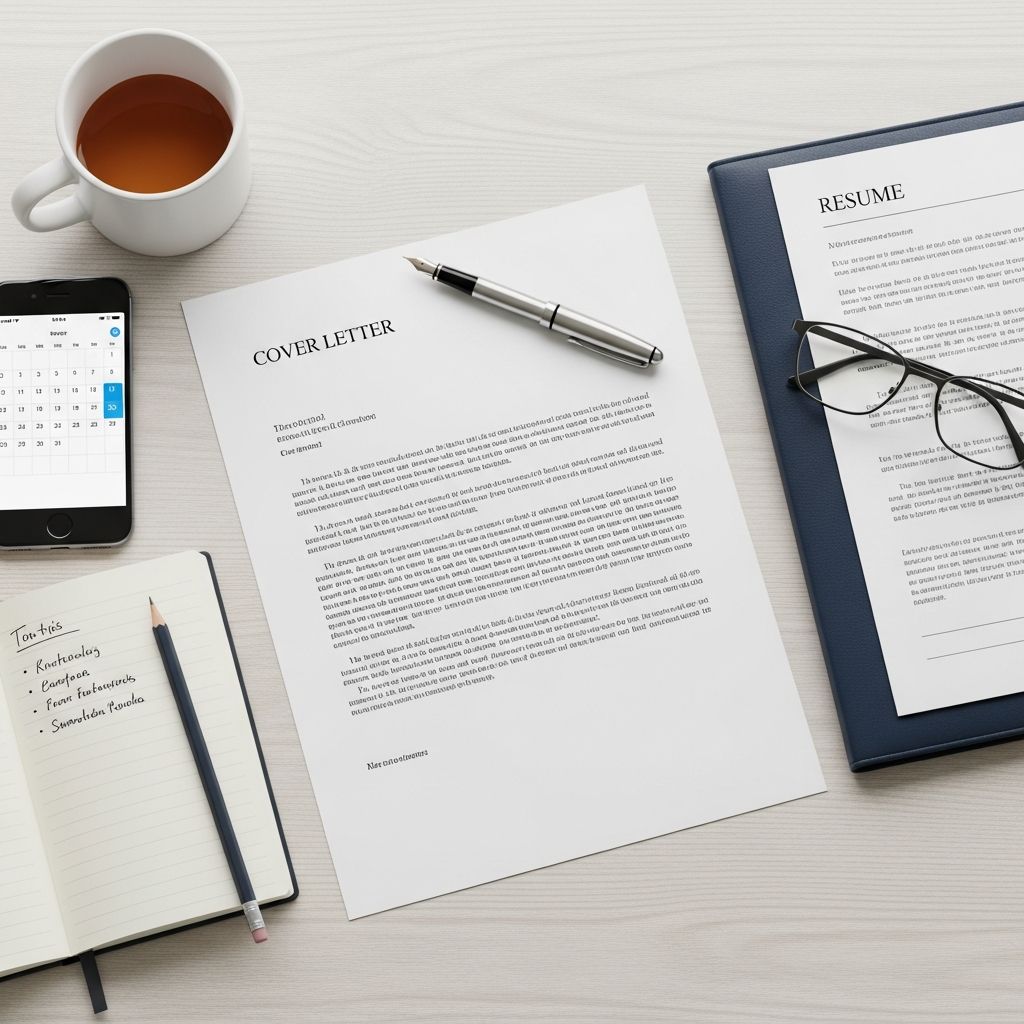
Why Your Cover Letter Matters More Than You Think
When applying for a job, your resume is often seen as the star of the application package. But the cover letter is the quiet powerhouse that can make the difference between being overlooked and being invited in for an interview. It’s not just a formality or a repeat of your resume in paragraph form. A well-crafted cover letter is a strategic document that tells a story: why you’re interested in this role, why you’re qualified, and why the employer should care.
Think of it as your personal pitch. While your resume lists what you’ve done, your cover letter explains what it means. It connects the dots between your background and the employer’s needs, showing that you’ve done your homework and that you’re not just sending out generic applications. In a competitive job market, a strong cover letter can be the deciding factor that gets your application moved from the “maybe” pile to the “must interview” list.
Understanding the Role of a Modern Cover Letter
Today’s cover letter is not the stiff, formal letter of decades past. It’s still professional, but it can also be engaging, authentic, and tailored. Its primary functions are to:
- Introduce yourself and state the position you’re applying for
- Explain your motivation for applying to this specific company and role
- Highlight key experiences and skills that match the job description
- Demonstrate that you understand the organization’s goals or challenges
- Convey enthusiasm, professionalism, and a clear call to action (e.g., requesting an interview)
Employers use cover letters to assess communication skills, attention to detail, and cultural fit. A generic, copy-pasted letter signals low effort. A thoughtful, customized letter signals that you’re serious, prepared, and genuinely interested.
Structuring Your Cover Letter for Maximum Impact
While there’s some flexibility in tone and style, a clear structure helps ensure your message is easy to follow and persuasive. A typical effective cover letter includes the following sections:
- Header and contact information
- Opening paragraph: purpose and enthusiasm
- Body paragraph(s): qualifications and evidence
- Closing paragraph: call to action and next steps
Each section serves a distinct purpose and should be written with the reader in mind. The goal is to make it easy for a hiring manager to quickly see why you’re a strong candidate.
Starting Strong: The Opening Paragraph
The first paragraph is your chance to grab attention and set the tone. It should clearly state:
- The exact job title you’re applying for
- Where you found the position (job board, company website, referral, etc.)
- Why you’re excited about this role and organization
A strong opening doesn’t just say “I’m interested.” It shows interest by referencing something specific about the company—its mission, a recent project, its values, or its reputation in the industry. For example:
“I’m excited to apply for the Marketing Coordinator position at GreenPath Solutions, which I discovered through your careers page. I’ve long admired your commitment to sustainable business practices, and I’m eager to contribute my digital marketing experience to a team that aligns with my values.”
This kind of opening is specific, enthusiastic, and immediately relevant. It also subtly signals that you’ve done your research, which employers appreciate.
Building Your Case: The Body of the Letter
The middle section is where you prove your qualifications. This is not the place to repeat your resume line by line. Instead, focus on 1–2 key experiences or skills that directly relate to the job description.
For each point, follow this pattern:
- State the skill or experience
- Provide a concrete example (what you did, how you did it)
- Explain the impact or result (preferably with numbers if possible)
- Connect it back to the role you’re applying for
For instance, if the job emphasizes project management and cross-functional collaboration, you might write:
“In my current role as a Project Coordinator at TechFlow Inc., I managed a portfolio of five client projects simultaneously, coordinating between design, development, and client teams. By implementing a new tracking system and weekly check-ins, I helped reduce project delays by 30% and improved client satisfaction scores by 25%. I’m confident that this experience in managing complex workflows and aligning diverse stakeholders would allow me to contribute effectively to your project management team.”
This approach shows, rather than tells, that you have the skills the employer is looking for.
Aligning with the Job Description
One of the most effective ways to strengthen your cover letter is to mirror the language of the job posting. Employers often use specific keywords and phrases to describe required skills, responsibilities, and qualifications. When you use similar language in your letter, it helps your application resonate with both human readers and applicant tracking systems (ATS).
To do this effectively:
- Read the job description carefully and highlight key skills and requirements
- Identify 3–5 core competencies that match your background
- Use those exact terms in your letter when describing your experience
For example, if the job description emphasizes “data-driven decision-making,” “cross-functional collaboration,” and “client relationship management,” make sure those phrases appear naturally in your letter when discussing relevant experiences.
Showing, Not Just Telling
Many cover letters fall flat because they rely on vague statements like “I’m a hard worker” or “I have excellent communication skills.” These claims are common and unconvincing without evidence.
To stand out, replace generalizations with specific examples. Instead of saying “I’m a strong communicator,” describe a situation where your communication made a difference:
- “I led weekly status meetings with stakeholders from sales, product, and engineering, ensuring alignment and reducing miscommunication-related delays by 40%.”
- “I rewrote our customer onboarding emails, which increased completion rates by 22% and reduced support tickets by 15%.”
These statements are more credible and memorable because they show the value you’ve delivered in real situations.
Researching the Company and Role
A tailored cover letter requires more than just reading the job description. It also involves learning about the company itself. This research helps you:
- Understand the organization’s mission, values, and culture
- Identify current challenges or priorities (e.g., expansion, new product launches, digital transformation)
- Explain why you’re genuinely interested in working there
Use the company’s website, recent news articles, press releases, and social media to gather insights. Then, weave that knowledge into your letter. For example:
“I was particularly impressed by your recent expansion into the European market and your focus on localized customer experiences. In my previous role, I supported international product launches in three markets, and I’d welcome the opportunity to bring that experience to your global growth strategy.”
This kind of detail shows that you’re not just applying to any job—you’re applying to this job at this company.
Choosing the Right Tone and Style
The tone of your cover letter should match the culture of the organization and the level of the role. A startup might appreciate a more conversational, energetic tone, while a law firm or government agency may expect a more formal style.
General guidelines for tone and style:
- Be professional but not robotic
- Use active voice (“I managed,” “I developed”) rather than passive voice
- Keep sentences clear and concise; avoid jargon unless it’s industry-standard
- Let some personality come through, but stay focused on the employer’s needs
Reading the company’s website and job postings can give you a sense of their preferred communication style, which you can then mirror in your letter.
Formatting and Presentation
Even the best content can be undermined by poor formatting. A clean, professional layout makes your letter easy to read and reflects attention to detail.
Key formatting tips:
- Keep it to one page (3–4 paragraphs is usually ideal)
- Use a standard business font (e.g., Arial, Calibri, Times New Roman) at 10–12 point size
- Left-align the text with 1-inch margins
- Use single spacing with a blank line between paragraphs
- Include your contact information at the top (name, phone, email, LinkedIn if relevant)
- Address the letter to a specific person when possible (e.g., “Dear Ms. Rivera”)
If you don’t know the hiring manager’s name, “Dear Hiring Manager” or “Dear [Department] Hiring Team” are acceptable alternatives.
Common Cover Letter Mistakes to Avoid
Even small errors can hurt your credibility. Common pitfalls include:
- Using a generic, one-size-fits-all letter for every application
- Repeating the resume instead of adding context and insight
- Being too vague or using clichés (“team player,” “results-oriented”)
- Overly long or overly short letters
- Spelling, grammar, or formatting errors
- Forgetting to customize the company name or job title
To avoid these, always tailor each letter to the specific role, proofread carefully, and ideally have someone else review it before sending.
Customizing for Different Situations
Your approach to the cover letter may vary depending on your situation. Here are a few common scenarios:
Changing Careers
Focus on transferable skills and relevant experiences, even if they’re from a different industry. Explain why you’re making the change and how your background prepares you for the new role.
Entry-Level or Recent Graduates
Highlight academic projects, internships, volunteer work, and relevant coursework. Emphasize eagerness to learn and contribute, and connect your experiences to the job requirements.
Internal Applications
Since the employer already knows you, focus on your achievements in your current role and how they prepare you for the new position. Mention your familiarity with the organization’s culture and processes.
Referrals
If someone referred you, mention their name and relationship to you early in the letter. This can help establish credibility and show that you have an internal connection.
Ending with Confidence
The closing paragraph should reinforce your interest and include a clear call to action. Avoid weak phrases like “I hope you’ll consider my application.” Instead, express confidence and initiative:
- “I would welcome the opportunity to discuss how my experience in [specific area] can support your team’s goals.”
- “I’m eager to bring my skills in [key skill] to your organization and would appreciate the chance to speak with you further.”
Then, thank the reader for their time and consideration, and close with a professional sign-off like “Sincerely” or “Best regards,” followed by your name.
Proofreading and Final Checks
Before sending, review your cover letter with a critical eye. Ask yourself:
- Does it clearly state the position and company?
- Does it explain why I’m interested in this role?
- Does it highlight 1–2 key qualifications with specific examples?
- Does it use language from the job description?
- Is it free of typos, grammatical errors, and formatting issues?
- Is it tailored to this specific application, not a generic template?
If possible, have a trusted colleague or mentor read it and provide feedback. A fresh set of eyes can catch mistakes and suggest improvements you might have missed.
Putting It All Together: A Practical Example
Imagine you’re applying for a Customer Success Manager role at a SaaS company. Your cover letter might look like this in structure:
- Opening: State the role, where you found it, and why you’re excited about the company (e.g., their product, mission, or growth).
- Body 1: Describe your experience managing customer accounts, improving retention, and handling escalations, with a specific example and result.
- Body 2: Highlight a relevant skill like onboarding or cross-functional collaboration, again with a concrete example.
- Closing: Reiterate your enthusiasm, express confidence in your fit, and request an interview.
The exact wording will depend on your background, but the structure ensures that you’re making a clear, evidence-based case for why you’re the right person for the job.
Frequently Asked Questions
How long should a cover letter be?
A cover letter should typically be one page, consisting of 3–4 concise paragraphs. Focus on the most relevant qualifications and keep it focused on the employer’s needs.
Should I always include a cover letter?
Yes, even if it’s optional. A strong cover letter can differentiate you from other candidates and shows initiative and professionalism.
What if I don’t know who to address it to?
If the job posting doesn’t list a name, try to find the hiring manager or department head through LinkedIn or the company website. If that’s not possible, “Dear Hiring Manager” or “Dear [Department] Team” are acceptable.
Can I use the same cover letter for multiple jobs?
You can use a base template, but each letter should be customized to the specific role and company. Generic letters are easy to spot and less effective.
What should I avoid in a cover letter?
Avoid repeating your resume, using clichés, being too informal or too stiff, and including irrelevant personal information. Focus on what you can do for the employer, not just what you want from the job.
References
- Cover Letter Writing Guide — University of Arizona Career Services. Accessed 2025. https://career.arizona.edu/resources/cover-letter-writing-guide/
- How To Write a Cover Letter (With Examples and Tips) — Indeed Career Advice. Accessed 2025. https://www.indeed.com/career-advice/resumes-cover-letters/how-to-write-a-cover-letter
- Cover Letters — Georgia Southern University Office of Career and Professional Development. Accessed 2025. https://ocpd.georgiasouthern.edu/channels/cover-letters/

- Integrated M.A. in Applied Linguistics, University of Hyderabad
- 5+ years in editorial, instructional, SEO, and research-based writing
Sneha is a relationships and lifestyle writer with a strong foundation in applied linguistics and certified training in relationship coaching. She brings over five years of writing experience to theskillvault, crafting thoughtful, research-driven content that empowers readers to build healthier relationships, boost emotional well-being, and embrace holistic living. Her writing and insights reflect the belief that beauty, happiness, and wellness…