
Understanding the Cover Letter Landscape
The cover letter remains one of the most critical components of your job application, yet many candidates approach it with minimal effort or strategic thinking. While your resume provides a factual overview of your professional background, your cover letter serves as your voice—an opportunity to communicate directly with hiring managers and demonstrate not just what you’ve accomplished, but why you’re genuinely interested in their specific opportunity. Many job seekers fall into the trap of treating cover letters as obligatory formalities, producing generic documents that could apply to virtually any position at any company. These ineffective letters often fail to capture the hiring manager’s attention and do little to differentiate you from other candidates.
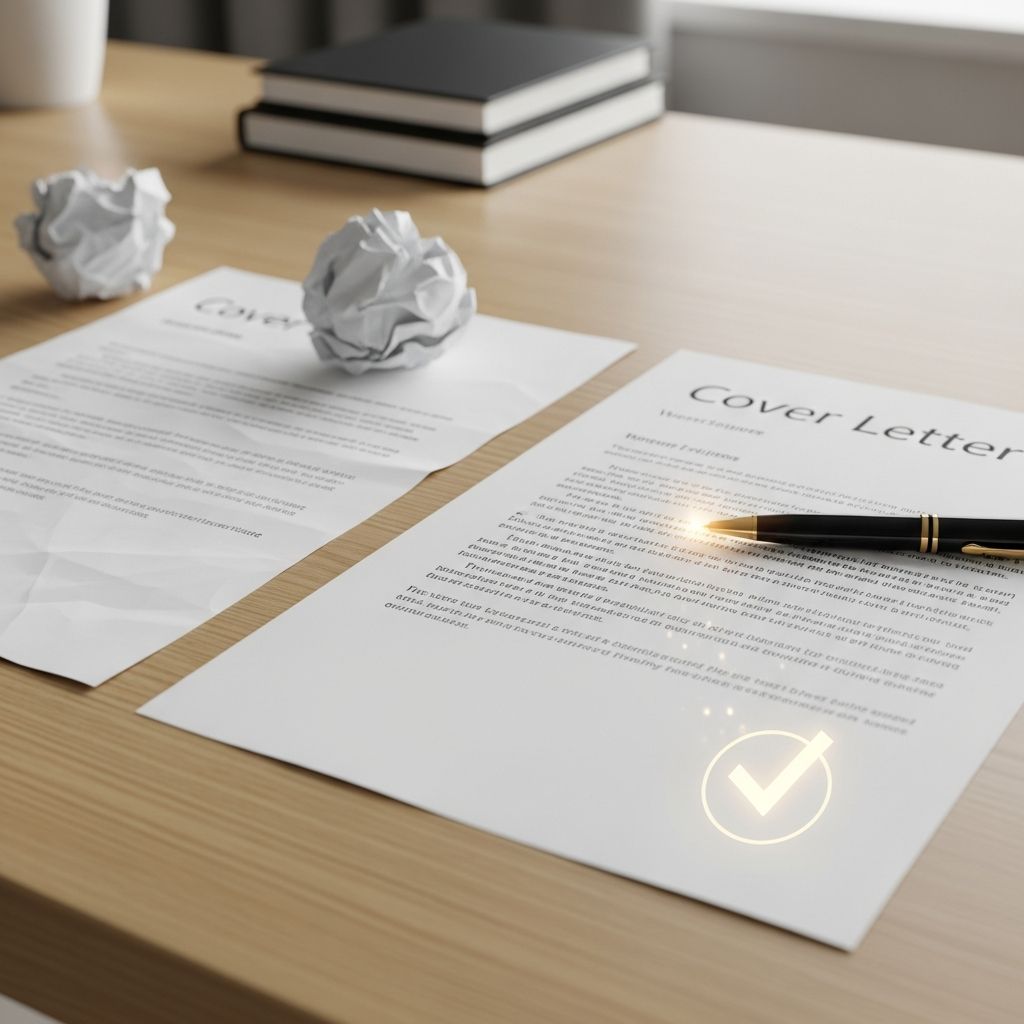
The transformation from a weak cover letter to a compelling one involves understanding what hiring managers actually look for and how to strategically structure your narrative to address their needs. By examining common pitfalls and learning how to reframe your experiences, you can create a cover letter that genuinely moves the needle in your job search.
Common Weaknesses in Cover Letters
Generic Opening Statements
One of the most prevalent issues in cover letters is the generic, impersonal opening. Phrases like “I am writing to express my interest in the position” or “I believe I would be a great fit for your team” immediately signal to hiring managers that they’re reading a template rather than a thoughtfully crafted message. These openings lack specificity and fail to demonstrate that you’ve invested time in understanding the company or the role. Instead of launching into a generic introduction, consider opening with a specific detail about the company, a particular challenge the role addresses, or a compelling statement about why this opportunity resonates with your professional goals.
Disconnected Qualifications
Weak cover letters often list qualifications without connecting them to the job requirements or explaining their relevance to solving the company’s problems. When you simply recite accomplishments from your resume without contextualizing them for the specific position, hiring managers struggle to see how you’ll actually contribute to their organization. Your qualifications must be presented through the lens of what the employer needs, not what you’ve done in general.
Lack of Company Research
Another critical weakness is failing to demonstrate genuine knowledge about the company. Hiring managers can quickly spot when a candidate hasn’t done their homework, and this oversight suggests a lack of genuine interest in the role. Without referencing specific company initiatives, values, recent achievements, or projects mentioned in the job description, your cover letter could be sent to any company in the industry.
Passive Language and Unclear Value Proposition
Weak cover letters often employ passive voice and vague statements about enthusiasm without clearly articulating what value you bring to the table. Phrases like “I hope to have the opportunity to contribute” lack the confidence and specificity that hiring managers expect from strong candidates. Your cover letter should clearly state why hiring you is beneficial for the company, not just why the job appeals to you.
Strategic Elements of a Compelling Cover Letter
The Personalized Introduction
A strong cover letter begins with an introduction that immediately signals you’ve done your research and have a genuine reason for applying to this particular role at this particular company. Rather than generic enthusiasm, open with a specific insight about the company’s mission, a recent company achievement you admire, or a particular aspect of the role that aligns with your professional aspirations. This approach demonstrates initiative and helps the hiring manager understand that you’re not sending identical applications to dozens of companies.
Your opening should also clearly state the position you’re applying for, where you discovered the opportunity, and a brief statement of why you’re interested. This clarity helps hiring managers immediately understand your intent and ensures your letter gets routed to the correct team or department.
Strategic Experience Positioning
In the body of your cover letter, your experiences should be presented not as a historical record but as evidence of your ability to succeed in the role you’re seeking. Rather than merely listing past responsibilities, demonstrate how specific accomplishments from previous roles directly translate to the challenges and opportunities within the new position. This requires careful reading of the job description and strategic selection of which experiences to highlight.
For instance, instead of writing “I managed multiple projects at my previous company,” you might write: “In my role at [Previous Company], I successfully coordinated cross-functional teams to deliver three major projects ahead of schedule, which directly required the project management and stakeholder communication skills outlined in your job description.” The second version explicitly connects your experience to what the employer needs.
Demonstrating Company Understanding
An exceptional cover letter reveals that you understand the company’s challenges, values, and strategic direction. This might involve referencing a recent company announcement, acknowledging how a particular company initiative aligns with your professional values, or explaining how your background makes you particularly well-suited to contribute to their stated goals.
This section of your letter shows hiring managers that you’re not pursuing just any job—you’re pursuing this specific opportunity because you understand what success looks like in this context and you believe you can contribute meaningfully.
Compelling Closing with Clear Call to Action
Strong cover letters conclude with genuine enthusiasm and a clear call to action, rather than passive phrasing that leaves the initiative entirely to the hiring manager. Instead of “I hope to hear from you,” consider: “I would welcome the opportunity to discuss how my background in [specific area] aligns with your team’s needs. I’m available for a conversation at your convenience.” This approach demonstrates confidence and makes it easy for the hiring manager to move forward with you as a candidate.
Before and After: The Transformation Process
Identifying Core Problems
The transformation from a weak to a strong cover letter typically begins with identifying specific weaknesses in your initial draft. Print out your cover letter and evaluate it against these criteria: Does it immediately establish why you’re interested in this specific opportunity? Does it demonstrate clear knowledge of the company? Do your qualifications connect directly to the job requirements? Is your language active and confident? Does it clearly articulate your unique value?
Strategic Rewriting Approach
Rather than editing surface-level grammar issues, effective rewriting addresses the strategic substance of your letter. This might involve:
- Replacing generic opening statements with specific company insights
- Reorganizing content to lead with your most relevant qualifications
- Adding concrete examples and metrics that demonstrate impact
- Removing any language that undermines your confidence or credibility
- Ensuring each paragraph advances a specific argument about why you’re an excellent fit
The Refinement Process
After addressing major structural and strategic issues, the refinement process focuses on clarity, tone, and professionalism. This includes verifying spelling and grammar, ensuring consistent formatting, confirming that names and company details are correct, and reading the letter aloud to identify awkward phrasing or overly complex sentences. Professional tone should be maintained throughout—enthusiastic but not casual, confident but not arrogant.
Structural Best Practices for Maximum Impact
Formatting and Presentation
Your cover letter should be formatted professionally, using a standard font such as Arial or Times New Roman in 10-12 point size, with 0.5 to 1 inch margins on all sides. The letter should be no longer than one page, which means every sentence must earn its place. Include your contact information at the top, followed by the date and the recipient’s contact information. If you know the hiring manager’s name, use it; if not, “Dear Hiring Manager” or “Dear [Department] Team” is acceptable.
Paragraph Organization
A well-structured cover letter typically follows a three-to-four paragraph format: an introduction that establishes your interest and demonstrates company knowledge; one or two body paragraphs that connect your qualifications to job requirements using specific examples; and a closing paragraph that reiterates your enthusiasm and includes a call to action. This structure is intuitive for readers and ensures you cover all necessary ground without overwhelming the hiring manager.
Language and Tone
Your cover letter should match the tone of the company while maintaining professionalism. A formal corporate law firm would expect a more traditional, polished tone, while a creative startup might appreciate more personality and enthusiasm, though still within professional bounds. Research the company’s website, social media, and job postings to understand their communication style and mirror it appropriately.
Leveraging Examples and Metrics
Generic claims about your abilities significantly weaken your cover letter. Instead of stating “I’m an excellent communicator,” provide a specific example: “I developed and delivered training presentations to cross-functional teams of 50+ employees, resulting in a 40% improvement in process efficiency.” This approach transforms an abstract claim into concrete evidence of capability.
Whenever possible, quantify your accomplishments using numbers, percentages, or other metrics. Rather than “I increased sales,” write “I increased quarterly sales by 32% through targeted customer outreach.” These specific details make your letter more memorable and credible, giving hiring managers tangible reasons to advance your candidacy.
Tailoring for Different Industries and Roles
Technical Positions
For technical roles, your cover letter should demonstrate not only that you possess the required technical skills but also that you understand the specific technical challenges the company faces. Reference particular technologies, methodologies, or frameworks mentioned in the job description, and provide examples of how you’ve successfully worked with these tools.
Creative Fields
Cover letters for creative positions can showcase more personality while remaining professional. Consider opening with a compelling story or unique insight that demonstrates creative thinking. However, remember that clarity and professionalism should never be sacrificed for creative expression.
Leadership and Management Roles
For leadership positions, emphasize your ability to lead teams, drive results, and develop people. Use specific examples of teams you’ve managed, initiatives you’ve led, and outcomes you’ve achieved. Demonstrate both strategic thinking and people management skills.
Common Mistakes to Avoid
Several critical mistakes can undermine even otherwise solid cover letters. Avoid apologizing for lack of experience; instead, emphasize transferable skills and relevant achievements from other contexts. Don’t share excessive personal information unrelated to the job, such as political views or personal hobbies, unless they directly demonstrate relevant skills or values alignment with the company. Never repeat your resume verbatim—instead, use your cover letter to tell a story about why you’re interested in this specific role and how your background uniquely positions you to succeed.
Additionally, ensure your cover letter is thoroughly proofread and accurate. Double-check the hiring manager’s name, company name, spelling, and grammar. A single error can significantly damage your credibility, particularly for positions where attention to detail is important.
The Impact of Effective Transformation
The difference between a weak and a strong cover letter often determines whether your application advances to the next stage. Hiring managers typically spend only 30-60 seconds reviewing each application, so your letter must immediately establish your fit for the role and your genuine interest in the company. A well-crafted cover letter that demonstrates company knowledge, connects your qualifications to specific job requirements, and articulates clear value proposition significantly increases your chances of securing an interview.
By understanding what transforms a generic cover letter into a compelling one and systematically addressing weaknesses in your draft, you position yourself as a thoughtful, thorough candidate who is genuinely interested in contributing to the organization—not just landing any job.
Frequently Asked Questions
Q: How long should my cover letter be?
A: Your cover letter should be no longer than one page, typically three to four concise paragraphs. Hiring managers appreciate brevity combined with substance—make every word count.
Q: Should I address my cover letter to a specific person?
A: Yes, whenever possible. Research the company website, LinkedIn, or call the company to identify the hiring manager’s name. If you cannot find this information, “Dear Hiring Manager” or “Dear [Department] Team” is acceptable.
Q: How should I handle employment gaps or career changes in my cover letter?
A: Address significant gaps or changes briefly and positively. Focus on what you learned during that time and how it makes you better equipped for the role, rather than dwelling on the gap itself.
Q: Should I include personal details or hobbies in my cover letter?
A: Only include personal information if it directly demonstrates skills relevant to the position or values alignment with the company. Generally, maintain focus on professional qualifications and interest in the role.
Q: Can I use the same cover letter for multiple positions?
A: No. Generic cover letters are often immediately apparent to hiring managers and significantly reduce your chances of advancement. Tailor each letter to the specific position and company.
Q: What font and formatting should I use?
A: Use professional fonts like Arial or Times New Roman, 10-12 point size, with 0.5-1 inch margins. Maintain left alignment and consistent spacing throughout.
Q: How do I demonstrate company knowledge in my cover letter?
A: Research the company’s recent news, achievements, strategic initiatives, and values. Reference specific details in your letter to show genuine interest and understanding.
References
- How to Write a Cover Letter That Gets You Hired (Examples & Tips) — My Perfect Resume. 2025. https://www.myperfectresume.com/career-center/cover-letters/how-to/write
- How to write a standout cover letter (step-by-step guide for students) — University of Cincinnati Career Center. 2024. https://www.uc.edu/news/articles/2024/11/standout-cover-letter-guide.html
- Best Cover Letters of 2025 (10 Good Examples) — Resume Genius. 2025. https://resumegenius.com/blog/cover-letter-help/best-cover-letters
- How To Write a Cover Letter (With Examples and Tips) — Indeed Career Advice. 2025. https://www.indeed.com/career-advice/resumes-cover-letters/how-to-write-a-cover-letter
- How to Write a Cover Letter That Sounds Like You (and Gets Noticed) — Harvard Business Review. 2022-05-15. https://hbr.org/2022/05/how-to-write-a-cover-letter-that-sounds-like-you-and-gets-noticed
- Cover Letter Resources — University of Michigan Career Center. 2025. https://careercenter.umich.edu/content/cover-letter-resources

- Integrated M.A. in Applied Linguistics, University of Hyderabad
- 5+ years in editorial, instructional, SEO, and research-based writing
Sneha is a relationships and lifestyle writer with a strong foundation in applied linguistics and certified training in relationship coaching. She brings over five years of writing experience to theskillvault, crafting thoughtful, research-driven content that empowers readers to build healthier relationships, boost emotional well-being, and embrace holistic living. Her writing and insights reflect the belief that beauty, happiness, and wellness…