
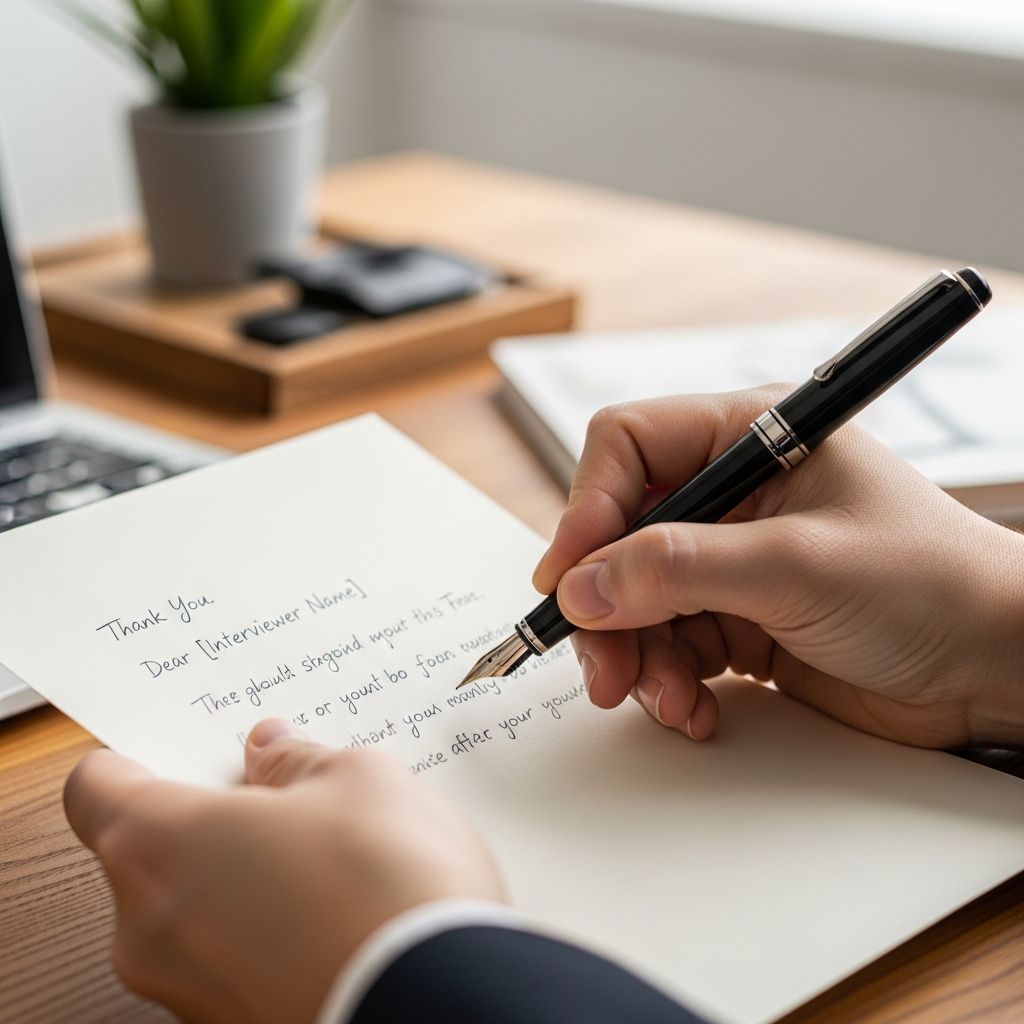
Sending a thank you note after a job interview is a crucial step in the hiring process that can set you apart from other candidates. This simple gesture demonstrates professionalism, genuine interest in the role, and attentiveness to the conversation. Research from career experts indicates that candidates who follow up promptly are more likely to be remembered positively by hiring managers. In today’s competitive job market, where decisions often hinge on subtle differentiators, a well-crafted note can reinforce your qualifications and enthusiasm.
Historically, thank you letters were sent via mail, but in the digital age, email has become the standard due to its speed and convenience. According to guidelines from leading career resources, the ideal window to send your note is within 24 hours of the interview to keep the interaction fresh in the recipient’s mind. This timeliness shows respect for their schedule while capitalizing on the momentum of your meeting.
Why Thank You Notes Matter in Your Job Search
Thank you notes serve multiple purposes beyond mere politeness. They provide an opportunity to reiterate your fit for the position, address any points that may have been overlooked during the interview, and subtly remind the employer of your unique value. For instance, if a particular challenge facing the team was discussed, you can reference how your skills align with solving it.
Statistics from professional networking platforms suggest that 80% of hiring managers view follow-up communication as a positive indicator of candidate interest. Moreover, in panel interviews involving multiple stakeholders, individualized notes to each participant can strengthen relationships across the board. Neglecting this step risks appearing disinterested, especially when other applicants are diligently following up.
- Reinforces enthusiasm: Explicitly stating continued excitement about the role keeps your candidacy top-of-mind.
- Highlights key moments: Referencing specific discussion points proves you were engaged.
- Addresses gaps: Politely clarify any misunderstood answers or add forgotten details.
- Showcases soft skills: Grammar, tone, and personalization reflect communication and etiquette abilities.
Essential Components of an Effective Thank You Email
A strong thank you email is concise yet impactful, typically 4-6 sentences long. It balances gratitude with subtle self-promotion without repeating your resume. Structure it logically: start with thanks, recap a highlight, reaffirm interest, and end with a forward-looking close.
| Component | Purpose | Example |
|---|---|---|
| Subject Line | Ensures opening; clear and specific | Thank You – [Position] Interview on [Date] |
| Greeting | Personalizes the message | Dear [Name], |
| Opening Thanks | Acknowledges their time | Thank you for meeting with me today. |
| Body Recap | References conversation | I enjoyed discussing [topic]. |
| Reaffirm Fit | Ties skills to needs | My experience in [skill] aligns with… |
| Closing | Expresses next steps | I look forward to hearing from you. |
Tailoring Notes for Different Interview Scenarios
Not all interviews are the same, so customize your approach. For initial screenings, keep it brief to respect the recruiter’s time. Final rounds warrant more detail, emphasizing your readiness to contribute immediately. Virtual interviews benefit from noting technical aspects, like appreciating a smooth Zoom setup.
After a Phone or Video Interview
These often feel less personal, so inject warmth. Mention the ease of connection or a shared screen detail to humanize it.
Panel or Group Interviews
Send individual emails to each person, referencing their unique contributions. If group emailing, use BCC for privacy.
Informational or Networking Chats
Focus on insights gained rather than a specific job, offering to reciprocate help.
Sample Templates for Quick Customization
Below are versatile templates adaptable to various situations. Replace placeholders with your details for authenticity.
Standard Post-Interview Template
Subject: Thank You for the [Position] InterviewDear [Interviewer's Name],Thank you for taking the time to interview me for the [Position] role today. I appreciated learning about [specific topic discussed] and how my background in [your skill] could support [company goal].I'm even more enthusiastic about the opportunity to contribute to [Company Name]. Please let me know if you need any additional information.Best regards,[Your Name][Your Phone][Your LinkedIn]Follow-Up with Attachment Template
Subject: Thank You - [Position] Discussion & PortfolioHi [Name],Thank you for our conversation yesterday. As promised, I've attached my portfolio highlighting [project].Our discussion on [topic] reinforced my excitement for [Company]. I look forward to next steps.Sincerely,[Your Name]Multiple Interviewers Template
Subject: Thank You for Today's InterviewsDear [Name1], [Name2], and [Name3],Thank you all for the insightful discussions today. [Name1]'s perspective on [topic1], [Name2]'s on [topic2], and [Name3]'s on [topic3] were particularly valuable.I'm eager to bring my skills to [Company Name].Regards,[Your Name]Frequently Asked Questions (FAQs)
What if I interviewed with a team—do I email everyone?
Yes, personalize notes for each person to show respect and attention to detail. If time is short, prioritize key decision-makers.
Is it okay to send a thank you note via LinkedIn?
LinkedIn works for networking but email is preferred for formal interviews as it’s more professional and direct.
What if I forgot to mention something important?
Use the note to briefly add it without sounding like an excuse. Frame it positively: “Reflecting on our talk, I also wanted to share…”.
How soon after the interview should I send it?
Within 24 hours, ideally the same day, to demonstrate promptness and keep the interaction fresh.
Should I send a thank you if it’s a casual coffee chat?
Absolutely—adapt the tone to be conversational while still professional to nurture the connection.
Common Mistakes to Avoid
Even seasoned professionals slip up. Steer clear of generic templates that scream copy-paste, typos that undermine credibility, or overly salesy language that feels insincere. Always proofread aloud and use tools like Grammarly. Avoid discussing salary or pushing for decisions—keep it gracious.
- Generic content without personalization.
- Delaying beyond 48 hours.
- Repeating resume bullet points verbatim.
- Forgetting contact info or LinkedIn.
- Negative comments about the interview process.
Advanced Strategies for Maximum Impact
To elevate your note, incorporate research. Reference a recent company news item or tie your skills to their strategic initiatives, showing deeper preparation. For creative roles, attach a relevant sample; for executive positions, propose a value-add idea. Track opens with email tools if appropriate, but prioritize substance over gimmicks.
In global or remote hiring, consider time zones—send during business hours. For international roles, adapt formality levels culturally; Europeans may prefer slightly more reserved tones.
Pair your note with LinkedIn connections, requesting to follow up post-decision. This builds long-term networks even if not selected immediately.
Long-Term Follow-Up Etiquette
If no response after a week, a polite check-in email is fine: reference the thank you and ask for updates. Limit to one or two. Persistence shows interest without desperation.
Post-offer, another note thanks the team, expressing anticipation. Rejection? Respond graciously to keep doors open.
Mastering thank you notes transforms routine interviews into memorable exchanges. Consistent practice yields refined skills, boosting your success rate over time.
References
- Thank You Email After Interview — Management Consulted. 2023-05-15. https://managementconsulted.com/thank-you-email-after-interview/
- Three Templates for A Perfect Interview Thank You Email — Mac’s List. 2022-11-10. https://www.macslist.org/interviews/three-killer-templates-interview-thank-you-emails
- How to Write a Thank You Email After an Interview (with Examples) — Questrom Field, Boston University. 2025-08-28. https://questromfeld.bu.edu/blog/2025/08/28/how-to-write-a-thank-you-email-after-an-interview-with-examples/
- 20 Post-Interview Thank You Email Examples for Any Situation — GetMailTracker. 2024-03-20. https://www.getmailtracker.com/blog/post-interview-thank-you-email
- How to Write an Interview Thank-You Note (an Email Template) — The Muse. 2023-09-12. https://www.themuse.com/advice/how-to-write-an-interview-thankyou-note-an-email-template
- Interview Follow-Up: Thank-You Notes — Harvard Law School. 2024-01-05. https://hls.harvard.edu/bernard-koteen-office-of-public-interest-advising/opia-job-search-toolkit/interview-follow-up-thank-you-notes/
- 4 Sample Thank-You Emails To Send After an Interview — Indeed.com. 2025-02-14. https://www.indeed.com/career-advice/interviewing/sample-thank-you-letter-after-interview

- Integrated M.A. in Applied Linguistics, University of Hyderabad
- 5+ years in editorial, instructional, SEO, and research-based writing
Sneha is a relationships and lifestyle writer with a strong foundation in applied linguistics and certified training in relationship coaching. She brings over five years of writing experience to theskillvault, crafting thoughtful, research-driven content that empowers readers to build healthier relationships, boost emotional well-being, and embrace holistic living. Her writing and insights reflect the belief that beauty, happiness, and wellness…