
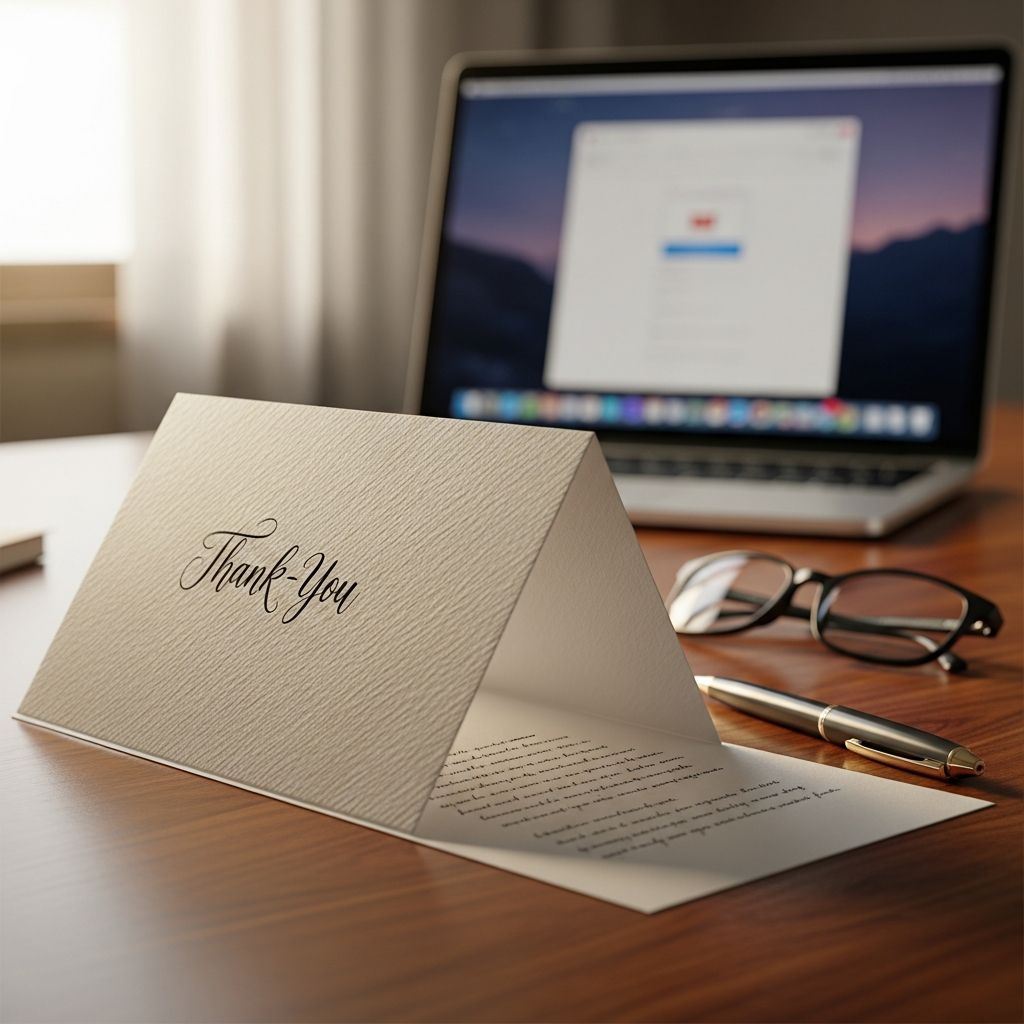
Writing a sincere thank-you letter to your boss is one of the simplest ways to build trust, show professionalism, and strengthen your reputation at work. When done well, a short note of appreciation can leave a lasting positive impression and reinforce the behaviors you value most in their leadership.
Why Thanking Your Boss Matters
Expressing gratitude at work is more than just good manners; it has real benefits for you, your manager, and your team.
- Strengthens relationships: A thoughtful note signals that you notice and value your boss’s efforts, which can deepen mutual respect.
- Boosts morale: Managers are employees too; recognition and appreciation increase their motivation and engagement.
- Reinforces positive behavior: When you call out helpful actions (mentorship, feedback, flexibility), you make it more likely they’ll continue.
- Supports your career: Professionals with strong relationships and communication skills are more likely to be promoted and trusted with opportunities.
Research on gratitude in workplaces shows that appreciated employees are more engaged and productive, and that recognition improves relationships between staff and their leaders.
Before You Write: Clarify Your Purpose
To write a focused, meaningful thank-you letter, first decide exactly what you’re thanking your boss for. Being specific makes your message feel genuine and memorable.
Common reasons to thank your boss
- A **promotion**, new role, or expanded responsibilities
- A **raise**, bonus, or salary adjustment
- Ongoing **mentorship** or coaching
- Support during a **personal difficulty** or crisis
- Backing you on an important **project** or idea
- Providing a **reference**, recommendation, or introduction
- Farewell or **goodbye** when you or your boss is leaving
Once you know the main reason, you can tailor your tone, level of detail, and format (quick email vs. longer handwritten note).
A Simple Structure for Any Thank-You Letter
You do not need to be a professional writer to craft a strong message. Most effective thank-you letters follow a straightforward structure.
| Section | What to Include | Tips |
|---|---|---|
| Greeting | Professional salutation with your boss’s name. | Use the level of formality you normally would (e.g., “Hi Alex” vs. “Dear Ms. Chen”). |
| Opening thanks | Clear statement of what you’re thanking them for. | Mention the specific action, decision, or support right away. |
| Impact | Explain how their support has helped you, the team, or the company. | Connect their action to outcomes: skills gained, confidence, results, or well-being. |
| Forward look | Optional line about how you’ll use the opportunity or continue contributing. | Show commitment to doing your best going forward. |
| Closing | Reiterate appreciation and sign off professionally. | Keep it brief and aligned with your usual style. |
Step-by-Step: Writing Your Letter
1. Choose the right format
Your format should match the context and your workplace culture.
- Email: Ideal for day-to-day appreciation, quick thanks for meetings, or remote teams.
- Handwritten card: Best for promotions, major milestones, retirement, or farewell messages.
- Typed letter: Suitable for formal environments, performance reviews, or when the letter may be kept on file.
In organizations with a strong digital culture, a concise email is often fully appropriate, while more formal workplaces may expect written letters for significant events.
2. Start with a clear subject or opening line
If you’re sending an email, your subject line should be simple and direct:
- “Thank you for the promotion”
- “Appreciation for your support last week”
- “Grateful for your guidance on the Q4 project”
In a handwritten or printed letter, your first sentence serves the same purpose: mention your gratitude right away.
3. Be specific about what you’re grateful for
Generic praise (“Thanks for everything you do”) feels vague and can sound insincere. Instead, focus on one or two concrete actions:
- A time they stood up for your idea or advocated for you.
- Feedback that helped you improve your performance.
- Flexibility around your schedule during a difficult period.
Specificity shows you are paying attention and recognizing their efforts, not just going through the motions.
4. Explain the impact on you or the team
Describe how their support made a difference. This is where your letter becomes meaningful rather than transactional.
- How you grew professionally, improved a skill, or gained confidence.
- How the team reached a milestone or avoided a setback.
- How their flexibility helped you manage a personal challenge.
Leadership and engagement research consistently emphasizes that feedback is more powerful when it focuses on impact and outcomes, not just actions.
5. Look ahead and reaffirm your commitment
A short forward-looking line helps connect your gratitude to future performance. For example:
- “I’m excited to apply what I’ve learned in this new role.”
- “I look forward to continuing to contribute to our team’s success.”
- “Your support motivates me to keep raising the bar on my work.”
6. Close professionally
End with a brief closing that matches your relationship with your boss. Common sign-offs include:
- “Sincerely,”
- “Best regards,”
- “With appreciation,”
- “Thank you again,”
Then add your name (and, in more formal letters, your title and contact details).
Sample Phrases for Different Situations
Below are adaptable phrases you can mix and match to create your own message. Use them as building blocks, not scripts to copy word-for-word.
After a promotion or raise
- “Thank you for trusting me with this new role and responsibility.”
- “I appreciate the raise and your recognition of my contributions to the team.”
- “Your confidence in my ability to grow into this position means a great deal to me.”
- “I’m committed to delivering at a higher level and justifying the trust you’ve placed in me.”
For ongoing mentorship and feedback
- “I truly value the time you invest in giving me thoughtful feedback.”
- “Your perspective has helped me approach challenges more strategically.”
- “I’ve learned a great deal from observing how you handle complex situations.”
- “Thank you for pushing me while also giving me the support I need to succeed.”
For support during a challenging time
- “Thank you for your understanding and flexibility while I navigated a difficult personal situation.”
- “Your willingness to adjust deadlines and priorities lifted a huge weight off my shoulders.”
- “I am grateful for your empathy and for checking in on how I was doing, not just on my work.”
- “Your support helped me stay engaged at work when it would have been easy to disconnect.”
For backing a project or idea
- “I appreciate you championing my proposal and helping it gain visibility.”
- “Thank you for giving me the opportunity to lead this project and trusting my judgment.”
- “Your guidance at key decision points helped us avoid missteps and stay on track.”
- “Because of your support, our team felt confident taking on an ambitious goal.”
When saying goodbye (you or your boss is leaving)
- “I’m grateful for the guidance you’ve given me during our time working together.”
- “Thank you for the opportunities you created for me to grow in my role.”
- “I will carry the lessons I’ve learned from you throughout my career.”
- “Although I’m sad to see you go, I’m thankful for the foundation you helped me build here.”
Polishing Your Message: Tone, Timing, and Etiquette
Find the right tone
Your note should sound like you, just slightly more polished than everyday conversation. Aim for:
- Professional but warm: Avoid slang, but don’t be overly stiff.
- Genuine: Only thank your boss for things you truly appreciate.
- Balanced: Avoid excessive flattery or exaggerated praise.
Research on effective workplace communication suggests that authenticity and clarity are key to building trust; over-the-top compliments can undermine credibility.
Send it at the right time
Try to send your thank-you letter soon after the event:
- Within a few days of receiving a promotion, raise, or new assignment.
- Within 24–48 hours after a significant favor, introduction, or one-on-one conversation.
- A week or so before you or your boss leaves, for farewell messages.
Prompt messages feel more sincere because the moment is still fresh for both of you.
Common mistakes to avoid
- Sounding transactional: Do not hint at expecting anything in return; focus on appreciation only.
- Over-sharing: Keep personal details appropriate for a professional relationship.
- Writing an essay: One well-crafted paragraph or a short page is usually enough.
- Forgetting to proofread: Typos or incorrect names can undermine your message.
Short Example Templates
Use these brief templates as inspiration and adapt them to your own situation, voice, and company culture.
Example: Thank-you after a promotion
Subject: Thank you for the promotion
Dear [Boss’s Name],
Thank you for promoting me to [new role]. I appreciate your confidence in my abilities and the opportunity to take on greater responsibility. I’ve learned a great deal from your leadership and am committed to contributing even more to our team’s goals in this position. Thank you again for your trust and support.
Best regards,
[Your Name]
Example: Thank-you for mentorship
Subject: Appreciating your guidance
Hi [Boss’s Name],
I wanted to thank you for the time you’ve spent coaching me over the past few months. Your feedback on my presentations and your advice on managing cross-functional projects have helped me grow more confident in my role. I’m grateful to have a manager who invests so much in my development, and I’m excited to keep applying what I’m learning.
With appreciation,
[Your Name]
Example: Thank-you for support during a difficult time
Subject: Thank you for your support
Dear [Boss’s Name],
I want to express my sincere thanks for your understanding and flexibility while I was dealing with [brief reference to the situation, e.g., “a family matter”]. Your willingness to adjust my workload and check in regularly made it much easier to balance my responsibilities at work and at home. I truly appreciate your empathy and leadership.
Sincerely,
[Your Name]
Best Practices by Communication Channel
Different formats call for slightly different approaches. The table below summarizes key points.
| Channel | When to Use | Best Practices |
|---|---|---|
| Everyday thanks, quick follow-ups, remote teams. | Use a clear subject line, keep it concise, avoid long paragraphs, proofread carefully. | |
| Handwritten note | Promotions, major milestones, retirement, farewell. | Use legible handwriting, quality stationery, and a short, focused message. |
| Typed letter | Formal settings, HR files, performance discussions. | Use business letter format, professional tone, and include your role/contact details. |
Frequently Asked Questions (FAQs)
How long should a thank-you letter to my boss be?
Most effective letters are short: one to three brief paragraphs. Focus on one main reason for your thanks, the impact it had, and a simple closing. Your boss is busy; a concise, thoughtful note will be appreciated more than a long essay.
Is email acceptable, or do I need a handwritten note?
Email is perfectly acceptable in most modern workplaces, especially for everyday appreciation or timely follow-ups after meetings or feedback. A handwritten note or printed letter is a nice touch for significant occasions like promotions, farewells, or long-term mentorship.
Can I send a thank-you letter if things are not perfect with my boss?
Yes. You can still acknowledge specific positive actions even if the overall relationship is complicated. Focus your note on something you genuinely appreciate, such as constructive feedback, flexibility, or a particular decision that benefited you or the team.
Should I copy HR or other leaders on my thank-you email?
In most cases, keep your message one-to-one. Copying others can make the note feel less personal or appear politically motivated. The exception is when your boss’s manager was directly involved in the situation; in that case, a brief, professional email with both included can be appropriate.
How often is it appropriate to thank my boss?
There is no strict limit, but aim for meaningful moments rather than constant praise. Thank your boss when they take a specific action that impacts you, your work, or your growth—promotions, support during challenges, important introductions, or significant feedback conversations.
References
- Employee Recognition, Gratitude, and Well-Being — U.S. Department of Veterans Affairs (VA). 2021-09-01. https://www.publichealth.va.gov/docs/employee-wellness/employee-recognition-gratitude-well-being.pdf
- Building a Culture of Employee Appreciation — Society for Human Resource Management (SHRM). 2022-03-15. https://www.shrm.org/resourcesandtools/hr-topics/employee-relations/pages/building-a-culture-of-employee-appreciation.aspx
- How to Write a Professional Email — Purdue Online Writing Lab. 2021-08-10. https://owl.purdue.edu/owl/subject_specific_writing/professional_technical_writing/email_etiquette.html
- The Role of Communication in Effective Leadership — Center for Creative Leadership. 2020-11-05. https://www.ccl.org/articles/leading-effectively-articles/communication-skills-for-leaders/

- Integrated M.A. in Applied Linguistics, University of Hyderabad
- 5+ years in editorial, instructional, SEO, and research-based writing
Sneha is a relationships and lifestyle writer with a strong foundation in applied linguistics and certified training in relationship coaching. She brings over five years of writing experience to theskillvault, crafting thoughtful, research-driven content that empowers readers to build healthier relationships, boost emotional well-being, and embrace holistic living. Her writing and insights reflect the belief that beauty, happiness, and wellness…