
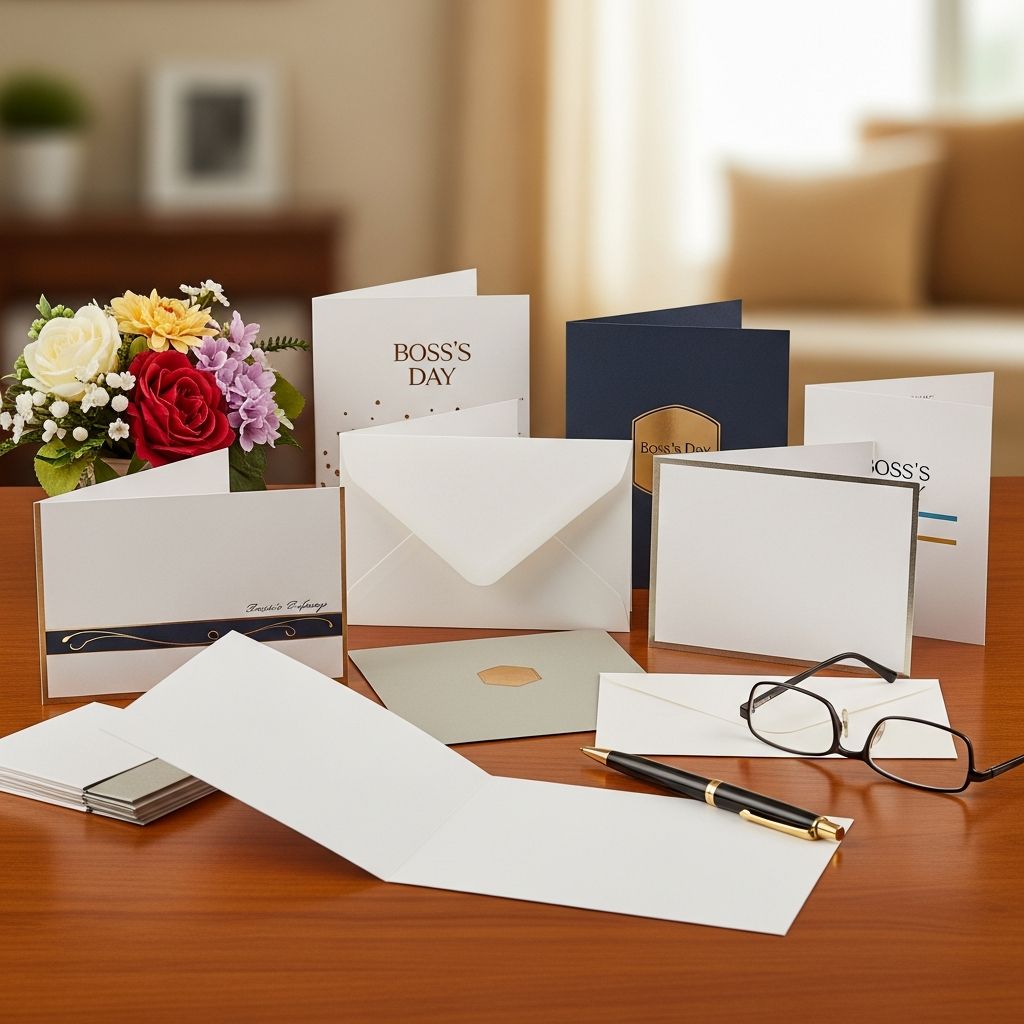
Why Boss’s Day Matters in the Workplace
Boss’s Day, observed in many organizations around October 16, is more than just a calendar reminder. It’s a dedicated moment to acknowledge the people who shape team culture, make difficult decisions, and support employee growth. While leadership roles come with authority, they also carry responsibility, pressure, and often, underappreciated effort.
Recognizing a manager or supervisor on Boss’s Day isn’t about flattery—it’s about reinforcing a culture of appreciation. A well-written card can boost morale, strengthen trust, and remind leaders that their work is seen and valued. For employees, it’s an opportunity to express gratitude in a way that feels authentic and professional.
Choosing the Right Tone for Your Message
One of the most important decisions when writing a Boss’s Day card is selecting the right tone. This depends on several factors:
- Your relationship with the boss (formal vs. informal)
- The company culture (traditional vs. relaxed)
- Whether the card is from an individual or a group
- The boss’s personality (serious, humorous, or somewhere in between)
There are three main tone categories to consider:
1. Professional and Respectful
This tone works well in more traditional environments or when you don’t have a close personal relationship with your manager. It focuses on their role, contributions, and leadership qualities without being overly casual.
Key characteristics:
- Polite and appreciative language
- Focus on team impact and company goals
- Avoids slang, inside jokes, or overly personal references
2. Warm and Appreciative
Use this tone when you have a positive working relationship and want to express genuine gratitude. It’s still professional but allows for a bit more personal warmth.
Key characteristics:
- Recognition of specific support or guidance
- References to growth, learning, or team success
- Can include phrases like “I’m grateful” or “I appreciate”
3. Lighthearted and Humorous
Humor can be effective if it matches your boss’s personality and the workplace culture. However, it should always remain respectful and never cross into sarcasm or criticism.
Key characteristics:
- Playful but not mocking
- References to shared experiences or team dynamics
- Best used when you know the boss well and have a relaxed rapport
Structuring Your Boss’s Day Message
A strong Boss’s Day card follows a simple but effective structure. Think of it as a mini letter with three parts:
1. Opening Line
Start with a clear and warm greeting. This sets the tone for the rest of the message.
Examples:
- “Happy Boss’s Day!”
- “Wishing you a wonderful Boss’s Day.”
- “On Boss’s Day, I wanted to take a moment to thank you.”
2. Core Message
This is the heart of your card. It should express appreciation and, ideally, include something specific about your boss’s impact.
Ask yourself:
- What do I genuinely appreciate about this person?
- How have they supported me or the team?
- What leadership qualities stand out?
Instead of generic praise, aim for concrete examples:
- “I really appreciate how you always make time to listen when I have questions.”
- “Your feedback has helped me grow in my role, especially in [specific area].”
- “The way you handled [project/challenge] showed great leadership and kept the team focused.”
3. Closing and Sign-Off
End with a positive note and a professional closing. This reinforces the sincerity of your message.
Examples:
- “Wishing you a great day and continued success.”
- “Thank you again for your leadership and support.”
- “Looking forward to continuing to work with you.”
Common sign-offs:
- Sincerely,
- Best regards,
- With appreciation,
- Warm regards,
What to Include (and Avoid) in Your Message
To make your Boss’s Day card meaningful, focus on content that feels genuine and appropriate for the workplace.
What to Include
- Specific examples: Mention a project, decision, or moment where their leadership made a difference.
- Recognition of effort: Acknowledge long hours, tough decisions, or consistent support.
- Impact on the team: Highlight how their actions have helped the group succeed or feel more connected.
- Personal growth: If relevant, note how they’ve helped you develop professionally.
- Positive qualities: Reference traits like fairness, clarity, empathy, or decisiveness.
What to Avoid
- Over-the-top flattery: Excessive praise can feel insincere or awkward.
- Personal or sensitive topics: Avoid references to health, family, or anything outside the professional sphere.
- Complaints or backhanded compliments: Even if phrased humorously, comments like “Thanks for not micromanaging me” can land poorly.
- Inside jokes that exclude others: If it’s a group card, keep references inclusive and professional.
- Requests or expectations: Boss’s Day is about appreciation, not asking for raises, promotions, or changes.
Message Ideas by Relationship Type
Not all bosses are the same, and your message should reflect the nature of your working relationship.
For a Manager You Respect but Don’t Know Well
Keep it professional and focused on their role and impact.
- “Happy Boss’s Day! Thank you for your leadership and for everything you do to support our team.”
- “I appreciate your guidance and the way you help keep our priorities clear.”
- “Wishing you a great Boss’s Day. Your dedication to our work doesn’t go unnoticed.”
For a Boss Who’s Also a Mentor
Highlight their role in your development and the value of their advice.
- “Thank you for being not just a great manager but also a mentor. I’ve learned so much from working with you.”
- “Your support and feedback have been instrumental in my growth. I’m grateful to have you as my boss.”
- “I appreciate how you challenge me to think differently and push myself. Happy Boss’s Day!”
For a Boss with a Great Sense of Humor
Light humor can work if it’s respectful and in line with your relationship.
- “Happy Boss’s Day! Thanks for making work feel less like work and more like a team effort.”
- “For a boss, you’re surprisingly reasonable. Thanks for everything!”
- “Happy Boss’s Day! I promise to keep showing up… unless you fire me first.”
For a Group Card from the Team
Focus on collective appreciation and shared experiences.
- “Happy Boss’s Day! Our team is so grateful for your leadership, support, and the positive environment you help create.”
- “Thank you for everything you do for us. We appreciate your hard work and the way you look out for the team.”
- “Wishing you a wonderful Boss’s Day. We’re lucky to have a leader who truly cares about our success.”
Adding a Personal Touch
A generic “thanks for everything” is fine, but a personalized message stands out. Here’s how to make it more meaningful:
- Reference a specific project: “I really appreciated how you guided us through [project name] and kept us on track.”
- Mention a quality you admire: “Your calm approach during stressful times has been a real asset to the team.”
- Highlight a moment of support: “I’ll never forget how you supported me during [challenge], and I’m so grateful.”li>
- Connect to company values: “You consistently demonstrate [company value], and it makes a real difference in how we work.”
Even a small detail—like how they always start meetings on time or how they remember team members’ preferences—can make the message feel more authentic.
When the Relationship Is Complicated
Not every boss is easy to work with, and that’s okay. If your relationship is strained or you don’t feel comfortable writing a glowing message, you can still be polite and professional.
In these cases, focus on:
- Neutral but positive qualities (e.g., “organized,” “consistent,” “dedicated”)
- General contributions to the team or company
- A simple, respectful tone without overstatement
Example:
- “Happy Boss’s Day. Thank you for your leadership and for everything you do to keep our team moving forward.”
The goal isn’t to pretend everything is perfect, but to maintain professionalism and avoid unnecessary tension.
Pairing the Card with a Small Gesture
A thoughtful card is often enough, but a small additional gesture can amplify the message:
- A coffee gift card with a note: “For your Boss’s Day—hope this helps power through the day!”
- A team-signed card with a shared treat (donuts, snacks, or a small gift)
- A brief verbal thank-you when handing over the card
These gestures don’t need to be expensive; they just need to feel genuine and aligned with workplace norms.
Common Mistakes to Avoid
Even with good intentions, it’s easy to make small missteps. Watch out for these common pitfalls:
| Mistake | Better Approach |
|---|---|
| Being too vague (“Thanks for everything”) | Add a specific example of their impact |
| Overusing humor or sarcasm | Keep humor light and respectful |
| Writing something too personal | Stick to professional topics and workplace experiences |
| Using a tone that doesn’t match the relationship | Match the tone to your boss’s style and your workplace culture |
| Forgetting to proofread | Check spelling, grammar, and clarity before signing |
Frequently Asked Questions
Should I write a Boss’s Day card if I don’t like my boss?
Yes, but keep it professional and neutral. A simple, respectful message like “Happy Boss’s Day. Thank you for your leadership” is appropriate and maintains professionalism without requiring false enthusiasm.
Is it okay to be funny in a Boss’s Day card?
Humor can work if it’s light, respectful, and matches your boss’s personality. Avoid sarcasm, teasing, or anything that could be misinterpreted. When in doubt, err on the side of professionalism.
How long should a Boss’s Day message be?
Aim for 3–5 sentences. It should be long enough to express genuine appreciation but concise enough to be easily read. A short, heartfelt note is often more effective than a long, rambling one.
Should I sign my name if it’s a group card?
Yes, especially if you’re contributing to a team card. Signing your name personalizes the message and shows individual appreciation, even within a group context.
Can I mention a specific achievement or project?
Absolutely. Referencing a recent success, a challenging project, or a moment of strong leadership makes your message more meaningful and shows that you’re paying attention to their contributions.
What if I’m not sure what to say?
Start with a simple structure: greeting, one or two sentences of appreciation, and a closing. Focus on what you genuinely value—whether it’s their support, clarity, or consistency—and build from there.
Final Tips for a Memorable Boss’s Day Card
Writing a Boss’s Day card doesn’t have to be stressful. With a little thought, you can create a message that feels both professional and personal.
- Choose a tone that fits your relationship and workplace culture.
- Structure your message with a clear opening, core appreciation, and closing.
- Include at least one specific example of their impact or a quality you admire.
- Keep it concise, respectful, and free of complaints or requests.
- Proofread before signing to ensure clarity and professionalism.
A well-crafted Boss’s Day card is more than a formality—it’s a small but powerful way to show that leadership matters and that good management is noticed and valued.
References
- Employee Recognition and Engagement — Society for Human Resource Management (SHRM). 2024. https://www.shrm.org/resourcesandtools/tools-and-samples/toolkits/pages/employee-recognition-and-engagement.aspx
- Creating a Culture of Appreciation in the Workplace — Harvard Business Review. 2023. https://hbr.org/2023/05/creating-a-culture-of-appreciation-in-the-workplace
- Effective Communication in the Workplace — U.S. Office of Personnel Management (OPM). 2023. https://www.opm.gov/policy-data-oversight/training-and-development/course-inventory/communication-skills/

Medha Deb is an editor with a master's degree in Applied Linguistics from the University of Hyderabad. She believes that her qualification has helped her develop a deep understanding of language and its application in various contexts. Medha specializes in the areas of beauty, health, sports, and wellness and is committed to ensuring that the content on the website is…