
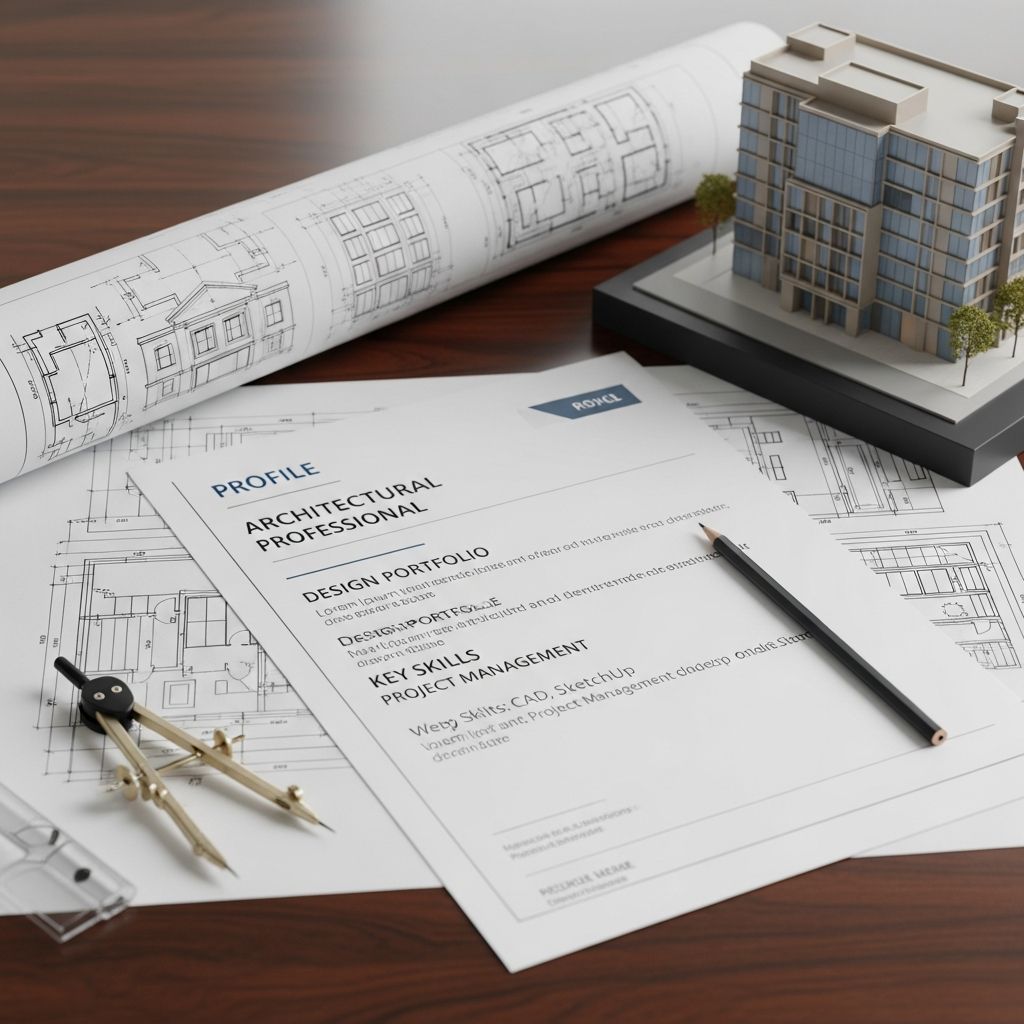
Why Your Resume Profile Matters in Architecture
In architecture, your portfolio often takes center stage, but your resume profile is the first impression that determines whether a hiring manager will look at it at all. A well-crafted profile—whether a summary or an objective—acts as a strategic introduction, framing your experience, skills, and ambitions in a way that aligns with the role you’re pursuing.
Unlike generic resumes, architecture roles demand a balance of creativity, technical precision, and project management. Your profile must quickly communicate not only what you’ve done but also how you’ve added value: through design innovation, cost savings, sustainability, or improved workflows. This section is not a biography; it’s a targeted pitch that answers the unspoken question: Why should we hire you?
Understanding the Two Types of Resume Profiles
There are two main formats for the opening section of an architecture resume: the professional summary and the resume objective. Choosing the right one depends on your experience level and career goals.
Professional Summary (For Experienced Architects)
A professional summary is ideal if you have several years of experience. It highlights your track record, key competencies, and major achievements in a concise paragraph. Think of it as an executive snapshot of your career.
Effective summaries focus on measurable outcomes: projects delivered, teams led, efficiency gains, or sustainability improvements. They avoid vague statements like “passionate designer” in favor of concrete evidence of impact.
Resume Objective (For Students and Early-Career Architects)
A resume objective works best when you’re just starting out or transitioning into a new specialization. It explains your current situation, what you’re seeking, and how your skills and education can benefit the employer.
For students and recent graduates, the objective should emphasize relevant coursework, design competitions, internships, and software proficiency. It should also reflect a clear understanding of the firm’s focus—whether that’s residential, commercial, urban design, or sustainable architecture.
Structuring a High-Impact Architecture Profile
Regardless of format, a strong profile follows a simple but powerful structure: context, value, and alignment.
1. Start with Context
Begin by establishing who you are and where you stand in your career. This sets the stage for everything that follows.
- For experienced architects: Mention your years of experience, licensure status, and primary project types (e.g., commercial, institutional, residential).
- For students and juniors: Highlight your academic background, current status (e.g., recent graduate, final-year student), and any relevant internships or design work.
2. Highlight Value and Achievements
This is where you demonstrate what you bring to the table. Focus on outcomes, not just responsibilities.
- Quantify results where possible: cost savings, time reductions, energy efficiency gains, project scale, or client satisfaction.
- Emphasize skills that matter to the role: BIM proficiency, sustainable design, project management, or specialized software (Revit, Rhino, AutoCAD, etc.).
- Include recognition or awards if applicable, such as design competitions, LEED certifications, or client commendations.
3. Align with the Employer’s Needs
The final part of your profile should connect your background to the specific opportunity. This shows that you’ve done your research and are genuinely interested in the firm.
- Reference the firm’s project types or design philosophy if known (e.g., “seeking to contribute to a firm focused on adaptive reuse and urban regeneration”).
- Indicate the type of role you’re targeting (e.g., project architect, design architect, BIM specialist).
- For objectives, clearly state what you hope to learn or achieve in the position, framed as a benefit to the employer.
Writing a Strong Profile at Every Career Stage
The best profiles are tailored to the architect’s experience level. Here’s how to approach each stage with concrete strategies.
For Architecture Students and Recent Graduates
Students and new graduates often lack extensive project portfolios, so the profile should emphasize potential, education, and relevant hands-on experience.
- Focus on academic projects that demonstrate design thinking, technical skills, and problem-solving.
- Highlight internships, design competitions, and collaborative studio work.
- Include proficiency in key software and any exposure to sustainable design, parametric modeling, or construction documentation.
For Junior Architects (0–3 Years Experience)
Junior architects should position themselves as capable contributors who are growing into more complex roles.
- Emphasize your role in real projects: drafting, documentation, site coordination, and collaboration with senior architects.
- Show progression: increasing responsibility, improved accuracy, or contributions to cost or time savings.
- Mention any licensure progress (e.g., AXP hours, exam stages) to signal commitment to the profession.
For Mid-Level and Senior Architects
Mid-level and senior architects need profiles that reflect leadership, project ownership, and strategic impact.
- Highlight project scale, budget, and complexity (e.g., multi-million dollar mixed-use developments, institutional buildings).
- Focus on outcomes: client satisfaction, on-time and on-budget delivery, sustainability certifications, or innovation in design or technology.
- Include team leadership, mentoring, and cross-disciplinary coordination as evidence of broader professional maturity.
Common Mistakes to Avoid in Architecture Profiles
Even experienced architects can undermine their profiles with avoidable errors. Steering clear of these pitfalls will make your resume stand out for the right reasons.
1. Being Too Generic
Phrases like “creative and detail-oriented architect” or “passionate about design” are overused and don’t differentiate you. Instead, replace them with specific examples of what you’ve created or improved.
2. Overloading with Jargon
While technical terms are necessary, a profile that reads like a software manual or code compliance checklist can alienate non-technical readers. Use jargon sparingly and always explain its impact.
3. Ignoring the Job Description
Every profile should be adjusted to match the role and firm. If a job emphasizes sustainable design, your profile should highlight relevant experience and certifications. If it’s a BIM-heavy role, emphasize your modeling and coordination skills.
4. Focusing Only on Responsibilities
Listing duties without outcomes tells employers what you did, but not why it mattered. Always pair responsibilities with results: how you improved efficiency, reduced costs, or enhanced design quality.
Examples of Effective Architecture Profiles
Below are original, realistic examples of profiles tailored to different career stages. These are meant as inspiration, not templates to copy verbatim.
Architecture Student Profile
Final-year architecture student with a strong foundation in residential and commercial design, supported by hands-on experience in a summer internship at a mid-sized firm. Proficient in Revit, AutoCAD, and Adobe Creative Suite, with a focus on sustainable design principles and energy-efficient solutions. Seeking an entry-level position where I can contribute to real-world projects while developing my skills in construction documentation and client collaboration.
Junior Architect Profile
Licensed junior architect with two years of experience in a multidisciplinary design firm, supporting the delivery of residential and mixed-use projects from schematic design through construction documentation. Skilled in Revit and Bluebeam, with a track record of improving drafting accuracy and reducing rework through careful coordination with consultants. Eager to take on greater responsibility in a firm that values innovation, sustainability, and collaborative design.
Mid-Level Architect Profile
Project architect with six years of experience leading the design and documentation of commercial and institutional buildings, including schools, offices, and community centers. Proven ability to manage projects from concept to completion, consistently delivering on time and within budget while achieving high client satisfaction. Adept at BIM coordination, code compliance, and interdisciplinary teamwork, with a growing interest in net-zero design and adaptive reuse projects.
Senior Architect Profile
Senior architect with over a decade of experience in large-scale commercial and civic projects, including multi-million dollar mixed-use developments and public infrastructure. Successfully led design teams on complex, high-budget projects, ensuring alignment with client goals, sustainability targets, and regulatory requirements. Recognized for improving project delivery timelines, reducing construction costs through value engineering, and mentoring junior staff to maintain high design and technical standards.
How to Tailor Your Profile for Different Firms
Architecture firms vary widely in size, focus, and culture. A profile that works for a boutique residential studio may not resonate with a large corporate firm or a sustainability-focused practice.
Residential and Boutique Firms
Emphasize design sensitivity, attention to detail, and client collaboration. Highlight experience with custom homes, renovations, and high-end finishes.
Commercial and Institutional Firms
Focus on project scale, budget management, code compliance, and interdisciplinary coordination. Mention experience with offices, schools, hospitals, or public buildings.
Sustainable and Green Design Firms
Highlight LEED, BREEAM, or other sustainability certifications, energy modeling experience, and projects that reduced environmental impact. Use metrics related to energy savings, material efficiency, or carbon reduction.
Technology and BIM-Focused Firms
Stress proficiency in BIM tools (Revit, ArchiCAD, BIM 360), parametric design (Grasshopper, Dynamo), and digital workflows. Include examples of how you’ve improved coordination, reduced errors, or accelerated project delivery through technology.
Integrating Your Profile with the Rest of the Resume
Your profile is the headline, but it must be supported by the rest of your resume. Here’s how to ensure consistency and impact.
Work Experience Section
Each bullet point under your roles should reflect the themes introduced in your profile. If your profile mentions cost savings, include specific examples of how you reduced budgets or improved efficiency. If it highlights sustainability, detail projects where you implemented green strategies or achieved certifications.
Skills Section
List technical skills that reinforce your profile: software (Revit, AutoCAD, Rhino, etc.), design methodologies (parametric, sustainable, adaptive reuse), and soft skills (client communication, team leadership, project management).
Education and Certifications
Include your degree, any honors or awards, and relevant certifications (LEED, WELL, licensure status). If you’re still pursuing licensure, mention your AXP progress or exam stages.
Final Checklist for Your Architecture Profile
Before submitting your resume, use this checklist to refine your profile:
- Is it tailored to the specific job and firm?
- Does it clearly state my experience level and key strengths?
- Are achievements quantified where possible?
- Does it avoid generic phrases and clichés?
- Is it concise (3–5 sentences for summaries, 2–4 for objectives)?
- Does it align with the rest of the resume in tone and content?
Frequently Asked Questions
Should I use a summary or an objective?
Use a professional summary if you have 2+ years of relevant experience. Use an objective if you’re a student, recent graduate, or changing careers, where you need to explain your current situation and goals.
How long should my profile be?
Keep it short: 3–5 sentences for a summary, 2–4 for an objective. Recruiters often skim resumes, so every word should add value.
Can I use the same profile for every application?
It’s better to customize your profile for each role. Even small adjustments—mentioning a specific project type or software—can make your application feel more targeted and thoughtful.
What if I don’t have many quantifiable achievements?
Focus on responsibilities, skills, and learning outcomes. For example, “Supported the delivery of 10+ residential projects, gaining experience in all phases from schematic design to construction documentation” still shows scope and progression.
Should I mention my portfolio in the profile?
You don’t need to say “portfolio available upon request” in the profile, but you can reference it indirectly by mentioning key projects or design work. Make sure your portfolio is clearly linked in your contact information.
References
- Architectural Experience Program (AXP) — National Council of Architectural Registration Boards (NCARB). 2025. https://www.ncarb.org/become-architect/axp
- LEED v4.1 Rating System — U.S. Green Building Council (USGBC). 2025. https://www.usgbc.org/leed
- Building Information Modeling (BIM) Standards — International Organization for Standardization (ISO 19650). 2025. https://www.iso.org/standard/66120.html

- Integrated M.A. in Applied Linguistics, University of Hyderabad
- 5+ years in editorial, instructional, SEO, and research-based writing
Sneha is a relationships and lifestyle writer with a strong foundation in applied linguistics and certified training in relationship coaching. She brings over five years of writing experience to theskillvault, crafting thoughtful, research-driven content that empowers readers to build healthier relationships, boost emotional well-being, and embrace holistic living. Her writing and insights reflect the belief that beauty, happiness, and wellness…