
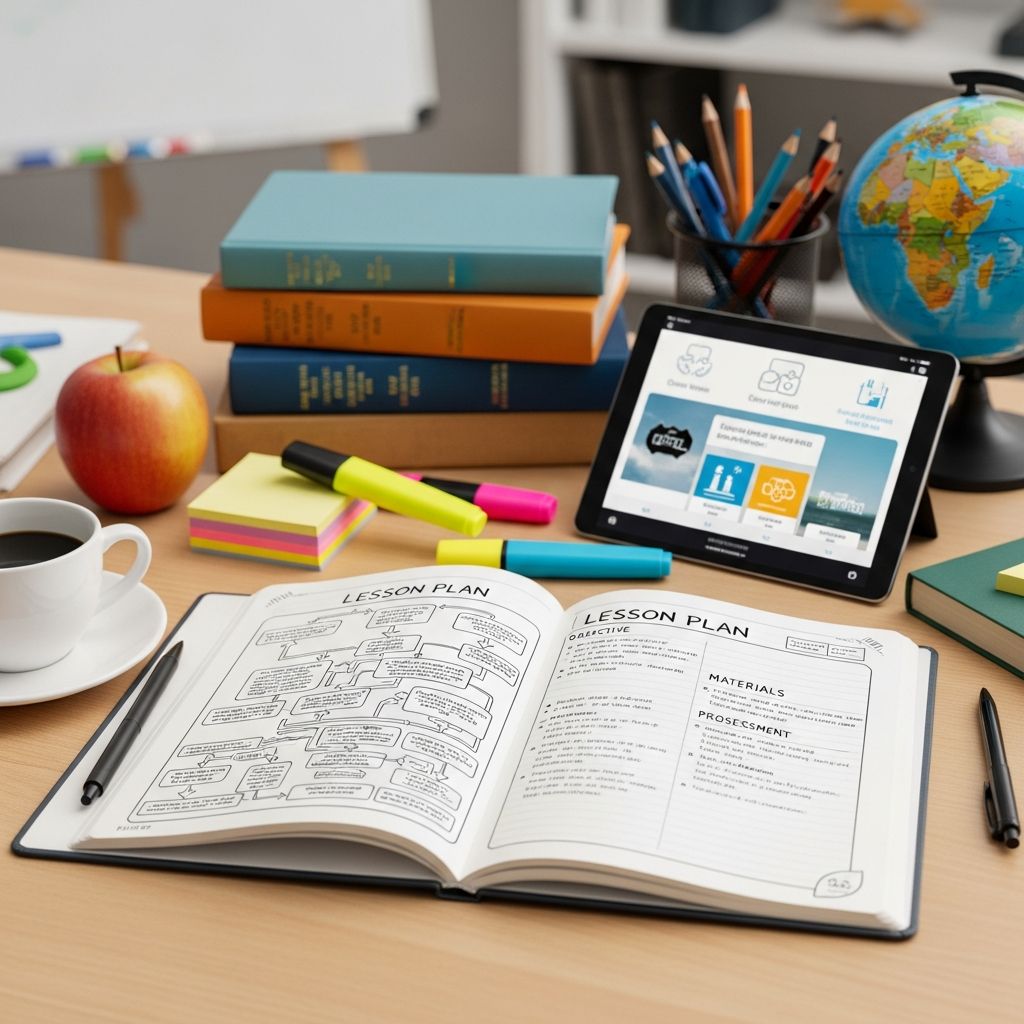
Lesson plans serve as the blueprint for successful teaching, ensuring that every class session drives meaningful learning. By systematically organizing objectives, activities, and evaluations, educators can create dynamic environments where students thrive. This guide draws on proven strategies to help teachers at all levels build plans that are flexible, engaging, and results-oriented.
Understanding the Foundation of Strong Lesson Plans
At its core, a lesson plan outlines what students will learn, how they will learn it, and how progress will be measured. Effective plans integrate three essential elements: clear learning goals, structured instructional methods, and robust assessment tools. Research from university teaching centers emphasizes that plans with a defined beginning, middle, and end promote better retention and application of knowledge.
Begin by considering the broader curriculum context. Align your plan with national or state standards, such as Common Core, to ensure relevance. For instance, in a high school English class, standards might require analyzing textual tone, which then informs specific lesson objectives. This alignment prevents isolated lessons and fosters cohesive unit progression.
Defining Clear and Measurable Learning Objectives
The heartbeat of any lesson plan is its objectives, which specify what students should know or do by the end. Use the SMART framework—Specific, Measurable, Achievable, Relevant, and Time-bound—to craft them. For example, instead of “understand fractions,” aim for “Students will solve fraction addition problems with accuracy exceeding 80% within 20 minutes”.
- Specific: Pinpoint exact skills or knowledge, avoiding vagueness.
- Measurable: Include criteria for success, like quizzes or demonstrations.
- Achievable: Match goals to students’ current abilities and resources.
- Relevant: Connect to standards and real-world applications.
- Time-bound: Set a timeframe to maintain pace.
Prioritize objectives by ranking them; if time runs short, focus on the most critical ones. This approach, recommended by instructional design experts, allows flexibility while safeguarding key outcomes.
Structuring the Lesson Flow for Maximum Engagement
A well-structured lesson follows a logical sequence: introduction, main activities, and closure. Allocate time precisely—estimate durations for each segment and build in buffers for questions or extensions.
| Phase | Purpose | Time Allocation (45-min Lesson) | Example Activities |
|---|---|---|---|
| Introduction (Hook) | Capture interest and preview objectives | 5-7 minutes | Provocative question or short video |
| Main Instruction & Practice | Deliver content and guided application | 25-30 minutes | Lecture, group work, hands-on tasks |
| Assessment & Closure | Check understanding and summarize | 8-10 minutes | Exit ticket, key takeaways discussion |
In the introduction, use hooks like real-life analogies or quick polls to activate prior knowledge. The core phase blends direct teaching—where you model skills—with guided and independent practice. Transition smoothly to closure, where students reflect and connect concepts.
Selecting Engaging Learning Activities
Activities must directly support objectives, eliminating filler tasks. Incorporate variety to address diverse learning styles: visual aids for spatial learners, discussions for verbal ones, and kinesthetic exercises for hands-on types.
Proven strategies include:
- Think-Pair-Share: Individuals ponder a prompt, pair up to discuss, then share class-wide—boosts participation without overwhelming introverts.
- Jigsaw Method: Divide content into expert groups; students teach peers, promoting deep understanding and collaboration.
- Debates or Role-Plays: Apply concepts to scenarios, enhancing critical thinking.
- Tech Integration: Use interactive tools like polls or simulations for modern appeal.
Balance teacher-led (modeling), collaborative (pairs/groups), and solo work to build independence. Monitor with quick checks, like thumbs-up signals, to gauge real-time comprehension.
Integrating Formative and Summative Assessments
Assessments confirm objective mastery. Formative tools—ongoing checks like observations or quizzes—inform mid-lesson adjustments. Summative ones, such as end-of-lesson tests, measure overall achievement.
Embed assessments naturally:
- Questioning during explanations.
- Quick writes or exit slips at transitions.
- Peer reviews in group activities.
According to educational guidelines, align assessments precisely with objectives; misalignment leads to skewed data. Track results to differentiate instruction for struggling or advanced students.
Adapting Plans for Diverse Learners
Know your students’ needs—backgrounds, abilities, interests—to tailor plans. Incorporate Universal Design for Learning (UDL) principles: multiple representation methods, engagement options, and expression avenues.
For inclusivity:
- Differentiate by providing tiered tasks (basic, advanced).
- Offer choices in how students demonstrate learning (e.g., essay vs. video).
- Support English learners with visuals and glossaries.
Anticipate challenges: prepare extensions for early finishers and scaffolds for others. Flexibility is key—adjust on the fly based on class energy.
Essential Components to Include in Every Plan
A comprehensive plan lists:
- Header: Title, grade, subject, date, duration.
- Standards: Linked objectives.
- Materials: All resources, including tech.
- Vocabulary: Key terms with definitions.
- Procedure: Timed steps with transitions.
- Assessment: Methods and rubrics.
- Homework/Extensions: Follow-up tasks.
- Reflection: Space for post-lesson notes.
Use templates or tables for clarity, as suggested by writing centers.
Common Pitfalls and How to Avoid Them
Avoid overload by prioritizing 2-3 objectives per lesson. Don’t neglect timing—overrun activities derail flow. Ensure activities aren’t just fun; they must advance goals. Test plans mentally: Can a substitute follow it? Revise based on past data.
Reflection: The Key to Continuous Improvement
Post-lesson, note what worked, what didn’t, and why. Adjust future plans accordingly. Reflection builds expertise, turning good teachers into great ones.
Frequently Asked Questions (FAQs)
What is the most important part of a lesson plan?
The learning objectives, as they guide every other element and ensure focus on student outcomes.
How long should a lesson plan take to create?
30-60 minutes for experienced teachers; more for novices. Practice speeds it up.
Can lesson plans be digital?
Yes, tools like Google Docs or specialized software enhance sharing and updates.
How do I handle unexpected disruptions?
Build flexibility: prioritize core objectives and have backup activities ready.
Are detailed plans necessary for veteran teachers?
Even experts benefit from outlines to maintain consistency and standards alignment.
References
- Lesson Plan Guidelines for Student Teachers — Drexel University School of Education. 2023-10-15. https://drexel.edu/soe/resources/student-teaching/advice/how-to-write-a-lesson-plan/
- Lesson Plan Template | How to Write a Lesson Plan — Discovery Education. 2024-02-20. https://www.discoveryeducation.com/blog/teaching-and-learning/lesson-plans/
- Strategies for Effective Lesson Planning — University of Michigan CRLT. 2022-08-10. https://crlt.umich.edu/gsis/p2_5
- Writing Lesson Plans — University of Arizona Global Campus Writing Center. 2023-05-12. https://writingcenter.uagc.edu/writing-lesson-plans
- 3 Steps to Writing Better Lesson Plans — Edutopia. 2021-09-08. https://www.edutopia.org/article/3-steps-to-writing-better-lesson-plans/

Medha Deb is an editor with a master's degree in Applied Linguistics from the University of Hyderabad. She believes that her qualification has helped her develop a deep understanding of language and its application in various contexts. Medha specializes in the areas of beauty, health, sports, and wellness and is committed to ensuring that the content on the website is…