
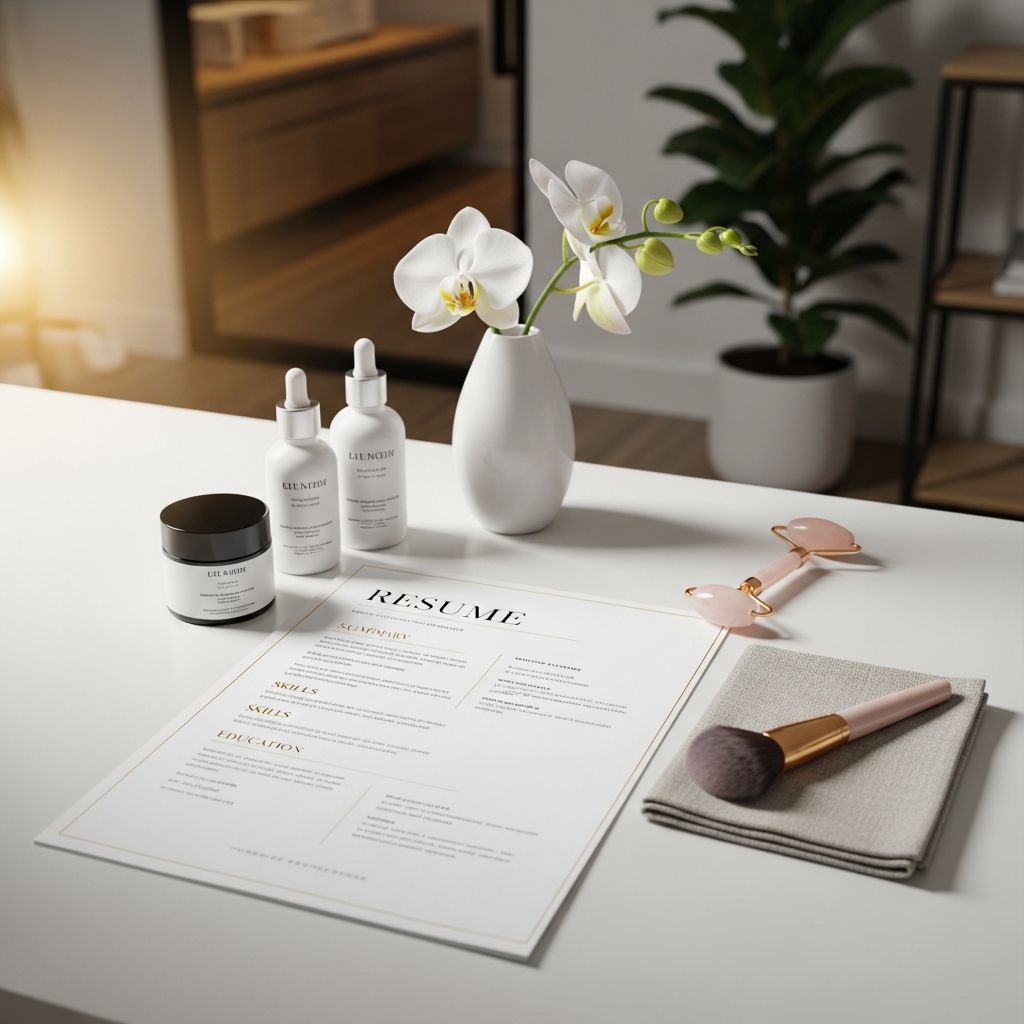
If you are a licensed esthetician or aspiring skincare specialist, your resume is more than a list of jobs—it is a snapshot of your technique, professionalism, and ability to build loyal clients. Employers need to see both your hands-on treatment skills and your customer service mindset in a clear, polished document.
This guide walks you through everything you need to create an esthetician resume that gets noticed, from structure and wording to examples of achievements that matter in spas, salons, and medical settings.
Understanding the Esthetician Role Before You Write
To tailor a powerful resume, it helps to understand how employers define the esthetician role. According to professional job descriptions, estheticians are licensed skin care specialists who perform facial and body treatments, evaluate skin conditions, advise on home care, and maintain strict hygiene standards.
| Core Area | Typical Esthetician Responsibilities |
|---|---|
| Treatments | Facials, peels, masks, hair removal, body treatments, basic makeup applications |
| Client Care | Perform skin analysis, discuss concerns, recommend services and home-care routines |
| Hygiene & Safety | Disinfect tools, sanitize work areas, follow health regulations and spa protocols |
| Business Support | Promote retail products, rebook clients, help with scheduling and record keeping |
Strong resumes reflect these clusters of responsibilities through focused skills, experience bullets, and measurable results.
Essential Sections Every Esthetician Resume Needs
Recruiters usually skim resumes in seconds. Make their job easy with a clean structure and predictable sections.
- Contact details with your professional credentials
- Resume summary (or objective for entry-level candidates)
- Licenses and certifications
- Core skills (technical and soft skills)
- Professional experience
- Education and training
- Optional: specializations, awards, or professional memberships
Contact Information That Looks Professional
Place your contact details at the top so hiring managers can reach you quickly.
- Full name and professional title (e.g., Licensed Esthetician)
- Phone number
- Professional email address
- City and state (full address is optional)
- Link to portfolio, LinkedIn, or spa Instagram if it showcases your work appropriately
Writing a Summary That Sells Your Value
A resume summary is a 2–4 sentence introduction highlighting your experience level, specialties, and what makes you valuable to employers.
Use it if you have at least some hands-on experience. If you are new, use a short objective instead that focuses on your training and goals.
Strong summary elements to include:
- Years of experience or type of environment (spa, medical, resort)
- Key services you provide (e.g., advanced facials, waxing, peels, body treatments)
- Client-care strengths (building repeat clients, educating on routines)
- Any standout outcomes (retail sales, positive feedback, retention)
Highlighting Licenses, Certifications, and Compliance
Because esthetician work is regulated at the state or provincial level, employers look first for proof that you are legally allowed to practice.
Include a clearly labeled section such as Licenses & Certifications.
- State or provincial esthetician license, with license number if appropriate
- Date obtained and expiration date (or “Active” if relevant)
- Any master esthetician or advanced practice licenses
- Additional certifications (e.g., microdermabrasion, chemical peels, lash extensions, laser technician where allowed by law)
Featuring this section near the top of your resume can prevent your application from being screened out early, especially in medical or clinical environments.
Showcasing the Skills Employers Really Want
Job descriptions for estheticians repeatedly mention a mix of technical treatment skills and interpersonal abilities. Organize your skills into clear categories so recruiters instantly see your fit.
Technical & Treatment Skills
- Facials (deep-cleansing, hydrating, anti-aging, acne-focused)
- Skin analysis and consultation
- Hair removal (waxing, threading, sugaring, tweezing, depilatory products)
- Exfoliation (microdermabrasion, enzyme or mild chemical peels where trained)
- Masks and body treatments (wraps, scrubs, masks)
- Basic makeup application and product color matching
- Use of professional skincare equipment (e.g., steamers, high-frequency devices, LED units where allowed)
Client Service & Soft Skills
- Warm, professional client communication
- Active listening and needs assessment
- Explaining procedures and home-care in clear language
- Handling sensitive topics like acne, aging, or scarring with empathy
- Encouraging rebooking and long-term treatment plans
- Building trust and maintaining client confidentiality
Sanitation, Safety & Professionalism
- Strict adherence to hygiene and disinfection protocols
- Proper handling and storage of tools and chemicals
- Compliance with local health and licensing regulations
- Accurate record keeping and documentation
- Time management and schedule adherence
Retail, Sales & Business Skills
- Recommending suitable skincare products based on analysis
- Upselling add-on treatments ethically
- Meeting or exceeding daily or monthly retail goals
- Contributing to positive online reviews and word-of-mouth referrals
Writing Experience Bullets That Go Beyond Duties
Many estheticians copy job description phrases into their resume, which makes them blend in rather than stand out. Instead of simply listing tasks, focus on results and specific contributions.
Translate Daily Tasks into Measurable Wins
For each job, include 4–6 bullet points that show:
- What you did
- How you did it (tools, techniques, approach)
- What benefit it produced for the client or business
Examples of outcomes you might highlight:
- Number of clients served per day or week
- Client retention or rebooking rates
- Retail sales performance (e.g., average per client or monthly totals)
- Positive feedback, reviews, or referrals generated
- Contribution to cleanliness, organization, or policy improvements
Tailoring Experience to Different Settings
Estheticians work in day spas, salons, resorts, dermatology practices, and medical spas. Your resume should reflect the priorities of the environment you are targeting.
| Work Setting | What to Emphasize on Your Resume |
|---|---|
| Day spa or salon | Client experience, upselling add-ons, retail sales, fast-paced scheduling, teamwork |
| Medical spa / dermatology | Working under medical supervision, detailed documentation, advanced treatments within legal scope, adherence to strict protocols |
| Resort or hotel spa | High-end service standards, multicultural clients, flexible scheduling, cross-selling other spa services |
Education, Training, and Continuous Learning
Most regions require estheticians to complete an approved training program and pass a licensing exam. Use your education section to show both your formal schooling and your commitment to staying current.
- Name of cosmetology or esthetics school
- Program title and completed hours
- Graduation year (optional if you have extensive experience)
- Relevant coursework (e.g., skin histology, facial techniques, infection control, product chemistry)
You can add a separate Professional Development or Continuing Education subsection for:
- Workshops on new technologies or product lines
- Business or marketing classes for beauty professionals
- Conferences or trade shows attended
Optimizing Your Resume for Applicant Tracking Systems (ATS)
Many spas, chains, and medical practices use software to filter resumes before a human reads them. To get past these systems, align your wording with the exact phrases used in the job posting.
Practical tips:
- Use standard headings like Experience, Education, and Skills
- Sprinkle relevant keywords such as facials, waxing, skin analysis, sanitation, and retail sales where they honestly apply
- Avoid embedding key information in graphics or complex tables that ATS may not read
- Submit in the file format requested (often PDF or DOCX)
Design Tips: Making Your Resume Look as Polished as Your Work
Your resume layout should reflect the clean, organized standards expected in professional skincare.
- Use a simple, legible font and consistent spacing
- Keep the length to one page for newer estheticians, up to two pages for experienced candidates
- Use bullet points, not large blocks of text
- Incorporate subtle design touches (like section dividers) without sacrificing clarity
- Make sure headings stand out so recruiters can scan quickly
Common Mistakes on Esthetician Resumes (and How to Avoid Them)
A few small errors can make an otherwise strong candidate appear unprofessional. Watch out for these pitfalls:
- Leaving out your license: Always include your license type, state, and status near the top.
- Copying job descriptions word-for-word: Replace generic duty lists with your specific contributions and results.
- Undervaluing sanitation and safety: Employers take cleanliness and infection control seriously—show you do too.
- Ignoring retail and business skills: Many spas depend heavily on retail and rebooking; highlight this part of your role.
- Typos and inconsistencies: Proofread carefully and ask a trusted colleague to review for clarity.
Bonus Ideas to Stand Out in the Skincare Job Market
In competitive areas, small extras can help your resume rise to the top.
- Create a simple online portfolio with before-and-after photos (with client consent and in line with employer policies).
- Mention any experience training junior staff or helping with product launches.
- Highlight bilingual skills if you serve diverse communities.
- Include memberships in professional associations or local beauty networks.
Frequently Asked Questions (FAQs)
Q: How long should an esthetician resume be?
For most estheticians, a single page is ideal, especially if you have fewer than 10 years of experience. If you have a long work history in multiple spas or medical settings, up to two pages is acceptable, as long as every line adds value.
Q: Where should I list my esthetician license?
Place your license information high on the page, either directly under your summary or in a dedicated “Licenses & Certifications” section. Employers often screen for this first, so it should never be hidden at the bottom.
Q: What if I am a new graduate with no spa experience?
Focus on your training hours, practical work done in school, and any part-time customer service or retail roles. Use an objective statement that highlights your eagerness to learn, your grasp of sanitation standards, and your comfort in a client-facing environment.
Q: How can I show client results without sharing private details?
Use aggregated or anonymized metrics, such as your average monthly rebooking rate, percentage of returning clients, or the growth in retail sales during your tenure. Avoid any information that could identify individual clients.
Q: Do I need to list every treatment I can perform?
You do not need an exhaustive list. Focus on the treatments that match the job posting and those you perform most frequently or confidently, such as facials, waxing, peels, or body treatments. You can discuss additional skills during the interview.
References
- Skincare Specialists — U.S. Bureau of Labor Statistics. 2024-09-04. https://www.bls.gov/ooh/personal-care-and-service/skincare-specialists.htm
- Esthetician Job Description — EstheticianEDU.org. 2023-05-15. https://www.estheticianedu.org/careers/
- Esthetician Job Description [+2024 Template] — Workable. 2024-02-10. https://resources.workable.com/esthetician-job-description
- Esthetician Job Description — Betterteam. 2023-11-20. https://www.betterteam.com/esthetician-job-description
- What Does an Esthetician Do? Job Duties, Required Skills and More — Natural Healers. 2022-08-30. https://www.naturalhealers.com/esthetician/job-description/
- Esthetician Job Description [Updated 2025] — Indeed Canada. 2025-01-05. https://ca.indeed.com/hire/job-description/esthetician
- What is an Esthetician’s Job Description? — Broken Arrow Beauty College. 2023-04-18. https://www.babeautycollege.com/blog/what-is-an-estheticians-job-description-2/

- Integrated M.A. in Applied Linguistics, University of Hyderabad
- 5+ years in editorial, instructional, SEO, and research-based writing
Sneha is a relationships and lifestyle writer with a strong foundation in applied linguistics and certified training in relationship coaching. She brings over five years of writing experience to theskillvault, crafting thoughtful, research-driven content that empowers readers to build healthier relationships, boost emotional well-being, and embrace holistic living. Her writing and insights reflect the belief that beauty, happiness, and wellness…