
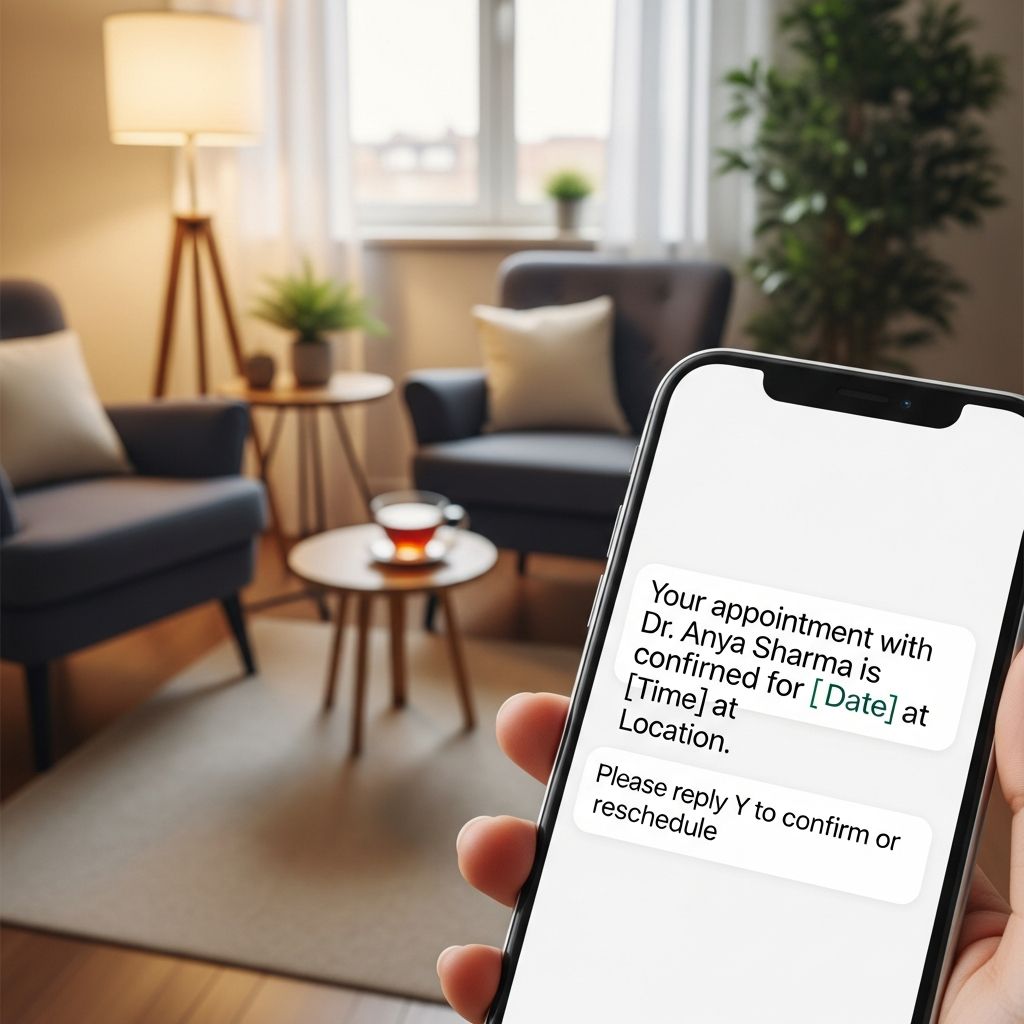
Appointment confirmation texts are one of the simplest tools you can use to reduce no-shows, support client engagement, and streamline your mental health practice. When written thoughtfully, they do more than repeat logistics: they reassure clients, protect privacy, and create a consistent, professional experience.
This guide explains how to design confirmation messages specifically for counseling and therapy settings, so you can communicate clearly while honoring ethics, confidentiality, and client well-being.
Why Confirmation Texts Matter in Mental Health Practices
Across health care, missed appointments are a major source of wasted resources and disrupted care. Research in health systems shows that no-show rates for medical appointments can range from 10% to over 30%, depending on the setting, and reminders are one of the most effective strategies to reduce them. Behavioral health services face similar challenges: missed sessions interrupt treatment, increase administrative workload, and delay access for other clients.
Simple reminder and confirmation messages can improve attendance and continuity of care. Studies of SMS reminders in clinical settings have found that text-based reminders are associated with better appointment adherence and are often preferred by patients because they are quick and unobtrusive.
For therapy practices, a well-crafted confirmation text can help you:
- Decrease no-shows by helping clients remember and confirm their time.
- Catch scheduling errors before the day of the session.
- Clarify logistics such as location, format, or video link.
- Maintain therapeutic alliance with a warm, non-judgmental tone.
- Support privacy and compliance with clear boundaries on what is shared by text.
Core Principles of a Strong Confirmation Text
Every appointment confirmation message in a counseling context should follow a few core principles. These keep your communication ethical, clear, and easy for clients to act on.
1. Prioritize Privacy and Confidentiality
Text messages are convenient but not inherently secure. Health privacy laws and professional ethics require you to protect client information as much as possible. When sending confirmation texts:
- Avoid clinical details such as diagnoses, treatment type, or sensitive topics.
- Use neutral wording like “appointment” or “session,” rather than specific procedures.
- Be cautious with identifiers if someone else might see the client’s phone screen.
- Limit content to what is needed to confirm logistics and next steps.
Before using SMS for reminders, obtain client consent and document their communication preferences, as recommended in many telehealth and privacy guidelines.
2. Be Short, Specific, and Easy to Scan
Clients often read texts quickly while multitasking. A good confirmation message can be understood at a glance. Aim for one or two short sentences that clearly present:
- Who the message is from.
- Which appointment it refers to.
- When the appointment will occur.
- How the client can confirm or request changes.
Many SMS systems still operate around a 160-character segment. Staying near that length reduces splitting into multiple messages and keeps your text focused.
3. Use Warm, Everyday Language
Clinical jargon can sound cold or confusing to clients. Technical terms like “intake assessment,” “treatment planning,” or “psychodiagnostic evaluation” are useful in documentation but not necessary in a brief confirmation.
Instead, choose plain language and a tone that feels human:
- Use everyday words such as first visit, session, or meeting.
- Write as though you are speaking to the client directly and respectfully.
- Keep the reading level simple to support clients with varied literacy backgrounds.
4. Always Include a Simple Action Step
Confirmation texts work best when they invite a clear, easy response. Instead of leaving clients unsure whether they must reply, spell out the next step. For example:
- “Reply YES to confirm.”
- “Text us if you need to reschedule.”
- “Call this number with any questions.”
Clear call-to-action language helps clients know how to respond and makes it easier for your team to track confirmations.
5. Match the Tone to the Therapeutic Relationship
Your message tone should align with the culture of your practice and your clients’ expectations. In mental health settings, a balance of professionalism and warmth is usually appropriate:
- Professional: Identifies the practice name and respects boundaries.
- Supportive: Signals that rescheduling is allowed and non-judgmental.
- Non-urgent: Avoids language that feels threatening or punitive.
Clients who already feel anxious about therapy may be particularly sensitive to wording. A calm, reassuring tone can reduce stress and support attendance.
Essential Elements to Include
Most confirmation texts for therapy appointments can follow a simple, repeatable structure. The table below summarizes the minimum information you should usually include, plus optional elements that you may add when appropriate.
| Element | Required? | Purpose |
|---|---|---|
| Client name | Recommended | Confirms who the message is for and personalizes communication. |
| Practice or therapist name | Required | Clarifies the sender and builds trust. |
| Date and time | Required | Ensures the client knows exactly when to attend. |
| Format (in-person or virtual) | Required | Prevents confusion about how the session will take place. |
| Location or link | Required | Provides the address or online platform details. |
| Confirmation instructions | Required | Guides the client on how to confirm or modify the appointment. |
| Contact information | Recommended | Offers a simple way to reach you for questions or changes. |
| Brief preparation info | Optional | Provides minimal, non-sensitive instructions (e.g., arrive early). |
Best Practices for Timing and Frequency
Sending your confirmation at the right moment is as important as the wording. Many clinics and health systems use a combination of confirmations and reminders to support attendance.
- Immediately after booking: Send a confirmation as soon as an appointment is scheduled so the client can save the details and correct mistakes.
- One to two days before: A short reminder close to the appointment helps clients plan transportation, childcare, or time off from work.
- Day-of reminder (optional): For clients with a history of missed appointments or for virtual sessions, a same-day reminder a few hours in advance can be helpful.
Adjust timing based on your client population, clinic hours, and cancellation policy. Document your standard process so that staff and automated systems are aligned.
Adapting Messages for Different Therapy Scenarios
While the same core structure works across most appointments, a few details should shift depending on the type of visit and where the client is in their therapy journey.
1. Established Individual Therapy Sessions
For returning clients who attend regular one-on-one sessions, confirmation texts can be very brief. They already know what to expect; your main goal is to confirm logistics and provide an easy way to respond.
- Keep the message short and routine.
- Reference the therapist or practice name consistently.
- Include rescheduling instructions without pressure.
2. First Sessions and Intakes
Clients arriving for a first appointment may be nervous or unsure about practical details. In these cases, a slightly more informative confirmation can reduce uncertainty and help them feel welcomed.
- Offer a brief, warm welcome that acknowledges this is their first session.
- Clarify arrival expectations, such as paperwork or check-in procedures, without sharing sensitive information.
- Ensure they know whom to contact if they have trouble finding the office or joining online.
3. Telehealth and Virtual Sessions
For video or phone sessions, confirmation texts should emphasize how the client will connect. Many telehealth guidelines note that clients should receive clear technical instructions ahead of time to avoid last-minute confusion.
- State clearly that the appointment is virtual.
- Indicate whether a separate email or portal message contains the secure link.
- Encourage clients to test their connection or log in a few minutes early.
4. Group Therapy or Classes
Group appointments involve multiple participants, so clarity about time, place, and expectations is especially important.
- Reference that the appointment is a group session or class, using non-stigmatizing language.
- Include any strictly necessary arrival or check-in instructions.
- Remind clients not to share group members’ names or details if they reply by text.
5. Appointments with Flexible Rescheduling
When your policy allows rescheduling within a certain time frame, confirmation texts can gently highlight this option. Emphasizing flexibility can make clients more likely to reach out early, rather than not showing up at all.
- Offer rescheduling as a normal, acceptable choice (“ If you need to change your time, text or call us ”).
- Avoid shaming language or threats about cancellation fees in SMS; share detailed policies in written intake materials instead.
Operational Tips for Implementing Confirmation Texts
Beyond the wording itself, your process for managing confirmation texts will affect how helpful they are for your practice.
- Standardize templates: Create a small set of templates for common scenarios (new client, ongoing, group, telehealth) and train staff on when to use each.
- Use automation thoughtfully: Many scheduling systems can automate reminders; configure them to respect time zones, clinic hours, and do-not-contact preferences.
- Monitor responses: Make sure someone on your team checks incoming replies so requests to reschedule or questions do not go unanswered.
- Review metrics: Periodically examine your no-show rates and client feedback to see if message timing or wording needs adjustment.
- Document consent: Include SMS communication preferences in your intake forms and inform clients that texts are primarily for logistics rather than clinical discussion.
Common Mistakes to Avoid
A few small missteps can undermine the value of your confirmation messages. Watch out for:
- Overloading the message: Long, multi-topic texts are easy to skim past. Stick to one purpose per message.
- Using threatening language: Messages that emphasize penalties rather than support can harm rapport.
- Including confidential information: Never include diagnostic labels, therapy content, or sensitive personal details.
- Sending at inappropriate times: Very early morning or very late-night texts may feel intrusive.
- Not identifying your practice: Anonymous messages can be mistaken for spam and ignored.
Frequently Asked Questions (FAQs)
Q: Are appointment confirmation texts allowed under privacy regulations?
In many regions, brief administrative texts that do not include sensitive medical details are permitted when reasonable safeguards and client consent are in place. You should still review local regulations and, if applicable, HIPAA or comparable rules to ensure your processes are compliant.
Q: How often should I text clients about an appointment?
A common pattern is one message at booking and one reminder 24–48 hours before the session. Some practices add a same-day reminder for telehealth or high-risk no-show clients. Adjust frequency based on your population and feedback.
Q: Can I include my cancellation policy in the confirmation text?
It is usually better to keep policy wording brief in text messages and provide full details in intake paperwork, email, or on your website. You can reference that a late-cancellation policy exists without listing every term.
Q: Should clients be able to reply to confirmation texts?
Allowing replies improves accessibility and can make it easier for clients to reschedule rather than not attend. If you use a no-reply number, make sure the message clearly states how clients should contact you instead.
Q: Is it better to call or text for confirmations?
Text messages are efficient, discreet, and often preferred by clients, while phone calls may be better for complex situations or when detailed discussion is needed. Many practices use a combination, reserving calls for high-risk or clinically sensitive contexts.
References
- Parikh A, Gupta K, Wilson AC, Fields K, Cosgrove NM, Kostis JB. The effectiveness of outpatient appointment reminder systems in reducing no-show rates. — Am J Med. 2010-06-01. https://doi.org/10.1016/j.amjmed.2010.01.034
- Gurol-Urganci I, de Jongh T, Vodopivec-Jamsek V, Atun R, Car J. Mobile phone messaging reminders for attendance at healthcare appointments. — Cochrane Database of Systematic Reviews. 2013-12-05. https://doi.org/10.1002/14651858.CD007458.pub3
- British Medical Association. Using SMS text messaging in general practice. — BMA Guidance. 2019-10-01. https://www.bma.org.uk/advice-and-support/gp-practices/communication-with-patients/using-sms-text-messaging-in-general-practice
- U.S. Department of Health and Human Services. Health App Use Scenarios and HIPAA. — HHS.gov. 2021-12-20. https://www.hhs.gov/hipaa/for-professionals/privacy/guidance/health-apps/index.html
- American Psychological Association. Guidelines for the practice of telepsychology. — American Psychologist. 2013-07-01. https://doi.org/10.1037/a0035001
- U.S. Department of Education. Adult Literacy in the United States. — National Center for Education Statistics. 2019-07-01. https://nces.ed.gov/datapoints/2019179.asp

- Integrated M.A. in Applied Linguistics, University of Hyderabad
- 5+ years in editorial, instructional, SEO, and research-based writing
Sneha is a relationships and lifestyle writer with a strong foundation in applied linguistics and certified training in relationship coaching. She brings over five years of writing experience to theskillvault, crafting thoughtful, research-driven content that empowers readers to build healthier relationships, boost emotional well-being, and embrace holistic living. Her writing and insights reflect the belief that beauty, happiness, and wellness…