
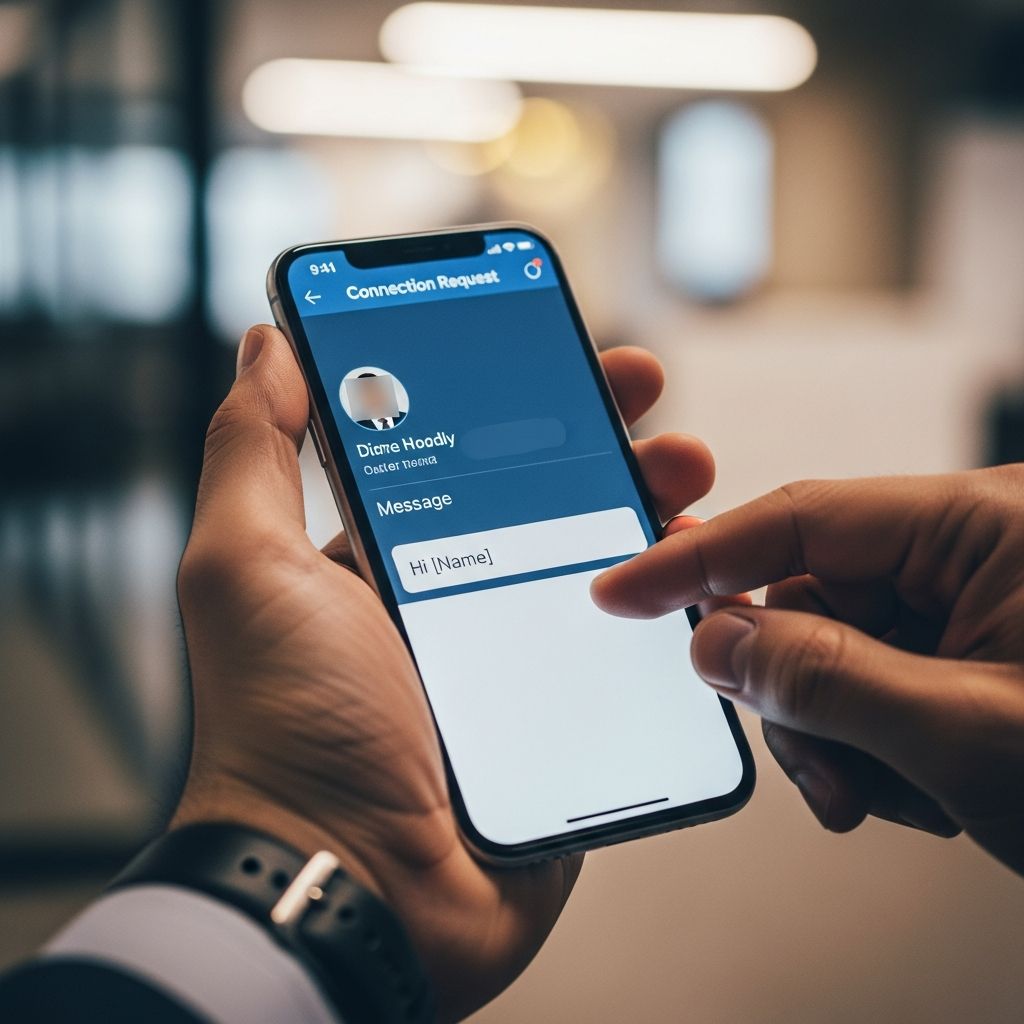
Sending a LinkedIn invite is easy. Getting it accepted is where the real work begins. In a crowded inbox full of generic “I’d like to connect” requests, a thoughtful message is what separates ignored invitations from meaningful new relationships.
This guide explains how to write connection requests that feel personal, respectful, and valuable. You will also see message ideas for different situations, learn what to avoid, and understand how to follow up once someone accepts.
Why Your LinkedIn Connection Message Matters
LinkedIn is one of the most widely used professional networking platforms worldwide, with hundreds of millions of users across industries and job levels. With that many people using the same platform, your message has to stand out in a professional and trustworthy way.
A strong connection request helps you:
- Increase acceptance rates by explaining clearly who you are and why you are reaching out.
- Set the tone for a respectful, mutually beneficial relationship from the first interaction.
- Position yourself professionally by showing that you value the other person’s time and achievements.
- Open the door for future conversations about ideas, opportunities, or collaboration.
Researchers have found that short, concise messages are more likely to be read and positively received in online environments than overly long ones, especially when communication is task-oriented and professional. That principle applies directly to LinkedIn invitations.
The Core Formula of an Effective Connection Request
While every message should be unique, most effective LinkedIn requests share a common structure. Think of your note as having four simple parts:
| Part | What It Does | Key Question Answered |
|---|---|---|
| Greeting + name | Shows you know who they are and treats them as an individual. | “Are you talking to me specifically?” |
| Personal relevance | References something specific about their profile, work, or content. | “Why did you choose to contact me?” |
| Clear intent | Explains briefly what you hope this connection will help you achieve. | “What do you want and how big an ask is this?” |
| Low-pressure close | Ends politely, without demanding immediate time or favors. | “Is it safe to accept without regret?” |
When these four elements are present, your message feels intentional and respectful rather than random or transactional.
Before You Click “Connect”: Prepare Your Profile
Even the best-written message can fail if your profile does not look credible. Professionals use profile cues like photo quality, headline clarity, and work history to judge whether accepting a request feels safe and worthwhile.
Review the following areas first:
- Photo: Use a clear, recent, professional headshot with a friendly, approachable expression.
- Headline: In a short phrase, explain what you do and who you help (e.g., “Product manager helping fintech teams ship secure features faster”).
- About section: Add a concise summary that highlights your expertise, goals, and areas of interest.
- Experience and education: Make sure titles, dates, and company names are accurate and up to date.
- Activity: Interact occasionally with posts or share insights to show that you are an active, engaged user.
When your profile clearly communicates who you are, people feel more comfortable accepting your request, especially if you have never met.
Personalization: The Difference Between “Ignore” and “Accept”
Most people can immediately tell when a message was copied and pasted. A few small details are often enough to turn a generic note into something that feels thoughtfully written.
Ways to personalize your request include:
- Referencing a specific role or project they have worked on.
- Mentioning a recent post, article, podcast, or talk they created or joined.
- Highlighting a shared background, such as school, city, certification, or industry.
- Using a mutual connection as a point of trust, if appropriate.
- Pointing to a shared professional interest, such as a niche technology, policy topic, or market.
Even in short notes, personalization shows you have invested effort and are not simply casting a wide net.
Connection Request Ideas for Common Situations
Below are message concepts (not word-for-word templates) you can adapt to fit your voice and situation. Keep your notes short—often 40–80 words is enough.
1. Connecting With Someone You Met Recently
When you have already interacted briefly, your goal is to jog their memory and anchor the connection to that encounter.
- Reference where you met (conference, webinar, meeting, class).
- Remind them of a topic you discussed or a question you asked.
- State that you would like to stay in touch or continue the conversation.
This approach works well after events, workshops, or introductions through colleagues.
2. Reaching Out to Someone You Admire
When writing to a senior leader, researcher, or public expert, your goal is to express appreciation without sounding insincere or demanding.
- Briefly mention what specific work of theirs you found helpful or inspiring.
- Connect that work to your own path or interests.
- Keep any ask very light—often just a connection is enough at first.
Most busy professionals are more open to genuine, specific compliments than to vague praise or immediate requests for favors.
3. Contacting Recruiters and Hiring Managers
Recruiters receive many messages every day. To respect their workload, focus on clarity and relevance.
- Introduce your role and years of experience in one line.
- Indicate the function, level, or type of roles you are exploring.
- Reference a relevant opening or team, if one exists.
- Make a modest ask, such as permission to send a short note with more detail.
Research on hiring practices shows that clear, targeted communication is more effective than broad, unfocused outreach when seeking new opportunities.
4. Building Peer Connections in Your Field
Peers at a similar career stage can be valuable sounding boards and collaborators. Your message should highlight what you have in common.
- Note similarities in role, industry, or tools you work with.
- Share a brief line about what you enjoy learning or discussing professionally.
- Offer to exchange experiences or insights from your side.
This approach is particularly useful if you want a broader professional community beyond your current organization.
5. Following Up on Online Interactions
If you have commented on someone’s post, interacted in a group, or attended one of their live sessions, reference that digital encounter in your request.
- Mention the specific post, discussion, or group where you interacted.
- Note one idea or question that stood out to you.
- Share that you would like to stay connected around that topic.
This strategy works especially well for thought leaders that you might not encounter offline.
Common Mistakes That Get Your Requests Ignored
Certain patterns repeatedly show up in invitations that people are quick to decline. Avoid these pitfalls to protect your reputation and improve your results.
- Sending no note at all: A blank request offers no context and often feels random, especially for second- or third-degree contacts.
- Leading with a sales pitch: Trying to sell a product or service in the first message tends to feel intrusive.
- Copy-pasting identical notes: Messages that look mass-produced are easier to dismiss.
- Writing long paragraphs: Large blocks of text are harder to skim on mobile and can discourage responses.
- Over-sharing personal details: Keep the conversation professional; you do not need your full life story in an invitation.
- Demanding time immediately: Asking for a meeting, recommendation, or major favor in the first note can feel premature.
Polite Follow-Up After Your Request Is Accepted
Once someone accepts your invitation, you have a short window in which your name and message are fresh in their mind. Use that moment thoughtfully.
A brief follow-up message can:
- Express appreciation for the connection.
- Reinforce how you hope to interact (e.g., share insights, learn from their content, stay in touch about a topic).
- Offer a small, relevant resource or idea, if appropriate (such as a short article or framework).
Avoid asking for a long call or major commitment immediately unless you already have a strong reason or prior relationship. Building professional trust often takes multiple respectful, low-pressure interactions over time.
Best Practices for Sustainable LinkedIn Networking
Effective networking on LinkedIn is not just about individual messages; it is about habits you maintain over weeks and months.
- Be selective: Prioritize people whose work, skills, or perspectives genuinely interest you.
- Engage consistently: React to posts, leave thoughtful comments, and share your own ideas periodically.
- Track your outreach: Keep a simple record of whom you contacted, when, and why, so you can follow up without repeating yourself.
- Respect boundaries: If someone does not respond after a reasonable time, avoid repeated follow-ups.
- Offer value: When possible, share useful information, introductions, or encouragement rather than only asking for help.
Approaching LinkedIn as a place for long-term relationships, not quick transactions, will shape your tone and improve the quality of your network.
Checklist: Before Sending Any LinkedIn Request
Use this quick checklist to review your message:
- Have you addressed them by name?
- Is there at least one specific detail that proves this is not a generic note?
- Is your intent clear in one or two short sentences?
- Is the message under 80–100 words and easy to skim?
- Does your tone sound polite, curious, and low pressure?
- Would you feel comfortable receiving this exact message yourself?
Frequently Asked Questions (FAQs)
Q: How long should a LinkedIn connection request message be?
Aim for a brief note that can be read in a few seconds—often one to three short sentences. Busy professionals are more likely to read and respond to concise messages than to long, detailed explanations.
Q: Is it acceptable to connect with people I do not know personally?
Yes, as long as you provide clear context and a professional reason for connecting. Refer to shared interests, mutual connections, or their work so your request feels intentional rather than random.
Q: Should I always include a note with my connection request?
Including a personal note is recommended in nearly all cases, especially when you have not met before. A brief explanation helps people quickly decide whether accepting your invitation makes sense.
Q: What if I sent a generic request by mistake?
If the person accepts, you can still follow up with a more thoughtful message that adds context and explains why you reached out. If they do not accept, consider withdrawing the request and sending a personalized one later.
Q: How many connection requests is too many?
Focus on quality over quantity. Sending a manageable number of tailored requests each week is more effective than large volumes of generic invitations, which can harm your reputation and result in low engagement.
References
- About LinkedIn — LinkedIn Corporation. 2024-01-10. https://about.linkedin.com
- Lengel RH, Daft RL. The Relationship of Media Richness to Managerial Information Processing — Organizational Behavior and Human Decision Processes (Academic Press). 1988-04-01. https://doi.org/10.1016/0749-5978(88)90020-7
- Walther JB. Computer-Mediated Communication: Impersonal, Interpersonal, and Hyperpersonal Interaction — Communication Research. 1996-02-01. https://doi.org/10.1177/009365096023001001
- High Tech or High Risk: Job Recruitment and Selection Using Web-Based Tools — Society for Human Resource Management (SHRM). 2016-04-01. https://www.shrm.org/resourcesandtools/hr-topics/talent-acquisition/pages/high-tech-high-risk-using-web-based-tools.aspx

- Integrated M.A. in Applied Linguistics, University of Hyderabad
- 5+ years in editorial, instructional, SEO, and research-based writing
Sneha is a relationships and lifestyle writer with a strong foundation in applied linguistics and certified training in relationship coaching. She brings over five years of writing experience to theskillvault, crafting thoughtful, research-driven content that empowers readers to build healthier relationships, boost emotional well-being, and embrace holistic living. Her writing and insights reflect the belief that beauty, happiness, and wellness…