
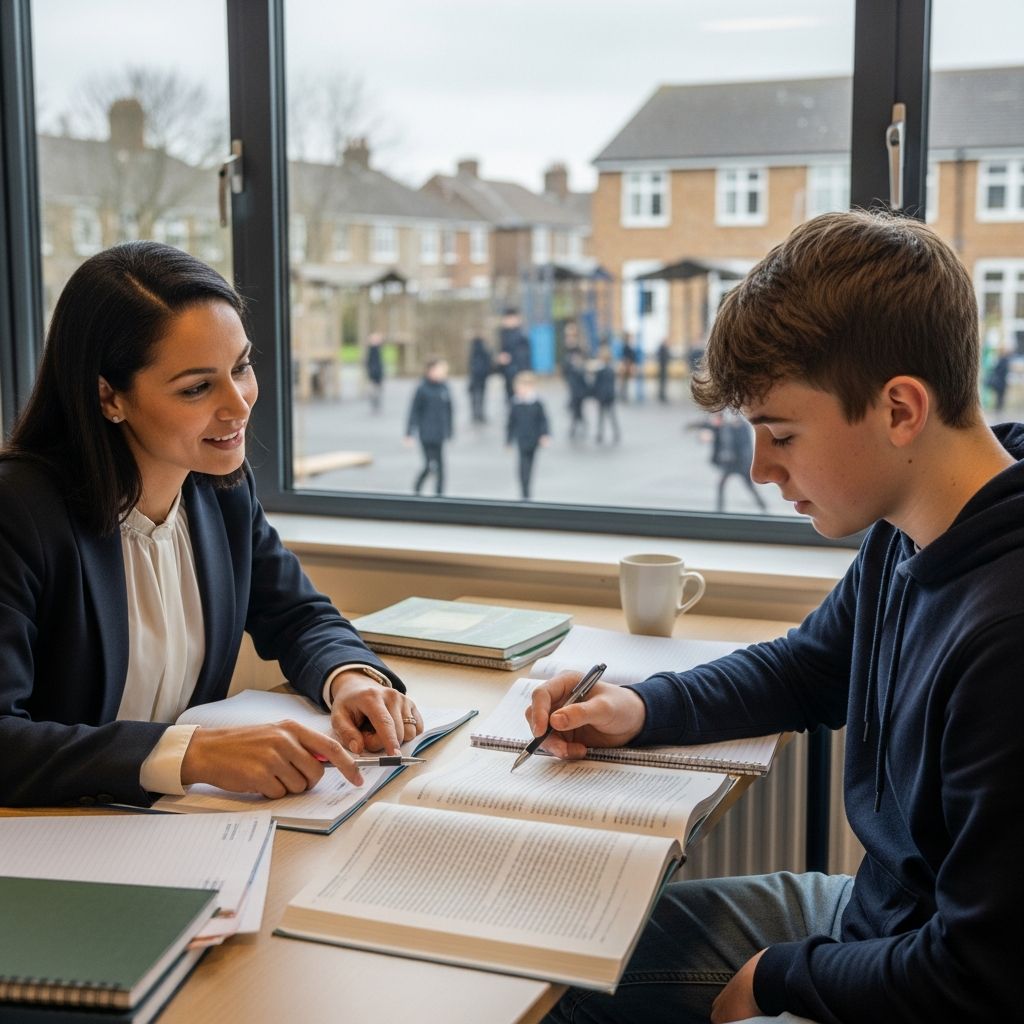
The COVID-19 pandemic reshaped education across the UK, leaving a legacy of mental health struggles among students that continue to affect school engagement. Tutors have emerged as key allies in addressing these challenges, offering personalized guidance to help young people rebuild their academic and emotional foundations.
Understanding the Pandemic’s Lasting Shadow on Youth Wellbeing
The abrupt shift to lockdowns and remote learning disrupted the lives of millions of UK children and teens. Isolation from peers, uncertainty about the future, and the loss of familiar school structures contributed to widespread psychological distress. Surveys indicate that a significant portion of young people experienced deteriorating mental health, with symptoms ranging from persistent sadness to intense worry that hindered daily functioning.
These effects were not uniform but hit hardest those already vulnerable, including students with pre-existing conditions or from disadvantaged backgrounds. The transition back to in-person schooling amplified these issues, as many struggled to readjust to social environments and rigorous schedules after prolonged periods away.
How Mental Struggles Translate to Absenteeism in Classrooms
School attendance rates plummeted post-pandemic, with data revealing sharp increases in persistent absentees. Mental health factors like anxiety often manifest as physical reluctance to leave home, while depression saps the energy needed for routine commitments. This creates a vicious cycle: missing classes widens knowledge gaps, which in turn heightens feelings of overwhelm and further discourages participation.
- Anxiety Barriers: Fear of social judgment or health risks keeps students home, even when physically able.
- Motivation Deficit: Remote learning eroded study habits, making traditional classrooms feel daunting.
- Social Withdrawal: Lost peer connections during lockdowns fostered avoidance behaviors.
- Routine Breakdown: Unstructured home days clashed with school demands upon reopening.
Addressing this requires interventions that tackle both emotional and academic roots, where tutors prove invaluable.
Tutors as Catalysts for Emotional and Academic Recovery
Beyond filling learning voids, tutors foster environments where students feel safe to express struggles. Their one-to-one approach allows for nuanced support, unlike overcrowded classrooms. Research underscores tutoring’s efficacy, showing substantial gains in student performance and confidence equivalent to significant percentile jumps.
| Challenge | Tutor Intervention | Expected Outcome |
|---|---|---|
| Learning Gaps | Targeted skill-building sessions | Improved grades and self-efficacy |
| Anxiety/Depression | Encouraging dialogue and coping tools | Reduced absenteeism |
| Lost Routines | Structured session schedules | Restored discipline |
| Social Isolation | Relationship-building interactions | Enhanced motivation |
This table illustrates how tutors systematically counteract pandemic fallout, promoting holistic progress.
Building Emotional Resilience Through Personalized Tutoring
Tutors equip students with strategies to manage stress, such as mindfulness techniques or goal-setting frameworks. Regular sessions instill a sense of predictability, crucial for those whose lives were upended. By celebrating small victories, tutors nurture resilience, helping students view challenges as surmountable rather than insurmountable.
In the UK context, where teacher workloads have intensified post-COVID, tutors fill critical gaps. They provide the ‘hidden curriculum’ of emotional support that overburdened schools struggle to deliver consistently.
Real-World Evidence: Tutoring’s Proven Impact
Meta-analyses confirm tutoring accelerates recovery from disruptions like those from COVID-19. Students receiving consistent support not only catch up academically but also report better mental health, with improved focus and reduced anxiety. Programs emphasizing tutor-student rapport yield the strongest results, underscoring the human element in education recovery.
UK-specific insights reveal teachers prioritizing wellbeing over pure academics initially post-reopening, recognizing emotional readiness as foundational. Tutors extend this by offering flexible, judgment-free spaces for growth.
Strategies for Effective Tutor-Led Support
- Assess Individual Needs: Begin with evaluations to pinpoint mental and academic hurdles.
- Incorporate SEL: Integrate social-emotional learning to bolster coping skills.
- Collaborate with Families: Share progress to reinforce home-school synergy.
- Monitor Progress: Use data-driven adjustments for sustained improvement.
- Promote Inclusivity: Adapt methods for diverse needs, including SEND students.
Social-emotional learning (SEL) stands out as pivotal for long-term recovery, aiding emotional regulation and peer relations.
Challenges and Opportunities in the UK Tutoring Landscape
While demand for tutors surges, access remains uneven, particularly in underserved regions. Policymakers advocate increased funding for interventions targeting SEND pupils, where pandemic effects linger profoundly. Opportunities abound for expanded training, ensuring tutors are versed in mental health first aid.
Teachers report heightened roles in pupil welfare post-COVID, feeling more equipped yet stretched. Tutors complement this by specializing in individualized care.
Frequently Asked Questions (FAQs)
How has COVID-19 specifically impacted UK student mental health?
Lockdowns led to isolation, routine disruptions, and heightened anxiety, with 68% of youth reporting worsened wellbeing per UK surveys.
Why do tutors outperform group classes for post-COVID recovery?
Personalization allows addressing unique gaps and emotional needs, yielding superior learning gains as per research meta-analyses.
Can tutoring alone fix attendance issues?
No, it works best alongside school and family efforts, focusing on root causes like anxiety while rebuilding academics.
What training should tutors have for mental health support?
Knowledge of SEL, resilience-building, and basic psychological first aid enhances effectiveness.
Are there government initiatives supporting tutoring post-COVID?
Yes, including recovery premiums and targeted funds for vulnerable pupils, emphasizing catch-up programs.
Empowering the Next Generation: A Call to Action
As UK education evolves, integrating tutor support into broader strategies will be key to mitigating pandemic scars. Prioritizing mental health alongside academics ensures students not only return to school but thrive within it. Parents, educators, and policymakers must champion accessible tutoring to secure a brighter future.
References
- Teachers and Teaching Post-COVID — Sheffield Hallam University. 2022. http://shura.shu.ac.uk/31937/3/Marsh-Davies-TeachersAndTeachingPostCovid(AM).pdf
- Covid Learning Loss? Tutoring is Key — Oxford Learning. 2023. https://oxfordlearning.com/covid-learning-loss-tutoring-is-key/
- Report highlights lessons to be learned from schools Covid-19 response — University of Portsmouth. 2023. https://www.port.ac.uk/news-events-and-blogs/news/report-highlights-lessons-to-be-learned-from-schools-covid-19-response
- Covid-19 changed the landscape for children and young people with special educational needs — British Psychological Society. 2023. https://www.bps.org.uk/psychologist/covid-19-changed-landscape-children-and-young-people-special-educational-needs
- The role and needs of teachers/schools in infection prevention — PubMed (peer-reviewed). 2024. https://pubmed.ncbi.nlm.nih.gov/40168819/
- Five reasons why social and emotional learning is critical — Early Intervention Foundation. 2022. https://www.eif.org.uk/blog/five-reasons-why-social-and-emotional-learning-is-critical-to-our-recovery-from-covid-19

Medha Deb is an editor with a master's degree in Applied Linguistics from the University of Hyderabad. She believes that her qualification has helped her develop a deep understanding of language and its application in various contexts. Medha specializes in the areas of beauty, health, sports, and wellness and is committed to ensuring that the content on the website is…