
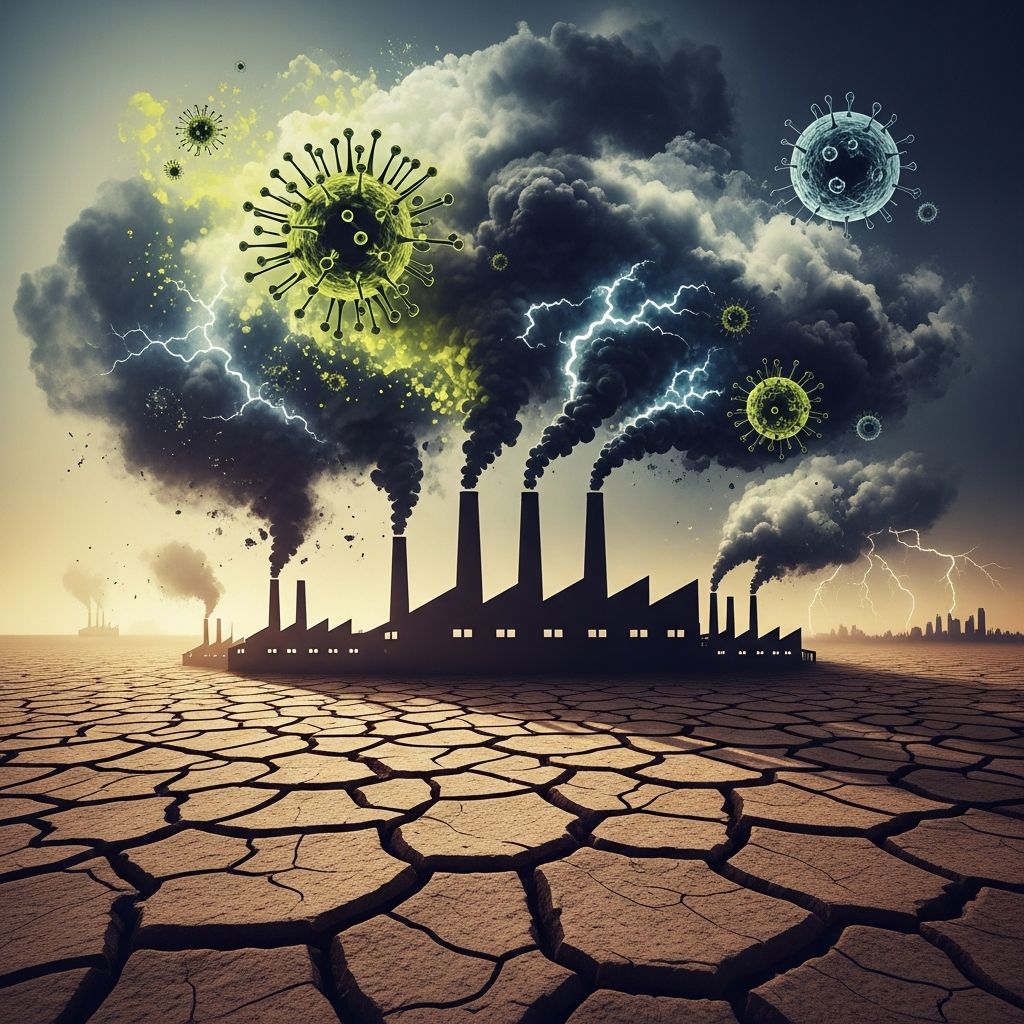
As new data on global risks accumulates, organizations that try to direct talent and funding toward the most pressing problems are regularly forced to update their views. In recent years, evidence on climate risks, factory farming, geopolitical instability, and transformative technologies has sharpened the picture of where additional work could matter most for the long-term future of humanity and other sentient beings.
This article synthesizes those shifting perspectives and outlines how updated assessments can influence careers, philanthropy, and policy. It draws inspiration from recent problem-ranking revisions while presenting an independent structure, argument and set of explanations.
Why Problem Rankings Need Constant Updating
Any attempt to rank global problems depends on three moving parts:
- Scale: how large the harms are, now and in the future.
- Neglectedness: how few resources and attention a problem currently receives.
- Tractability: how much additional resources can realistically improve outcomes.
As evidence improves, these factors often change:
- Scientific research updates risk estimates for climate, pandemics, and ecosystem tipping points.
- Public concern and government spending rise or fall, changing neglectedness.
- New technologies and policies open up interventions that were previously impossible, altering tractability.
Because of this, rankings should be treated as provisional maps rather than fixed doctrines. Periodic re-evaluations help avoid overinvesting in problems that are now well-resourced and underinvesting in areas that remain dangerously overlooked.
Factory Farming: A Persistent Moral Catastrophe
Industrial animal agriculture remains one of the largest sources of suffering on the planet. Tens of billions of land animals and an even larger number of farmed fish live and die each year in conditions that often fall far below basic welfare thresholds.
Updated Views on Scale and Neglectedness
Recent years have brought:
- Growing recognition in mainstream policy circles of the environmental impacts of livestock, including deforestation, water use and greenhouse gas emissions.
- Continued underinvestment in reforms specifically targeted at welfare rather than emissions.
- Rapid expansion of alternative proteins, but from a very low baseline relative to global meat demand.
From a moral perspective that counts the suffering of nonhuman animals, the scale remains vast and urgent. Yet as climate-policy frameworks increasingly incorporate agricultural emissions, part of factory farming’s neglectedness on the climate side is slowly shrinking, even while welfare remains under-addressed.
Strategic Shifts in Animal Advocacy
Updated thinking about the field suggests greater emphasis on:
- Institutional commitments: corporate cage-free pledges, fish welfare standards, and slaughter reforms.
- Technology: cultivated meat, precision fermentation, and plant-based innovations that can directly displace intensive animal farming.
- Policy levers: labeling laws, subsidies reform, and public procurement favoring higher-welfare or alternative proteins.
This does not mean individual diet change is unimportant, but rather that marginal effort might have more leverage at institutional and technological levels.
Climate Change: From One Crisis Among Many to a Structuring Risk
Climate change has long been considered a major global issue; what has changed more recently is its centrality in medium- and long-term risk landscapes. Both the World Economic Forum and the United Nations now highlight climate-related threats as dominant among long-term global risks.
New Evidence on Climate as a Risk Multiplier
Recent global risk assessments emphasize that climate change increasingly acts as a driver and amplifier of other crises:
- Extreme weather and critical changes to Earth systems are among the top near- and long-term risks identified by global experts.
- Climate inaction and large-scale pollution top the United Nations’ global risk rankings by importance, combining likelihood and severity.
- Climate shocks interact with food insecurity, water stress, and migration, especially in fragile states.
This framing shifts climate from being one issue on a list to a backdrop that shapes many other threats, from conflict to forced displacement.
How Neglected Is Climate Now?
Climate action is no longer neglected in absolute funding terms: hundreds of billions of dollars flow annually into mitigation, adaptation and related technologies. However, some areas remain comparatively under-resourced:
- High-impact, low-status adaptation in low-income countries.
- Early-warning systems and resilience infrastructure for the most vulnerable populations.
- Governance of emerging technologies such as carbon removal and solar radiation modification.
This suggests a more nuanced view: climate as a whole is well-recognized but specific leverage points, especially those benefiting the poorest or future generations, remain neglected.
Global Catastrophic Risks and the Long-Term Future
Alongside climate and animal welfare, another cluster of problems concerns risks that could cause sustained, global-scale harm to human civilization. Recent reports from international organizations emphasize several of these threats.
| Risk Area | Examples | Key Concerns |
|---|---|---|
| Pandemics & Biosecurity | Engineered pathogens, lab accidents | High lethality, global spread, limited preparedness |
| Nuclear & Geopolitical Conflict | Interstate war, nuclear escalation | Escalating conflicts and erosion of arms control regimes |
| AI & Frontier Technologies | Misuse of advanced AI, ungoverned AI arms races | Capabilities growing faster than governance, systemic disruption |
| Environmental Tipping Points | Ice-sheet collapse, ecosystem breakdown | Non-linear changes, irreversible damage, feedback loops |
Shifting Emphasis Within Global Risk Portfolios
Recent surveys of experts show notable changes in perceived risk priorities:
- Misinformation and disinformation emerged as the top short-term global risk, reflecting concern over political instability and eroding trust.
- Extreme weather and climate adaptation remain central medium-term concerns.
- Interstate conflict and economic downturn have climbed in the rankings, partly linked to wars and macroeconomic volatility.[10]
For longtermist analyses, these updates suggest more attention on systemic fragility—how combinations of climate, conflict, technological disruption, and institutional breakdown might interact.
Socioeconomic Instability: Inequality, Inflation and Migration
While existential and long-term risks attract substantial philosophical interest, short- and medium-term social stresses also affect billions of people and may influence future risk trajectories.[10]
Public Concern and Economic Pressures
Large-scale surveys show that:
- Inflation has recently been the most worrying issue worldwide, according to multi-country polling.
- Poverty and social inequality consistently rank near the top of public concerns.
- Economic pessimism is widespread, with negative evaluations of national economies in many countries.[10]
These pressures can feed political instability, polarization, and reduced capacity for cooperative global action—factors that, in turn, influence the feasibility of addressing long-term threats.
Forced Displacement and Humanitarian Crises
Forced displacement is at record levels, driven by conflict, persecution and climate stress.
- More than 120 million people were forcibly displaced worldwide by mid-2024, including tens of millions of refugees.
- Climate-linked shocks such as droughts and floods compound fragility in countries already facing conflict or weak governance.
For priority setting, this raises questions about how much weight to give to immediate humanitarian response versus structural work on peacebuilding, climate resilience and economic development.
Comparing Problem Areas: A Priority Matrix
One way to visualize shifting priorities is to compare problems across the dimensions of scale, neglectedness and tractability. The table below uses a qualitative scoring (Low/Medium/High) to illustrate typical updated views inspired by recent assessments.
| Problem Area | Scale of Harm | Neglectedness | Tractability |
|---|---|---|---|
| Factory Farming & Animal Welfare | High (billions of animals affected annually) | Medium–High (low relative to moral stakes) | Medium (policy, corporate, and tech avenues) |
| Climate Change | Very High (global, multi-century impacts) | Medium (large funding, but gaps in key areas) | Medium (mitigation and adaptation options exist) |
| Global Catastrophic Risks (Bio, Nuclear, AI) | Very High (civilizational-scale) | High (few specialists, limited institutions) | Low–Medium (early-stage governance and norms) |
| Socioeconomic Instability & Inequality | High (widespread human hardship) | Medium (many actors, but uneven focus) | Medium (policy and institutional reforms possible) |
This kind of qualitative matrix does not yield a single “correct” ranking, but it helps clarify why some analyses prioritize global catastrophic and long-term risks, while others focus on high-certainty improvements to current well-being.
Implications for Career and Funding Decisions
Revised views on problem importance and neglectedness naturally affect decisions about careers, research agendas, and philanthropy. Some broad lessons include:
- Target the margin: Focus on problem sub-areas that remain genuinely under-resourced, rather than fields that are rich in attention but poor in coordination.
- Leverage comparative advantage: People with technical skills in biology, computer science, or climate modeling may have disproportionate impact in global catastrophic risk mitigation, while those with legal or policy skills may be best placed to improve governance and institutions.
- Consider long-term spillovers: Building better public health systems or climate-resilient infrastructure can reduce both present suffering and future catastrophe risk.
- Stay willing to update: As new research or data arises—on, for example, AI capabilities or climate tipping points—reconsider where your own work fits into the evolving landscape.
Frequently Asked Questions (FAQs)
Q1: Why do some frameworks prioritize long-term risks over current poverty or health problems?
Analyses that prioritize long-term or existential risks argue that preventing even a small chance of civilizational collapse or permanent curtailment of humanity’s potential can have enormous expected value, because it affects all future generations. This does not imply that present-day poverty or health are unimportant, but that the leverage from reducing existential risks may be unusually large relative to the resources currently devoted to them.
Q2: Has climate change become less neglected, and does that mean it is now a lower priority?
Climate change has become much more prominent in policy, finance, and public debate, which reduces its neglectedness at a high level. However, specific subdomains—such as adaptation for low-income countries, loss-and-damage mechanisms, or governance of carbon removal technologies—remain significantly under-resourced. For people with suitable expertise, these subareas can still be among the highest-impact options.
Q3: Is work on factory farming mainly about diet change?
Individual diet choices matter, but many of the most leveraged interventions operate at institutional levels: corporate welfare commitments, regulatory reforms, R&D into alternative proteins, and public procurement standards. These can shift entire supply chains and affect large numbers of animals per unit of effort.
Q4: How do global surveys of risk perceptions influence problem rankings?
Surveys conducted by organizations such as the World Economic Forum, the UN, Ipsos, and others provide information about how experts, policymakers and the public perceive risks.[10] These perceptions can influence funding and political will, which in turn affect neglectedness. However, priority-setting frameworks also consider scientific and economic evidence that may not yet be widely recognized.
Q5: If I am early in my career, should I specialize narrowly in one problem right away?
Given how quickly evidence and technologies are evolving, many advisers recommend first building flexible, transferable skills—such as quantitative analysis, policy design, or technical research—before committing to a very narrow specialization. This makes it easier to pivot as the understanding of global priorities evolves.
References
- Global Risks 2024: At a Turning Point — World Economic Forum. 2024-01-10. https://www.weforum.org/publications/global-risks-report-2024/in-full/global-risks-2024-at-a-turning-point/
- These are the biggest global risks we face in 2024 and beyond — World Economic Forum. 2024-01-17. https://www.weforum.org/stories/2024/01/global-risks-report-2024/
- Ranked: The 28 Biggest Global Risks, According to the UN — Visual Capitalist (summarizing UN Global Risk Report 2024). 2024-02-01. https://www.visualcapitalist.com/ranked-the-28-biggest-global-risks-according-to-the-un/
- What Worries the World – July 2024 — Ipsos. 2024-07-24. https://www.ipsos.com/en-us/what-worries-world
- The Top Risks of 2024 — Eurasia Group. 2024-01-08. https://www.eurasiagroup.net/issues/top-risks-2024
- Global issues — United Nations. 2024-06-30 (last updated). https://www.un.org/en/global-issues
- The top 10 crises the world can’t ignore in 2024 — International Rescue Committee. 2023-12-13. https://www.rescue.org/article/top-10-crises-world-cant-ignore-2024
- Global issues: Refugees and Migrants — United Nations. 2024-06-30 (data to mid-2024). https://www.un.org/en/global-issues
- Most worrying topics worldwide as of May 2025 — Statista. 2025-06-01. https://www.statista.com/statistics/946266/most-worrying-topics-worldwide/
- Economic ratings across 34 countries are more negative than positive — Pew Research Center. 2024-06-07. https://www.pewresearch.org/short-reads/2024/06/07/economic-ratings-across-34-countries-are-more-negative-than-positive/

Medha Deb is an editor with a master's degree in Applied Linguistics from the University of Hyderabad. She believes that her qualification has helped her develop a deep understanding of language and its application in various contexts. Medha specializes in the areas of beauty, health, sports, and wellness and is committed to ensuring that the content on the website is…