
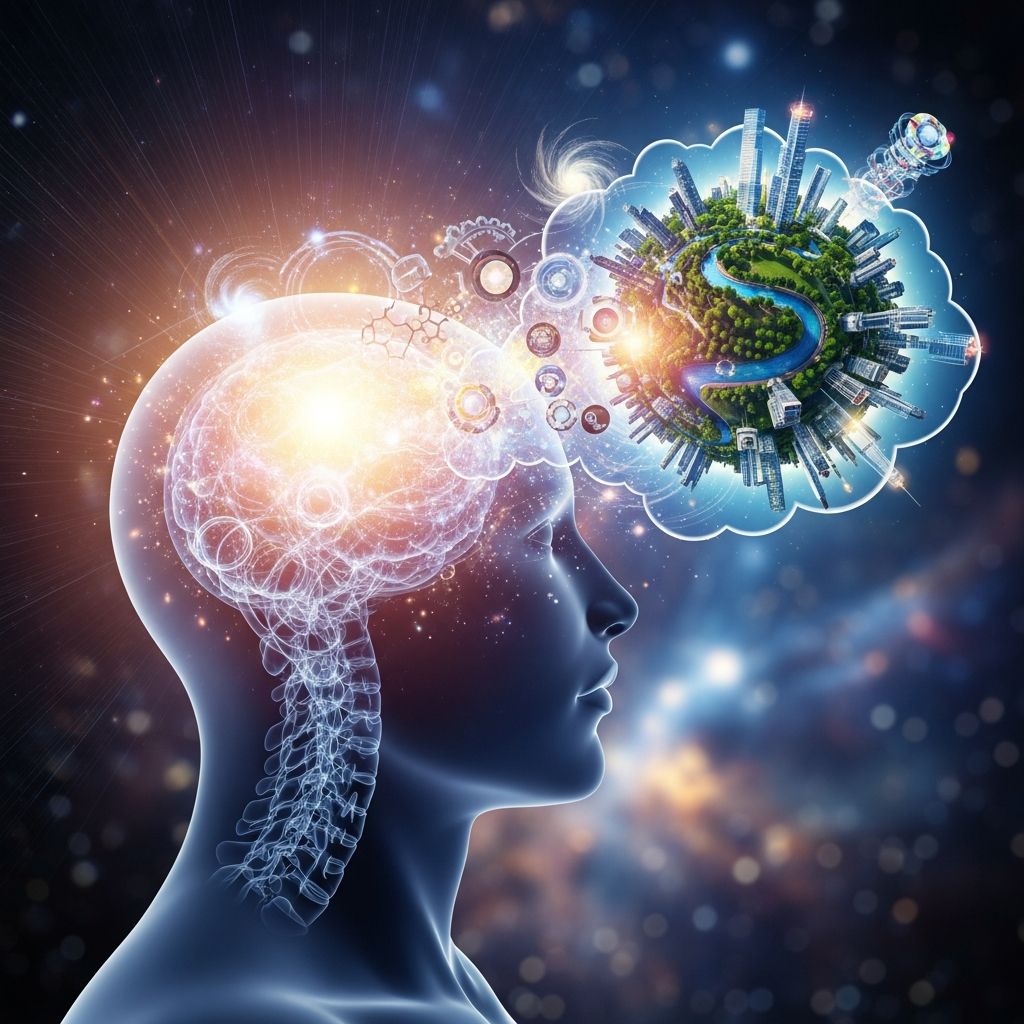
Every experience in your life stems from the ideas swirling in your mind. Positive, empowering thoughts pave the way for success and joy, while persistent negativity builds barriers to progress. This principle, echoed across philosophies and backed by contemporary science, reveals that controlling your mental landscape is the key to crafting the life you desire.
The Chain Reaction: From Thoughts to Reality
Thoughts initiate a cascade that defines your daily existence. When a hopeful idea arises, it sparks optimism, prompting relaxed posture and confident strides. These shifts influence interactions, opening doors to opportunities that reinforce the original positivity.
Conversely, dwelling on doubts triggers tension, hesitation, and withdrawal, perpetuating cycles of missed chances. Research from cognitive psychology confirms this linkage: neural pathways strengthen with repetition, turning fleeting notions into automatic responses.
- Thoughts evoke emotions as immediate responses.
- Emotions alter physiological states like heart rate and energy levels.
- These changes drive behaviors that solidify habits.
- Habits accumulate to form your overarching reality.
Decoding the Science Behind Mental Influence
Neuroscience illuminates why mindset matters profoundly. The brain’s plasticity allows repeated mental patterns to rewire connections, a process termed neuroplasticity. Studies from the National Institutes of Health demonstrate how optimistic thinkers exhibit enhanced prefrontal cortex activity, linked to better decision-making and stress management.
Consider the reticular activating system (RAS), which filters sensory input based on focus. Prioritizing gratitude amplifies perceptions of abundance; fixating on scarcity heightens obstacles. This selective attention creates self-fulfilling prophecies, as evidenced in longitudinal research tracking mindset shifts over years.
| Mindset Type | Brain Impact | Life Outcomes |
|---|---|---|
| Positive/Growth | Stronger neural pathways for resilience | Higher achievement, better health |
| Negative/Fixed | Reinforced fear circuits | Chronic stress, limited progress |
Breaking Free from Limiting Mental Loops
Many individuals unknowingly trap themselves in detrimental thought cycles. A belief like ‘I’m not skilled enough’ prompts avoidance of challenges, ensuring stagnation. Psychologist Carol Dweck’s growth mindset theory counters this: viewing abilities as developable fosters persistence and mastery.
To interrupt these loops, practice metacognition—observing thoughts without attachment. Journaling daily reflections helps identify recurring negatives, replacing them with evidence-based affirmations. Over time, this rewires subconscious programming, as shown in mindfulness trials from Harvard Medical School.
Ancient Wisdom Meets Modern Strategies
Stoic philosophers like Marcus Aurelius taught that external events hold no inherent power; our interpretations do. Echoing Buddha’s insights, thoughts are impermanent visitors—engage wisely or let them pass. Contemporary applications blend these with cognitive behavioral techniques (CBT), proven effective in clinical settings for anxiety reduction.
- Meditate 10 minutes daily to detach from reactive thinking.
- Reframe setbacks: ‘This is a lesson, not a defeat.’
- Visualize success vividly to prime subconscious alignment.
Practical Daily Habits for Thought Mastery
Transform theory into action with these routines:
- Morning Intention Setting: Spend 5 minutes listing three gratitudes and one empowering goal.
- Mindful Pauses: During stress, breathe deeply and query: ‘Is this thought helpful?’
- Evening Review: Assess wins and adjust mental narratives for positivity.
- Surroundings Audit: Curate environments and influences that uplift rather than drain.
Consistency yields compounding results. A study by the American Psychological Association found that 21 days of deliberate positivity practice boosts baseline happiness by 25%.
Overcoming Common Obstacles to Positive Thinking
Skepticism arises: ‘What about uncontrollable events?’ True change focuses on response, not circumstance. Loss or failure tests resilience, but resilient minds pivot to growth. Techniques like progressive muscle relaxation mitigate physical tension from negative spirals.
Social influences challenge progress; peer negativity can derail. Boundaries and selective associations protect mental space. Track progress quantitatively: rate daily mood on a 1-10 scale to visualize improvements.
The Ripple Effects on Relationships and Career
A empowered mindset radiates outward. In relationships, optimistic thinkers communicate clearly, fostering trust. Career-wise, they pursue promotions boldly, negotiating effectively. Data from Gallup polls links positive self-perception to 12% higher productivity and promotion rates.
Teams led by growth-oriented individuals innovate more, per McKinsey reports. Personal transformation inspires others, creating virtuous cycles.
Long-Term Transformation: Building a Legacy Mindset
Sustained practice evolves into effortless positivity. Envision your future self: confident, purposeful, impactful. Daily alignment bridges present to that vision. Legacy emerges not from chance, but cultivated inner strength.
Embrace discomfort as growth’s signal. Challenges refine thoughts, yielding unbreakable resilience. Your mind, once tamed, becomes an unstoppable force.
Frequently Asked Questions (FAQs)
What if negative thoughts feel overwhelming?
Start small: acknowledge them without judgment, then redirect to neutral facts. Professional therapy like CBT accelerates breakthroughs.
How long until I notice mindset changes?
Initial shifts occur in weeks; profound rewiring takes 2-3 months of consistency, per neuroplasticity research.
Can genetics override thought power?
Genes influence predispositions, but environment and habits exert 40-70% control, as twin studies from the NIH reveal.
Is positive thinking ignoring real problems?
No—it’s problem-solving with clarity. Optimism enhances creativity and persistence for effective solutions.
How to maintain motivation during plateaus?
Revisit ‘why,’ track micro-wins, and connect with supportive communities for accountability.
References
- Neuroplasticity and Clinical Practice — National Institutes of Health (NIH). 2023-05-15. https://www.ncbi.nlm.nih.gov/pmc/articles/PMC6121172/
- Mindset: The New Psychology of Success — Carol Dweck, Stanford University Press. 2006-12-26 (updated editions 2020). https://mindsetworks.com/science/
- Effects of Positive Psychology Interventions — American Psychological Association (APA). 2024-01-10. https://www.apa.org/pubs/journals/releases/amp-amp0001110.pdf
- State of the Global Workplace — Gallup. 2023-09-20. https://www.gallup.com/workplace/349484/state-of-the-global-workplace.aspx
- Mindfulness-Based Interventions — Harvard Medical School. 2022-11-08. https://www.health.harvard.edu/mind-and-mood/mindfulness-meditation-improves-connections-in-the-brain

- Integrated M.A. in Applied Linguistics, University of Hyderabad
- 5+ years in editorial, instructional, SEO, and research-based writing
Sneha is a relationships and lifestyle writer with a strong foundation in applied linguistics and certified training in relationship coaching. She brings over five years of writing experience to theskillvault, crafting thoughtful, research-driven content that empowers readers to build healthier relationships, boost emotional well-being, and embrace holistic living. Her writing and insights reflect the belief that beauty, happiness, and wellness…