
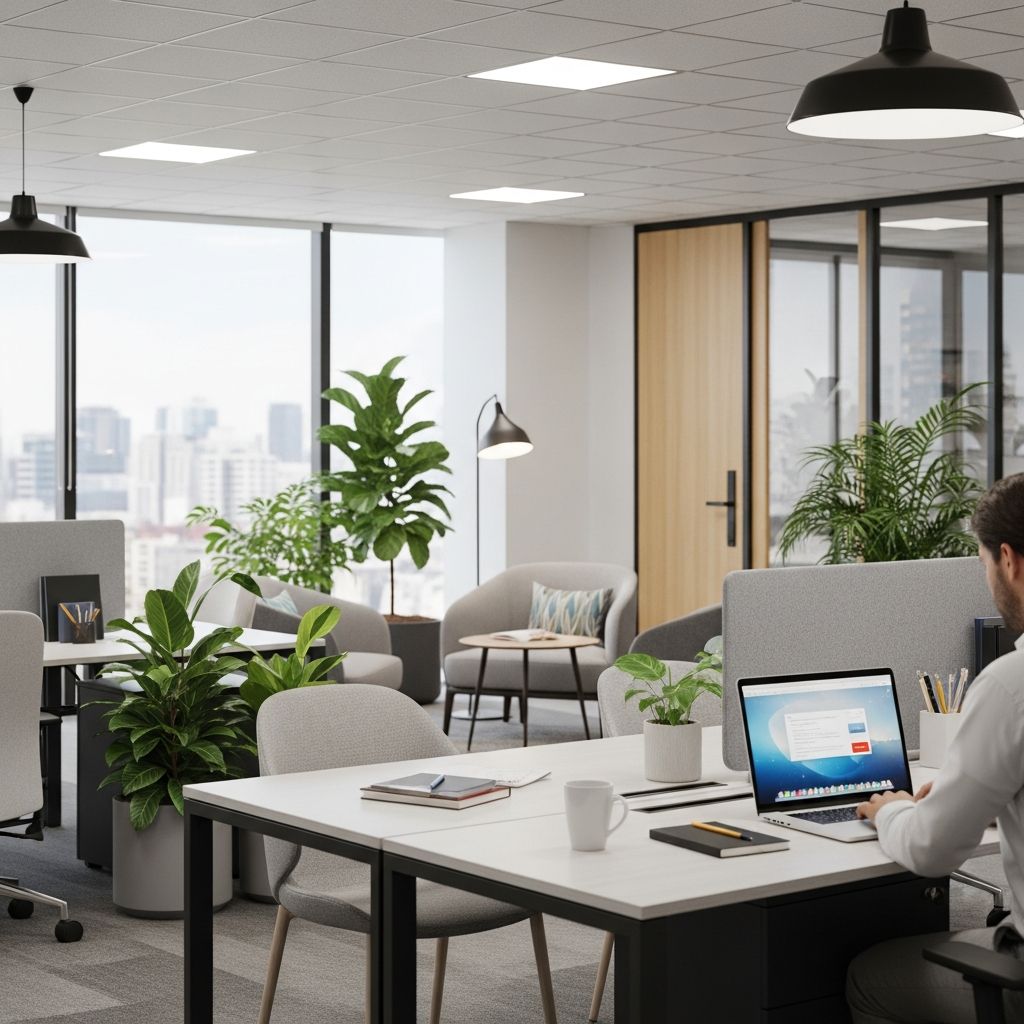
Understanding Contemporary Workplace Flexibility
The modern workforce has fundamentally shifted how organizations approach work location and scheduling. A flexible workplace model integrates in-office presence with remote work options, creating an ecosystem where employees maintain agency over their work environment while maintaining organizational cohesion. This approach differs distinctly from traditional office-centric models and fully distributed remote arrangements, instead positioning itself as a middle ground that captures advantages from both approaches.
The transition toward flexible arrangements reflects changing workforce expectations and organizational recognition that productivity isn’t strictly tied to physical office presence. Companies across industries have adopted these models as competitive advantages in talent recruitment and retention.
Core Advantages for Organizational Success
Enhanced Workforce Productivity and Performance
One of the most compelling reasons organizations adopt flexible arrangements is the measurable improvement in work output. When employees select work environments aligned with their tasks, they experience fewer interruptions and distractions common in traditional office settings. Spontaneous meetings, background noise, and workplace conversations that characterize office environments can fragment focus and reduce deep work capacity.
Strategic use of office days for collaborative work, problem-solving sessions, and team alignment activities creates concentrated periods for interaction-dependent tasks. Meanwhile, remote work days accommodate focused individual work requiring sustained concentration. This segmentation optimizes how and where specific work gets accomplished, allowing employees to match their environment to task requirements.
Financial Efficiency and Cost Optimization
Real estate and facility costs represent significant organizational expenses. Flexible models reduce the necessity for expansive office footprints since not all employees occupy space simultaneously. This leads to reduced expenditures on rent, utilities, maintenance, and associated building overhead. Organizations can right-size their physical spaces to support collaborative activities and team gatherings rather than providing assigned seating for entire workforces.
Beyond direct facility savings, reduced commuting frequency decreases employee transportation-related expenses and environmental impact. For organizations providing transportation allowances or parking benefits, flexible arrangements create opportunities for cost reduction.
Expanded Talent Acquisition and Retention
Geographic boundaries no longer constrain recruitment when flexible arrangements allow remote work components. Organizations can access talent pools beyond immediate metropolitan areas, increasing diversity of thought and specialized expertise availability. This expanded reach strengthens competitive positioning in competitive labor markets.
From retention perspectives, flexibility addresses a primary driver of voluntary turnover. Employees increasingly prioritize autonomy and work-life balance when evaluating employment opportunities. Organizations offering flexible arrangements demonstrate employee-centric values that foster loyalty and reduce costly turnover cycles.
Organizational Resilience and Adaptability
Flexible work infrastructure proves invaluable during disruptions—whether unexpected emergencies, natural disasters, or market volatility. Organizations with established remote capabilities and distributed workforce management systems can maintain operations when traditional office environments become inaccessible. This operational continuity protects revenue streams and client relationships during challenging periods. According to research insights, approximately 74% of companies recognize the strategic value of flexible arrangements in improving business resilience and planning for continuous operations across uncertain circumstances.
Employee-Centered Advantages
Personal Autonomy and Scheduling Control
Flexible arrangements grant employees authority over their work schedules and locations within established organizational parameters. Rather than adhering to fixed 9-to-5 office requirements, employees align work hours with personal peak productivity periods. Some individuals accomplish their best work during early morning hours, while others hit their stride in afternoon or evening timeframes. This personalization accommodates biological differences in circadian rhythms and energy patterns, ultimately supporting sustainable high performance.
Improved Work-Life Integration
Reduced commuting time creates reclaimed hours in daily schedules—time employees redirect toward personal priorities, family responsibilities, or self-care activities. This temporal flexibility reduces stress accumulation that characterizes rigid office attendance requirements. Research indicates that 76% of employees recognize improved work-life balance as a primary advantage of flexible arrangements, while 61% report decreased fatigue and burnout compared to traditional work models.
The ability to manage personal appointments, family obligations, and health needs without requesting time off creates practical integration between professional and personal spheres rather than rigid separation.
Mental Health and Wellbeing Enhancement
Flexibility contributes meaningfully to psychological wellbeing through reduced workplace stress and increased autonomy. The ability to work in preferred environments—whether quiet home offices or collaborative spaces—supports individual work styles and preferences. Reduced commute-related fatigue and schedule-based stress translate into improved mental health outcomes and enhanced job satisfaction.
Implementation Framework and Structural Considerations
Scheduling Models and Office Coordination
Organizations typically implement flexible arrangements through several structural approaches. Some establish fixed schedules where specific days mandate office presence while other days permit remote work. This approach provides predictability for office capacity planning and team coordination, though it sacrifices individual choice in work location selection.
Alternative models grant employees maximum flexibility in determining office attendance based on weekly task requirements and team collaboration needs. While this approach maximizes individual autonomy, it creates challenges in forecasting office utilization and ensuring desk/meeting space availability.
Intermediate approaches balance structure with flexibility through threshold requirements—perhaps mandating minimum office days monthly while allowing employees discretion over specific days. This model provides planning frameworks while preserving meaningful autonomy.
Technology Infrastructure Requirements
Successful flexible arrangements depend on robust digital infrastructure enabling seamless remote collaboration. Home offices require fully functional workstations with reliable internet connectivity and ergonomic setups supporting productive work. Cloud-based tools, video conferencing platforms, and collaborative document systems replace traditional in-office communication channels.
Equally important, on-site facilities must transform into remote-capable collaboration hubs. Conference rooms require professional video conferencing equipment ensuring remote participants experience genuine inclusion rather than second-class participation. This infrastructure investment ensures distributed teams maintain communication quality despite geographic separation.
Cultural and Communication Strategies
Maintaining organizational culture becomes more deliberately intentional in flexible environments. Regular office gatherings for team-building activities, company meetings, and informal social interaction help sustain shared values and community identity. These occasions serve purposes beyond task completion—they reinforce cultural elements that remote-only environments struggle to cultivate naturally.
Clear communication protocols establish expectations around response times, meeting availability, and collaboration norms. Without explicit guidelines, distributed teams risk fragmentation and miscommunication. Intentional leadership practices that emphasize connection and inclusion across distributed settings prove essential for thriving flexible organizations.
Challenges and Mitigation Strategies
Coordination and Visibility Complexities
Flexible arrangements create operational challenges around resource allocation and coordination. Without knowing precisely which employees will occupy office space on any given day, organizations struggle with desk availability, meeting room bookings, and team synchronization. Over-capacity situations waste resources while under-utilization suggests insufficient commitment to office infrastructure.
Mitigation approaches include implementing booking systems that provide real-time visibility into office occupancy, desk utilization, and room reservations. Digital workplace tools that synchronize team schedules help coordinate collaboration times when distributed members need synchronous interaction.
Organizational Culture and Connection
Intermittent remote work presents paradoxical cultural challenges—neither creating fully remote environments where distance-appropriate norms develop nor maintaining constant in-person interaction that sustains spontaneous relationship building. Employees who rotate between office and remote days may experience periodic disconnection despite reasonable office presence frequency.
Organizations counter this through intentional culture-building initiatives: regular all-hands meetings combining remote and in-office participation, team lunches and social events on office days, mentorship programs supporting relationships across distance, and communication practices that intentionally include remote team members in discussions and decisions.
Equity and Inclusion Considerations
Flexible arrangements must prevent creating differentiated employee experiences based on office presence or location. Remote workers shouldn’t experience career advancement disadvantages compared to office-present counterparts. This requires intentional fairness in promotion decisions, project assignments, and visibility with leadership.
Organizations should audit policies ensuring that client meetings, strategic discussions, and high-visibility opportunities don’t cluster during office-present days, inadvertently advantaging in-office employees. Transparent communication about advancement criteria and deliberate leadership attention to distributed team visibility helps mitigate these risks.
Comparative Model Overview
| Arrangement Type | Location Flexibility | Schedule Autonomy | Team Collaboration | Cultural Maintenance |
|---|---|---|---|---|
| Traditional Office | Minimal | Limited | Constant | Strong |
| Fully Remote | Maximum | High | Virtual Only | Challenging |
| Flexible Blended | Moderate to High | Moderate to High | Blended | Maintained |
Strategic Implementation Guidelines
Assessment and Planning Phase
Before implementing flexible arrangements, organizations should evaluate role-specific requirements, workforce preferences, and infrastructure readiness. Not all positions suit hybrid models equally—client-facing roles, creative collaboration-dependent functions, and onboarding-intensive positions may require different flexibility levels than analytical, independent-work positions.
Conducting employee surveys to understand preferences alongside assessing technological infrastructure, physical workspace availability, and management capability ensures implementation aligns with organizational context and readiness.
Policy Development and Communication
Clear, comprehensive policies eliminate ambiguity around expectations, approval processes, and performance evaluation. Policies should address scheduling mechanisms, office day requirements, equipment provisioning, cybersecurity expectations, and communication norms. Transparent communication explaining policy rationale and implementation timelines helps secure employee and manager buy-in.
Leadership Development and Training
Managers require specific training in leading distributed teams effectively. Training should address communication strategies, performance evaluation in flexible environments, fostering inclusion across distance, and building team connection without constant in-person interaction. Leadership capability directly impacts flexible arrangement success.
Frequently Asked Questions
Q: What percentage of companies have adopted flexible work arrangements?
A: Research indicates widespread adoption, with organizations across sectors recognizing flexible models’ competitive advantages. The trend continues expanding as workforce expectations shift and technology enables remote collaboration.
Q: Does flexible work reduce team cohesion and company culture?
A: While fully distributed environments present culture-building challenges, flexible models maintaining regular in-person interaction can sustain organizational culture. Success requires intentional practices including regular team gatherings, inclusive communication, and leadership commitment to distributed team connection.
Q: How do organizations ensure productivity in flexible arrangements?
A: Successful approaches focus on outcomes and results rather than surveillance or presence-based metrics. Clear performance expectations, regular feedback, accessible communication channels, and trusting relationships between managers and employees support accountability without micromanagement.
Q: What technology investments are necessary for flexible work success?
A: Essential investments include reliable cloud-based collaboration platforms, video conferencing systems with remote participation capabilities, cybersecurity infrastructure, and booking systems for office space management. Home office technology support (internet quality, ergonomic equipment) also matters significantly.
Q: Can all job functions successfully operate under flexible arrangements?
A: While many roles benefit from flexibility, some positions—particularly those requiring extensive hands-on training, constant client interaction, or specialized on-site equipment—may operate better under different models. Successful organizations conduct role-specific assessments rather than applying uniform policies.
Q: How should organizations handle fairness concerns with mixed office and remote work?
A: Intentional policies ensure equity in advancement opportunities, project assignments, and visibility regardless of office presence patterns. Remote workers should have equal access to mentorship, leadership exposure, and high-visibility opportunities. Regular audits help identify and address inadvertent disparities.
References
- Hybrid Work: Definition, Models, Benefits, Types — UnSpot. January 2026. https://unspot.com/blog/hybrid-work/
- Hybrid Work 101: Benefits, Challenges & Tips to Success — Deskbird. 2025. https://www.deskbird.com/guides/hybrid-work/what-is-hybrid-work
- What is Hybrid Work and What Are Hybrid Work Models? — Webex. 2025. https://www.webex.com/what-is-hybrid-work.html
- The Advantages and Challenges of Hybrid Work — Gallup. 2024. https://www.gallup.com/workplace/398135/advantages-challenges-hybrid-work.aspx

- Integrated M.A. in Applied Linguistics, University of Hyderabad
- 5+ years in editorial, instructional, SEO, and research-based writing
Sneha is a relationships and lifestyle writer with a strong foundation in applied linguistics and certified training in relationship coaching. She brings over five years of writing experience to theskillvault, crafting thoughtful, research-driven content that empowers readers to build healthier relationships, boost emotional well-being, and embrace holistic living. Her writing and insights reflect the belief that beauty, happiness, and wellness…