
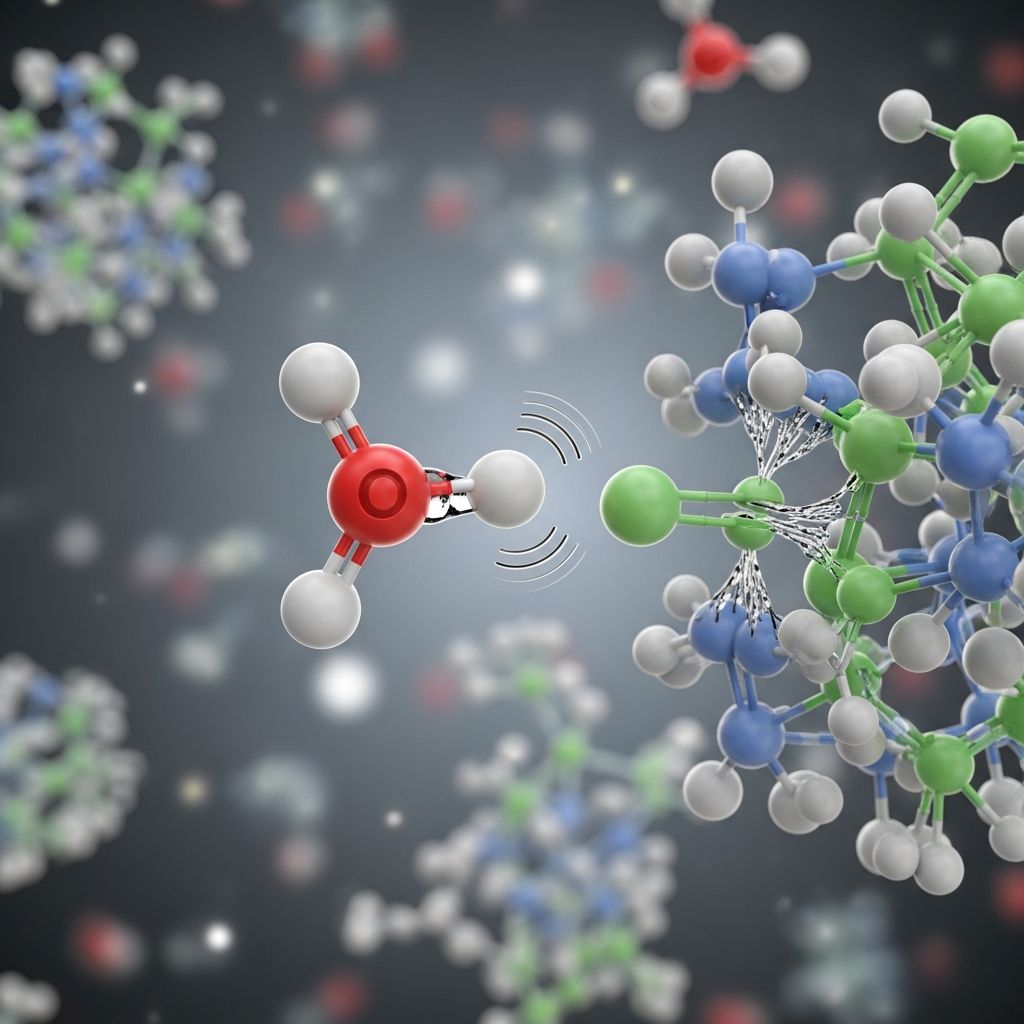
Hydrolysis is a fundamental chemical reaction where water molecules facilitate the cleavage of chemical bonds within larger compounds, producing simpler substances. This process underpins numerous natural and industrial phenomena, from food digestion to polymer degradation.
Defining the Essentials of Hydrolysis
At its core, hydrolysis involves the addition of water to break covalent bonds. Derived from Greek roots meaning ‘water splitting,’ it occurs when a water molecule (H₂O) inserts itself across a bond, with the hydrogen attaching to one fragment and the hydroxide (OH⁻) to the other. This reaction is the opposite of condensation, where molecules combine by releasing water.
In practice, hydrolysis can proceed under acidic, basic, or neutral conditions, often catalyzed by enzymes in biological settings. For instance, in organic chemistry, it targets ester, amide, or glycosidic linkages, yielding alcohols, acids, sugars, or amino acids.
Mechanisms Driving Hydrolysis Reactions
Hydrolysis mechanisms vary by compound type and environment. In acid-catalyzed hydrolysis, a proton (H⁺) activates the target bond, making it susceptible to water attack. Nucleophilic water then displaces the leaving group, followed by deprotonation.
Basic hydrolysis, or saponification for esters, involves hydroxide ions directly attacking the carbonyl carbon, forming a tetrahedral intermediate that collapses to release the alcohol. Enzymatic hydrolysis employs specialized proteins like hydrolases, which lower activation energy via active sites tailored to substrates.
| Type | Catalyst | Key Step | Example Product |
|---|---|---|---|
| Acid | H⁺ | Protonation of bond | Carboxylic acid + alcohol |
| Base | OH⁻ | Nucleophilic attack | Carboxylate salt + alcohol |
| Enzymatic | Enzyme | Active site binding | Sugars, amino acids |
Biological Significance: Fueling Life Processes
In living organisms, hydrolysis is indispensable for metabolism. During digestion, enzymes like amylase hydrolyze starches into maltose, while proteases break proteins into peptides and amino acids. Lipases target triglycerides, yielding glycerol and fatty acids for absorption.
Energy currency ATP undergoes hydrolysis to ADP and inorganic phosphate, releasing 30.5 kJ/mol under standard conditions. This powers cellular work, from muscle contraction to active transport. Nucleic acids like DNA and RNA are hydrolyzed by nucleases during replication and degradation.
- Carbohydrate digestion: Salivary amylase initiates starch breakdown in the mouth.
- Protein catabolism: Pepsin in the stomach cleaves peptide bonds.
- Fat emulsification: Bile aids lipase access to lipids.
Hydrolysis in Carbohydrates: From Polymers to Monomers
Complex carbohydrates such as starch, glycogen, and cellulose consist of glucose units linked by glycosidic bonds. Hydrolysis severs these, producing monosaccharides usable for energy. In humans, pancreatic amylase completes starch digestion in the small intestine, yielding glucose.
Industrially, acid hydrolysis converts cornstarch to glucose syrup for sweeteners. Cellulases from fungi hydrolyze plant cellulose into biofuels, addressing sustainable energy needs. Disaccharides like sucrose split into glucose and fructose via sucrase.
Protein and Lipid Hydrolysis: Building Blocks of Nutrition
Proteins, chains of amino acids joined by peptide bonds, require hydrolysis for assimilation. Trypsin and chymotrypsin in the duodenum further degrade peptides into free amino acids. This process is vital for protein synthesis and nitrogen balance.
Lipids, mainly triglycerides, hydrolyze via lipases into fatty acids and monoglycerides, which form micelles for intestinal uptake. This reaction is crucial for fat-soluble vitamin absorption and energy storage. In soap-making, basic hydrolysis of animal fats produces glycerin and soaps.
ATP and Energy: Hydrolysis as a Power Source
Adenosine triphosphate (ATP) hydrolysis exemplifies hydrolysis’s role in bioenergetics: ATP + H₂O → ADP + Pi + energy. Enzymes like ATPases couple this exergonic reaction to endergonic processes, such as sodium-potassium pumps maintaining membrane potentials.
In muscle cells, myosin ATPase hydrolyzes ATP for contraction. This universal mechanism ensures efficient energy transfer across life’s kingdoms.
Industrial Applications: Beyond Biology
Hydrolysis extends to manufacturing. In detergents, surfactants undergo partial hydrolysis for cleaning efficacy. Polymer industries monitor hydrolytic stability; polyesters like PET degrade slowly in moist environments, informing recycling.
Pharmaceuticals employ hydrolysis for drug activation; prodrugs hydrolyze in vivo to active forms. Food processing uses it for flavor enhancement, as in aging cheeses where rennet hydrolyzes casein. Biofuel production hydrolyzes lignocellulose via enzymes or acids to fermentable sugars.
Environmental and Material Science Contexts
Biodegradable polymers like polylactic acid (PLA) hydrolyze into lactic acid, reducing plastic waste. Hydrolysis contributes to weathering, where minerals in rocks react with rainwater acids, forming clays. In water treatment, hydrolysis precipitates metals from wastewater.
Challenges and Control Factors
Hydrolysis rates depend on pH, temperature, and catalysts. Acidic conditions accelerate ester hydrolysis but may degrade products. Enzymes offer specificity, minimizing side reactions. Inhibitors like chelators control unwanted hydrolysis in formulations.
In storage, low humidity prevents hydrolytic degradation of drugs and materials. Understanding kinetics via Arrhenius equations aids prediction and mitigation.
Frequently Asked Questions (FAQs)
What distinguishes hydrolysis from other reactions?
Hydrolysis specifically uses water to break bonds, unlike oxidation (electron transfer) or combustion (oxygen reaction).
Is hydrolysis always spontaneous?
No; many require energy input or catalysts, though ATP hydrolysis is exergonic.
How does hydrolysis aid digestion?
It converts macromolecules into absorbable units like glucose, amino acids, and fatty acids.
Can hydrolysis be reversed?
Yes, via condensation, but equilibrium often favors hydrolysis in aqueous environments.
What role does pH play?
Acidic pH protonates substrates; basic pH provides nucleophilic OH⁻.
References
- Hydrolysis — Wikipedia. 2023-10-15. https://en.wikipedia.org/wiki/Hydrolysis
- HYDROLYSIS Definition & Meaning — Merriam-Webster. 2023-11-01. https://www.merriam-webster.com/dictionary/hydrolysis
- Organic reactions: Hydrolysis — Monash University. 2024-02-20. https://www.monash.edu/student-academic-success/chemistry/reactions-of-organic-compounds/organic-reactions-and-synthesis-pathways/organic-reactions-hydrolysis
- What is Hydrolysis? — Polymer Solutions. 2022-08-10. https://www.polymersolutions.com/hydrolysis/
- Hydrolysis definition — Northwestern University. 2023-05-12. https://groups.molbiosci.northwestern.edu/holmgren/Glossary/Definitions/Def-H/hydrolysis.html
- 5.4: Hydrolysis Reactions — Chemistry LibreTexts (Georgia Southern University). 2024-01-08. https://chem.libretexts.org/Courses/Georgia_Southern_University/CHEM_1152:_Survey_of_Chemistry_II_(GSU_-_Dr._Osborne)/05:_Organic_Chemical_Reactions/5.04:_Hydrolysis_Reactions

- Integrated M.A. in Applied Linguistics, University of Hyderabad
- 5+ years in editorial, instructional, SEO, and research-based writing
Sneha is a relationships and lifestyle writer with a strong foundation in applied linguistics and certified training in relationship coaching. She brings over five years of writing experience to theskillvault, crafting thoughtful, research-driven content that empowers readers to build healthier relationships, boost emotional well-being, and embrace holistic living. Her writing and insights reflect the belief that beauty, happiness, and wellness…