
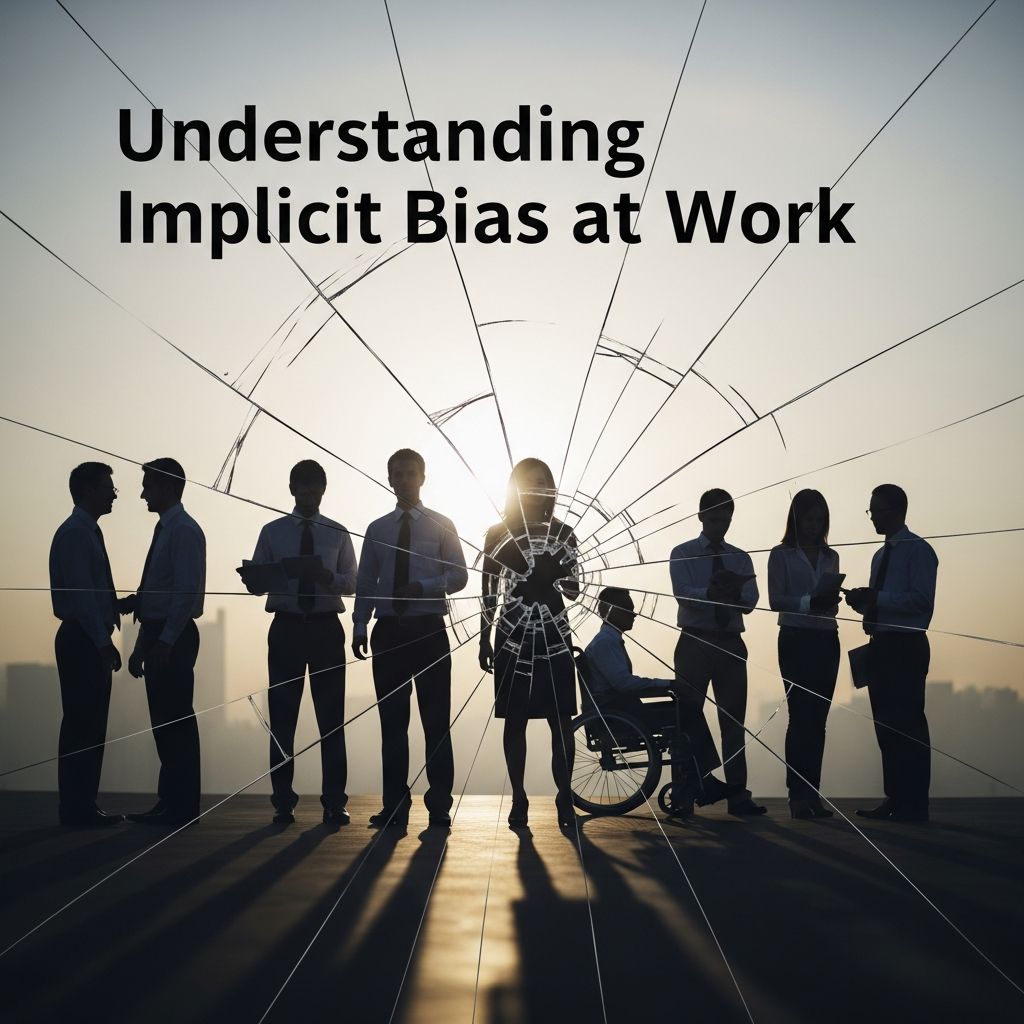
Implicit bias quietly shapes decisions in hiring, promotion, feedback, and everyday interactions, even among people who strongly believe in fairness and equality. Recognizing and addressing these unconscious patterns is essential for any organization that wants to build genuine inclusion, retain diverse talent, and improve performance.
What Is Implicit Bias?
Implicit bias refers to automatic attitudes, associations, or stereotypes that influence how we perceive and act toward others without conscious awareness or deliberate intent. These biases form through repeated exposure to cultural messages, media representations, and past experiences.
Unlike explicit bias, which is openly acknowledged and deliberate, implicit bias operates beneath the surface. A person can consciously endorse equality while still holding unconscious preferences or assumptions that affect their behavior.
Implicit Bias vs. Explicit Bias
| Aspect | Implicit Bias | Explicit Bias |
|---|---|---|
| Awareness | Unconscious, automatic | Conscious, deliberate |
| Control | Hard to control directly | Potentially controllable with effort |
| Expression | Revealed in subtle behaviors and patterns | Reflected in stated beliefs and overt actions |
| Self-perception | Often inconsistent with declared values | Typically aligned with what a person says they believe |
Both types of bias can lead to unfair treatment, but implicit bias is particularly challenging because people often do not realize it is guiding their judgments.
How Implicit Bias Develops
Implicit biases do not appear overnight; they are learned over time as the brain searches for shortcuts to navigate a complex world. Research in social cognition shows that people quickly categorize others by visible traits such as race, gender, age, or accent, and then associate those categories with qualities they have repeatedly seen or heard in their environment.
Key Drivers of Implicit Bias
- Cultural narratives: Repeated stories, jokes, or assumptions about specific groups become internalized as “how things are.”
- Media portrayals: Overrepresentation of certain groups in specific roles (for example, leaders vs. supporting roles, professionals vs. criminals) shapes unconscious expectations.
- Family and community norms: Messages absorbed from caregivers, peers, and local institutions in childhood and adolescence.
- Cognitive shortcuts: The brain’s preference for fast, efficient categorization rather than slow, analytical thinking, especially under time pressure or stress.
- Limited exposure: Lack of meaningful interaction with people from different backgrounds can cause stereotypes to fill the gap.
Because these influences are pervasive, everyone is susceptible to implicit bias, regardless of their intentions or values.
Why Implicit Bias Matters at Work
In organizational settings, decisions are often made quickly and under pressure. This environment creates fertile ground for implicit bias to shape who is hired, who is heard, and who advances.
Typical Workplace Areas Affected
- Recruitment and hiring: Assumptions about competence based on name, school, accent, or perceived background can skew evaluations of equivalent candidates.
- Performance evaluations: Similar behavior may be interpreted differently depending on the evaluator’s unconscious expectations for a given group (for example, assertiveness in men vs. women).
- Leadership potential: Stereotypes about who “looks like” a leader may limit opportunities for underrepresented employees.
- Task assignment and visibility: High-impact projects and client exposure may be offered more frequently to people who feel familiar or comfortable to decision-makers.
- Everyday interactions: Who gets interrupted, who is invited to informal gatherings, and whose ideas are credited are all shaped by subtle, often unnoticed biases.
Over time, these small advantages and disadvantages accumulate, producing sizeable gaps in representation, pay, and promotion.
Common Forms of Implicit Bias in Organizations
While implicit bias can relate to any social category, several patterns appear frequently in workplaces across industries.
- Affinity bias: Favoring people who share similar backgrounds, interests, or identities, which can reinforce homogeneity in teams and leadership.
- Confirmation bias: Seeking information that confirms an initial impression about a person while discounting evidence that contradicts it.
- Gender bias: Unconscious assumptions about men and women’s “natural” roles, particularly in leadership, caregiving, and technical work.
- Racial and ethnic bias: Automatic preferences or stereotypes linked to race or ethnicity that influence how behavior is interpreted and how competence is judged.
- Age bias: Viewing younger employees as inexperienced or older employees as less adaptable, regardless of their actual performance.
- Disability and health assumptions: Underestimating the capabilities of people with visible or invisible disabilities or chronic conditions.
How Researchers Measure Implicit Bias
Because implicit biases operate below conscious awareness, they cannot be measured simply by asking people what they believe. Researchers use indirect tools to reveal patterns in automatic associations.
The Implicit Association Test (IAT)
The Implicit Association Test (IAT) is one of the most widely used methods for assessing implicit biases. It measures how quickly individuals associate concepts (for example, racial groups, gender categories) with positive or negative words or with particular roles.
- Participants sort images and words into categories as quickly as possible.
- Faster response times when certain categories are paired (for example, male–leader, female–support) suggest stronger automatic associations.
- Slower responses indicate weaker or conflicting associations.
Large-scale IAT studies have found widespread implicit preferences favoring some groups over others, including racial and gender biases, even among people who explicitly endorse equality.
Although there is active debate about how precisely the IAT predicts individual behavior, there is broad agreement that it reveals shared cultural patterns of association that can influence decisions, especially when unexamined.
Conditions That Intensify Implicit Bias
Implicit bias is more likely to influence behavior when people are relying on fast, automatic thinking. Certain workplace conditions make this more common:
- Time pressure: Quick decisions discourage deliberate reflection and encourage reliance on gut impressions.
- High cognitive load: Juggling multiple tasks or managing constant interruptions leaves little mental capacity to challenge first instincts.
- Stress and fatigue: When people are tired or stressed, they are more prone to fall back on well-worn mental shortcuts.
- Ambiguous criteria: Vague job requirements or evaluation standards provide room for stereotypes to fill the gaps.
- Lack of accountability: When evaluators believe their decisions will not be scrutinized, they are less likely to check for bias.
Designing processes that reduce these pressures and increase transparency makes it easier to counteract implicit bias.
Strategies to Reduce the Impact of Implicit Bias
Implicit bias cannot be eliminated overnight, but its influence can be significantly reduced through intentional individual and organizational practices. Research indicates that structured, ongoing efforts are more effective than one-off training sessions.
Individual Practices
- Increase self-awareness: Reflect on your own patterns of comfort, surprise, or doubt in interactions. Consider using evidence-based tools such as the IAT as a starting point for reflection (not as a label).
- Slow down key decisions: Build in short pauses before deciding on hiring, promotion, or performance ratings, especially when you feel rushed.
- Rely on structured criteria: Use predefined, job-related criteria to evaluate candidates and employees, and document your reasoning.
- Seek disconfirming evidence: When you form a quick impression, deliberately look for information that might challenge it.
- Broaden exposure: Engage with colleagues, mentors, and role models from a wide range of backgrounds and roles. Positive, sustained contact can reshape automatic associations over time.
Organizational Practices
- Standardize recruitment: Use structured interviews with the same core questions for all candidates and clear scoring rubrics linked to job requirements.
- Use diverse decision-making panels: Bring multiple perspectives into hiring, promotion, and resource allocation decisions.
- Clarify performance standards: Define success in specific, observable terms to reduce room for subjective assumptions.
- Audit outcomes regularly: Review data on hiring, pay, promotion, performance ratings, and attrition by demographic group to identify inequities.
- Provide ongoing learning and coaching: Offer sustained development opportunities, such as inclusive leadership coaching and peer learning circles, rather than single training events.
- Encourage speaking up: Establish psychologically safe ways for employees to raise concerns about bias or exclusionary behaviors without fear of retaliation.
Inclusive Leadership Behaviors
Leaders play a critical role in setting expectations and modeling behaviors that counter implicit bias. Inclusive leadership is not only about beliefs; it is about consistent daily actions.
- Invite broad participation: Proactively ask quieter team members for input and rotate who leads meetings or presents work.
- Share credit fairly: Publicly recognize contributions from all team members, especially those whose work is less visible.
- Challenge stereotypes: Question comments that rely on group-based assumptions and redirect conversations to individual evidence.
- Sponsor diverse talent: Use your influence to open doors for high-potential employees from underrepresented groups.
- Model learning: Be open about your own growth, acknowledge mistakes, and demonstrate a commitment to continuous improvement.
Measuring Progress on Bias Reduction
To know whether efforts are working, organizations need both quantitative and qualitative indicators.
- Representation metrics: Track diversity at different levels and functions over time.
- Equity indicators: Analyze performance ratings, promotion rates, pay bands, and access to development opportunities across demographic groups.
- Climate and inclusion surveys: Ask employees whether they feel respected, able to speak up, and fairly evaluated.
- Process reviews: Periodically review hiring, promotion, and assignment processes to ensure criteria remain clear and relevant.
- Qualitative feedback: Listen to stories from employees about moments when they felt included or excluded; these narratives often reveal areas where bias still operates.
Frequently Asked Questions (FAQs)
Is implicit bias the same as unconscious bias?
Yes. In everyday usage, implicit bias and unconscious bias typically refer to the same phenomenon: automatic attitudes or stereotypes that influence judgments and behavior without conscious awareness.
If bias is unconscious, can people be held responsible for it?
People are not morally at fault for having implicit biases they did not choose. However, individuals and organizations are responsible for recognizing that bias exists and for taking reasonable steps to limit its impact on decisions and behaviors that affect others.
Can implicit bias be removed completely?
Current research suggests that implicit biases are deeply ingrained and may not disappear entirely, but their influence on behavior can be reduced through sustained effort, structural changes, and ongoing reflection.
Does implicit bias always lead to discrimination?
Not always. Implicit bias increases the risk of unfair treatment, especially in ambiguous situations or under pressure. Clear criteria, accountability, and conscious checks can prevent biased attitudes from translating into discriminatory actions.
Is implicit bias training enough to fix inequities?
No. Training can raise awareness, but lasting change requires process redesign, leadership accountability, consistent data review, and reinforcement of inclusive behaviors in everyday work.
References
- Implicit Bias: What It Is, Examples, & Ways to Reduce It — Simply Psychology. 2023-06-15. https://www.simplypsychology.org/implicit-bias.html
- Implicit bias — American Psychological Association. 2023-04-01. https://www.apa.org/topics/implicit-bias
- Implicit stereotype — Wikipedia (summary of scientific literature). 2024-01-10. https://en.wikipedia.org/wiki/Implicit_stereotype
- Implicit Bias Explained — Perception Institute. 2016-09-01. https://perception.org/research/implicit-bias/
- Implicit Bias — StatPearls, NCBI Bookshelf. 2023-07-24. https://www.ncbi.nlm.nih.gov/books/NBK589697/

- Integrated M.A. in Applied Linguistics, University of Hyderabad
- 5+ years in editorial, instructional, SEO, and research-based writing
Sneha is a relationships and lifestyle writer with a strong foundation in applied linguistics and certified training in relationship coaching. She brings over five years of writing experience to theskillvault, crafting thoughtful, research-driven content that empowers readers to build healthier relationships, boost emotional well-being, and embrace holistic living. Her writing and insights reflect the belief that beauty, happiness, and wellness…