
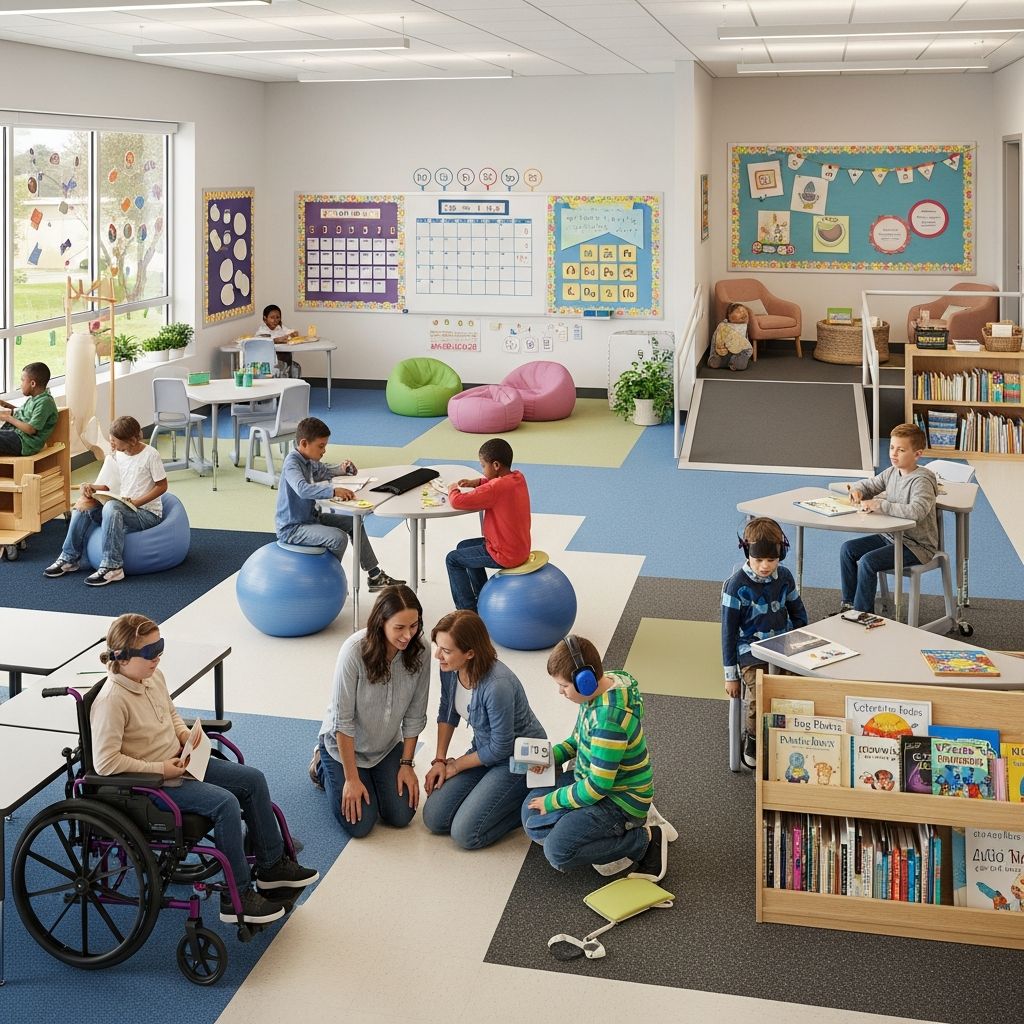
Creating classrooms where every student thrives requires intentional design that honors diverse learning profiles. Inclusive education integrates students with special needs into general settings, promoting equity and richer learning for all. This approach draws on evidence-based practices to adapt teaching, leverage technology, and build community.
Foundations of Equitable Learning Spaces
Equity in education starts with recognizing that one-size-fits-all methods fall short. Inclusive classrooms prioritize accessibility, ensuring materials and activities suit varied abilities. Research shows these environments yield academic gains and social benefits across the board.
Key principles include flexibility in delivery and proactive support. Educators assess needs early, tailoring environments to minimize barriers. This foundation supports long-term success by valuing each student’s strengths.
Adapting Instruction for Diverse Learners
Customization lies at the heart of inclusion. Teachers modify content, processes, and products to match individual profiles, from adjusting complexity to incorporating multimedia.
- Content tweaks: Offer materials at multiple reading levels or with visual aids.
- Process variations: Provide choices like hands-on tasks or discussions.
- Product options: Allow demonstrations via presentations, writings, or projects.
Project-based learning shines here, letting students apply knowledge creatively while building confidence.
Universal Design for Learning Framework
UDL provides a blueprint for curricula that engage multiple senses and pathways. It operates on three pillars: multiple means of representation, action/expression, and engagement.
| UDL Principle | Description | Classroom Application |
|---|---|---|
| Representation | Present info in varied formats | Videos, texts, diagrams |
| Action/Expression | Enable diverse output methods | Quizzes, essays, models |
| Engagement | Spark interest through choice | Personalized goals, gamification |
This framework boosts comprehension, organization, and self-regulation, making lessons accessible without extra work.
Building Collaborative Teaching Models
Teamwork between general and special educators amplifies inclusion. Co-teaching pairs experts, dividing roles like one leading while the other circulates support.
Models include:
- Station teaching: Rotate students through activity stations.
- Parallel teaching: Duplicate lessons in smaller groups.
- Team teaching: Joint delivery of unified content.
Regular planning sessions align on accommodations, embedding them seamlessly.
Cultivating Positive Social Dynamics
Inclusion extends beyond academics to emotional growth. Structured interactions build empathy and friendships.
- Implement buddy systems for peer mentoring.
- Host cooperative games emphasizing teamwork.
- Teach social skills via role-play and prompts.
Social-emotional learning (SEL) lessons address emotions, fostering resilience and belonging.
Structuring Routines and Expectations
Predictability reduces anxiety, especially for students with autism or ADHD. Clear routines provide security.
Strategies:
- Use visual schedules outlining the day.
- Signal transitions with timers or cues.
- Reinforce rules with consistent positive feedback.
Flexible seating and break zones further stabilize the environment.
Leveraging Assistive Technologies
Tech levels the field, offering tools for independence. From text-to-speech apps to adaptive keyboards, these aids personalize access.
| Tool Type | Benefits | Examples |
|---|---|---|
| Audio Aids | Replays instructions | Recording devices, apps |
| Visual Enhancers | Enlarges text | Magnifiers, screen readers |
| Sensory Supports | Manages overload | Headphones, fidgets |
| Translation Devices | Aids multilingual | Real-time translators |
Integrate these thoughtfully to empower without isolating.
Managing Behaviors Proactively
Positive approaches prevent issues. Define expectations visually and praise compliance.
- Buddy pairs promote accountability.
- Adjust seating to minimize distractions.
- Movement breaks regulate energy.
PBIS frameworks systematize this, tying behaviors to rewards.
Personalizing Support Through Assessment
Regular check-ins reveal needs. Micro-coaching asks, “What helps you best?”
- Notebook reviews track progress.
- Think-pair-sketch aids processing.
- Quiet zones suit focus preferences.
Shift queries to “How can you shine?” inviting universal input.
Addressing Sensory and Physical Needs
Sensory-friendly setups prevent overload. Designated calm corners with weighted items or noise reduction help regulate.
Incorporate movement: standing desks, fidget stations, walk-talks enhance retention for many.
Promoting Cultural and Identity Inclusion
Diversity education combats bias. Discuss equity openly, celebrate heritages.
- Use inclusive language avoiding assumptions.
- Diversify curricula with global perspectives.
- Model respect in interactions.
Family and Specialist Partnerships
Consistency across home-school bridges gaps. Share strategies and progress.
Professional development equips teams, as more specialists enable scale.
Frequently Asked Questions
What is differentiated instruction?
A method tailoring teaching to individual needs via content, process, and product adjustments.
How does UDL benefit all students?
By offering flexible options, it engages diverse learners universally.
Why co-teach in inclusive settings?
It combines expertise for comprehensive support.
What assistive tech is essential?
Audio, visual, sensory tools promoting independence.
How to prepare for routine changes?
Advance notices and visuals ease transitions.
What’s micro-coaching?
Quick, daily feedback chats empowering students.
References
- Strategies for Inclusive Classrooms in Special Education — Marymount University. 2023-10-15. https://marymount.edu/blog/strategies-for-inclusive-classrooms-in-special-education/
- Effective Classroom Strategies for Teaching Students with Autism — Incredible Years. 2023-05-20. https://www.incredibleyears.com/blog/autism-in-the-inclusive-classroom
- Inclusive Classroom Support Strategies for Teacher Collaboration — Edutopia. 2023-08-12. https://www.edutopia.org/article/inclusive-classroom-support-strategies-teacher-collaboration/
- Nine Powerful Ways to Promote Inclusion in the Classroom — University of Illinois. 2024-04-12. https://education.illinois.edu/about/news-events/news/article/2024/04/12/nine-powerful-ways-to-promote-inclusion-in-the-classroom
- Special Education: Making Classrooms Inclusive — University of New Hampshire. 2023-07-10. https://cps.unh.edu/blog/2023/07/special-education-making-classrooms-inclusive
- Building and Sustaining Inclusive Educational Practices — U.S. Department of Education. 2023-11-01. https://www.ed.gov/media/document/inclusive-practices-guidance-109436.pdf

- Integrated M.A. in Applied Linguistics, University of Hyderabad
- 5+ years in editorial, instructional, SEO, and research-based writing
Sneha is a relationships and lifestyle writer with a strong foundation in applied linguistics and certified training in relationship coaching. She brings over five years of writing experience to theskillvault, crafting thoughtful, research-driven content that empowers readers to build healthier relationships, boost emotional well-being, and embrace holistic living. Her writing and insights reflect the belief that beauty, happiness, and wellness…