
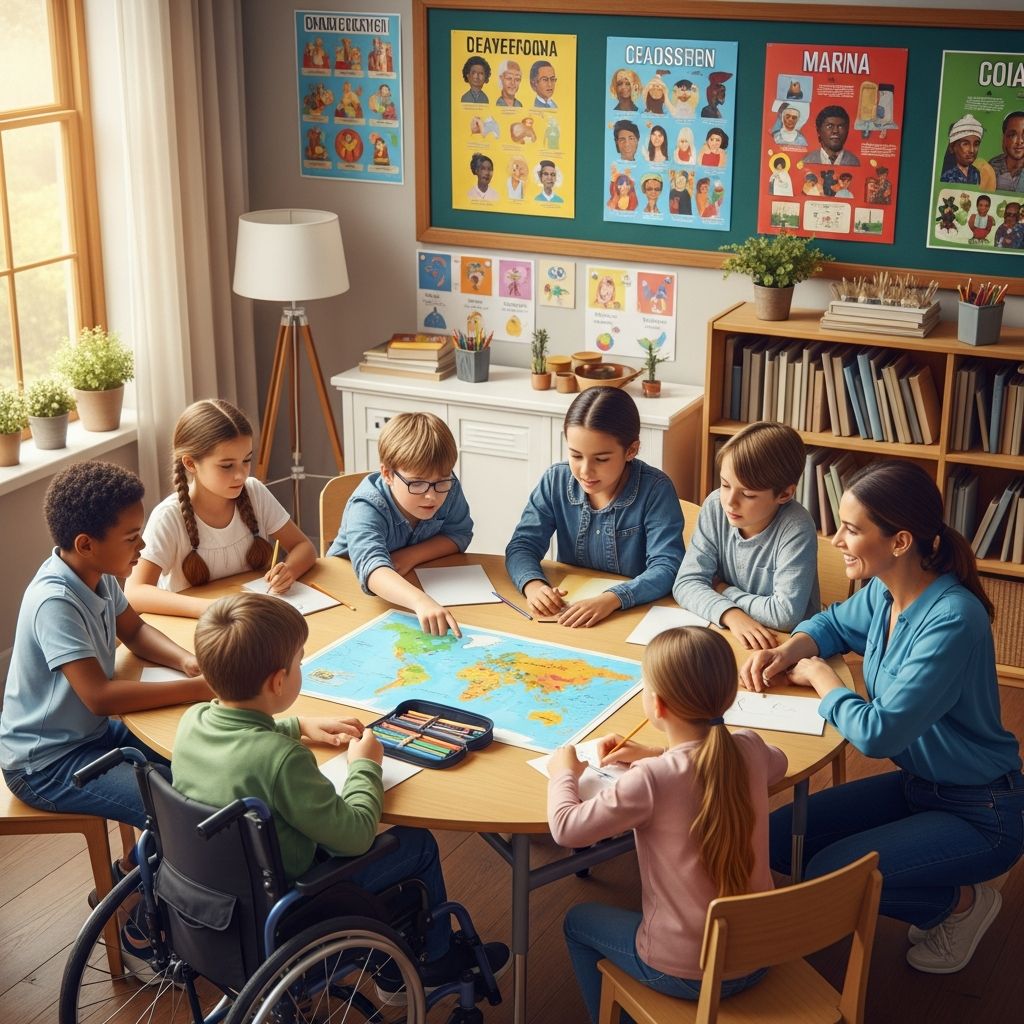
Understanding Inclusive Education and Its Impact
Inclusive education represents a fundamental shift in how we approach teaching and learning. Rather than viewing inclusion as a specialized service for certain students, it encompasses the entire educational philosophy and practice within a classroom. An inclusive environment is one where all students—regardless of ability, background, or learning style—have access to quality instruction, meaningful participation, and genuine belonging.
Research demonstrates significant benefits when classrooms prioritize inclusion. Students with disabilities in inclusive settings show improved academic performance, higher attendance rates, and fewer behavioral challenges compared to segregated settings. Equally important, students without disabilities benefit substantially. They develop greater acceptance of individual differences, lower their prejudicial views, and learn to appreciate diverse perspectives. These outcomes extend beyond academics to encompass emotional growth, social skills development, and the cultivation of empathy.
Establishing Personalized Learning Pathways
One of the most critical shifts educators must make is abandoning the assumption that all students learn in the same way. Traditional one-size-fits-all instruction inadvertently excludes students whose learning profiles differ from the majority. Personalized learning pathways recognize that students possess different strengths, processing speeds, prior knowledge, and learning preferences.
Implementing differentiated instruction allows teachers to address these variations systematically. This approach involves tailoring content, instructional methods, and assessment strategies to match individual student needs. For instance, a teacher might present the same historical concept through multiple modalities: visual timelines for visual learners, audio recordings for auditory learners, and hands-on activities for kinesthetic learners. When students engage with material through their preferred learning channels, comprehension deepens and confidence grows.
Universal Design for Learning (UDL) provides a comprehensive framework for creating flexible learning environments from the outset. Rather than retrofitting accommodations after the fact, UDL encourages educators to design instruction with diverse learners in mind from the beginning. This framework emphasizes multiple means of representation (presenting information in varied formats), multiple means of action and expression (allowing students to demonstrate knowledge differently), and multiple means of engagement (connecting to student interests and motivations).
Small group instruction represents another powerful personalized learning strategy. When teachers work with students in targeted groups—whether for intervention, enrichment, or grade-level instruction—they can pinpoint specific skill gaps, provide focused feedback, and adjust pacing to match student readiness. Writing conferences, guided reading sessions, and skill-based small groups create opportunities for individualized attention that whole-class instruction cannot provide.
Building Classroom Community and Belonging
An inclusive classroom transcends academic considerations to address the fundamental human need for belonging. Students must feel genuinely welcomed, valued for their unique contributions, and connected to peers and teachers. Without this social-emotional foundation, even well-designed instruction falls short of its potential.
Teachers build community by demonstrating genuine interest in students’ lives, backgrounds, and experiences. This extends beyond surface-level conversations to authentic engagement with students’ identities, family cultures, and personal aspirations. When educators allocate time to listen actively to student stories and acknowledge the diverse backgrounds represented in the classroom, they signal that every person matters.
Celebrating individual strengths creates powerful opportunities for belonging. When a student who struggles with traditional writing assignments creates a graphic novel instead, they experience success and develop confidence. When teachers explicitly recognize and articulate how specific student capabilities support learning in other areas, they reinforce the concept that multiple pathways lead to achievement. This strength-based approach shifts students’ self-perception from deficient to capable.
Peer relationships flourish when teachers intentionally facilitate collaboration among students with varied abilities and backgrounds. Structured cooperative learning activities, mixed-ability groupings, and peer teaching opportunities create natural contexts for students to appreciate differences and develop mutual respect. When students work alongside classmates with disabilities or different cultural backgrounds in meaningful tasks, stereotypes dissolve and genuine friendships often emerge.
Implementing Culturally Responsive Curricula
Curriculum represents the stories we tell about whose knowledge matters. When students consistently encounter literature, historical narratives, scientific achievements, and artistic expression exclusively from one cultural perspective, students from other backgrounds receive the implicit message that their cultures are peripheral or insignificant. Inclusive curricula intentionally center diverse voices and perspectives.
Integrating diverse materials across subject areas accomplishes multiple objectives simultaneously. Students encounter reflections of themselves in assigned readings, which strengthens engagement and builds literacy skills. Simultaneously, all students develop richer, more accurate understandings of history, science, literature, and society when multiple perspectives are represented. Studying historical events from various viewpoints, reading literature by authors from different cultures, and examining scientific contributions by people of varied backgrounds create more complex, nuanced learning.
Beyond adding diverse materials, culturally responsive teaching involves examining and challenging dominant narratives. Students benefit from critically analyzing concepts like identity, privilege, power, and social justice through open, respectful dialogue. When teachers facilitate these conversations with clear guidelines emphasizing active listening and empathy, students develop critical thinking skills and learn to engage constructively with complex societal issues.
Celebrating cultural diversity through classroom events and practices reinforces messages of inclusion. Acknowledging cultural holidays, inviting family members to share traditions, and incorporating diverse languages into the classroom environment communicate respect for all cultures represented among students and families.
Modeling and Teaching Inclusive Language and Behavior
Language carries power. The words educators choose shape classroom culture and influence how students view themselves and others. Inclusive language affirms all identities and consciously avoids reinforcing stereotypes or inadvertently excluding students.
Fundamental practices include respecting students’ chosen names and pronouns, avoiding gendered language when unnecessary, and refraining from assumptions about students’ family structures or abilities. Teachers also proactively address biases and microaggressions—those small, often unintentional slights that accumulate to create hostile environments. When a student is assigned a role in a project based on a stereotype, when ability assumptions are made, or when comments demean particular groups, teachers address these moments directly and educatively.
Perhaps most importantly, educators must model the inclusive behaviors they expect. When teachers demonstrate problem-solving strategies calmly when frustrated, acknowledge and correct their own mistakes, ask for help when needed, and celebrate their own learning process, they normalize growth mindsets and humanize the teaching role. Students learn more from what educators do than from what they say.
Creating space for student input about language norms strengthens inclusive cultures. When classrooms collaboratively develop expectations for respectful communication and students help establish guidelines for sensitive discussions, they develop ownership of inclusive values. Regular reflection on language practices—both whole-class and individual—keeps inclusion at the forefront rather than allowing it to fade as initial novelty dissipates.
Structuring Flexible Participation and Engagement Options
Students possess varied strengths in how they process information and demonstrate understanding. A student who excels in verbal discussion might struggle with written expression. Another might possess rich ideas but need processing time before speaking. An anxious student might freeze during presentations but produce thoughtful work in written form. Inclusive classrooms recognize these differences by offering multiple pathways for participation and demonstration of learning.
Providing choices in how students engage with content and express understanding increases motivation and access. A student might demonstrate understanding of a concept through a written essay, a multimedia presentation, a detailed drawing with annotations, a verbal explanation, or a hands-on demonstration. When students select formats aligned with their strengths, they succeed while still engaging with rigorous content.
Accommodations for students with disabilities ensure equal access to educational opportunities. These might include extended time for assignments, modified materials, assistive technology, or alternative assessment formats. Rather than viewing accommodations as unfair advantages, inclusive educators recognize them as necessary leveling mechanisms that allow students to demonstrate their actual knowledge rather than being hindered by disability-related barriers.
Flexible grouping arrangements also support varied participation styles. Some students thrive in whole-group discussions, while others contribute more readily in small groups or one-on-one conversations. Offering diverse participation structures—silent reflection time, pair-shares before whole-group sharing, written responses, nonverbal signals for agreement or confusion—ensures all students can meaningfully engage regardless of communication preference.
Establishing Clear Structures and Positive Environments
While flexibility characterizes inclusive classrooms, clarity and structure provide essential scaffolding. Students need clear expectations, consistent routines, and predictable consequences. These elements create psychological safety, allowing students to take academic risks and focus on learning rather than worrying about unexpected changes or unclear requirements.
Posting daily schedules, displaying classroom rules collaboratively developed with student input, and establishing signal systems for transitions create environmental clarity. When students understand what comes next and how to transition between activities, anxiety decreases and learning time increases. Rules developed collaboratively—where teachers and students together discuss why respectful behavior matters and what it looks like—carry more weight and foster greater buy-in than rules imposed from above.
Addressing instances of bullying, exclusion, or discrimination promptly and effectively is essential for maintaining inclusive environments. When hurtful behavior occurs, inclusive educators use it as a teaching moment rather than merely punishing. Restorative approaches that help students understand the impact of their actions and repair relationships often create more lasting behavioral change than traditional consequences.
Positive behavioral intervention systems provide whole-school frameworks for teaching and reinforcing prosocial behaviors. When schools systematically teach expectations in all settings and acknowledge students when they demonstrate these behaviors, positive culture emerges organically. Students internalize values of respect and responsibility rather than viewing them as external mandates.
Collaborating With Families and Support Systems
Inclusive education cannot succeed when teachers work in isolation. Collaboration with special educators, related service providers, and families creates comprehensive support systems for students. When general education and special education teachers co-plan, co-teach, and share assessment data, they can make more informed instructional decisions and provide better support.
Partnerships with families are particularly crucial. Parents possess deep knowledge of their children’s strengths, interests, learning patterns, and needs. When teachers genuinely solicit family input, share information about student progress transparently, and welcome family perspectives in problem-solving, stronger relationships develop. These partnerships are especially important for students from culturally and linguistically diverse backgrounds, where family knowledge helps teachers provide culturally responsive instruction.
Frequently Asked Questions
Q: What is the difference between inclusion and integration?
A: Integration typically refers to placing students with disabilities in general education settings without necessarily modifying curriculum or instruction. Inclusion involves genuine participation with meaningful curriculum modifications, support services, and community building that ensure all students—not just physically present students—truly belong and access rigorous instruction.
Q: Does inclusion mean eliminating all special education services?
A: No. Inclusion means providing necessary special education services within general education settings whenever possible. Students receive individualized education plans (IEPs) and related services while learning alongside peers without disabilities. The goal is maximizing time in general education while ensuring students receive specialized support.
Q: How do teachers manage classrooms with such diverse learning needs?
A: Teachers use frameworks like Universal Design for Learning, differentiated instruction, small group instruction, and collaborative teaching models. Strategic use of instructional assistants, clear classroom structures, and proactive behavior management reduce overwhelm and allow teachers to respond to individual needs effectively.
Q: What if students resist or mock inclusive practices?
A: Student resistance often reflects misinformation or lack of exposure to diverse peers. Teachers address this through explicit teaching about disability and difference, celebrating diverse abilities, creating structured positive interactions among students with varied abilities, and consistently addressing inappropriate comments and behaviors.
Q: How can teachers implement inclusion without additional resources?
A: While additional resources help, foundational inclusive practices require primarily mindset shifts and intentional planning. Differentiating instruction, building community, modeling inclusive language, and offering flexible participation options cost little but yield significant results. Teachers can leverage peer tutoring, library resources, and free digital tools to expand possibilities.
Key Takeaways
- Personalization matters: Recognize that students learn differently and design instruction accordingly through differentiated instruction, UDL frameworks, and small group work.
- Belonging is foundational: Create classroom communities where every student feels valued, connected to peers, and celebrated for unique strengths.
- Curriculum shapes identity: Integrate diverse voices, perspectives, and materials to validate all cultures and foster comprehensive understanding.
- Language shapes culture: Use inclusive language, model inclusive behavior, and address biases to create psychologically safe environments.
- Flexibility enables access: Offer multiple pathways for participation and demonstration of learning to honor varied strengths and needs.
- Structure supports learning: Combine flexibility with clear expectations, routines, and proactive behavior management.
- Collaboration strengthens systems: Partner with colleagues, families, and support specialists to create comprehensive inclusive systems.
References
- Nine Powerful Ways to Promote Inclusion in the Classroom — University of Illinois College of Education. 2024-04-12. https://education.illinois.edu/about/news-events/news/article/2024/04/12/nine-powerful-ways-to-promote-inclusion-in-the-classroom
- Tips for Creating an Inclusive Classroom in Elementary School — Edutopia. 2024. https://www.edutopia.org/article/tips-creating-inclusive-classroom-elementary-school/
- Best Practices for Building an Inclusive Classroom — Walden University College of Education. 2024. https://www.waldenu.edu/programs/education/resource/best-practices-for-building-an-inclusive-classroom
- 4 Benefits of Inclusive Classrooms — Understood. 2024. https://www.understood.org/en/articles/4-benefits-of-inclusive-classrooms
- Inclusive Practices — Virginia Department of Education. 2024. https://www.doe.virginia.gov/programs-services/special-education/iep-instruction/inclusive-practices
- Building and Sustaining Inclusive Educational Practices — U.S. Department of Education Office of Special Education Programs. 2024. https://www.ed.gov/media/document/inclusive-practices-guidance-109436.pdf
- Overview of Inclusive Teaching Practices — Stanford University Teaching Commons. 2024. https://teachingcommons.stanford.edu/teaching-guides/inclusive-teaching-guide/getting-started-inclusive-teaching/overview-inclusive

- Integrated M.A. in Applied Linguistics, University of Hyderabad
- 5+ years in editorial, instructional, SEO, and research-based writing
Sneha is a relationships and lifestyle writer with a strong foundation in applied linguistics and certified training in relationship coaching. She brings over five years of writing experience to theskillvault, crafting thoughtful, research-driven content that empowers readers to build healthier relationships, boost emotional well-being, and embrace holistic living. Her writing and insights reflect the belief that beauty, happiness, and wellness…