
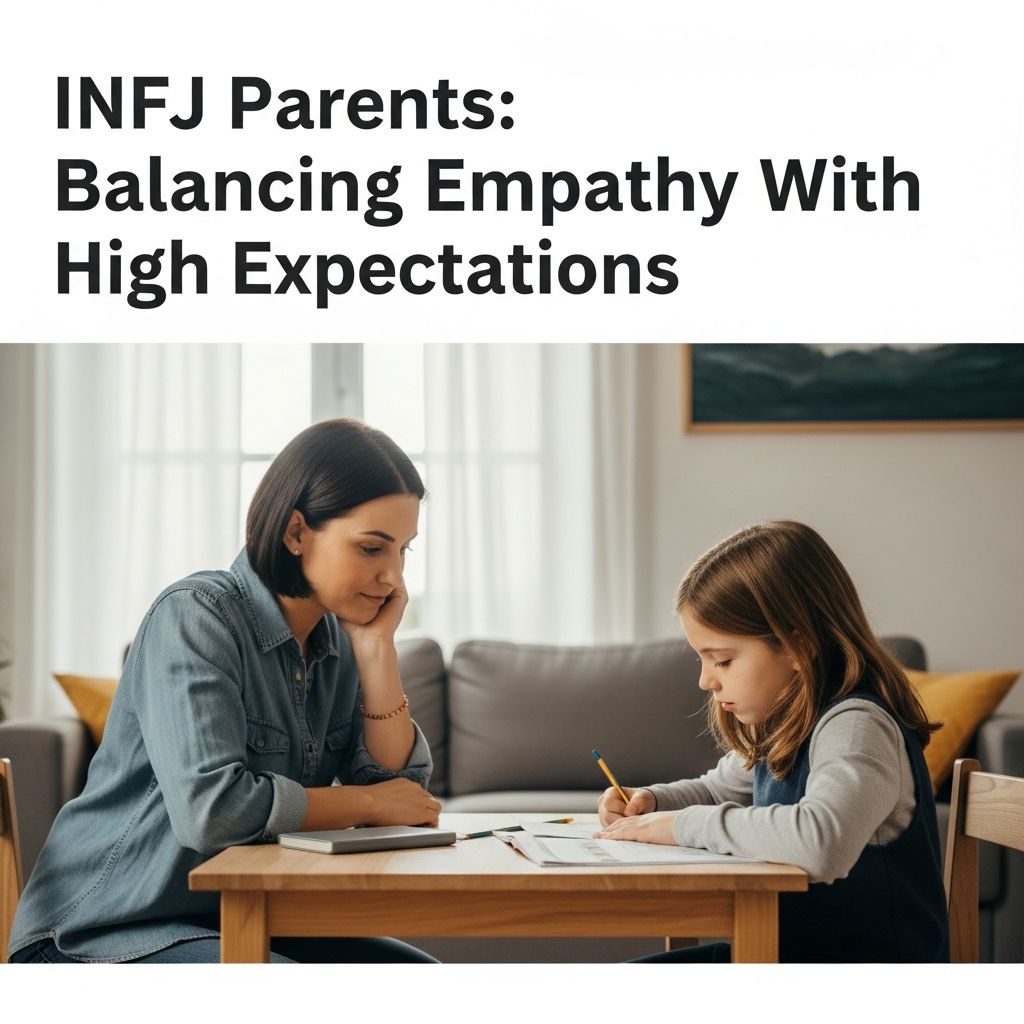
Understanding The INFJ Parent: A Unique Approach To Raising Children
Parents come in many varieties, each bringing their own distinct personality traits and values to the parenting experience. The INFJ personality type represents a particular constellation of characteristics that shapes how these individuals approach the profound responsibility of raising children. Known as the Advocate personality type, INFJs are typically characterized by their deep sense of compassion, profound intuition, and unwavering commitment to their principles. When these traits intersect with parenthood, they create a distinctive parenting dynamic that is both nurturing and demanding, supportive yet exacting.
INFJ parents enter the parenting journey with a clear vision of the values they wish to impart and the kind of individuals they hope their children will become. This vision is rooted not in superficial goals but in a genuine desire to shape compassionate, authentic, and morally grounded human beings. The commitment runs deep, often driving these parents to make significant personal sacrifices and to invest considerable emotional energy in their children’s development.
The Intuitive Foundation: How INFJs Read Their Children
One of the most distinctive features of INFJ parenting is the role that intuition plays in their decision-making and understanding. INFJs possess what might be described as a finely tuned radar system for detecting shifts in their children’s emotional states and underlying concerns. This perceptiveness extends beyond surface-level observations to encompass a deeper understanding of their children’s inner worlds, motivations, and struggles.
This intuitive ability manifests in numerous practical ways throughout daily parenting. An INFJ parent might notice a slight hesitation in their child’s voice during a routine conversation about school, prompting them to gently probe further and uncover a social conflict that would otherwise have remained hidden. They observe subtle changes in behavior patterns—perhaps a child who usually bounds enthusiastically from the school bus now trudges slowly with slumped shoulders—and immediately recognize that something requires attention.
The strength of this intuitive capacity allows INFJ parents to anticipate their children’s needs before those needs become urgent or problematic. Rather than waiting for a child to explicitly ask for help, an INFJ parent can often sense when emotional support is required, when a conversation about values needs to occur, or when a child is struggling with internal conflict. This proactive approach to parenting enables them to address issues before they escalate and to provide guidance that feels both timely and surprisingly insightful to their children.
Creating Emotional Safety And Authentic Connection
The emotional environment that INFJ parents cultivate in their homes represents one of their most valuable contributions to their children’s development. These parents are fundamentally committed to creating spaces where their children feel deeply understood, valued, and accepted for who they authentically are. This commitment stems from the INFJ’s core need for genuine connection and their recognition that children thrive when they feel emotionally secure.
Within this emotionally safe environment, INFJ parents encourage their children to express themselves honestly, to explore their feelings without judgment, and to develop a strong sense of self-awareness. They model vulnerability themselves, demonstrating that it is acceptable to acknowledge struggles, to seek help, and to work through difficult emotions. This modeling teaches children that emotional expression is healthy and that their inner lives matter.
The supportive nature of INFJ parents also extends to practical matters. These parents are willing to go to considerable lengths to address their children’s needs, whether that involves advocating for them in educational settings, providing emotional support during challenging transitions, or simply being present during moments of confusion or distress. Their loyalty to their children is unwavering, and their children typically understand that their parents are fundamentally on their side.
The Tension Between Standards And Individual Differences
While the strengths of INFJ parenting are considerable, these parents also contend with significant challenges that arise from the very traits that make them effective nurturers. One of the most pronounced tensions in INFJ parenting stems from the disconnect between their high personal standards and the reality of their children’s individual personalities, capacities, and developmental stages.
INFJs typically maintain exacting standards for themselves regarding honesty, integrity, kindness, and ethical behavior. These are not negotiable principles but rather fundamental to how they navigate the world. The challenge emerges when INFJ parents expect their children to adhere to these same rigorous standards immediately and consistently. A child’s seemingly small transgression—failing to be honest about a minor mistake, showing unkindness to a sibling, or not putting full effort into schoolwork—can trigger significant disappointment in an INFJ parent because these behaviors violate principles that the parent holds sacred.
This dynamic becomes particularly complex because INFJ parents often cannot simply overlook or minimize these issues as other parents might. Their strong internal value system makes it difficult to adopt a “pick your battles” approach when it comes to matters of character and integrity. Consequently, children of INFJ parents may experience their parents as excessively strict, inflexible, or harsh in response to what seem like ordinary childhood mistakes and developmental missteps.
Navigating The Introversion-Extroversion Paradox
INFJ parents face a unique challenge related to their introverted nature in a role that demands constant attention and availability. Parenting, particularly during the early years, is an inherently demanding endeavor that requires nearly constant engagement, responsiveness, and emotional presence. For introverted personalities like INFJs, this relentless demand for social and emotional energy creates an exhausting tension.
The conflict is particularly acute because INFJ parents are deeply feeling individuals who care profoundly about meeting their children’s emotional needs. When they choose to prioritize solitude and self-care—something absolutely necessary for their psychological health—they often experience significant guilt, interpreting their need for alone time as a failure to be the kind of parent they aspire to be. Conversely, when they sacrifice their own restoration needs to meet the constant demands of parenting, they risk becoming depleted, operating on empty emotional reserves, and finding themselves unable to access the warmth and engagement that their children need from them.
This is not simply a matter of time management but rather a fundamental challenge of personality and capacity. An INFJ parent who sacrifices too much solitude gradually becomes less capable of providing the emotionally attuned presence that is their greatest parenting strength. The irony is that by neglecting their own needs, they undermine their ability to parent in the way that feels most authentic and valuable to them.
The Perfectionism Trap: Expectations And Overreach
Related to the challenge of high standards is the broader issue of perfectionism and the temptation to over-direct their children’s lives. INFJ parents can sometimes fall into the pattern of trying to guide their children too intensively, attempting to steer them away from mistakes, poor choices, and difficult experiences that the parent can intuitively foresee. This impulse comes from genuine love and care but can prevent children from developing independence, resilience, and the capacity to learn from their own experiences.
The “Judging” aspect of the INFJ personality type manifests as a tendency toward structure, planning, and a clear sense of what should happen. Combined with their strong values and intuitive foresight, this can result in INFJ parents becoming overly controlling, establishing rigid rules that allow little flexibility, and refusing to accept their children’s explanations or justifications when they fall short of expectations. While consistency and clear boundaries are important in parenting, the INFJ’s particular approach to these elements can sometimes feel authoritarian rather than collaborative.
The most effective INFJ parents learn to balance their natural inclination toward high standards with an awareness of their children’s individual capacities and needs. They learn to distinguish between principles that are truly non-negotiable—such as honesty and basic kindness—and preferences or expectations that they may need to release or modify based on their child’s personality and circumstances.
Building Resilience Through Graduated Autonomy
One of the most important lessons INFJ parents can learn involves the value of allowing their children to make decisions, experience consequences, and develop their own sense of agency. While an INFJ parent’s instinct to prevent suffering and guide their children toward success is understandable, children ultimately need opportunities to exercise choice, to sometimes fail, and to discover their own capabilities.
This requires INFJ parents to resist the urge to rescue their children from every difficulty and to trust that their children can develop competence and confidence through managed challenges. It means stepping back from the tendency to anticipate problems and instead allowing children to encounter obstacles, work through them, and emerge with a stronger sense of their own resourcefulness.
Creating this space for autonomy does not mean abandoning the emotional support and guidance that INFJ parents provide so effectively. Rather, it means offering support while allowing children to take the lead in solving problems, making choices, and moving through their own development at their own pace.
Self-Care And Parental Well-Being
The intensity of INFJ parenting—the emotional investment, the high standards, the intuitive attunement to their children’s needs—creates substantial demands on the parent’s own psychological resources. INFJ parents benefit significantly from prioritizing their own well-being, not as a luxury but as a necessity for sustainable, effective parenting.
This self-care might take various forms: pursuing interests and hobbies that restore their energy, maintaining friendships and adult connections, engaging in reflective practices like journaling or meditation, or seeking support through therapy when emotional patterns from their own childhoods resurface in their parenting. The goal is not perfection or constant positivity but rather maintaining enough personal equilibrium to show up as the engaged, compassionate parent they aspire to be.
Creating Meaningful Values Without Rigidity
Perhaps the most significant opportunity for INFJ parents involves learning to transmit their values and principles to their children while allowing those children the freedom to interpret, adapt, and eventually adopt or modify those values as they develop their own worldviews. The goal is not to create clones of the parent but to raise children who think deeply about what matters, who make intentional choices based on genuine conviction rather than fear of parental disapproval, and who develop their own moral frameworks.
This requires INFJ parents to engage in ongoing conversations with their children about values, to model the process of wrestling with ethical questions rather than presenting answers as final and unquestionable, and to demonstrate that growth sometimes involves revising previously held beliefs.
Frequently Asked Questions About INFJ Parenting
Q: Are INFJ parents overly strict with their children?
A: INFJ parents often set high standards and have clearly defined values they want to instill. They can be quite strict about matters they consider important, such as honesty and kindness, but this strictness stems from genuine care rather than harshness. The key is whether they remain rigid about expectations or learn to adapt based on their children’s individual circumstances and development.
Q: How do INFJ parents handle their need for alone time while parenting?
A: This is an ongoing challenge. Effective INFJ parents learn to build in regular moments of solitude to maintain their emotional reserves, recognizing that this self-care ultimately enables them to be more present and engaged with their children. Communicating honestly with their children about their needs, rather than feeling guilty about them, models healthy boundary-setting.
Q: What can INFJ parents do to avoid pushing their children too hard?
A: INFJ parents benefit from regularly reflecting on whether their expectations are truly about their children’s well-being or about their own vision of who their children should become. Seeking feedback from partners or trusted advisors, and practicing flexibility about methods (even if principles remain firm), can help create balance.
Q: How do INFJ parents typically handle their children’s mistakes or failures?
A: INFJ parents can struggle in this area because they intuitively see the potential consequences of poor choices and may respond with disappointment rather than simple acceptance. Growth comes from learning to view mistakes as learning opportunities and to separate a child’s worth from their performance or choices.
References
- Parenthood (INFJ Personality) — 16Personalities. https://www.16personalities.com/infj-parents
- INFJ Parenting Style: Nurturing With Intuition And Empathy — Boo World. https://boo.world/infj-personality/family-infj-parenting-style
- The Strengths and Challenges of the INFJ Parent — Introvert, Dear. https://introvertdear.com/news/infj-parent-strengths-challenges/

Medha Deb is an editor with a master's degree in Applied Linguistics from the University of Hyderabad. She believes that her qualification has helped her develop a deep understanding of language and its application in various contexts. Medha specializes in the areas of beauty, health, sports, and wellness and is committed to ensuring that the content on the website is…