
Understanding the Foundation: What Makes These Types Similar
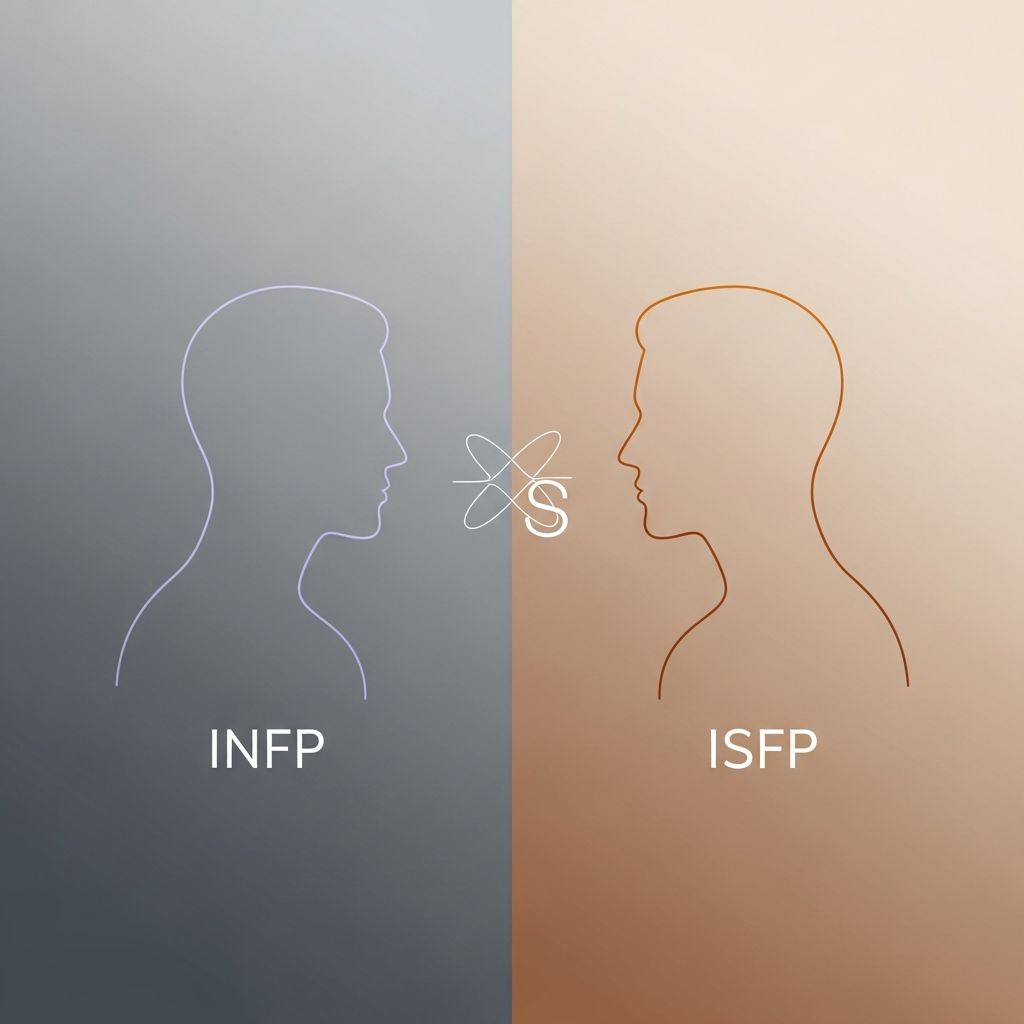
At first glance, INFPs and ISFPs can appear remarkably alike. Both personality types share three of the four core characteristics that define the Myers-Briggs Type Indicator framework: introversion, feeling-based decision making, and a preference for perceiving rather than judging. This substantial overlap in fundamental traits can lead many individuals to question which type truly resonates with their personality. However, despite these significant similarities, the distinction between these two types becomes increasingly apparent when examining their underlying cognitive architecture and how they process information.
The most striking commonality between INFPs and ISFPs lies in their dominant cognitive function: Introverted Feeling. This shared foundation means both types prioritize authenticity, personal values, and individual expression in their interactions with the world. They both shy away from rigid social conventions and superficial relationships, preferring instead to build meaningful connections with those who understand their authentic selves. Neither type enjoys small talk or forced social niceties, and both tend to be contemplative about matters that touch their core values.
The Cognitive Function Framework: The Real Differentiator
While Introverted Feeling forms the cornerstone of both personality types, the secondary and tertiary functions create a significant divergence in how each type experiences the world. This cognitive function stack serves as the blueprint for understanding why these personalities, despite their similarities, operate in fundamentally different ways.
INFPs utilize Extraverted Intuition as their secondary function, complemented by Introverted Sensing in the tertiary position. This combination orients them toward possibilities, abstract concepts, and imaginative exploration. ISFPs, conversely, employ Extraverted Sensing as their secondary function, with Introverted Intuition as their tertiary. This arrangement grounds them more firmly in concrete sensory experiences and the present moment.
The implications of these functional differences ripple throughout nearly every aspect of how each type navigates life. INFPs are natural theorists who enjoy exploring ideas before implementing them, while ISFPs are more inclined toward direct action and real-time engagement with their environment. Understanding these cognitive preferences provides the key to distinguishing between the two types.
How Each Type Processes Information and Ideas
One of the most observable differences between INFPs and ISFPs emerges in their approach to information gathering and idea generation. INFPs, armed with their Extraverted Intuition, actively seek out possibilities and connections. When faced with a problem or creative challenge, they engage in deliberate brainstorming. They think aloud, discuss concepts with others, and consciously trace threads of possibility across various domains. This external processing of ideas is characteristic of their intuitive orientation.
ISFPs, by contrast, experience ideas quite differently. With their focus on immediate sensory reality and their tertiary Introverted Intuition, ISFPs are less likely to actively brainstorm. Instead, they tend to wait for insights to emerge organically. When they do receive an idea or inspiration, it often feels like an epiphany—a sudden crystallization rather than the result of systematic exploration. This explains why ISFPs may seem quieter or less engaged during brainstorming sessions; their creative process simply operates on a different frequency.
Expression and Communication: Words Versus Actions
The way INFPs and ISFPs express themselves reveals another crucial distinction. INFPs have a natural facility with language. Their combination of Introverted Feeling and Extraverted Intuition gives them access to rich metaphorical frameworks and abstract vocabulary. They tend to be articulate, sometimes even verbose, when expressing their thoughts and emotions. This linguistic prowess explains why many INFPs gravitate toward writing, poetry, and other word-based creative pursuits.
ISFPs express themselves more effectively through physical and tangible means. Rather than relying on elaborate verbal explanations, they prefer demonstrating their ideas through art, music, physical performance, or hands-on creation. While they possess equally deep feelings and meaningful insights, articulating these through speech may prove challenging. ISFPs often struggle to find adequate words in the moment and may prefer to take time before sharing their thoughts—but once they do, their expressions tend to be concise and carefully chosen.
Self-Understanding and Identity Formation
How each type relates to their own identity and sense of self showcases another fascinating divergence. INFPs engage in extensive self-analysis. They ask themselves fundamental questions like “Who am I?” and “What do my values truly mean?” Their combination of Introverted Feeling and Introverted Sensing prompts them to review their feelings, examine their reactions to various situations, and run hypothetical scenarios to deepen their self-understanding. This introspective tendency leads INFPs to develop a relatively detailed and articulated sense of identity. They can usually explain precisely who they are and what they stand for.
ISFPs develop their sense of self more instinctively and reactively. Rather than extensively analyzing “who they are” through hypothetical scenarios, they assess themselves in real-time situations. When faced with a decision or action, they ask themselves “Is this true to who I am?” Their self-understanding emerges through lived experience rather than contemplation. While ISFPs certainly possess a clear value system and ideal image of themselves, this self-concept tends to be less verbally articulated and more intuitive in nature.
Risk Assessment and Anxiety Patterns
Another revealing difference appears in how each type experiences worry and manages potential risks. INFPs, with their Extraverted Intuition, tend to generate multiple possible negative outcomes simultaneously. Rather than fixating on a single problem, they jump between various “what-if” scenarios. This can lead to a scattered anxiety where they struggle to identify which concern actually demands their attention. The constant generation of possibilities can leave them feeling overwhelmed and paralyzed, unable to determine which contingency to prepare for.
ISFPs approach risk assessment differently. With their tertiary Introverted Intuition, when they do experience anxiety about potential outcomes, they’re more likely to fixate on one particular disaster scenario that feels inevitable and doomed. Rather than the scattered worry of INFPs, ISFPs may become locked onto a single negative future, leaving them stuck in that particular mental track.
Approach to Action and Implementation
The tendency toward action versus contemplation creates yet another practical difference. INFPs may become so absorbed in theorizing and imagining possibilities that they neglect to take concrete action. They might spend extended periods in the “planning phase,” enjoying the intellectual exploration of what could be done rather than actually doing it. This preference for possibility over actuality means that sometimes INFPs’ best ideas remain in the realm of imagination rather than becoming reality.
ISFPs are generally more inclined toward immediate action. They prefer to engage with the world directly rather than endlessly deliberate about it. This action orientation means ISFPs are less likely to get stuck in the planning phase, though they might benefit from more deliberate preparation in certain situations. Their comfort with the present moment and current reality means they’re ready to respond and adapt as needed.
Material Values and Lifestyle Preferences
When it comes to how each type relates to material goods and lifestyle choices, clear differences emerge. INFPs tend toward minimalism and are generally unconcerned with status symbols or material accumulation. Their Introverted Sensing, combined with their Intuitive focus on ideas and possibilities, means they find contentment with basic necessities. They’re more likely to prioritize experiences—particularly unconventional or off-the-beaten-path adventures—over acquiring possessions. Many INFPs are voracious readers, using literature to fuel their imaginative explorations rather than spending on luxury items.
ISFPs have a different relationship with material reality. With their Extraverted Sensing, they have greater appreciation for aesthetic beauty, sensory pleasures, and refined experiences. This isn’t necessarily about accumulation for accumulation’s sake, but rather about curating a life filled with beauty and quality. ISFPs often develop refined tastes and may be more conscious of style, comfort, and the sensory quality of their environment. They’re likely to invest in items and experiences that genuinely bring them joy and sensory satisfaction.
Openness and Flexibility in Experience
Both types share a preference for perceiving, which makes them generally open-minded, but they express this openness differently. INFPs, as intuitive explorers, are often more experimental overall. They’re drawn to novel ideas, unconventional lifestyles, and exploring paths that mainstream society might question. Their openness extends to trying new conceptual frameworks and abstract possibilities.
ISFPs, as sensing perceivers, are open-minded about their immediate experiences. They prefer to appreciate what life offers in the present moment rather than overthinking or placing rigid expectations on how things should be. While they have preferences and tastes, they’re less likely to impose predetermined standards on their experiences. This makes them adaptable and willing to enjoy things as they come, without the burden of excessive analysis.
Artistic Expression and Creative Pursuits
Both INFPs and ISFPs can be highly creative, but their creative focus diverges meaningfully. INFPs prioritize ideation and imagination in their artistic endeavors. They excel at generating novel concepts, exploring abstract themes, and using their art to express complex emotional and philosophical ideas. Their creativity often involves combining disparate concepts into unexpected wholes.
ISFPs, while equally creative, tend to emphasize technical execution, performance quality, and the sensory impact of their work. They may be more concerned with how something looks, sounds, or feels in practice. Their artistic pursuits often showcase their keen eye for aesthetic beauty and their ability to refine techniques to achieve their vision. Both types produce meaningful art, but from different angles of creative expression.
Comparative Analysis Table
| Dimension | INFP | ISFP |
|---|---|---|
| Information Processing | Abstract possibilities and connections | Concrete sensory experiences |
| Communication Style | Verbal, metaphorical, elaborate | Demonstrative, concise, action-based |
| Self-Awareness | Analytical, detailed, hypothetical | Intuitive, reactive, situational |
| Anxiety Pattern | Multiple scattered worries | Single fixated concern |
| Action Preference | Contemplation then action | Action with real-time adaptation |
| Material Focus | Minimalist, idea-focused | Aesthetic appreciation, sensory quality |
| Creativity Emphasis | Concept and imagination | Technique and execution |
Common Questions About INFP and ISFP Differences
Q: Can someone be a mix of both INFP and ISFP?
A: The MBTI framework categorizes people into distinct types based on their cognitive function preferences. While everyone uses all eight functions to some degree, your type reflects your natural hierarchy. Some people may relate to both types during different life phases, but typically one will be the better fit. If you’re uncertain, examining your relationship with intuition versus sensing, and how you process information, can clarify your type.
Q: Are ISFPs more practical than INFPs?
A: ISFPs tend to be more action-oriented and present-focused, which can make them appear more practical in immediate situations. However, INFPs can be quite practical when they choose to be—they may simply prefer exploring ideas first. The difference is more about approach and timing than actual capability.
Q: Why do INFPs and ISFPs seem so similar?
A: The shared Introverted Feeling function creates genuine similarities in values, authenticity, and how they relate to others. Only one letter differs between the types, which makes them the closest pair in the MBTI system. However, this one difference—intuition versus sensing—creates cascading effects throughout their personality.
Q: Do both types struggle socially?
A: Both INFPs and ISFPs are introverts who prefer meaningful connections over surface-level socializing. Both tend to be reserved in unfamiliar company. Neither type particularly enjoys small talk, and both prefer intimate conversations with close friends. However, their social challenges stem from similar sources—introversion and authenticity-seeking—rather than the same underlying causes.
Q: Which type is more artistic?
A: Both types can be highly artistic. INFPs may gravitate toward narrative arts and conceptual work, while ISFPs might excel in visual arts, music, and performance. Neither type has a monopoly on artistic ability; they simply express creativity through different mediums and approaches.
Conclusion: Recognizing Your Type
Distinguishing between INFP and ISFP requires looking beyond surface similarities to examine how you fundamentally process information and move through the world. Ask yourself whether you’re more energized by exploring abstract possibilities or engaging with sensory experiences. Consider whether you express yourself primarily through words or through actions and demonstrations. Reflect on whether you analyze your identity extensively or assess it more reactively in real situations. These questions reveal the underlying cognitive preferences that define each type.
Neither type is superior to the other—they simply represent different ways of being authentic and engaged with life. By understanding which type resonates with your natural preferences, you can better appreciate your strengths, recognize your potential growth areas, and connect more meaningfully with others who share your cognitive style. The journey toward self-understanding through personality frameworks like this can be enlightening, offering validation for how you naturally operate while also suggesting areas for development and growth.
References
- INFP vs ISFP: 9 Differences — Practical Typing. 2024-05-27. https://practicaltyping.com/2024/05/27/infp-vs-isfp-9-differences/
- INFP or ISFP? Key Similarities & Differences — Personality Junkie. https://personalityjunkie.com/02/infp-or-isfp-similarities-differences/
- INFP vs. ISFP: How to Tell Them Apart — Truity. https://www.truity.com/blog/infp-vs-isfp-how-tell-them-apart
- How to Tell a Mediator (INFP) and an Adventurer (ISFP) Apart — 16Personalities. https://www.16personalities.com/articles/how-to-tell-a-mediator-infp-and-an-adventurer-isfp-apart

- Integrated M.A. in Applied Linguistics, University of Hyderabad
- 5+ years in editorial, instructional, SEO, and research-based writing
Sneha is a relationships and lifestyle writer with a strong foundation in applied linguistics and certified training in relationship coaching. She brings over five years of writing experience to theskillvault, crafting thoughtful, research-driven content that empowers readers to build healthier relationships, boost emotional well-being, and embrace holistic living. Her writing and insights reflect the belief that beauty, happiness, and wellness…