
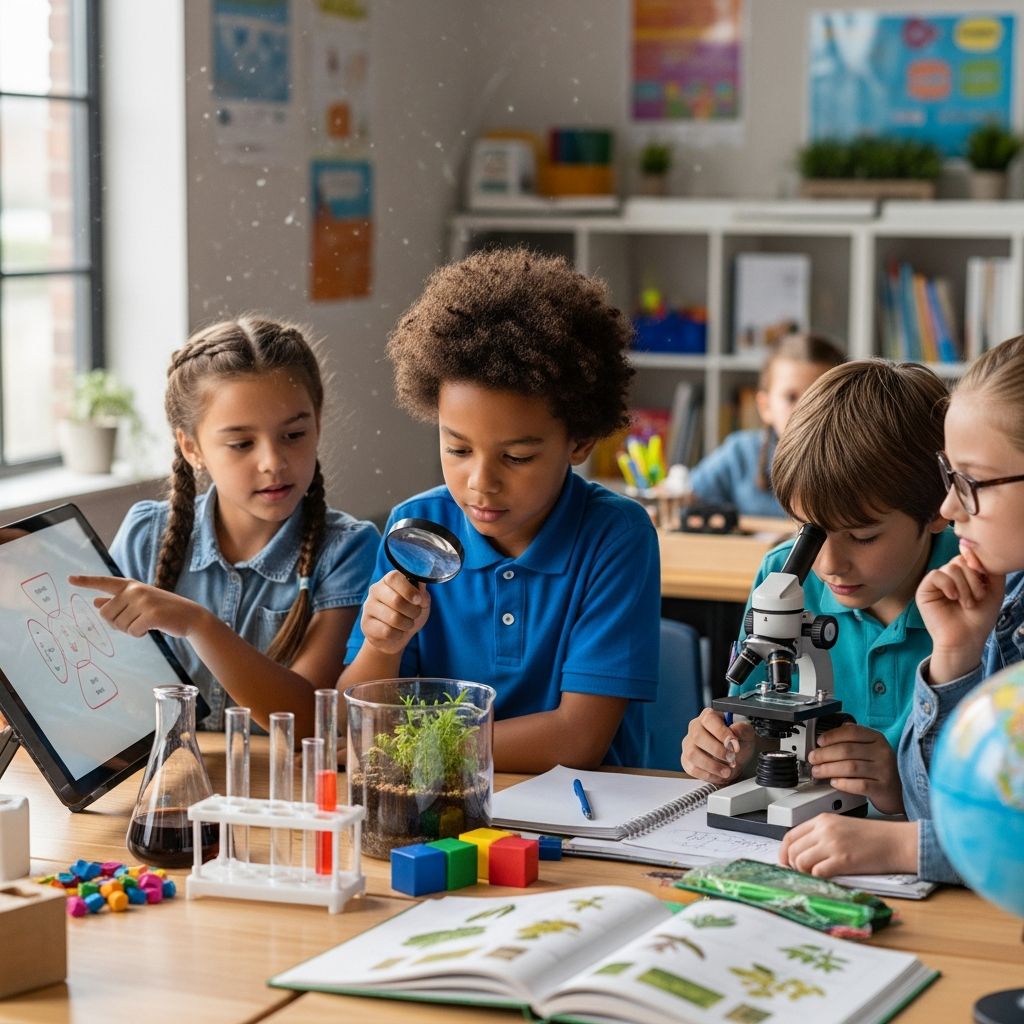
Inquiry-based learning transforms traditional classrooms into dynamic spaces where students lead their own educational journeys. By prioritizing questions over answers, this approach cultivates deep understanding, critical thinking, and lifelong learning skills. Educators facilitate rather than dictate, allowing learners to explore real-world problems through active investigation.
Understanding the Foundations of Inquiry-Driven Education
At its core, inquiry-based learning shifts the focus from rote memorization to knowledge construction. Students engage with phenomena, pose questions, gather evidence, and draw conclusions, mirroring authentic scientific and problem-solving processes. This method draws from constructivist theories, emphasizing that learners build new knowledge upon prior experiences.
Key principles include fostering curiosity as the starting point, promoting active student involvement, encouraging collaboration, and reflecting on processes to refine understanding. Unlike passive lectures, inquiry empowers students to own their learning, leading to higher retention and motivation.
Core Phases of the Inquiry Process
Inquiry-based learning unfolds in structured yet flexible phases, guiding students from initial wonder to refined insights. These stages ensure systematic progression while allowing room for creativity.
| Phase | Student Focus | Teacher Role | Example Activities |
|---|---|---|---|
| 1. Igniting Curiosity | Observe phenomena and generate initial questions | Present engaging scenarios or media | View a puzzling video clip; brainstorm ‘what if’ ideas |
| 2. Deepening Inquiry | Refine questions and plan investigations | Model questioning techniques; provide resources | Formulate testable hypotheses; select tools |
| 3. Exploring and Gathering Evidence | Conduct experiments, research, and collect data | Facilitate access to materials; offer skill guidance | Run simulations; interview experts; analyze sources |
| 4. Analyzing and Constructing Meaning | Synthesize findings and form conclusions | Prompt critical analysis; challenge assumptions | Create models or reports; debate interpretations |
| 5. Sharing and Reflecting | Present results and evaluate the process | Moderate discussions; encourage metacognition | Group presentations; journal reflections |
This phased model, adapted from established frameworks, supports gradual skill development.
Types of Inquiry Approaches for Diverse Classrooms
Educators can select from various inquiry types based on student readiness and lesson goals, balancing guidance with independence.
- Structured Inquiry: Teacher provides question and procedure; ideal for novices building foundational skills.
- Guided Inquiry: Teacher poses the question, students design methods; promotes planning and decision-making.
- Open Inquiry: Students generate questions and plans; fosters high autonomy for advanced learners.
- Problem-Based Inquiry: Tackles real-world challenges collaboratively; enhances teamwork and application.
Begin with structured formats for younger or inexperienced groups, progressing to open inquiry as confidence grows. This scaffolding aligns with cognitive load principles, preventing overwhelm.
Practical Strategies for Launching Inquiry Lessons
Effective inquiry lessons start with a compelling hook. Craft open-ended, curriculum-aligned questions tied to students’ lives, such as ‘How can we reduce plastic waste in our school?’ Ensure questions allow multiple pathways to answers.
Provide diverse resources: digital tools, primary sources, and hands-on materials. Use templates for planning investigations to structure thinking without stifling creativity. Incorporate collaborative elements like group research or peer feedback to build communication skills.
Monitor progress through checkpoints: observe planning, review data collection, and conference on analyses. Offer targeted feedback to refine approaches, modeling expert thinking throughout.
Benefits Backed by Research and Practice
Inquiry-based learning yields measurable gains. Students develop higher-order thinking, problem-solving, and resilience, as they navigate uncertainty. Engagement surges when learning feels relevant and self-directed.
- Improved retention through active knowledge construction.
- Enhanced critical thinking and evidence evaluation.
- Better collaboration and communication skills.
- Increased motivation and ownership of learning.
- Preparation for real-world complexities.
Studies affirm these outcomes, with learners showing deeper conceptual grasp compared to traditional methods.
Overcoming Common Implementation Challenges
While powerful, inquiry requires thoughtful planning. Time constraints can be addressed by integrating into existing units and using flexible timelines. Manage varying skill levels with differentiated roles in groups and tiered resources.
Classroom management thrives with clear expectations and rubrics. Assessment shifts to process and product: use portfolios, presentations, and reflections alongside traditional measures. Start small—pilot one lesson per unit—to build teacher and student comfort.
Real-World Examples Across Subjects
Science: Students investigate local water quality, testing samples and proposing solutions, linking to environmental science standards.
History: Explore ‘What if’ scenarios from key events, debating alternate outcomes using primary documents.
Math: Design surveys to analyze class data, applying statistics to real questions like ‘Best recess games?’
Language Arts: Research folktales from diverse cultures, creating multimedia stories that compare themes.
These examples demonstrate inquiry’s versatility, adapting to any discipline.
Integrating Technology to Amplify Inquiry
Digital tools supercharge inquiry. Interactive simulations allow safe experimentation, while collaborative platforms enable global peer sharing. Curate reliable online sources and teach digital literacy for credible research.
Adaptive apps provide personalized scaffolds, adjusting support based on progress. Virtual reality immerses students in phenomena, like historical events, igniting deeper questions.
Frequently Asked Questions
What is the role of the teacher in inquiry-based learning?
Teachers act as facilitators: sparking interest, providing resources, guiding without directing, and assessing growth.
How do you assess inquiry-based learning?
Use rubrics for process skills, artifacts like reports, peer reviews, and self-reflections to capture holistic development.
Is inquiry suitable for all grade levels?
Yes, with adaptations—structured for primary, open for secondary—scaling complexity to match developmental stages.
Can inquiry fit into standardized curricula?
Absolutely; align driving questions to standards, ensuring coverage while deepening understanding.
What if students get stuck during inquiry?
Employ ‘productive struggle’: prompt with hints, peer consultations, or targeted mini-lessons without providing answers.
Building a Culture of Inquiry in Your Classroom
To sustain inquiry, cultivate a safe, questioning environment. Display student work, celebrate failures as learning steps, and revisit big ideas in spiral curricula. Professional development on facilitation techniques empowers educators.
Parental involvement amplifies impact: share inquiry projects via newsletters, inviting family input on real-world connections. Over time, this fosters a community of curious, capable thinkers.
References
- The Essential Guide to Inquiry-Based Learning — Mission.io. 2023. https://mission.io/blog/the-essential-guide-to-inquiry-based-learning
- A Teacher’s Guide to Inquiry-Based Learning — Structural Learning. 2023. https://www.structural-learning.com/post/a-teachers-guide-to-inquiry-based-learning
- Inquiry-Based Learning (IBL) — ETSU Pressbooks. 2023. https://pressbooks.pub/etsu/chapter/inquiry-based-learning-ibl/
- 4 Phases Of Inquiry-Based Learning: A Guide For Teachers — TeachThought. 2023. https://www.teachthought.com/pedagogy-posts/phases-inquiry-learning/
- Inquiry-Based Learning (IBL) Guide — Clayton State University. 2025-01-01. https://www.clayton.edu/celt/docs/2025_updated_docs/teaching_resources/ibl.html
- Guide to inquiry-based learning with examples — Nearpod Blog. 2023. https://nearpod.com/blog/inquiry-based-learning/

Medha Deb is an editor with a master's degree in Applied Linguistics from the University of Hyderabad. She believes that her qualification has helped her develop a deep understanding of language and its application in various contexts. Medha specializes in the areas of beauty, health, sports, and wellness and is committed to ensuring that the content on the website is…