
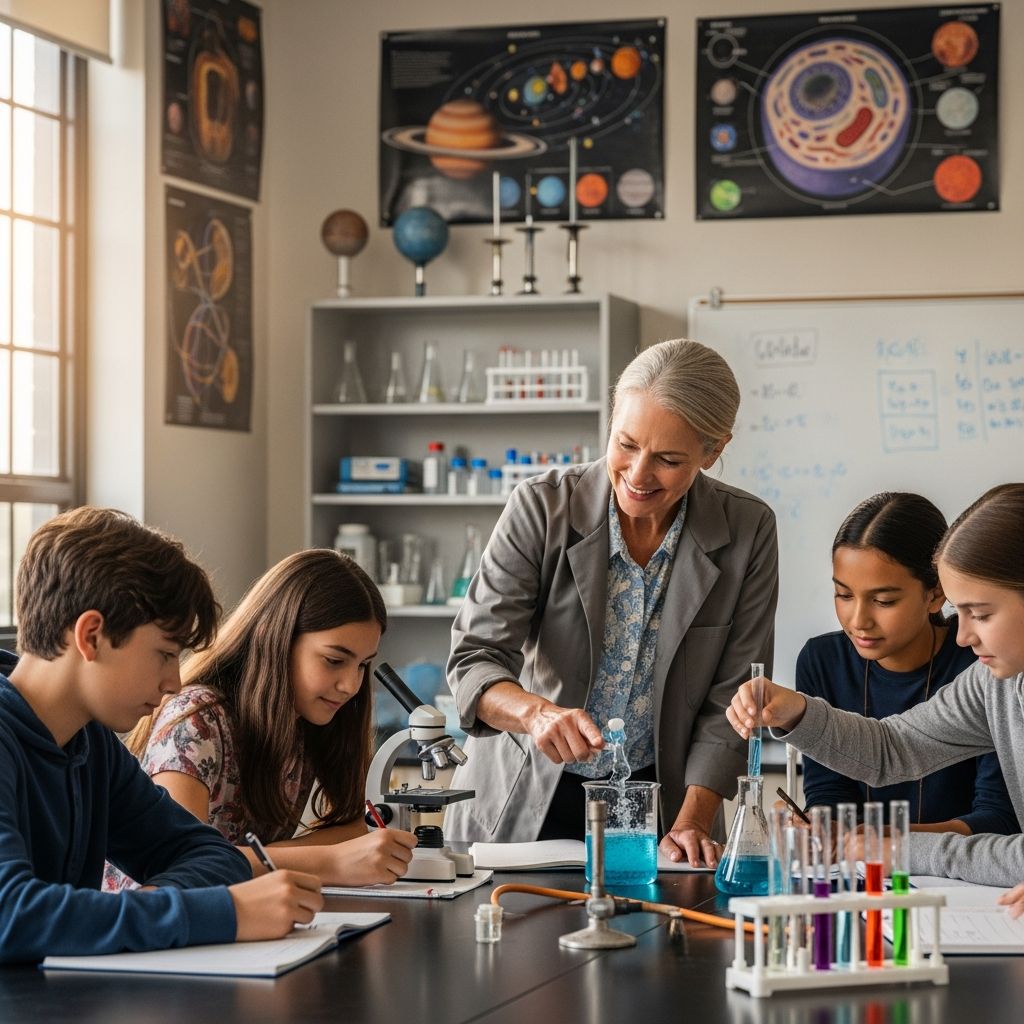
Inquiry-based science education transforms passive learners into active investigators, empowering students to explore phenomena, ask probing questions, and construct knowledge through discovery. This approach shifts the classroom dynamic from teacher-led lectures to student-driven exploration, fostering lifelong curiosity and essential STEM skills.
Understanding the Foundations of Student-Led Discovery
At its core, inquiry-based learning flips traditional education on its head. Rather than memorizing facts delivered by the teacher, students take the reins, posing questions about real-world problems and pursuing answers through evidence gathering and analysis. This method, rooted in 1960s educational reforms, emphasizes shared responsibility between educators and learners.
Key processes include developing questions, collecting evidence, explaining findings, connecting ideas, and justifying conclusions. By engaging in these steps, students mirror authentic scientific practices, building not just knowledge but also resilience and problem-solving prowess.
- Question Development: Students craft their own inquiries about engaging phenomena.
- Evidence Gathering: Hands-on experiments or simulations provide data.
- Explanation and Connection: Linking observations to broader concepts.
- Justification: Arguing for solutions based on robust evidence.
Shifting from Traditional to Dynamic Classroom Interactions
Conventional teaching often relies on the IRE model: Initiation (teacher question), Response (student answer), Evaluation (teacher feedback). While useful for basics, it limits deeper thinking. Veteran teachers enhance this by incorporating ‘revoicing’—paraphrasing student ideas to affirm and expand them—and ‘reflective tosses,’ redirecting questions back to the class for collective reflection.
This fosters dialogic discourse, where students hypothesize, predict, and self-evaluate, co-constructing knowledge. The authority for evaluation moves from teacher to peers, encouraging justification and exploration.
| Traditional IRE | Enhanced Inquiry Model |
|---|---|
| Teacher asks, student answers, teacher evaluates. | Teacher initiates, class reflects, peers justify. |
| Short, recall-based responses. | Open-ended, higher-order thinking. |
| Teacher-centered authority. | Student-driven discourse. |
Phased Approach to Inquiry Implementation
Effective inquiry follows structured yet flexible phases: initiation, invention, investigation, interpretation, and instruction. These form a cyclical model, allowing fluidity between stages.
- Initiation: Spark interest with a provocative problem or student question.
- Invention: Hypothesize and plan experiments.
- Investigation: Collect data through tests or observations.
- Interpretation: Analyze and reflect on findings.
- Instruction: Share insights via discussions or reports.
Modes of inquiry—curiosity, description, authoritative knowledge, and experimentation—can apply across phases, making learning minds-on and adaptable.
| Inquiry Mode | Description |
|---|---|
| Curiosity | Spontaneous probes into the unknown. |
| Description | Accurate representations of events. |
| Authoritative Knowledge | Evaluating established facts. |
| Experimentation | Testing hypotheses. |
Practical Strategies for Everyday Classroom Use
Start lessons with compelling, real-world questions like ‘How does pollution affect local waterways?’ to hook students. Integrate the 5E model: Engage, Explore, Explain, Elaborate, Evaluate. Promote collaboration through group investigations, blending digital simulations with hands-on labs.
Teachers guide subtly—posing open-ended prompts, providing timely feedback, and using collaborative language. Scripted cooperation, where pairs recount and question each other, elevates thinking over time.
- Frame around central questions lasting one or multiple periods.
- Incorporate experiments, discussions, and readings.
- Keep answers just out of reach to build perseverance.
- Leverage student prior knowledge for mutual teaching.
Building Deeper STEM Understanding Through Exploration
Inquiry connects abstract concepts to tangible applications. Instead of rote Newton’s Laws, students experiment with forces in simulations, grasping principles contextually. This promotes critical thinking, data analysis, and real-world relevance, like designing sustainable filters or ecosystem models.
Three-dimensional learning—practices, crosscutting concepts, disciplinary cores—structures these explorations, culminating in scientific sensemaking.
- Critical Thinking: Analyze complex problems like scientists.
- Real-World Ties: Solve challenges like bridge-building.
- Deeper Grasp: Concepts stick through active engagement.
Overcoming Common Challenges in Inquiry Teaching
Time constraints and classroom management arise, but structured phases mitigate this. Start small with single-period inquiries, scaling up. Differentiate by allowing varied question depths and grouping by readiness. Professional development on content and processes ensures confidence.
Address misconceptions proactively through modeling and argumentation. Use tools like question graphic organizers to refine student inquiries.
Tools and Resources to Support Inquiry
Digital platforms offer virtual labs for safe experimentation. Phenomena-based starters, like video clips of natural events, ignite wonder. Graphic organizers for questioning and modeling streamline processes.
- Asking Questions Organizers.
- Model Development Sheets.
- Cause-and-Effect Chain Maps.
Frequently Asked Questions (FAQs)
What is the biggest benefit of inquiry-based science?
It cultivates critical thinking and problem-solving by having students actively build understanding, unlike passive memorization.
How do I start inquiry in a structured curriculum?
Begin with one central question per unit, aligning explorations to standards using the 5E model.
Does inquiry work for all grade levels?
Yes, adapt phases and modes: simpler for elementary, complex for high school.
What if students struggle with open-ended questions?
Scaffold with reflective tosses and peer discussions to build skills gradually.
How does inquiry prepare students for real science careers?
By mirroring practices like hypothesizing, experimenting, and justifying—exact skills professionals use.
Long-Term Impact on Student Engagement and Outcomes
Veteran educators report sustained engagement, as students own their learning. This leads to better retention, enthusiasm for STEM, and equity in participation. Over years, it produces thinkers who question norms and innovate.
Incorporate sensemaking by planning investigations from student models, refining through evidence and debate. The result: classrooms buzzing with genuine discovery.
References
- Support STEM Skills with Inquiry-based Learning — ExploreLearning Gizmos. 2023. https://gizmos.explorelearning.com/resources/insights/inquiry-based-learning
- An Inquiry-Led Science Classroom — Edutopia. 2022-10-12. https://www.edutopia.org/article/inquiry-led-science-classroom/
- Teaching Science as Inquiry – Phases and Modes — University of Hawaii Manoa. 2023. https://manoa.hawaii.edu/exploringourfluidearth/node/348
- Inquiry-Based Learning in the Science Classroom — YouTube (Casey Middle School). 2021. https://www.youtube.com/watch?v=BbqPaKTsDIU
- What is Inquiry-Based Science? — Smithsonian Science Education Center. 2022. https://ssec.si.edu/stemvisions-blog/what-inquiry-based-science
- Teaching — The Wonder of Science — The Wonder of Science. 2024. https://thewonderofscience.com/teaching

- Integrated M.A. in Applied Linguistics, University of Hyderabad
- 5+ years in editorial, instructional, SEO, and research-based writing
Sneha is a relationships and lifestyle writer with a strong foundation in applied linguistics and certified training in relationship coaching. She brings over five years of writing experience to theskillvault, crafting thoughtful, research-driven content that empowers readers to build healthier relationships, boost emotional well-being, and embrace holistic living. Her writing and insights reflect the belief that beauty, happiness, and wellness…