
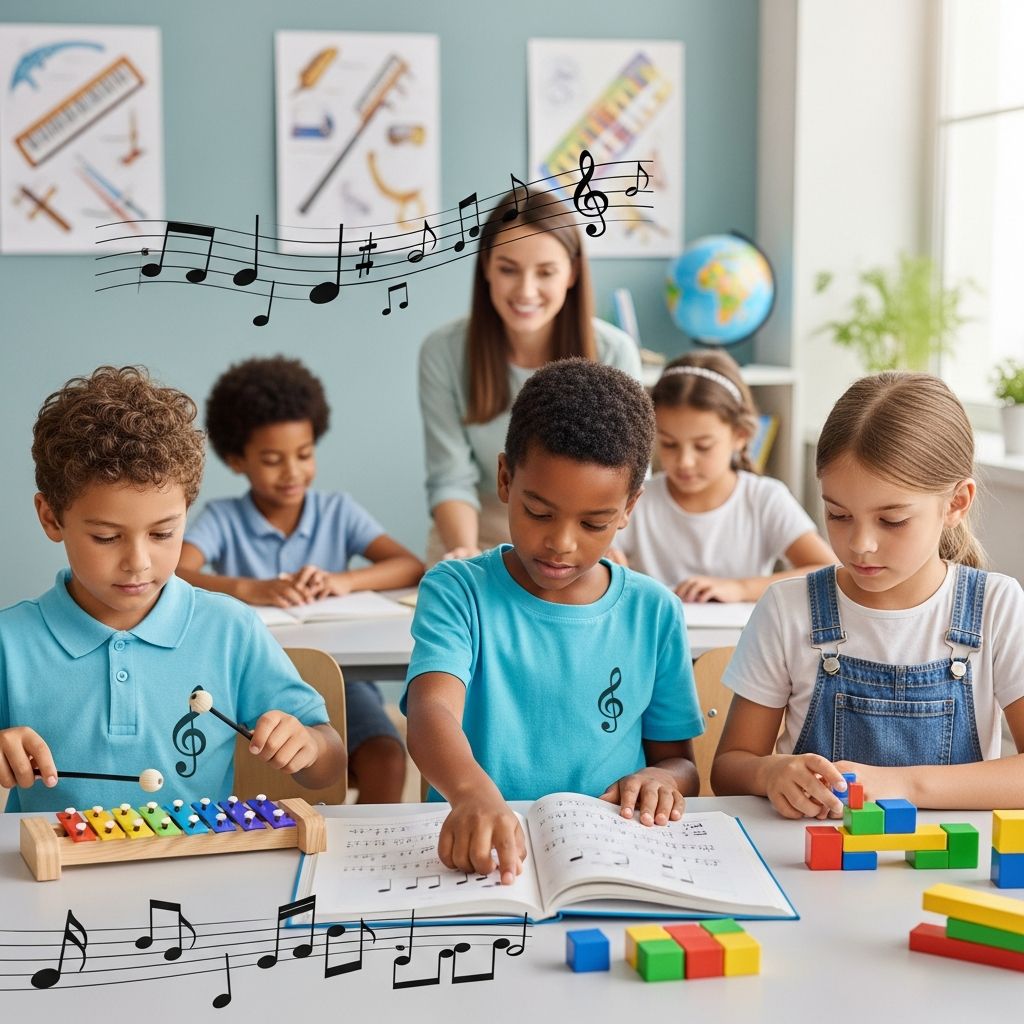
Music serves as a dynamic tool for reinforcing fundamental academic areas in elementary education, making abstract concepts tangible and memorable through rhythm, melody, and lyrics. By embedding musical elements into daily lessons, teachers can elevate student participation and comprehension across disciplines.
Why Music Enhances Academic Performance
Research highlights music’s role in cognitive development, improving memory retention via rhythmic patterns and emotional engagement. In elementary settings, where attention spans are short, songs and beats transform rote memorization into interactive experiences, aligning with brain-based learning principles that favor multisensory input.
Teachers report heightened focus and enthusiasm when lessons incorporate tunes, as auditory processing strengthens neural connections for language and logic. This approach not only supports standards-based instruction but also cultivates creativity, essential for well-rounded growth.
Building Strong Foundations in Literacy Through Melody
Literacy skills flourish when paired with music, as rhythms mirror syllable structures and phonics patterns. Chants and songs break words into beats, aiding phonemic awareness crucial for early readers.
- Employ nursery rhymes to practice blending sounds, helping students segment words effortlessly.
- Use call-and-response lyrics to build vocabulary, introducing new terms through repetitive phrasing.
- Analyze song narratives to differentiate story elements, enhancing comprehension and sequencing skills.
For instance, adapting folk tunes to include sight words reinforces recognition and fluency, turning reading practice into a joyful group activity. Older students can compose verses summarizing texts, deepening analysis while practicing poetic devices like rhyme and meter.
Mathematical Concepts via Rhythmic Exploration
Music’s inherent structure lends itself to math instruction, where note durations represent fractions and patterns predict sequences. Elementary learners grasp division through quarter-note divisions of whole measures, making abstract numbers concrete.
| Math Skill | Musical Activity | Learning Outcome |
|---|---|---|
| Fractions | Clapping half and quarter beats | Visualize part-whole relationships |
| Patterns | Repeating ostinato rhythms | Identify and extend sequences |
| Counting | Song-based skip counting | Master multiplication basics |
| Geometry | Body percussion shapes | Explore symmetry in beats |
Activities like drumming addition problems or rapping multiplication tables solidify facts kinesthetically. Probability emerges in composing with chance elements, such as dice-rolled rhythms, bridging creativity and calculation.
Science Lessons Amplified by Sound and Song
Scientific inquiry gains vibrancy through music depicting natural phenomena, from weather cycles in seasonal songs to animal habitats via mimetic melodies. Sound wave experiments using tuned instruments illustrate vibration and pitch, aligning with physics standards.
- Sing about the water cycle, assigning movements to evaporation and precipitation phases.
- Explore life cycles with cumulative songs tracking growth stages.
- Use percussion to simulate heartbeat rhythms in health units.
These methods foster observation and prediction skills, as students hypothesize how tempo changes affect mood or energy, mirroring experimental design.
Social Studies Enriched with Cultural Tunes
History and geography come alive through global music traditions, connecting past events to anthems and folklores. Patriotic songs teach timelines, while world music exposes cultural diversity, promoting empathy and global awareness.
Activities include mapping instrument origins or role-playing historical figures through era-specific genres. Discussions on lyrics reveal societal values, encouraging critical thinking about change over time.
Practical Strategies for Seamless Integration
Begin with familiar songs, adapting lyrics to fit lesson objectives—no advanced musical training required. Short daily segments, like five-minute math raps, build habits without overwhelming schedules.
- Review standards to spot alignments, highlighting music’s natural ties.
- Curate playlists matching themes, from classical for focus to upbeat for energy.
- Involve students in creation, boosting ownership and retention.
- Assess via performances, where groups present subject-infused songs.
Collaborate with music specialists for resources, ensuring activities stay true to artistic integrity while supporting academics.
Addressing Challenges in Music Integration
Time constraints and teacher confidence pose hurdles, yet low-prep options like YouTube-backed chants minimize prep. Professional development on simple instruments empowers educators, yielding long-term classroom benefits.
Diverse learners thrive: visual aids pair with lyrics for ELL students, while movement accommodates kinesthetic needs, creating inclusive environments.
Evidence of Impact: Real Classroom Results
Educators observe improved test scores and engagement post-integration. One teacher noted students reciting facts effortlessly after song exposure, attributing gains to enhanced memory encoding. Studies affirm music’s boost to executive function, vital for academic success.
Frequently Asked Questions (FAQs)
What if I can’t sing or play instruments?
No expertise needed—use recorded tracks, clapping, or student-led performances to drive lessons effectively.
How much time should I dedicate weekly?
Even 10-15 minutes daily yields results; integrate during transitions or reviews for maximum impact.
Does this work for all grade levels?
Yes, from kindergarten chants to upper-grade compositions, scale complexity to match developmental stages.
Can music help with classroom management?
Absolutely—signal shifts with tunes, calming groups or energizing activities seamlessly.
Where do I find age-appropriate songs?
Leverage free educational sites, public domain folk songs, or adapt pop hits to curricular needs.
Advanced Techniques for Seasoned Integrators
For deeper dives, orchestrate unit-long projects: compose operas retelling historical events or symphonies modeling ecosystems. Guest artists or tech apps like GarageBand extend possibilities, fostering 21st-century skills.
Track progress with rubrics evaluating both musical and content mastery, showcasing interdisciplinary wins to administrators.
References
- Demonstrating Core Subject Support in the Music Classroom — Sally’s Sea of Songs. 2024-11. https://www.sallysseaofsongs.com/2024/11/demonstrating-core-subject-support-in-music.html
- Effective Integration of Music in the Elementary School Classroom — ERIC. 2018. https://files.eric.ed.gov/fulltext/EJ1171782.pdf
- How to Incorporate Music in the Elementary Classroom — The Domestic Musician. N/A. https://www.thedomesticmusician.com/how-to-incorporate-music-in-the-elementary-classroom/
- 6 Smart Ways to Bring the Power of Music Into Your Classroom — Edutopia. N/A. https://www.edutopia.org/article/6-smart-ways-bring-power-music-your-classroom/
- Integrating Music into the Elementary Classroom Culture — CEJ Online. N/A. https://www.cejonline.com/article/integrating-music-into-the-elementary-classroom-culture/

- Integrated M.A. in Applied Linguistics, University of Hyderabad
- 5+ years in editorial, instructional, SEO, and research-based writing
Sneha is a relationships and lifestyle writer with a strong foundation in applied linguistics and certified training in relationship coaching. She brings over five years of writing experience to theskillvault, crafting thoughtful, research-driven content that empowers readers to build healthier relationships, boost emotional well-being, and embrace holistic living. Her writing and insights reflect the belief that beauty, happiness, and wellness…