
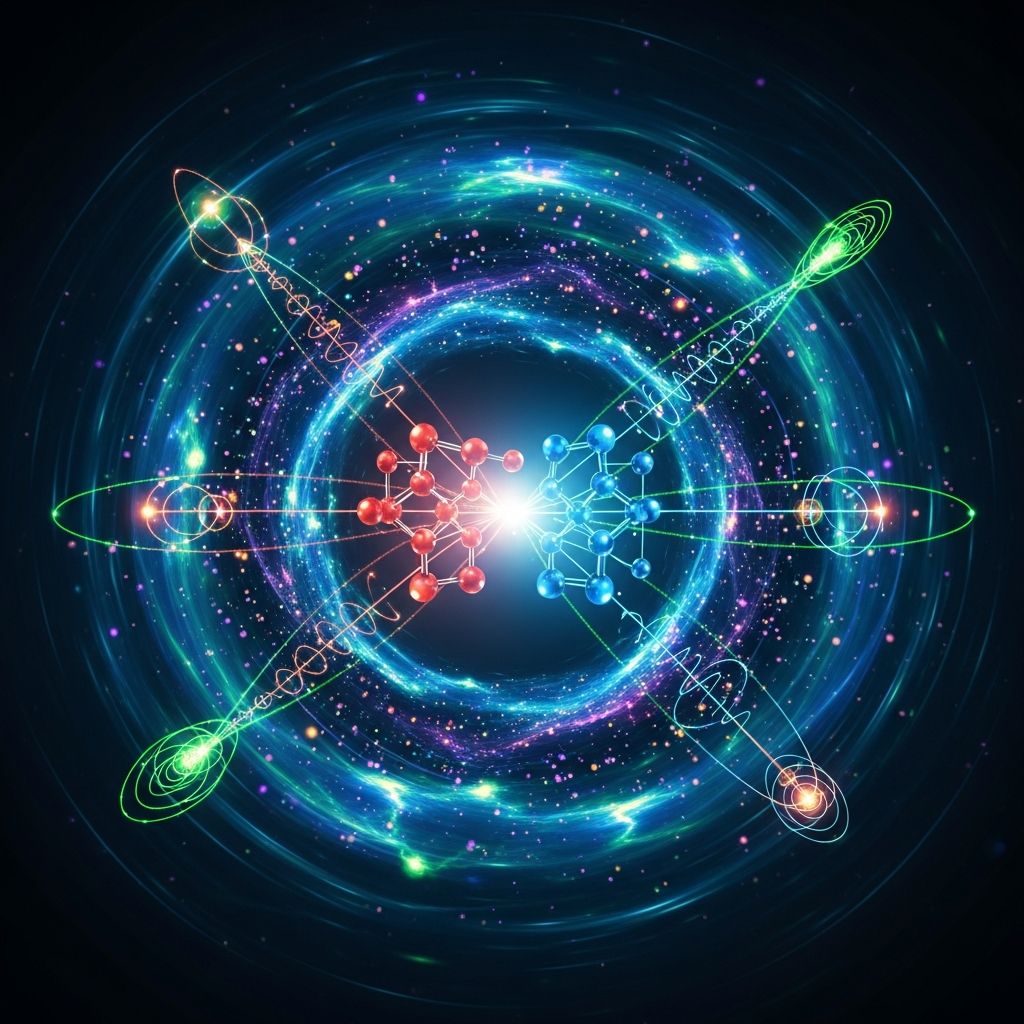
Introduction to Molecular Cohesion and Intermolecular Phenomena
At the molecular scale, matter exhibits fascinating behaviors driven by forces that operate between individual molecular units. These forces, known as intermolecular forces (IMFs), represent the electrostatic attractions and repulsions occurring between adjacent molecules, atoms, and ions. Unlike the powerful covalent and ionic bonds that hold atoms together within molecules—the intramolecular forces—intermolecular forces are considerably weaker yet profoundly influence the macroscopic properties we observe in everyday materials. Understanding these subtle interactions is essential for comprehending why substances behave differently, from the boiling points of liquids to the solubility of compounds in various solvents.
The significance of intermolecular forces becomes particularly evident when examining transitions between states of matter. When a solid melts into liquid or a liquid vaporizes into gas, the intramolecular bonds remain intact while intermolecular interactions break apart. This distinction explains why water can transform between its three states without the actual H₂O molecules decomposing—only the connections between molecules weaken or strengthen.
The Electrostatic Foundation of Molecular Interactions
All intermolecular forces fundamentally arise from electrostatic phenomena—the attraction between opposite electrical charges and repulsion between similar charges. These forces operate through the distribution of electrons within and around molecules, creating regions of partial positive and negative charge. The strength of these electrostatic interactions depends critically on the distance between molecules; as molecules separate, the attractive or repulsive forces diminish rapidly.
This distance dependency explains why intermolecular forces become pronounced only when molecules are in close proximity, making them most significant in solids and liquids where molecular packing is dense. In gases at standard conditions, molecules remain too far apart for intermolecular forces to substantially influence behavior. However, when gases are subjected to extreme pressure, molecules compress together and intermolecular interactions become important, causing real gases to deviate from the predictions of ideal gas theory.
Dipole-Dipole Interactions: Attractions Among Polar Molecules
Among the primary categories of intermolecular forces, dipole-dipole interactions represent attractions occurring between polar molecules—those with uneven electron distribution creating permanent charge separation. In a polar molecule, the end bonded to a more electronegative atom accumulates partial negative charge while the opposite end becomes partially positive. This permanent dipole moment allows molecules to orient themselves strategically, with the positive end of one molecule attracted to the negative end of a neighboring molecule.
The strength of dipole-dipole interactions depends on two factors: the magnitude of the dipole moment and the inverse cube of the distance separating molecules (proportional to 1/r³). Hydrogen chloride (HCl) exemplifies this phenomenon—chlorine’s higher electronegativity relative to hydrogen creates a polarized bond where chlorine bears partial negative charge and hydrogen bears partial positive charge, enabling strong dipole-dipole attractions between HCl molecules.
Among standard intermolecular forces, dipole-dipole interactions rank as the strongest, surpassed only by hydrogen bonding. This relative strength makes them crucial for determining physical properties of polar compounds, though they remain substantially weaker than covalent bonds within molecules.
Hydrogen Bonding: A Specialized Dipole-Dipole Interaction
Hydrogen bonding represents a unique and exceptionally powerful variant of dipole-dipole interaction, occurring only when hydrogen atoms bond to highly electronegative elements—specifically nitrogen, oxygen, or fluorine. When hydrogen attaches to these elements, the electronegativity difference creates an extraordinarily polarized bond with hydrogen bearing substantial partial positive charge. The lone electron pairs on nitrogen, oxygen, or fluorine then create strong electrostatic attractions with this highly polarized hydrogen atom.
What distinguishes hydrogen bonding from ordinary dipole-dipole interactions is its remarkable strength, making it the strongest intermolecular force excluding ionic attractions. This exceptional strength explains several anomalies in molecular behavior—for instance, water’s boiling point is far higher than would be predicted based on molecular weight alone, a phenomenon directly attributable to extensive hydrogen bonding networks among water molecules.
The specificity of hydrogen bonding—restricted to only certain molecular combinations—means not all substances containing hydrogen exhibit this interaction. Only compounds where hydrogen directly bonded to N, O, or F atoms can engage in hydrogen bonding. This selectivity, combined with its substantial strength, makes hydrogen bonding crucial in biological systems, where it stabilizes protein structures and enables DNA base pairing.
London Dispersion Forces: The Universal Attraction
London dispersion forces, also termed London forces or dispersion forces, represent the weakest category of intermolecular attraction yet possess special significance—they occur in all molecular substances without exception. These forces arise from temporary, fleeting dipoles created when electron distributions fluctuate around atoms or molecules.
At any given instant, electrons within an atom occupy asymmetrical positions, creating momentary charge imbalances. This temporary dipole in one atom can polarize nearby atoms, inducing temporary dipoles in them, producing mutual attractive forces. Because these dipoles are constantly forming and disappearing, London forces fluctuate in magnitude but remain perpetually present.
The weakness of London dispersion forces becomes evident when examining nonpolar substances like methane or benzene—these compounds exhibit low boiling points compared to polar substances of similar molecular weight because their primary intermolecular attraction consists of these fleeting forces. Yet the universality of dispersion forces means that substances comprising only nonpolar molecules can still condense to liquids when sufficiently cooled, proving that even weak attractive forces accumulate when numerous molecules interact collectively.
Ion-Dipole Interactions: When Ions Meet Polar Molecules
Ion-dipole interactions occur when ionic compounds dissolve in polar solvents, representing electrostatic attractions between charged ions and the dipole moments of polar molecules. An ion—whether positively or negatively charged—attracts itself to the oppositely charged end of a polar molecule’s dipole, while repelling the same-charged end.
This interaction category is considerably stronger than dipole-dipole forces but generally weaker than ionic bonds themselves. Ion-dipole forces become particularly important in aqueous solutions, where water’s polar nature creates strong attractions with dissolved ions. The solvation of sodium chloride in water exemplifies this phenomenon—the positive sodium ions orient themselves around water’s partially negative oxygen atoms while chloride ions position themselves near water’s partially positive hydrogen atoms, allowing the ionic crystal to dissolve.
Ion-Induced Dipole Interactions: Polarization by Charge
Ion-induced dipole interactions represent a more subtle category of intermolecular attraction where ions polarize normally nonpolar molecules, forcing them into temporary dipole configurations. When an ion approaches a nonpolar molecule, its electric field distorts the electron cloud around the nonpolar molecule, temporarily displacing electrons and creating an induced dipole.
The induced dipole, though temporary and dependent on the ion’s continued presence, experiences attraction toward the ion. This category of force is generally weaker than ion-dipole interactions but stronger than London dispersion forces. Ion-induced dipole interactions become significant when ionic compounds interact with nonpolar solvents or when dissolved ions influence the behavior of surrounding nonpolar molecules in solution.
Comparative Strength Hierarchy of Intermolecular Forces
Understanding the relative strengths of different intermolecular forces provides crucial insight into molecular behavior and substance properties:
- Strongest: Ion-dipole interactions and hydrogen bonding dominate at the upper end of the intermolecular force spectrum
- Moderate: Dipole-dipole interactions represent the middle tier of intermolecular attractions
- Weakest: London dispersion forces constitute the feeblest intermolecular attractions, though universally present
This hierarchy becomes apparent when comparing boiling points: substances held together primarily by hydrogen bonding exhibit dramatically higher boiling points than those relying on dipole-dipole forces, which surpass nonpolar compounds dependent on dispersion forces alone. For example, hydrogen fluoride boils at 19.5°C owing to substantial hydrogen bonding, while hydrogen chloride boils at −85°C despite containing a polar bond, because chlorine cannot form hydrogen bonds.
Van der Waals Forces: The Collective Category
The term “van der Waals forces” collectively describes several categories of intermolecular attraction, specifically London dispersion forces, dipole-dipole interactions, and dipole-induced dipole forces. Named after Dutch physicist Johannes van der Waals who first postulated their existence to explain real gas behavior, this umbrella category encompasses weaker intermolecular forces that supplement stronger interactions like hydrogen bonding.
Van der Waals forces exclude ionic interactions and formal hydrogen bonding but include the diverse array of electrostatic attractions arising between atoms and molecules that lack formal charges or extreme polarity. The recognition of van der Waals forces was revolutionary for chemistry, explaining deviations from ideal gas behavior and enabling accurate predictions of real substance properties.
Practical Implications for Physical Properties
Intermolecular forces directly determine numerous observable physical properties of substances. Boiling points and melting points depend primarily on the strength and prevalence of intermolecular attractions—stronger intermolecular forces require greater thermal energy to overcome, elevating phase transition temperatures.
Solubility phenomena reflect intermolecular force compatibility between solutes and solvents. The principle “like dissolves like” stems from intermolecular force considerations—polar solvents dissolve polar solutes through ion-dipole and dipole-dipole interactions, while nonpolar solvents dissolve nonpolar substances through London dispersion forces.
Viscosity, surface tension, and other liquid properties emerge from intermolecular force strengths. Liquids with strong intermolecular interactions exhibit higher viscosity and surface tension because molecular movement requires overcoming substantial attractive forces between particles.
Distinguishing Intermolecular from Intramolecular Forces
A critical distinction separates forces holding atoms together within molecules (intramolecular forces) from forces holding molecules together (intermolecular forces). Intramolecular forces—covalent bonds, ionic bonds, and metallic bonds—involve sharing or transfer of electrons between atoms and far exceed intermolecular forces in strength.
When substances undergo phase transitions, intramolecular bonds remain unbroken; only intermolecular attractions break. Water illustrates this perfectly—whether solid ice, liquid water, or water vapor, each H₂O molecule retains its intact covalent bonds between hydrogen and oxygen atoms. The transformation between states reflects breaking and reforming of intermolecular hydrogen bonds connecting separate water molecules.
This distinction proves essential for understanding chemical reactions and physical changes. Chemical reactions involve breaking intramolecular bonds and forming new ones, while physical changes like melting or freezing involve only intermolecular force modifications.
Molecular Distance and Intermolecular Force Strength
A fundamental characteristic of intermolecular forces is their rapid attenuation with distance. The dependence of dipole-dipole interactions on 1/r³ demonstrates this principle mathematically—doubling the separation between molecules reduces dipole-dipole attraction to only one-eighth its original strength.
This distance sensitivity explains why intermolecular forces matter primarily in condensed phases where molecules remain in close proximity. In ideal gases, where molecules are far apart and moving rapidly, intermolecular forces exert negligible effects on behavior. At high pressures where gas molecules compress closer together, intermolecular forces become significant, producing deviations from ideal gas behavior.
Why All Molecules Experience London Forces
The universality of London dispersion forces among all molecular substances derives from fundamental quantum mechanics principles. Electrons never remain perfectly stationary; they exhibit probabilistic distributions around atoms. Instantaneous fluctuations in electron positions create temporary dipoles in all atoms and molecules, including absolutely nonpolar substances.
These temporary dipoles, though fleeting and individually weak, collectively enable even nonpolar substances to liquefy when sufficiently cooled. Liquid nitrogen and liquid oxygen, despite being nonpolar, remain liquids at temperatures below −180°C because sufficient London forces accumulate between numerous molecules, providing net attractive effects.
Frequently Asked Questions
Q: How do intermolecular forces differ from chemical bonds?
A: Intermolecular forces act between separate molecules and are considerably weaker, while chemical bonds hold atoms together within molecules. Chemical bonds involve electron sharing or transfer and are roughly 10-100 times stronger than intermolecular forces.
Q: Why do some substances have higher boiling points than others?
A: Boiling point depends on intermolecular force strength. Substances with strong intermolecular attractions like hydrogen bonding require more thermal energy to overcome these forces, resulting in higher boiling points than substances relying on weaker London forces.
Q: Can nonpolar molecules experience attractive forces?
A: Yes, all molecules including nonpolar ones experience London dispersion forces due to temporary dipole fluctuations. This explains why noble gases and nonpolar compounds can liquefy when temperature decreases sufficiently.
Q: Which intermolecular force is strongest?
A: Hydrogen bonding is the strongest intermolecular force, followed by ion-dipole interactions. These substantially exceed dipole-dipole forces and London dispersion forces in strength.
Q: Why are intermolecular forces important in real gases?
A: At high pressures, gas molecules compress closely together enabling intermolecular forces to become significant. These forces cause real gases to deviate from ideal gas law predictions by creating attractive forces between molecules.
References
- Intermolecular force — Wikipedia. Accessed April 2026. https://en.wikipedia.org/wiki/Intermolecular_force
- Intramolecular and intermolecular forces — Khan Academy. Accessed April 2026. https://www.khanacademy.org/test-prep/mcat/chemical-processes/covalent-bonds/a/intramolecular-and-intermolecular-forces
- Types of Intermolecular Forces — BYJU’S. Accessed April 2026. https://byjus.com/chemistry/different-types-of-intermolecular-forces/
- 12.6: Types of Intermolecular Forces- Dispersion, Dipole–Dipole, Hydrogen Bonding, and Ion-Dipole — LibreTexts Chemistry. Accessed April 2026. https://chem.libretexts.org/
- Types of Intermolecular Forces — The Physics Classroom. Accessed April 2026. https://www.physicsclassroom.com/Chemistry-Tutorial/Solids-Liquids-and-Intermolecular-Forces/Types-of-Intermolecular-Forces
- The Four Intermolecular Forces and How They Affect Boiling Points — Master Organic Chemistry. 2010. https://www.masterorganicchemistry.com/2010/10/01/how-intermolecular-forces-affect-boiling-points/
- Introduction to Intermolecular Forces — UC Merced Chemistry Center. Accessed April 2026. https://chemcenter.ucmerced.edu/

- Integrated M.A. in Applied Linguistics, University of Hyderabad
- 5+ years in editorial, instructional, SEO, and research-based writing
Sneha is a relationships and lifestyle writer with a strong foundation in applied linguistics and certified training in relationship coaching. She brings over five years of writing experience to theskillvault, crafting thoughtful, research-driven content that empowers readers to build healthier relationships, boost emotional well-being, and embrace holistic living. Her writing and insights reflect the belief that beauty, happiness, and wellness…